
Inha University is a private research university located in Incheon, South Korea. Established in 1954, the university has developed strong academic and research capabilities, particularly in engineering, technology, logistics, aerospace, business, natural sciences and medicine. Its location in Incheon also supports close connections with industry, transportation, ports and international business.
Inha places considerable emphasis on innovation, interdisciplinary education, industry–academia collaboration and the development of future-oriented talent. Its AI Convergence Research Center, for example, focuses on integrating artificial intelligence with manufacturing, logistics, ports and healthcare.
| Acronym | INHA |
| Motto / Slogan | Truth |
| Colour | Sky Blue and Deep Blue |
| Mascot | Annyong and Induck |
| Founded | 1954 |
| Location | Michuhol, Incheon, South Korea |
| Address | 100, Inha-ro, Michuhol-gu, Incheon, 22212 |
To cultivate creative and convergent talent through education and research, while contributing to industrial and social development through innovation and collaboration.
In its AI Convergence Research Center, this mission is expressed more specifically as developing specialised talent for innovative AI-convergence industries and connecting universities with industry to strengthen technological and industrial competitiveness.
Inha's vision, particularly reflected in its current AI-convergence strategy, is:
“AI-Converged Talent and Technology Dissemination Hub.”
The university seeks to serve as a hub connecting education, research, industry and technology, with AI convergence extending into areas such as manufacturing, logistics, ports and medical/healthcare industries.
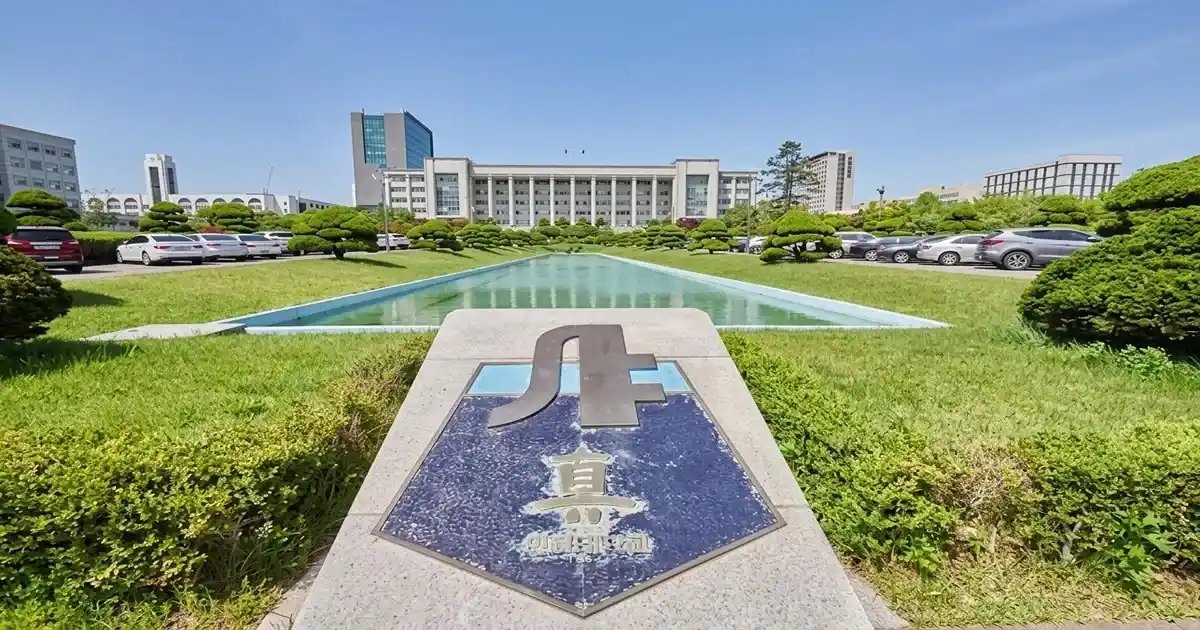
Inha's history and academic strengths are closely connected with Korea's industrial and technological development. Its programs span areas that are highly relevant to industries such as automotive, shipbuilding, aerospace, logistics, electronics, and information technology.
The university provides a research-oriented environment, particularly in areas such as biotechnology, nanotechnology, materials science, mechanical engineering, aerospace, telecommunications, and other advanced fields.
Inha University has a long-standing reputation for technological research and offers programs across engineering, natural sciences, business, logistics, humanities, and social sciences.
Application Type A
Category: Applicants whose parents have foreign citizenship.
Application Type B
Category:
Applicants who have completed entire education
courses (elementary, junior high, high school, and university) outside of South Korea.
-Documents which prove entire education are required: Official certificates of each degree/graduation & transcript.
Nationality:
Applicants who have foreign citizenship. (Applicant with dual nationality including Republic of Korea cannot apply)
Degree Program:
[Master's and Integrated]
The applicant must have (or will achieve before the date of entrance) a Bachelor
degree(4-year program) or a diploma that is equivalent to or higher than a Bachelor degree.
[Doctoral]
The applicant must have (or will achieve before the date of entrance) a Master's degree or a diploma that is equivalent to or higher than a Master's degree.
Certificate of Language Proficiency: Applicants must submit the certificate of Language Proficiency each department requires. If not, they cannot apply.
Students from countries where English is their first language or country’s official language do not need to submit language proficiency documents
Language proficiency
The required language qualification depends on the program. Some programs may require Korean-language proficiency (TOPIK), while English-taught programs can have English-language requirements. The language requirement should therefore be checked against the specific program you want.
Email: [email protected],[email protected]
Phone : +82-32-860-8609, (032)-860-8609
Woongbijae
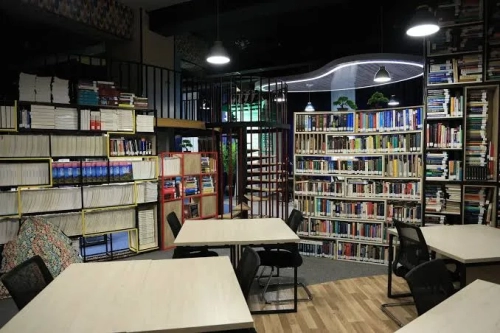
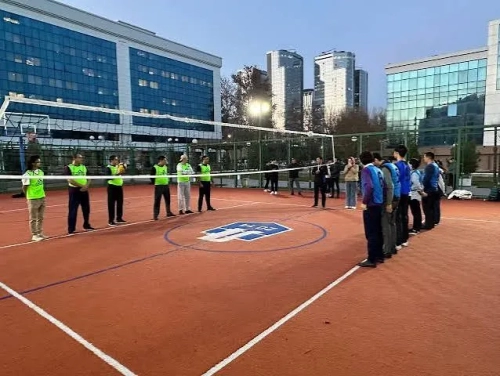
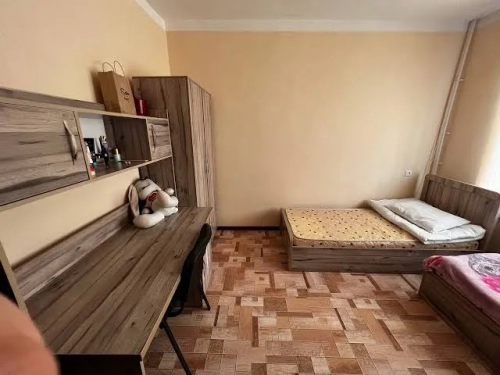
"Woongbijae" , Dormitory 1, a five-story building with one basement level and five aboveground, can accommodate up to 1,010 students. In addition to regular Inha students, Woongbijae houses exchange students, and is fully accessible for handicapped students. Woongbijae also offers LAN access ports, satellite TV reception, DID telephones, and a computer room. Other facilities include a cafeteria, a laundry room, a small lounge area, providing students with a comfortable living environment.
Biryongjae
Inha University opened the new Dormitory 'Biryongjae' , resembling an undulating wave, outwardly appearing a design of nature in 2006. Accommodating over 1,150 students, the new 13 story dormitory is equipped with various modern facilities such as LAN connection, digital satellite receivers, and DID telephones. The dormitory also provides students with access to a fitness room, Internet Cafe and various welfare facilities.
Inha University holds institutional accreditation under Korea's university accreditation system and has programme-level accreditation from internationally and nationally recognised bodies, including AACSB International (Business), ABEEK (Engineering), KAAB (Architecture), KIMEE (Medicine), and KABONE (Nursing). It is also an IEQAS-certified university recognised by Korea's Ministry of Education/NIIED.




The name 'Inha' comes from the name of 'Incheon' and 'Ha' in Hawaii. In March 1954, with the goal of establishing a world-class engineering university like MIT in the US, Dr. Lee Won Chul, an astronomer who obtained his Ph.D. degree, was the inaugural vice president Lee Ki-bong. On April 24, 1954, he had the entrance ceremony for 179 freshmen. On Ma... read more
Financial resources for the foundation came from the proceeds of the sale of the Korean Christian Institute, an organization founded and managed by Dr. Rhee for the purpose of educating the children of the original emigrants, donations from Korean emigrants in Hawaii and domestic supporters, and a government subsidy. Along with school site donation from Incheon city, the Ministry of Culture and Education approved the foundation of the Inha Institute in February, 1954.
Institute building construction began in earnest, to finally have the Inha Institute of Technology opened later the same year, in the scheme of the parent 6 Departments of Metallurgical, Mechanical, Mining, Electric, Shipbuilding and Chemical Engineering.