ListOfUni
Visit School Website
  • 12,348 Students
  • 1971Founded
  • YesDistance learning

About

KAIST (originally the Korea Advanced Institute of Science and Technology) is a national research university located in Daedeok Innopolis, Daejeon, South Korea. KAIST was established by the Korean government in 1971 as the nation's first public, research-oriented science and engineering institution. KAIST has been internationally accredited in business education, and hosts the Secretariat of the Association of Asia-Pacific Business Schools (AAPBS). KAIST has 10,504 full-time students and 1,342 faculty researchers (as of the Fall 2019 Semester) and had a total budget of US$765 million in 2013, of which US$459 million was from research contracts.

In 2007, KAIST first began partnering with international institutions to adopt dual degree programs for its students. The current list of partner institutions includes New York University, the Technical University of Denmark, Carnegie Mellon University, the Georgia Institute of Technology, Technische Universität Berlin, and the Technical University of Munich.

Founded 1971
Location Yuseong, Daejeon, South Korea
Address Yuseong, Daejeon, South Korea

Mission

KAIST educates, researches, and takes the lead in innovations to serve the happiness and prosperity of humanity. KAIST fosters talents who exhibit creativity, embrace challenges, and possess caring minds in creating knowledge and translating it into transformative innovation.


Vision

Having successfully fulfilled the founding philosophy of half a century ago, KAIST has announced Vision 2031, aiming to become a leading university that creates global value by 2031, the year marking its 60th anniversary. We intend to fulfill our mission as a science and technology university that contributes to the happiness and prosperity of humanity by pursuing innovation in education, research, technology commercialization, internationalization, and future strategies.


KAIST

Main Academic Divisions (Faculties)

  1. College of Natural Sciences
  2. College of Life Science and Bioengineering
  3. College of Engineering
  4. College of AI
  5. College of Liberal Arts and Convergence Science
  6. College of Business
  7. School of Transdisciplinary Studies

Reasons to Study at KAIST

  1. A Legacy of Innovation and Excellence

    Founded in 1971, KAIST has spent over five decades developing world-class scientists, engineers, and innovators who have driven Korea's scientific, technological, and economic growth. Renowned for excellence in education, research, and entrepreneurship, KAIST continues to shape the future by combining cutting-edge innovation with a strong academic foundation to create lasting impact and value for society worldwide.


  2. A Global Value-Creative Leading University

    Our history of innovation and audacious challenge has been marked by international league tables. They are the marks of our collective advancement. Not to mention, our graduate students are at the heart of the excellence.


  3. KAIST Learns and Creates through Research

    In 2024, KAIST conducted 3,065 R&D projects—780 with industry and 2,285 funded by the Korean government. Its researchers published 3,404 academic papers, including 2,979 SCI-indexed articles, demonstrating global research excellence. KAIST also ranked 1st in Korea and 10th worldwide for U.S. patents granted, securing 176 patents across digital, mobility, chemistry, biomedical sciences, and advanced technologies.

  4. English as the Official Language of Communication

    At KAIST, research is at the heart of learning and collaboration, while English is the official language for academic and campus communication. Strong English proficiency is required for admission. Graduate students are not required to learn Korean to graduate, but they can study the language through the KAIST Language Center and KI House exchange programs, enriching their campus experience and daily life in Korea.

Fees

Undergraduate Tuition

Indigenous Students KRW 6,866,000

Postgraduate Tuition

Indigenous Students KRW 19,118,000

Admission

Undergraduate Admission Requirement

International applicants MUST ADDITIONALLY satisfy one of the following two requirements:
1) Neither of the applicant’s parents is a Korean citizen; or
2) Applicants of Korean origin must have received their entire elementary, junior high, and
high school education outside of Korea. The education received must be at a level that
is comparable and equivalent to the education provided in Korea.
Note that international schools? located in Korea are NOT acknowledged as foreign schools.
? Applicants who hold Korean Citizenship (including dual citizenship) are NOT eligible to
apply as international students.

  1. Application Form
  2. High School and University Transcripts
  3. Copy of Passport or National ID
  4. Standardized Test Score Reports: (e.g., SAT, ACT, AP, IB, GCE A-Level, or other national high school leaving or university entrance
    examinations)
  5. English Proficiency Test (EPT) Score Reports
    (e.g., TOEFL, IELTS, TOEIC or TEPS)
  6. Letters of Recommendation*( Highly recommended, Up to Two)
  7. Honors and Awards
  8. High School Profile
  9. School Report
  10. Certificate of Entry and Exit (issued by the Korean Immigration Office)
  11. Certificate of Loss of Korean Nationality
     

A recommendation letter is optional starting with the 2027 admissions cycle. Applicants may submit up to
two recommendation letters.
** Applicants of Korean origin with at least one Korean parent must submit diplomas from all schools
attended to verify that their education was completed outside of K

Postgraduate Admission Requirments

View the application guide for international Graduate admission. Official transcripts and graduation certificates from all primary and secondary schools outside Korea *only those with parent (s) still
holding Korean citizenship.

If you are expected to graduate, you can submit a certificate of expected graduation or an official letter from your university. While we prioritize a certificate indicating your expected graduation date, a certificate of enrollment is also acceptable if the former is unavailable. Please ensure you obtain your official diploma before matriculation at KAIS.

There are no minimum GPA or age restrictions for applicants. However, the program is open only to non-Korean applicants.

How To Apply For Admission

kindly review the information and learn more about the application process

Interviews may be conducted if deemed necessary. Selected applicants will be contacted individually via email with further instructions. The interview date is subject to change. 

? Please note that the dates for Admission Announcement are subject to change.

? Submit your completed application and documents including a recommendation letter by 6:00 PM (KST) on the deadline.

? Interview is NOT required for all applicants. Applicants will be contacted through individual email if an interview is necessary.

? After you pay the application fee, you are not allowed to change your application track from one to another (i.e: from Early to Regular)

Admission Contacts

Email: [email protected],[email protected]
Phone : +82.42.350.4803, 2145, +82-42-350-2352, 2354
Apply For Admission

Campus Tour

Facilities

  • Classrooms
  • Library
  • Accommodation
  • Hospital
  • Sports
  • Gym
  • ICT
  • Cafeteria
  • Health Care: KAIST clinic, the Pappalardo Center delivers medical care for the KAIST community and their family members. An on-campus health office and pharmacy are accessible even late at night and during the weekends. The KAIST day care center provides childcare services for students, faculty, and staff members.


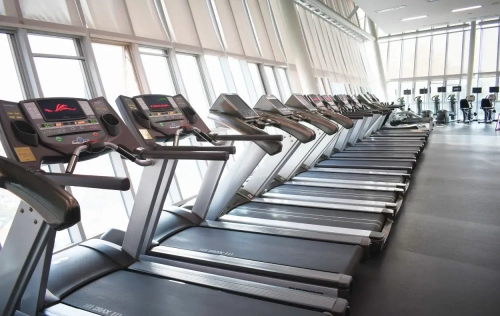
  • Sports: Spanning approximately 160 pyeong, the facility is equipped with a variety of cardio equipment, weight machines, and free weights.
    You can undergo systematic exercise assessments tailored to your specific goals and consult with an exercise prescription specialist regarding scientific exercise programs based on the results. Additionally, a professional fitness coach is on-site to provide guidance on exercise methods.


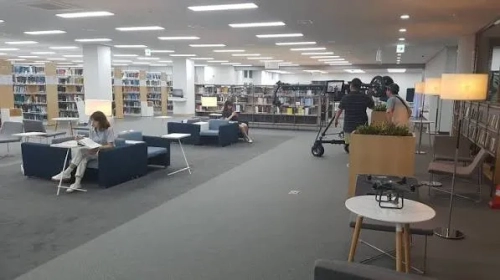
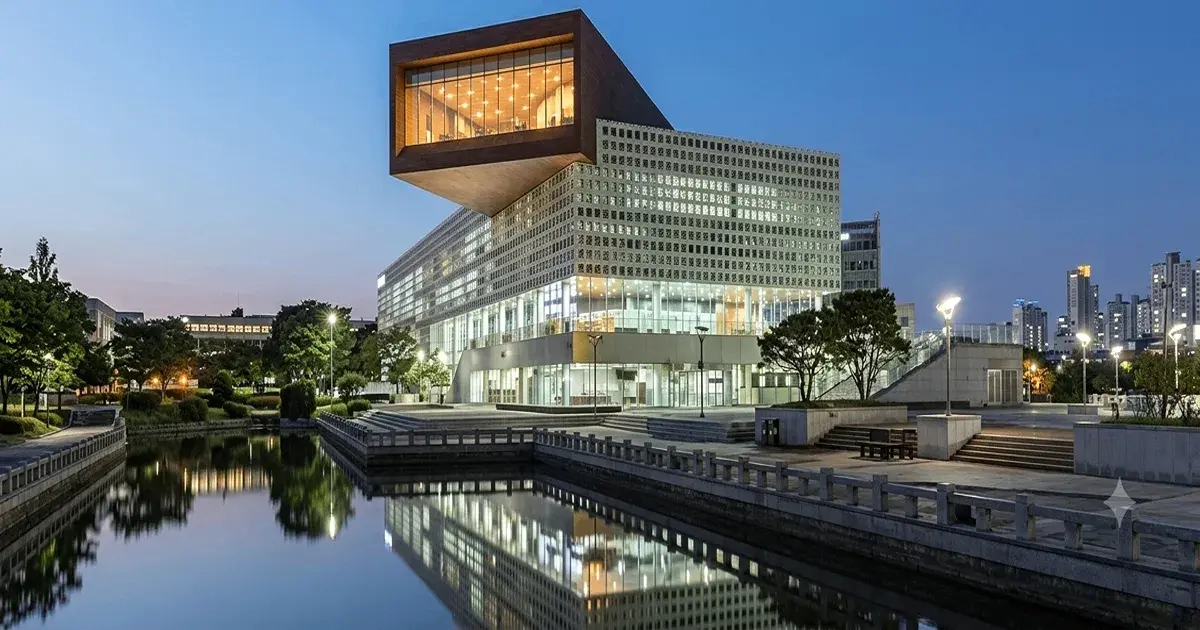
  • Library: Four libraries across the various KAIST campuses provide services and tools to enrich your research and studies. KAIST libraries’ special collections and archives help connect you to the resources needed for completing your goals. The Academic Cultural Complex, which houses the newly opened main library, is a new KAIST landmark and serves as a diverse space for cultural and academic events.

School Contact

Address

Yuseong, Daejeon, South Korea

Website Address

https://www.kaist.ac.kr/en/

Social Media Pages

Accreditations

AACSB Accreditation (College of Business)

EQUIS Accreditation (College of Business)

Vice Chancellor

Bae Chung-sik

  • 2025-Chair of the International Energy Agency's Sustainable Combustion Technical Cooperation Program
  • 2024-Chairman of the Carbon Neutral Fuel Technology Research Association
  • 2024-Korea Electric Power Corporation Endowed Professor
  • 2024-2025Renault Group Scientific Council External Member
  • 2019-Regular member of the Korean Academy of Engineering
  • 2023-20... read more
    25Chairperson of the Climate Subcommittee of the Advisory Committee on Science, Technology and Diplomacy, Ministry of Foreign Affairs
  • 2023-Chairman of the Organizing Committee for the Carbon Neutral Fuel Technology Symposium

Academic Staff

  • Kim Kyung-soo

    Vice Chancellor for External Affairs
    • External Advisory Director of the University of the UAE
    • 2024-Director of the KAIST Next-Generation ESS Research Center
    • 2022-Director of KAIST Daedong-KAIST Mobility Research Ce... read more
      nter
    • 2021-2024KAIST Director of Planning
    • 2017-2021Director of the KAIST Eco-friendly Smart Vehicle Research Center
    • 2015-2021Cho Chun-sik, Dean of the Graduate School of Green Transport at KAIST.

    Kim Kyoung-soo is a South Korean politician who served as a member of the National Assembly from 2016 to 2018 and as the governor of South Gyeongsang Province from 2018 to 2021. His governorship ended following his conviction for involvement in opinion rigging.
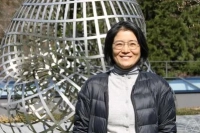
  • Lee Sang-Yeop

    Vice President for Research
    • 2019-Chairman of the Standing Committee of the Korean Academy of Engineering
    • 2017-2021KAIST Research Director
    • 2017-2021Director of the KAIST Center for Intelligent Information ... read more
      and the Fourth Industrial Revolution
    • 2016-Member of the World Economic Forum's Global Future Committee on the Fourth Industrial Revolution
    • 2016-2020Co-chair of the World Economic Forum’s Biotech Global Future Committee
  • Lee Kyun-min

    Vice President for Academic Affairs
    • KAIST Vice President for External Affairs
    • 2021-Dean of the College of Life Sciences and Technology at KAIST
    • 2021-Korea Electric Power Corporation Endowed Professor
    • 2015... read more
      -2020Technical University of Denmark Scientific Director (CHO Cell Line Engineering Section)
    • 2012-2021Outside director of Isu Abxis
    • 2014-2016KAIST Faculty Council
    • 2010-2011KAIST Dean of Academic Affairs
    • 1998-1999University of California Visiting Researcher
    • 1991-Professor of Biological Sciences at KAIST
  • Kim So-young

    Director of International Cooperation
  • View More Staff

    Notable Alumni

    View More Alumni

    History

    The institute was founded in 1971 as the Korea Advanced Institute of Science (KAIS) by a loan of US$6 million (US$38 million 2019) from the United States Agency for International Development (USAID) and supported by President Park Chung-Hee. The institute's academic scheme was mainly designed by Frederick E. Terman, then vice president of Stanford University, and Dr. KunMo Chung, a professor at the Polytechnic Institute of Brooklyn. The institute's two main functions were to train advanced scientists and engineers and develop a structure of graduate education in the country. Research studies had begun by 1973 and undergraduates studied for bachelor's degrees by 1984.

    In 1981, the gover... read more

    nment merged the Korean Advanced Institute of Science and the Korea Institute of Science and Technology (KIST) to form the Korea Advanced Institute of Science and Technology, or KAIST, under the leadership of physics professor Choochon Lee. Due to differing research philosophies, KIST and KAIST split in 1989. In the same year KAIST and the Korea Institute of Technology (KIT) combined and moved from Seoul to the Daedeok Science Town in Daejeon. The first act of President Suh upon his inauguration in July 2006 was to lay out the KAIST Development Plan. The 'KAIST Development Five-Year Plan' was finalized on February 5, 2007, by KAIST Steering Committee. The goals of KAIST set by Suh were to become one of the best science and technology universities in the world, and to become one of the top-10 universities by 2011. In January 2008, the university dropped its full name, Korea Advanced Institute of Science and Technology, and changed its official name to only KAIST.

    Other Universities in South Korea

    View all universities in South Korea