ListOfUni

McGill University (McG)

Quebec, Canada
Visit School Website
  • Public Type
  • 39,513 Students
  • 11 Faculties
  • 1821Founded
  • YesAccept Int. Studs
  • YesDistance learning

About

McGill University is one of Canada's best-known institutions of higher learning and one of the leading universities in the world. International students from more than 150 countries make up nearly 30% of McGill's student body, the highest proportion of any Canadian research university.

Acronym McG
Nickname McGill Redbirds and Martlets
Motto / Slogan By work, all things increase and grow
Colour Red and White
Mascot Marty the Martlet
Founded 1821
Location Montreal, Quebec, Canada
Address 845 Sherbrooke Street West Montréal (Québec) H3A 0G4

Mission

The mission of McGill University is the advancement of learning and the creation and dissemination of knowledge, by offering the best possible education, by carrying out research and scholarly activities judged to be excellent by the highest international standards, and by providing service to society.

Vision

We provide leadership, coordination, and support for creating and sustaining meaningful teaching and learning experiences and environments for instructors and students.
McGill University

Objectives

  • Be open to the world: McGill will strive to remain an institution of choice for international students and faculty. 
  • Expand diversity
  • Lead innovation
  • Connect across disciplines and sectors
  • Connect with the communities

Main Academic Divisions (Faculties)

  • Faculty of Agricultural and Environmental Sciences
  • Faculty of Arts
  • School of Continuing Studies
  • Faculty of Dental Medicine and Oral Health Sciences
  • Faculty of Education
  • Graduate and Postdoctoral Studies
  • Faculty of Law
  • Desautels Faculty of Management
  • Faculty of Medicine and Health Sciences
  • Schulich School of Music
  • Faculty of Science

Reasons to Study at McGill University

  1. Leaders in research and innovation

    With a vision to support and enhance a university-wide research and innovation environment, McGill University remains at the forefront of groundbreaking innovation. It is a premier research-intensive university that partners with relevant stakeholders to achieve advancements in knowledge discoveries that benefit the world at large.


  2. Great location

    McGill University’s prime location in Montreal, Quebec, contributes significantly to its appeal. The campus is centrally situated, offering students proximity to cultural, recreational, and culinary delights. The renowned Plateau Mont-Royal neighbourhood, just a stone’s throw away, beckons with eclectic cafes, boutiques, and a vibrant arts scene. The bustling Saint Catherine Street, a central shopping hub, provides students with retail therapy and entertainment. 


  3. Scholarship opportunities

    Carrying forward the legacy of academic excellence with responsible governing of student interests, McGill University has an array of scholarships that are awarded to native as well as international students. The Scholarships and Student Aid Office at the University ensures that qualified students from all geographic locations are financially supported in their goals to enter and complete their education at the University.


  4. A rich legacy of notable alumni

    McGill University proudly counts among its alumni and faculty members 12 Nobel Laureates along with 147 Rhodes Scholars, both of which are the highest for any Canadian university.


Fees

Undergraduate Tuition

Indigenous Students CAD 2,392 - CAD 11,658
International Students CAD 32,952 - CAD 115,533

Postgraduate Tuition

Indigenous Students CAD 7,968 - CAD 32,970
International Students CAD 11,313 - CAD 35,326

Admission

Undergraduate Admission Requirement

Admission requirements are determined by your educational background and the program(s) you are applying to. View your educational background for more information. 

Supporting Documents

Mcgill University will tell you which documents they need and when - all you have to do is check your McGill Applicant Portal and your email regularly.

Postgraduate Admission Requirments

For detailed information on the accepted academic and language qualifications, view the admission requirements page.

Supporting Documents

  • Transcripts: Transcripts in languages other than English or French must be accompanied by an English or French translation provided by the institution issuing the transcript, or by a certified translator. A copy in the original language is also required; an English or French translation alone is not sufficient. 
  • Letters of reference/recommendation: Normally, two (2) letters of reference/recommendation are required. Letters must be dated and not be more than 12 months old and the referee must indicate his/her position/title and full contact information at the institution/organization they work for.
  • Visit your program page for detailed information on additional supporting documents (e.g., statement of purpose/personal statement, writing sample, application for assistantship, C.V.).


How To Apply For Admission

Applications are made online via the Mcgill Applicant Portal.

Admission Contacts

Phone : 514-398-7878

Apply For Admission
Campus Tour

Facilities

  • Classrooms
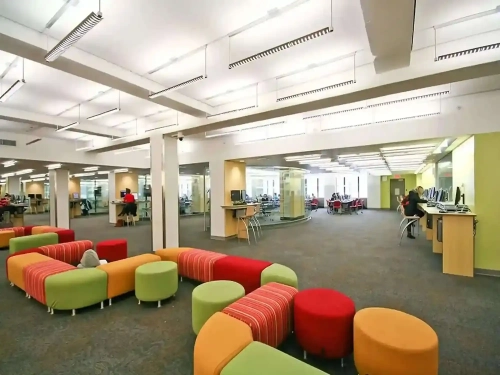
  • Library
  • Laboratory
  • Research Center
  • Accommodation
  • Sports
  • Gym
  • ICT
  • Place of Worship
  • Cafeteria
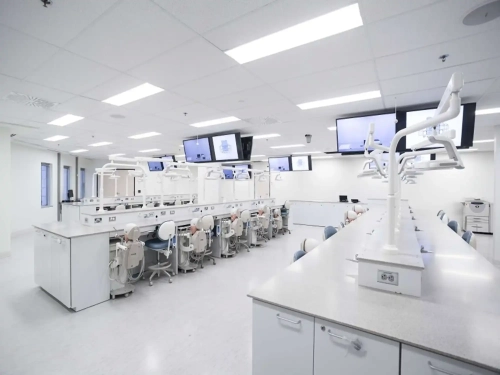
  • Laboratory: McGill University has numerous laboratories across its various departments and affiliated institutions, including research labs, teaching labs, specialized facilities, and even "living laboratories" like field research stations. Examples include state-of-the-art chemistry research labs, dental and human nutrition labs, and clinical labs at the associated Research Institute of the McGill University Health Centre (RI-MUHC). 
  • Research Center: There are over thirty research units at McGill, which are referred to as centres and institutes. Research units are approved by the McGill Board of Governors to pursue research at the university and are distinct from departments and schools.
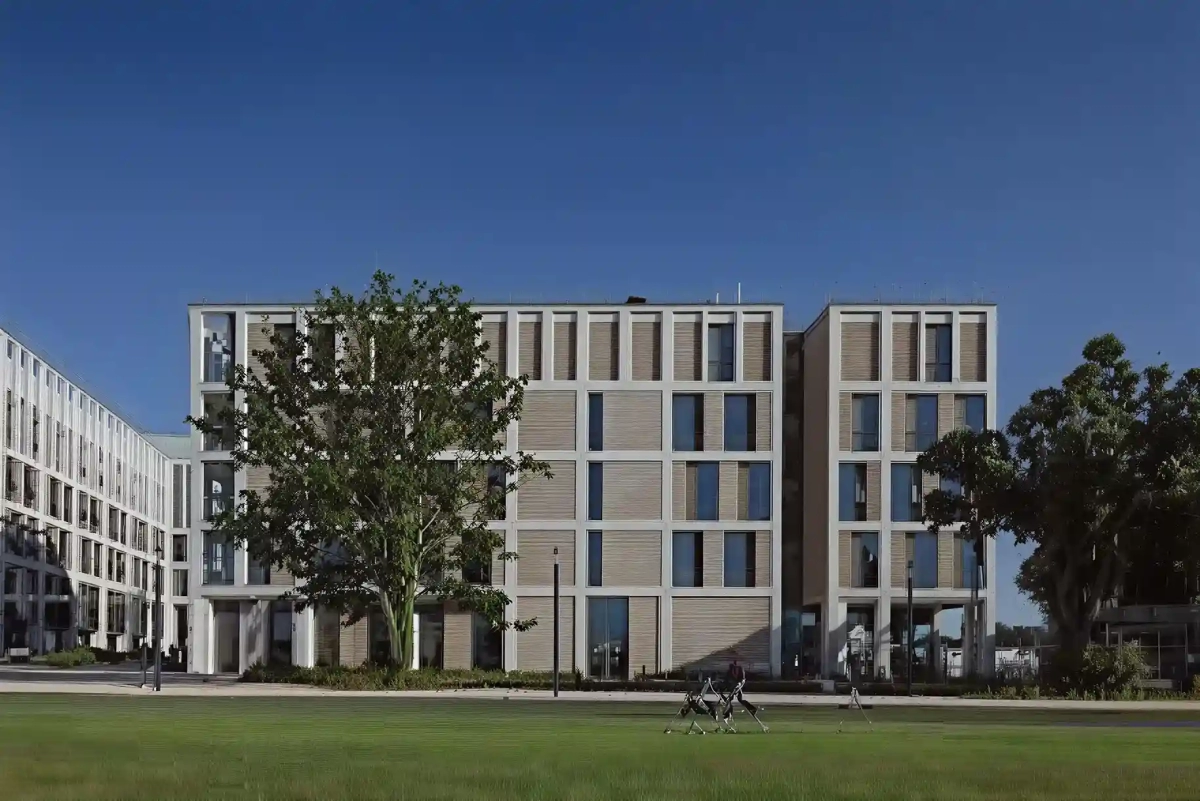
  • Accommodation: McGill's residences create a respectful and supportive living community environment within which students can flourish personally, socially and academically. They offer modern dormitory style, dormitory style and shared facility housing residences.
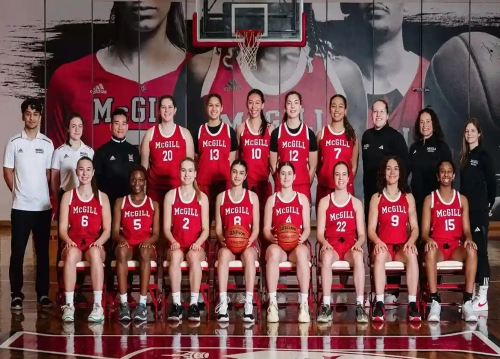
  • Sports: McGill University has extensive sports facilities, including gymnasiums, fitness centers, weight rooms, and both indoor and outdoor tracks.
  • Gym: McGill University has multiple gym facilities, including the McGill Sports Complex and the Macdonald Stewart Athletic Complex, which feature gyms, weight rooms, fitness centers, and various sports courts and fields. There are options for cardio and strength training equipment, along with programs like personal training and various fitness classes. 
  • ICT: McGill University has extensive ICT facilities, including over 100 computer labs, wireless and wired network access, IT support services, and online resources. The university's IT services department manages enterprise IT architecture, network access, and security, while also providing support for students, staff, and faculty. 
  • Place of Worship: McGill University has various places of worship, including a multi-faith prayer and meditation center, chapels for Christian worship, and spaces for Jewish and Islamic practices. These include the Birks Heritage Chapel, the Presbyterian College Chapel, the Newman Catholic Centre, and Hillel House. 
  • Cafeteria: McGill University has multiple cafeterias and dining halls, including three all-you-care-to-eat (AYCTE) dining halls that are open to the public. In addition to the larger dining halls, there are numerous other on-campus food service locations, such as cafes and eateries. 


School Contact

Address

845 Sherbrooke Street West Montréal (Québec) H3A 0G4

Website Address

https://www.mcgill.ca/

Accreditations

  • The Committee on Accreditation of Canadian Medical Schools (CACMS) for its medical programs 
  • The Canadian Engineering Accreditation Board (CEAB) for its engineering programs

Vice Chancellor

Professor Deep Saini

A career academic and accomplished researcher in plant biology, Professor Saini brings a unique combination of national post-secondary experience with an international perspective. He most recently served as president of Dalhousie University in Canada and, prior to that, was vice-chancellor and president of the University of Canberra in Australia. Professor Saini has previously worked at four of C... read more
anada’s U15 universities, including as a vice-president of the University of Toronto and principal of its Mississauga campus, dean of the Faculty of Environment at the University of Waterloo, and director general of the Plant Biology Research Institute at the Université de Montréal. 

Academic Staff

  • Christopher Manfredi

    Provost and Executive Vice-President Prior to becoming Provost and Executive Vice-President (Academic), Professor Manfredi was the Dean of McGill’s Faculty of Arts, a position he held for two terms between 2006 and 2015. He joined... read more
    McGill’s Department of Political Science in 1988, and served as Chair of the Department from 2000 to 2006, with one year for a sabbatical.


  • Ekaette Idaresit

    Assistant Professor Dr. Ekaette is an Assistant Professor in the Food and Bio-based Material Engineering research program and holds a joint appointment in the Departments of Bioresource Engineering, and Food Science and ... read more
    Agricultural Chemistry at McGill University. Dr. Ekaette obtained Ph.D. and bachelor’s degrees in Bioresource and Food Engineering, and a master’s in Food Technology giving her a strong background in food and bio-processing systems. Before joining McGill University, Dr. Ekaette worked as a Postdoctoral Fellow at the University of Alberta where her research focused on developing solution properties for carbon fiber production. 
  • Dr. Angelica Galante

    Associate Professor Dr. Galante is originally from Brazil and has been in Canada for about 15 years. Growing up in an officially Portuguese-speaking country and in a family with Italian and Spanish heritage, mixing langu... read more
    ages has always been the norm for her. Before joining McGill, she held faculty positions at Concordia University, Brock University, York University and University of Toronto.


  • Mitali Banerjee

    Assistant Professor Mitali Banerjee is an Assistant Professor in the Strategy & Organizations department at the McGill Desautels Faculty of Management. She completed her Ph.D. in Management from Columbia University. ... read more
    She graduated Summa Cum Laude, Phi Beta Kappa with a double major in Mathematics (BS) and Economics (BA) from the University of Rochester. Prior to joining McGill, she was an Assistant Professor at HEC Paris.


  • Benjamin Croitoru

    Associate Professor Dr. Croitoru joined McGill's Faculty of Management in the Fall of 2000, where he teaches introductory finance, investments and theoretical asset pricing at the undergraduate, masters and doctoral leve... read more
    l.


View More Staff

Notable Alumni

View More Alumni

History

To meet demands for public education, the Royal Institution for the Advancement of Learning was established in 1801. In 1813, merchant James McGill died, leaving his estate outside Montréal and an endowment of £10,000 for a college, naming the Royal Institution as trustee. It acquired a charter for "the University of McGill College" in 1821. McGill's heirs contested his will; the trustees, on gaining the estate, adopted in 1829 the Montreal Medical Institution, a teaching arm of the Montreal General Hospital, as the new university's Faculty of Medicine. The litigation surrounding the endowment was finally settled in the trustees' favour, and the nondenominational McGill College was built o... read more
n the founder's farm. Its Faculty of Arts was established in 1843.