ListOfUni

Capilano University (CapU)

British Columbia, Canada
Visit School Website
  • Public Type
  • 3,473 Students
  • 5 Faculties
  • 1968Founded
  • YesAccept Int. Studs
  • YesDistance learning

About

Capilano University (CapU), located in North Vancouver, British Columbia, Canada, is a public university known for its focus on teaching and experiential learning.

Acronym CapU
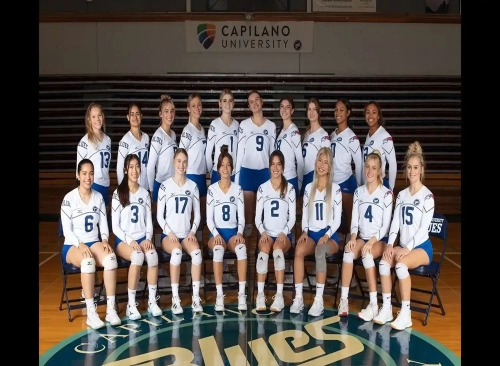
Nickname Capilano Blues
Motto / Slogan Through learning to a greater good
Colour Blue & white
Mascot Jay
Founded 1968
Departments 97
Location Vancouver, British Columbia, Canada
Address 2055 Purcell Way North Vancouver, BC V7J 3H5

Vision

Capilano University values collaboration, authenticity and belonging to ensure students and employees feel connected and empowered to achieve their potential.
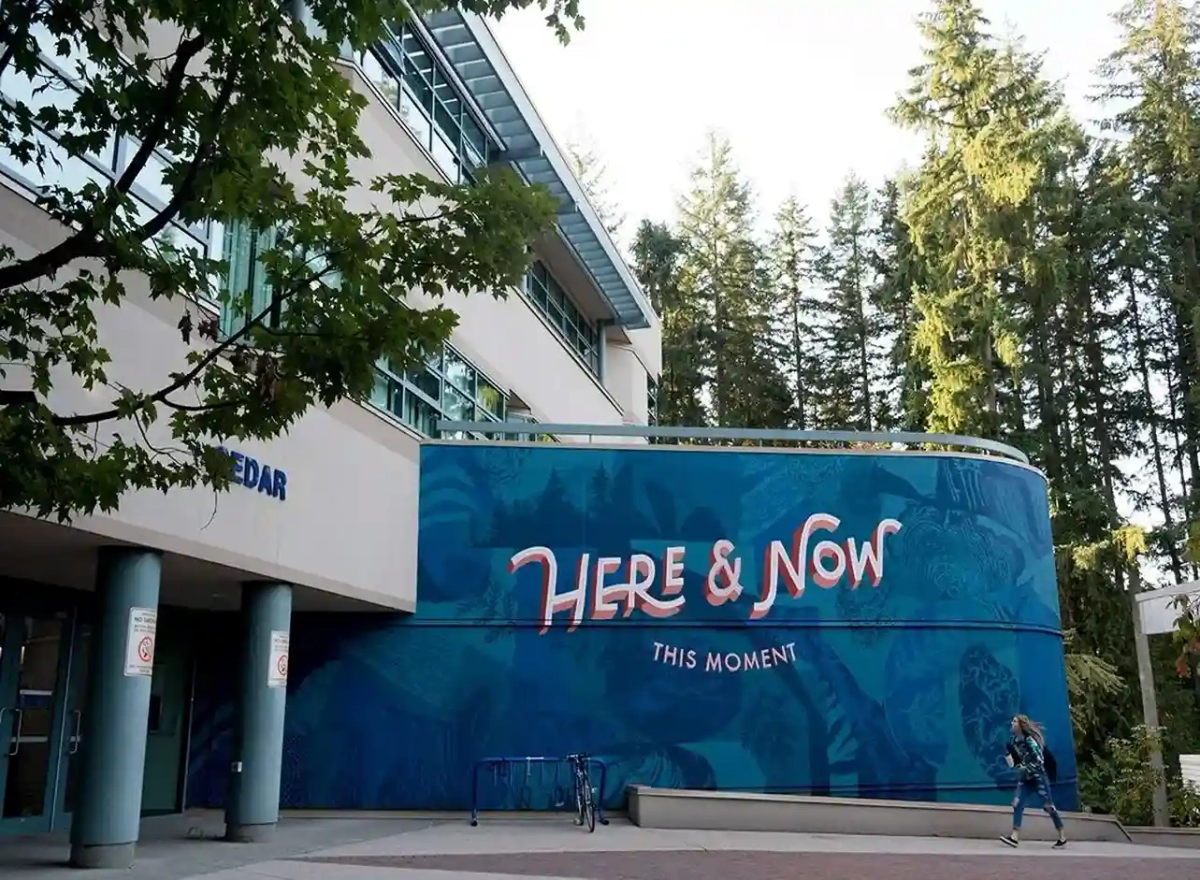
 

Capilano University

Objectives

Capilano University aims to effectively advance their commitment to co-create a distinct university experience. In this way, they will improve learning and research opportunities and the health and well-being of learners and employees.

Main Academic Divisions (Faculties)

  • Faculty of Arts & Sciences
  • The Faculty of Business & Professional Studies
  • The Faculty of Education, Health & Human Development
  • The Faculty of Fine & Applied Arts
  • The Faculty of Global & Community Studies.

Reasons to Study at Capilano University

  1. Get working quickly with career-oriented programs

    From their Bachelor of Business Administration degree to the 3D Animation for Film and Games diploma to the Health Care Assistant certificate, programs at CapU are designed to give you a head start on a hands-on career.


  2. Study in small, focused classes with top faculty

    You'll get plenty of time with instructors in their programs and courses. Classes at CapU are kept small to ensure you receive the mentorship and support to thrive.


  3. Take advantage of their network

    Nearly every program at CapU contains an element of experiential learning, with co-ops, practicum placements, applied research projects, seminars and work experience while also receiving mentorship from your instructors. 


  4. Access the resources you need to thrive

    If you have specific academic requirements or an accessibility concern, their Accessibility Services team can tailor academic accommodation solutions to meet your needs.

Fees

Undergraduate Tuition

Indigenous Students CAD 4,819 - CAD 16,415
International Students CAD 20,693 - CAD 33,159

Admission

Undergraduate Admission Requirement

  • View the Basic Admission Requirements for detailed information on the general admission requirement and international equivalencies.
  • View the English Language Requirements for applicants whose first language is not English.
  • Each program may have unique requirements for admissions. Review the admissions information for your program of interest to determine if there are more steps for program-specific requirements.


Supporting Documents

  • Official transcripts and bachelor’s degree certificate
  • Statement of Intent / Purpose
  • Resume or CV (often mandatory)
  • Letters of Recommendation (program-specific)
  • Portfolio (for creative and professional programs)


How To Apply For Admission

Applications are made via EducationPlannerBC (EPBC), a website colleges and universities across British Columbia use to handle applications.


Admission Contacts

Email: [email protected]
Phone : 604 990 7914
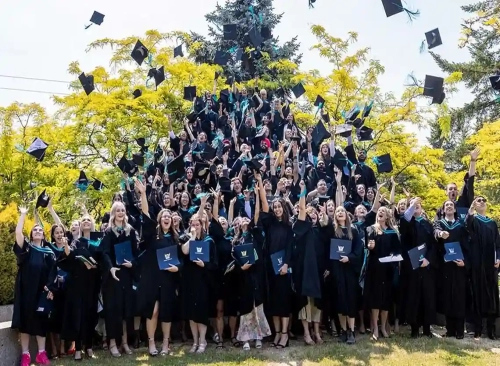
Apply For Admission

Campus Tour

Facilities

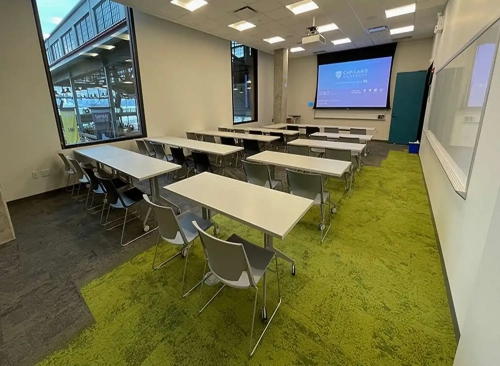
  • Classrooms
  • Library
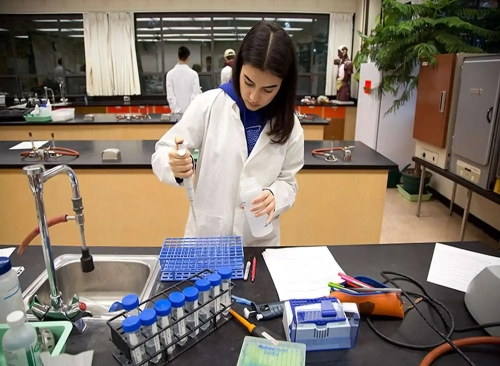
  • Laboratory
  • Research Center
  • Accommodation
  • Sports
  • Gym
  • ICT
  • Place of Worship
  • Cafeteria
  • Place of Worship: Capilano’s Meditation and Silent Prayer Space can offer you refuge from your busy and stressful student life. Located in room 139 of the Library, this space is made available to all members of Capilano’s community for silent prayer and meditation.
  • ICT: The Library has many computer workstations located throughout the 1st floor, and 8 workstations upstairs in the Silent Zone on the 2nd floor.
  • Accommodation: Open to full-time students at both our Main and Squamish campuses, CapU student housing provides an affordable, safe and convenient housing option.
  • Sports: Capilano University uses one of the finest soccer fields on the North Shore. Lillooet Park is home to Blues soccer action as well as intramural soccer, ultimate and Blues sports camps.
  • Gym: The Centre for Sport and Wellness at their North Vancouver campus offers several options for students and staff wanting to hit the gym. Facilities in the centre include a fully-equipped weight room, changing rooms, locker rentals and accessible ramp entrances, bathrooms and changing facilities for students with mobility challenges. And the best part: the gym is free for students, faculty and staff. 
  • Library: CapU Library is a student-centered library that builds success. They provide access to a world of information, participatory learning opportunities and services, and flexible spaces for collaboration, inquiry and exploration.


School Contact

Address

2055 Purcell Way North Vancouver, BC V7J 3H5

Email Address

[email protected]

Phone Number

604 986 1911

Fax Number

604 984 4985

Website Address

https://www.capilanou.ca/

Social Media Pages

Accreditations

  • Province of British Columbia
  • Ministry of Advanced Education and Skills Training
  • Post-Secondary Education (PSE) of the Government of British Columbia

Vice Chancellor

Laureen Styles

Laureen holds a Doctor of Education, Educational Leadership (EdD) from the University of Calgary, a Master of Nursing and a Bachelor of Science in Nursing, both from the University of Alberta. Prior to her tenure at CapU, she held the positions of vice president academic at the Justice Institute of BC, dean of the Faculty of Health and Human Services at Vancouver Island University (VIU) and facult... read more
y roles at VIU and the College of New Caledonia.


Academic Staff

  • Dilsora Fozilova

    Instructor Dilsora Fozilova (PhD, University of British Columbia) is a sociologist whose teaching and research explore the intersections of religion, law, and state power in post-Soviet Central Asia. She holds a... read more
    BA and MA in Sociology from the University of Alberta and a PhD in Sociology from the University of British Columbia, where her doctoral research examined the paradoxical governance of Islam in Uzbekistan. At Capilano University, Dr. Fozilova teaches sociology and criminology courses such as Power, Identity and Culture, Surveillance and Social Control, Women and Crime.
  • Hojat Yazdanpanah

    Instructor Hojat Yazdanpanah (PhD, University of Tehran, 2008) is a physical geographer with research interests focused on spatial data analysis, geographic information system (GIS) and climate change. He receiv... read more
    ed his PhD in Physical Geography from the University of Tehran in 2008.


  • Eugene Chu

    Instructor Eugene Chu is an instructor and laboratory supervisor in the Biology department at Capilano University. His primary interests include genetics, cell and molecular biology, as well as biochemistry. Chu... read more
    obtained his B.Sc. in Molecular Biology and Biochemistry at Simon Fraser University where he worked in several labs ranging from the B.C. Centre for Disease Control, B.C. Cancer Research Centre, to a nucleic acids research laboratory through volunteer opportunities, co-operative education, and individual study semesters.


  • Daniel Barabanov

    Instructor Daniel Barabanov is a personality psychologist whose research interests lie in the study of willpower, volitional traits of personality, self-control and procrastination. Barabanov obtained his specia... read more
    list degree (equivalent to a BA and MA) from Lomonosov Moscow State University (Russia). The main focus of this program was on personality psychology and the history of psychology.
View More Staff

Notable Alumni

View More Alumni

History

Capilano University was founded as a college in 1968, with an initial enrolment of just over 700 students. Its founding was part of an effort in the 1960s to expand access to post-secondary education in British Columbia