ÉTS is a public engineering university located in Montreal, Quebec, Canada. Established in 1974, it is part of the Université du Québec system and specializes in applied teaching and research in engineering, as well as transferring advanced technologies to companies.
| Acronym | ÉTS |
| Nickname | ETS Piranhas |
| Motto / Slogan | Engineering for Industry |
| Colour | Black and Maroon |
| Founded | 1974 |
| Location | Montreal, Quebec, Canada |
| Address | 1100 Notre-Dame Street West (corner of Peel to the south), Montreal, QC H3C 1K3 |
ÉTS aims to provide high-quality education and research in engineering, focusing on practical applications and collaboration with industry partners to meet the evolving technological needs of society.
To be recognized as a leader in applied engineering education and research, fostering innovation and contributing to the advancement of technology and industry.
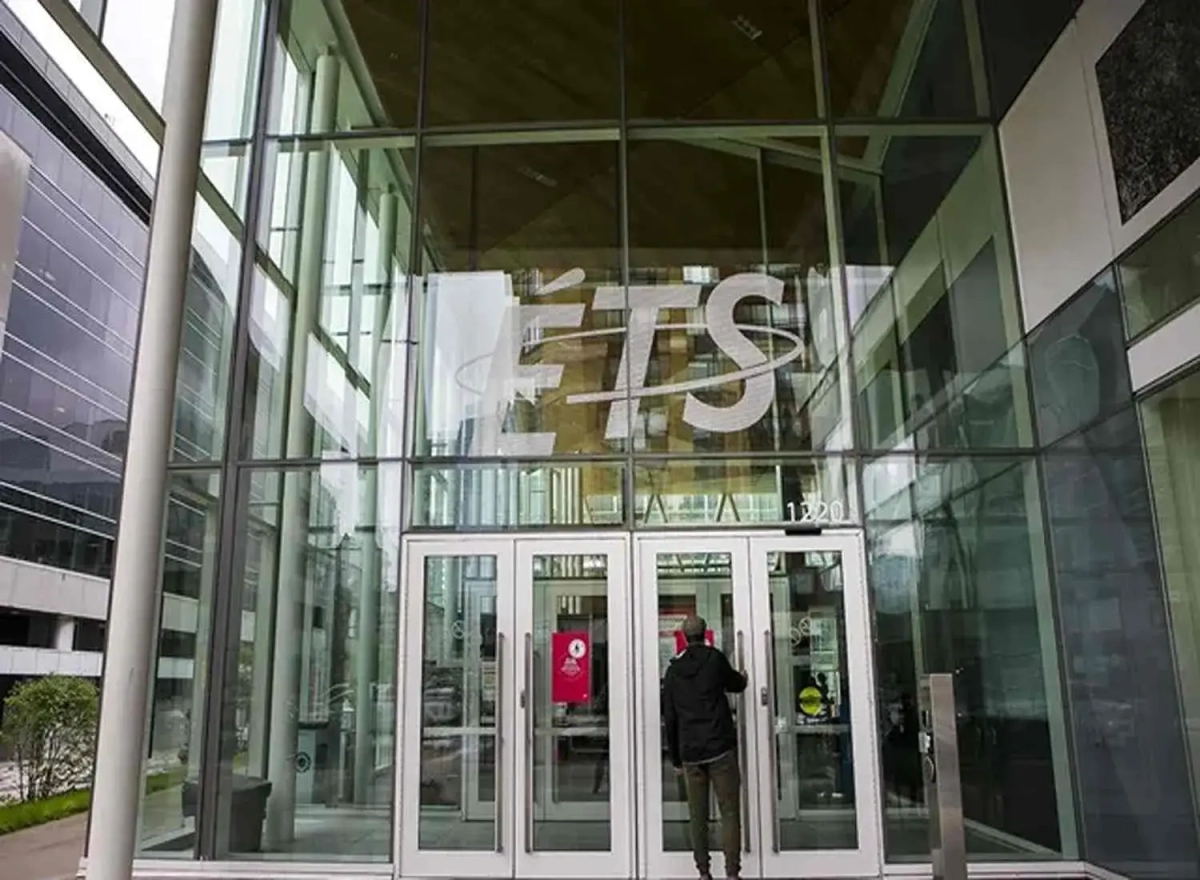
Providing a studying, working and living environment where every individual is free to develop their full potential and evolve in a climate of respect and open-mindedness. Contributing to the training of a new and diversified generation of engineers. Promoting innovation and creativity. That is the vision that guides the actions and initiatives implemented by ÉTS when it comes to equity, diversity and inclusion.
In today’s world, taking equity, diversity and inclusion into consideration in connection with every research project is a given, from the project concept stage to the composition of the academic team to the training of highly qualified professionals.
ÉTS is committed to providing a learning, working, and living environment where each person feels welcome, respected, and safe, and that meets the diverse needs of our community.
Within the context of the National Building Reconciliation Forum (2021), ÉTS took advantage of the opportunity to flesh out its commitment to increasing its contribution to reconciliation efforts and to take action aimed at promoting success among members of First Peoples within its academic community.
Since 2022, a committee made up of ÉTS faculty and staff has been leading workshop-discussions and developing tools to promote the inclusion of diversity in teaching practices. Workshop content and tools are made available to teaching staff in the resources offered by the Bureau de soutien à l’enseignement.
Academic Qualification:
If you are in Québec, having a DEC technique (technical college diploma) is accepted.
If you come from France (or similar), a BUT/DUT (French technical bachelor) is accepted.
For other academic systems (“Diplôme équivalent à un baccalauréat obtenu à l’extérieur du Québec”): you need to submit your transcripts, diploma, and translate them (if not in English or French).
In some cases, admission may also be based on relevant work experience (if you have at least 2 years and enough technical units).
Language Requirements:
Since ÉTS is a French-language institution, proof of French proficiency may be required.
International Students:
Non-Québec / non-Canadian students must provide academic transcripts, diploma, proof of French language, and other admission documents.
For proof of identity, they may ask for a birth certificate.
Please check the program page for specific program requirements.
Entrance requirements vary by program. Check the program page for requirements.
Some programs allow “equivalent training or experience” if your degree isn’t exactly in the expected discipline.
Language Requirements
Email: [email protected]
Phone : (514) 396-8800

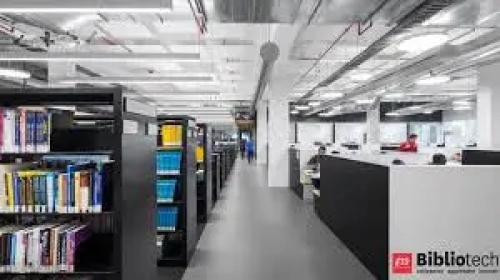

Accommodation: Conveniently located in the heart of urban activity, ÉTS's student residences can accommodate 1100 students. They offer a dynamic living environment and provide quick access to campus buildings and the many services offered to the student community.
Before that, Kathy Baig held the positions of Vice-President, Positioning and Business Development and Principal Director, Transport Operations – Montréal Métropolitain for the consulting engineering firm Stantec. She has also held engineering and management positions with IBM Bromont, PyroGenesis Canada Inc., Aéroports de Montréal, and Johnson & Johnson, where she worked in research and development.
Deeply involved in her community, Ms. Baig has received a number of awards and distinctions and has served on numerous boards, including those of VIA Rail Canada, Fondaction, Nav Canada, the Institut sur la gouvernance d’organismes privés et publics and the Institut national d’optique.
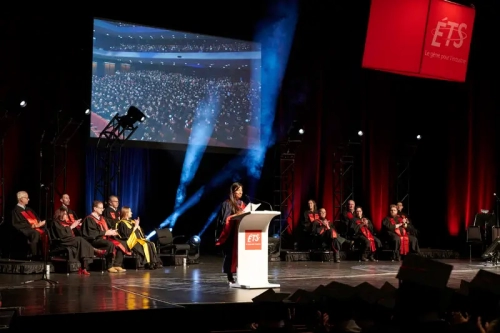
Recognized as one of Canada’s most influential engineers, she received an honorary doctorate from ÉTS in 2021 in recognition of her exceptional leadership and commitment to promoting women in engineering. In 2023, Concordia University awarded her the same honour for her positive impact on the profession.
Her strategic approach, ability to inspire people, and her strong management experience are invaluable assets that will help build the profile, reach and growth of ÉTS.
Manel Abdellatif is a professor in the Department of Software Engineering and IT. Her training is M.Sc. (ÉTS), Ph.D. (Polytechnique Montréal)
... read more
Over the course of his career, he has contributed to a number of industrial projects and has around 50 scientific communications and 20 patents to his name.
He started his career as a Professor in 1990 in the Ophthalmology Department at Université de Sherbrooke, and five years later, he joined the École d’optométrie (school of optometry) at UdeM, where he was appointed to the position of Director in 2011. Christian was a driving force behind the first Doctoral program in Visual Sciences in Québec, and is a member of the Institut de génie biomédical (biomedical engineering institute) at UdeM and École Polytechnique. An ardent promoter of intersectoral and partnership-based research, his creation of virtual-reality training laboratories is seen as a significant contribution to the field of engineering.





The first student club (Mini-Baja ÉTS) was created in 1989. The same year, ÉTS opened its first bachelor's degrees in engineering: construction engineering, mechanical engineering, electrical engineering, and automated production engineering. In 1990, they were accredited by the Canadian Engineering Accreditation Board... read more