
The name Ewha University symbolizes traditions and the spirit of women’s education in Korea The name Ewha was first used for the school when Emperor Gojong bestowed ‘Ewha Haktang’ on a girls’ school, run by Mrs. Scranton, in order to celebrate the start of women’s education in Korea in1887.
The first official use of the name Ewha was early in 1887, when Emperor Gojong bestowed the name ‘Ewha Haktang’ on a girls’ school run by Mrs. Scranton, to celebrate the start of women’s education in Korea. It has been suggested that Ewha was named after pear blossoms (??, in Chinese letters) that were scattered near the school or the name of a garden pavilion, Ewha-jung. While the different department of schools used independent academic curriculums, college courses and pre-medical courses were restructured as Ewha College in 1925. Eventually, the name Ewha Haktang was officially abolished in 1928.
The name Ewha is not limited to just the name of an educational institution, but also symbolizes the tradition and spirit of women's education in Korea. There is an element of cultural identity to the name because Ewha was forced to change its name twice under Japanese colonial rule; the first time to Ewha Women’s College Youth Training Department in 1943 and the second time to Kyungsung Women’s College in 1945, because it was perceived that the name Ewha had a strong nationalistic connotation. In 1945, however, the original name was reinstated with Korea’s liberation. Since then, the University has been known as Ewha Womans University.
Ewha Womans University is the original English name that has been used since Ewha developed into a comprehensive university right after Korea’s liberation from colonial rule. The English translation of the University’s name involved more than just direct translation because of a desire to include the profound educational philosophy of Ewha in the name of the school. Education at Ewha stems from respect for each student as the noblest and individual person. When Ewha was founded to further the education of women in Korea, it was a time when women were not respected as individuals. A stark example of this is the fact that women were not given their own, original names, but were merely referred to by the number of the order in which they were born. Therefore, Ewha strives to see students grow into personally mature people and avoid totalitarian and unitary education by providing individually customized lessons to develop each unique personality and talent. To depict this philosophy in a prominent manner, Ewha decided to go against English grammar rules and use “woman” instead of “women” in the English translation of the University’s name. The name therefore shows that Ewha emphasizes that each woman is an individual and each unique student contributes to the whole that comprises Ewha.
| Acronym | EWHA |
| Motto / Slogan | Jin Sun Mi Truth, Goodness, Beauty |
| Colour | Green |
| Founded | 1886 |
| Location | Seodaemun, Seoul, South Korea |
| Address | 52 Ewhayeodae-gil, Seodaemun-gu, Seoul, 03760, Republic of Korea |
To empower women through an uncompromising commitment to academic excellence, leadership development, and societal contribution, building on its legacy as Korea's first modern educational institute for women.
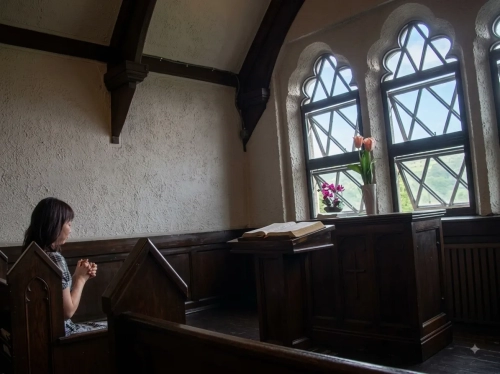
At Ewha our spirit of education centers on the idea that women’s education must be modernized under the spirit of Christianity, educational opportunities for women should be expanded, and female leaders should be nurtured to create a harmonious society that can benefit from equality between the sexes. For more than a century, Ewha has taken a leading role as a community of women who work to contribute to our modern 21st century society based on our goals that are firmly rooted in tradition. To build on this basis, we strive to pursue globalization, professionalism and scientific education to support and secure the unique individuality that characterizes Ewha.
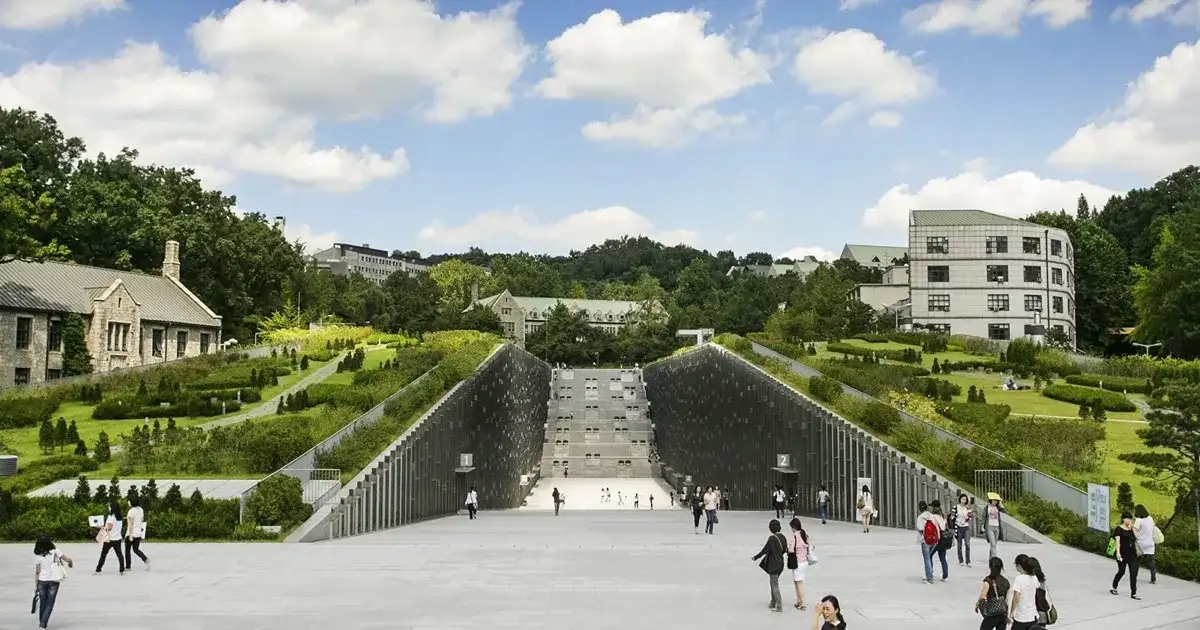
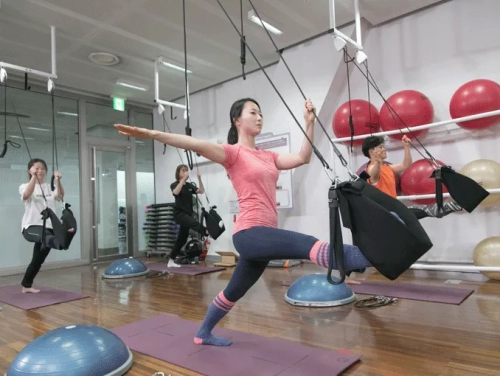
Ewha offers a broad range of academic programmes across humanities, social sciences, business, natural sciences, engineering, medicine, arts, and other fields. Students benefit from experienced faculty, interdisciplinary learning, innovative teaching methods, and opportunities to develop both specialized knowledge and practical skills.
Founded in 1886, Ewha Womans University is Korea’s first institution of higher education for women and has grown into one of the country’s leading comprehensive research universities. Its long history, academic reputation, and contribution to women’s education make it an attractive choice for students seeking a respected and internationally recognized university.
As a research-oriented university, Ewha promotes innovation, creativity, and knowledge creation across different disciplines. Students have opportunities to engage with research projects, advanced laboratories, academic centers, and interdisciplinary initiatives while developing the analytical and problem-solving skills needed to address contemporary global challenges.
Ewha provides students with extensive opportunities for international exposure through partnerships with universities and institutions around the world. International exchange programmes, overseas study opportunities, English-taught courses, and a diverse student community allow students to gain global perspectives and develop cross-cultural communication skills.
Applicants who have graduated or are expected to graduate from high school
? GED, Korean High school Graduate Equivalency Test, home schooling, cyber schooling, or other high school equivalency certificates are not considered as high school diploma.
A. Undergraduate Freshman Applicants : No language proficiency requirement
? Starting from the 2025 academic year, all incoming freshmen (except those in the Division of International Studies and the College of Nursing) will
automatically be enrolled in the Global Scholars Program within the HOKMA College of General Education. As part of this program, students must take
Korean language and required liberal arts courses for at least one year (two semesters) upon admission. Students with a TOPIK level below 3 will be
restricted from enrolling in major-specific courses.
? To advance to their respective majors, students must first complete one year (two semesters) of study in the Global Scholars
Program and obtain a TOPIK level of 3 or higher, or an equivalent qualification.
However, Applicants to Division of International Studies(International Studies, Global Korean Studies) meet one or more of the English requirements below
? English Proficiency Test Scores: TOEFL iBT 80, IELTS 6.0, New Teps 326 or above
? Completion of high school education conducted entirely in English
Applicants who have acquired or are expected to acquire a Bachelor’s degree.
DOCTORAL:
Applicants who have acquired or are expected to acquire a Master’s degree.
Email: [email protected],[email protected]
Phone : +82-2-3277-3818, +82-2-3277-7000
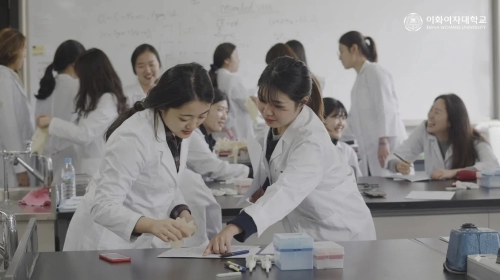
AACSB Accreditation: The Ewha School of Business holds accreditation from the Association to Advance Collegiate Schools of Business (AACSB) for undergraduate, master's, doctoral, and MBA programs—making it the sole women's university in South Korea to achieve universal AACSB accreditation.
2021-2023
Director of Industry-Academia Collaboration Foundation and Vice President of Research, Ewha Womans University
2025-Present
18th President, Ewha Womans University
2026.01~
Steering Committee Member, Seoul Forum of University Presidents.




1886 The first modern educational institute for Korean women.
The American missionary Mary F. Scranton began classes for women at her home in Jeongdong, Seoul.
1887 Po Goo Nyo Gwan offered medical service for women.
As Korea’s first hospital exclusively for women, it laid the groundwork for Ewha’s Colleges of Nursing and Medicine, which became the current Ewha Womans University Medical Center.
College courses open doors to women’s higher education 1910-1925
1910 College courses launched in September.
The College opened at Ewha Haktang with 15 students; i... read more
1925 Ewha College was founded.
The College officially became Ewha College, making it the first institute of higher education for Korean women.
Fostering a sense of calling and thirst for learning in students 1925-1945
1935 Campus moved to Sinchon.
The new campus in Sinchon marked Ewha College’s first step toward becoming a world-class university.
1946 First Korean university to receive government accreditation
Ewha was officially accredited by the Ministry of Education, becoming the first accredited four-year university in Korea.
1951 Temporary wartime campus in Busan
Following the outbreak of the Korean War, Ewha opened an evacuee campus in the southern city of Busan on Sept. 1, 1951, comprising 30 temporary wooden structures and tents.
Decades of progress as Korea’s top women’s university 1961-2000
1963 First PhDs awarded
Ewha awarded its first doctoral degrees to Ban Heon-gyeong and Kim Hye-chang in medicine.
1977 Korea’s first women’s studies course
Ewha offered Korea’s first course in women’s studies and established the Korean Women’s Institute to further development in the discipline.
1986 Ewha’s 100th anniversary
Ewha celebrated the 100th anniversary of its foundation, a turning point in its development as a world-class 21st-century university.
1995 Top marks in national accreditation
Ewha named top-ranked school in Comprehensive University Accreditation System conducted by Korean Council for University Education, winning recognition for its high education standards.
1996 World’s first women’s engineering college
Ewha established the world's first engineering college for women.
From Korea’s first to world’s best 2000-2010
2001 Korea’s first International Studies Division
Ewha opened Korea’s first Division of International Studies, offering all courses in English.
2006 Ewha Global Partnership Program
Korea’s first degree program for women from developing countries was established to lead women’s global education.
2007 Ewha-KOICA Program
Ewha established an intensive MA program for female researchers and public servants from developing countries.
2007 Korea’s first self-designed major
In keeping with the vision of its founder, Ewha established Scranton College, offering Korea’s first self-designed major in an undergraduate program.
2008 Construction of ECC
The Ewha Campus Complex is Korea’s largest environmentally friendly underground campus facility and has changed the landscape of university campuses in Korea.
Global hub for women’s education and intellectual exchange 2010-present
2011 Ewha-Solvay collaboration
Ewha signed a university-industry collaboration agreement with multinational chemical corporation Solvay, to build the global headquarters of its specialized R&D center at Ewha.
2012 Center of women’s global education
Ewha launched the Ewha Global Empowerment Program to foster female leaders in public and non-government sectors in developing countries.
Global center for basic science research
Ewha was awarded KRW 100 billion over the next 10 years from the Institute for Basic Research.
2014 University-Industry Cooperation Building
Ewha opened the University-Industry Cooperation Building in 2014 with the aim of providing the infrastructure for a global research network that will lead the future of science and promote cooperation among academia, industries, research institutes, and government agencies.
2016 Construction of New Dormitory
In 2016, E-House and Ottogi Global House were constructed. As of 2018, approximately 4,300 students live on campus, the highest accommodation rate among Seoul-based universities.
2018 Ewha Womans University Seoul Hospital
Descended from its predecessor Pogoonyogoan, Korea’s first medical institution for women, Ewha Womans University Medical Center completed the construction of its new hospital ‘Ewha Womans University Seoul Hospital’ in Magok district of Seoul in 2018.
2019 Research Cooperation Building
Ewha opened the Research Cooperation Building in 2019. The Research Cooperation Building will offer a base camp for global scientific research, starting with the Center for Quantum Nanoscience, which is affiliated with the Institute for Basic Science, and ELTEC College of Engineering.