
Hansung University is a private university in Seongbuk District, Seoul, South Korea. It was founded on December 21, 1972. The Hansung University is located in Seongbuk District and Jongno District, Seoul.
Hansung focuses on creative convergence education, interdisciplinary study, AI and digital technologies, design, IT, humanities, social sciences and global education. Its current development plan emphasizes becoming a global innovative university leading the future through creative convergence.
| Acronym | HSU |
| Motto / Slogan | Truth and the Highest Good |
| Founded | 1972 |
| Location | Seongbuk, Seoul, South Korea |
| Address | (02876) 116, Samseongyo-ro 16-gil (Samseon-dong 2-ga), Seongbuk-gu, Seoul, Republic of Korea Hansung University |
Hansung University's educational mission is grounded in its philosophy of Truth and Highest Good. Its educational purpose is:
“To cultivate creative talent who pursue the common good based on Hansung University's educational philosophy.”
The university's mission is implemented through three major educational goals:
A Global Innovative University Leading the Future through Creative Convergence.”
Its 2030 development goal is to enter the Top 100 Global Innovative Universities.
The university's current strategic priorities include:
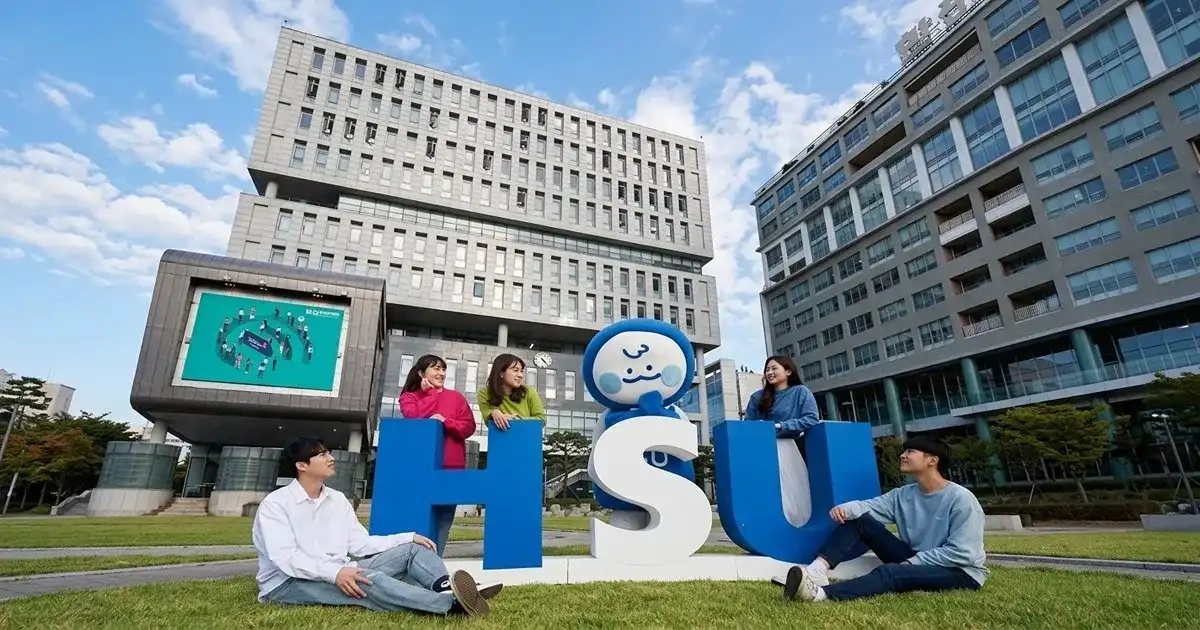
Hansung University offers programmes designed to develop globally oriented students. Its College of Global Talent includes Korean Language & Culture Education, Global K-Business, Video Entertainment, Fashion & Beauty Creation, SW Convergence and Global Venture Entrepreneurship. These programmes combine academic knowledge with practical and intercultural skills, helping students prepare for further study, international careers and participation in the global economy.
Hansung University connects academic education with career development through employment and career-support programmes. Students can receive career counselling, résumé and interview guidance, recruitment information, job-matching services and opportunities to participate in internships, job fairs and career programmes. These services help students explore career options, develop professional skills and connect their academic studies with future employment opportunities.
Hansung University provides dedicated services to help international students adapt to academic and campus life in Korea. Through its International Admission & Student Services, students can access information and support relating to admission, university life and other student needs. The university also provides career and employment support for international students, helping them understand available opportunities and develop skills for their studies and future careers.
Hansung University provides a broad academic environment covering humanities, social sciences, business, design, engineering, artificial intelligence, software, media, fashion, beauty, Korean language and culture, and entrepreneurship. Its interdisciplinary structure allows students to explore different fields and develop complementary skills. This flexibility can benefit students who want to combine creative, technological, business or cultural interests with their main area of study.
Application Fee: KRW 100,000 / Documentation fee and application fee are included
Nationality Eligibility:
Both parents and students must have foreign nationality.
- The nationality requirement applies only if the applicant and both parents have acquired non-Korean citizenship before the applicant starts the equivalent of a Korean high school curriculum.
- Students with dual nationality (Korean citizenship + other) and stateless person are not eligible to apply for these types of admission.
Academic Requirement
Those who are graduated or expected to graduate from a regular high school or who have been recognized as having
- The elementary and junior high school curriculum is based on the principle of 12 years. If the student has the ability to enroll in a national university, he/she is granted an exceptional 10 or 11 year academic year. (Do not accept exceptions if mixed across the countries)
- G.E.D. (General Equivalency Diploma), Home-schooling, Cyber School(Learning) or etc. are not recognized as academic backgrounds
Transfer to the second year
Language qualifications
Those who satisfy at least one of the following qualification requirements
Nationality:
Applicants must generally be foreign nationals whose parents are also foreign nationals.
Applicants with Korean citizenship, including dual/multiple Korean citizens, are not eligible under the foreign-student category. There is also an alternative eligibility route for certain overseas Koreans/foreign applicants who completed the equivalent of Korea’s entire primary, secondary and higher-education curriculum abroad.
Academic Qualification:
Master’s Programme
Doctoral Programme
Korean Language Requirement
For Korean-track programmes, applicants generally need TOPIK Level 3 or higher. Other accepted routes include having a bachelor's degree or higher from a four-year Korean university, or obtaining an appropriate recommendation as a government-sponsored/exchange student.
Applicants admitted through the applicable Korean-language routes are generally required to obtain TOPIK Level 4 before graduation. Graduates of English-track programmes are exempt from this TOPIK graduation requirement.
English Language Requirement
Applicants to English-track departments/majors must provide one of the accepted English qualifications. The 2026 guide lists:
The exact requirement should be checked against the department and the applicable admission round.
STEP 01: Online application
STEP 02: Document Submission (Mail/Visit)
STEP 03: Interview screening (limited to eligible candidates)
STEP 04: Announcement of successful candidates
STEP 05: Tuition Payment/Admission
STEP 06: Registration
Email: [email protected]
Phone : +82 2-760-5800, +82 2-760-5598




June 2026
Achieved Excellence University (Grade A) in the 2025 'Work-Study Parallel Joint Training Center' performance evaluation conducted by the Ministry of Employment and Labor and the Human Resources Development Service of Korea, and was selected as a Top/Excellent University for 10 consecutive years.
Selected as a 'Mentoring Agency (Operating Agency) for Cohort 2 of the Everyone's Startup Project' organized by the Ministry of SMEs and Startups
May 2026
Selected for the 'Korean Online Open Course (K-MOOC)' organized by the National Institute for Lifelong Education for 6 consecutive years - Level 4 Leading MOOC University (AI & Digital Field) and... read more
Selected for the 5th consecutive year for the Ministry of Education's 2026 'Support Project for Universities Contributing to High School Education'
April 2026
The only university in Seoul selected for three consecutive years for the 'Digital Seedling' project organized by the Ministry of Education and the Korea Foundation for Science and Creativity.
Introduction of 'HSU AI HUB (Multi-LM Generative AI Platform)' for Hansung University Members
March 2026
Selected for 8 consecutive years for 'K-Move School (Overseas Employment Training Program)' organized by the Ministry of Employment and Labor and the Human Resources Development Service of Korea
Selected as an Institution for the 2026 'University Library Specialization Support Project' Hosted by the Korea Education and Research Information Service
2026. 02
Selected for the Ministry of Employment and Labor's 'University Job Plus Center (Hub Type) Project' and 'Customized Employment Service Project for Current University Students' for 3 consecutive years, and the 'Specialized Program for Graduates' for 2 consecutive years.
Selected as an 'Excellent University Certified for Educational Internationalization Competency for Two Consecutive Years' by the Ministry of Education.
May 2019
Selected by Korea Information & Communication Technology Promotion Agency for 'VR·AR Literacy Tour Education Project'
Seoul Metropolitan Government Selected as Operating University for '2019 University-Small Giant Enterprise Linkage Youth Employment Project'
Seoul City Selected as 'Universities Operating the 2019 Seoul City Government University Student Internship Program'
Selected by the Korea Scholarship Foundation as an 'Operating University for the 2019 Employment-Linked Key University Project'
1990
1990. 02.27
Completion of Science Museum and Opening of Computer Center
1999
November 1999
Reorganization of the Graduate School of International Trade and Information into the Graduate School of International Studies, and expansion of Master's and Doctoral programs.
1945
1945. 10.05
Establishment of Hansung Academy Foundation
September 25, 1945
Acquisition of Gyeongseong Women's Art School