
Founded in 1946, Konkuk University (KU) is a leading private comprehensive university in South Korea, with campuses in Seoul and Chungju (Glocal Campus). It has developed from its founder Yoo Seok-chang's commitment to education and social service into a research-oriented university emphasizing interdisciplinary education, innovation, global engagement, and practical contributions to society. Its educational philosophy is rooted in Sincerity, Fidelity, and Righteousness.
| Acronym | KU |
| Nickname | Kondae |
| Motto / Slogan | Sincerity, Fidelity, and Righteousness |
| Colour | Green |
| Mascot | KonWoo & KonHee (Bull) |
| Founded | 1931 |
| Location | Gwangjin, Seoul, South Korea |
| Address | 120 Neungdong-ro, Gwangjin-gu, Seoul 05029, Korea |
Konkuk University's mission is to provide world-class education that empowers students to achieve their full potential and make a positive impact on the world. Its educational philosophy seeks to cultivate moral character, self-reliance, responsible citizenship, advanced academic knowledge, and practical capabilities that contribute to human society and national development.
Konkuk University aims to become a world-leading university in education, research, and social responsibility, with a goal of entering the world's top 100 universities by 2031, its centennial year. Its 2031 strategy emphasizes world-class research, academic excellence, global leadership, and strong institutional reputation. Current 2031 vision: “KONKUK WAVE 2031” for the Seoul Campus, reflecting the university's ambition to lead the world through innovation and sustainable development.
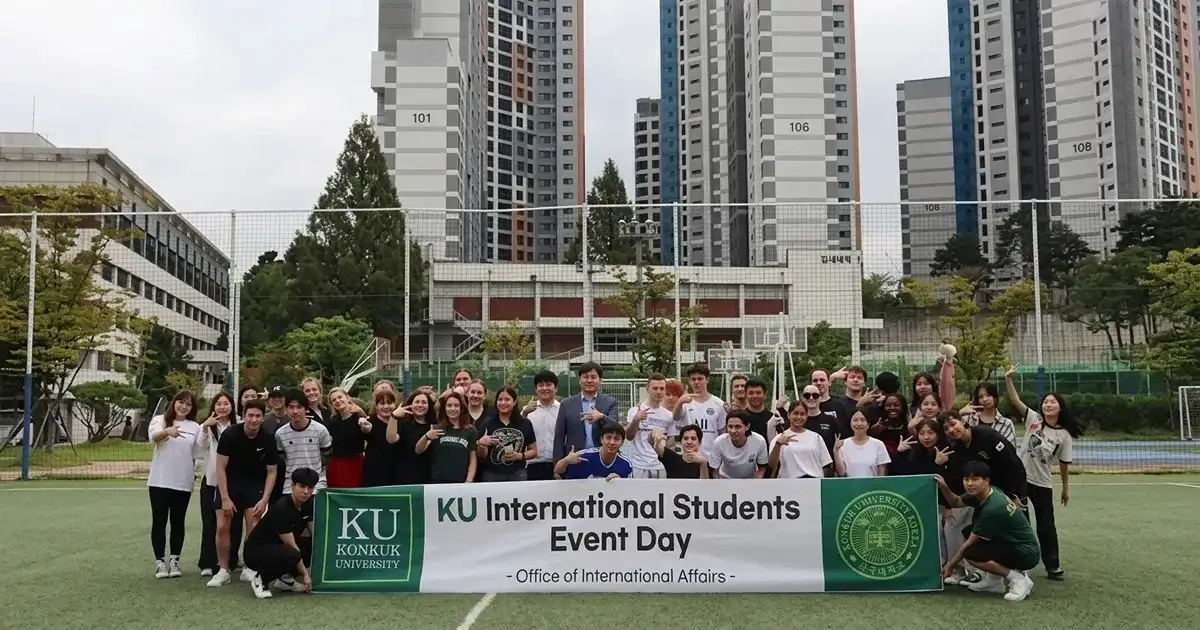
Established in 1931, Konkuk University is a top private university in South Korea, featuring a main campus in Seoul and a GLOCAL campus in Chungju. Home to 22,700 undergraduate and 2,200 graduate students, KU excels in art and design, biomedicine, bioscience, business administration, and real estate studies. The university offers distinguished faculty and over 160 courses taught in English each semester to help students achieve their goals.
Located in central Seoul, Konkuk University's main campus sits steps from Konkuk University Station, served by Subway Lines 2 and 7 for easy citywide access within an hour. The vibrant surrounding area features a major shopping mall, Lotte Department Store, and hundreds of cafes and restaurants. Students can also easily walk to Han River Park for biking, swimming, and picnics.
As of December 23, 2020, Konkuk University maintains a global network of 649 partner universities across 69 countries. Through these partnerships, an expanding array of dual-degree programs, exchange opportunities, language courses, and short-term study options are available to both domestic and international students. Annually, over 900 Konkuk students study abroad, while around 2,000 international students attend Konkuk.
Seoul is a globally safe city, and Konkuk University ensures extra security through campus police, guards, student volunteers, and 15 strategic 24-hour emergency call boxes. As a diverse, multicultural institution, KU supports international students through customized services from the Office of International Programs and a student volunteer program that helps foreign students settle into campus life.
Nationality and Academic Requirements
Language Proficiency Requirements
All international students at Konkuk University must acquire TOPIK Level 4 or above to graduate. Admitted students may be required to take Korean language courses based on their proficiency.
TOPIK Level 3 or Korean Language Program Completion Certificate issued by KU Language Institute with Level 3 or above. TOPIK Level 4 or 5 TOPIK Level 6
For a Master's programme:
For a Doctoral programme:
Konkuk University's graduate regulations generally require international students to demonstrate Korean or English proficiency. The university lists the following minimum standards:
Applicants who are expected to graduate must provide the required expected-graduation documents and later submit their final degree verification.
Apply online
Konkuk University's 2026 international graduate applications must be submitted online through EK-Apply. You need to:
Email: [email protected]
Phone : +02-2049-6204



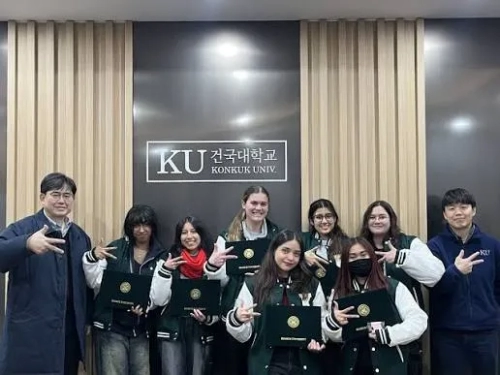




Konkuk University established the “PRIME KONKUK 2020“ mid-term development plan in 2017. Under the vision of “A University that Strengthens the Nation and Embraces the World" and the development goal of “Top 5 Private Universities in Korea and Top 100 Universities in Asia“, KU has taken the lead in cultivating WE? who are ?Practical Social Citizens ?Creative Professionals ?Leading Global Citizens. Currently, there are 13 colleges, 62 departments, and 14 graduate schools at the Seoul campus in Hwayang-dong, Gwangjin-gu, Seoul, and 4 colleges, 28 departments, and 4 graduate schools at the Chungju campus in Danwol-dong, Chungju, Chungbuk, with a total of 27,700 students.
In addition, Konkuk University has established the slogan "Leading the Future with Creative Innovation" and established the long-term development strategy "RENAISSANCE KONKUK 2031" by 2031, the 100th anniversary of the its founding, to focus the abilities of university members to become a world-leading university that fulfills education, research, and social responsibility.
Konkuk University has a history of rising to the challenges of the times and serving the community. Now, Konkuk University will be reborn as Korea's leading private university by proactively responding to the rapid social changes of the 4th Industrial Revolution and by innovating and making significant investments to foster new growth engines for the future. We will promote specialization programs in bio and tech fields, two of the university's traditional strengths, and move forward to create new intellectual property through intensive investment. As we prepare to celebrate the 100th anniversary of the founding, we will take on new challenges for the next 100 years as an innovation leader that opens up the future society and builds a knowledge community that meets the needs of the hyper-connected, hyper-intelligent, and hyper-converged era.