ListOfUni

Kyungpook National University (KNU)

Daegu, South Korea
Visit School Website
  • 37,242 Students
  • 1946Founded
  • YesAccept Int. Studs
  • YesDistance learning

About

Kyungpook National University (KNU) is a major national research university in South Korea, with campuses in Daegu and Sangju. It emphasizes cutting-edge research, interdisciplinary education, innovation, and regional development. KNU aims to cultivate creative talent capable of responding to global challenges while preserving the value of fundamental academic disciplines.

Acronym KNU
Motto / Slogan Truth, Pride, and Sevice
Colour Red
Mascot Hobanu (Korean Brindle Cattle)
Founded 1946
Location Buk, Daegu, South Korea
Address 80, Daehak-ro, Buk-gu, Daegu, Republic of Korea

Mission

  • Truth – pursuing and advancing knowledge through learning and research.
  • Pride – nurturing leaders who contribute to Korean and international society while valuing KNU's history and traditions.
  • Service – developing professionals and intellectuals who serve society, the nation, and the global community

Vision

Mid-term Power Generation Plan KNU, Leading the New Century, and Leading the Modern Era.

Long-term Power Generation Plan KNU, Leading the World, Leading the Future

Establishment of a future-oriented education and research system.

Operation of a specialization-oriented university.

Strengthening the role of a National Flagship University.
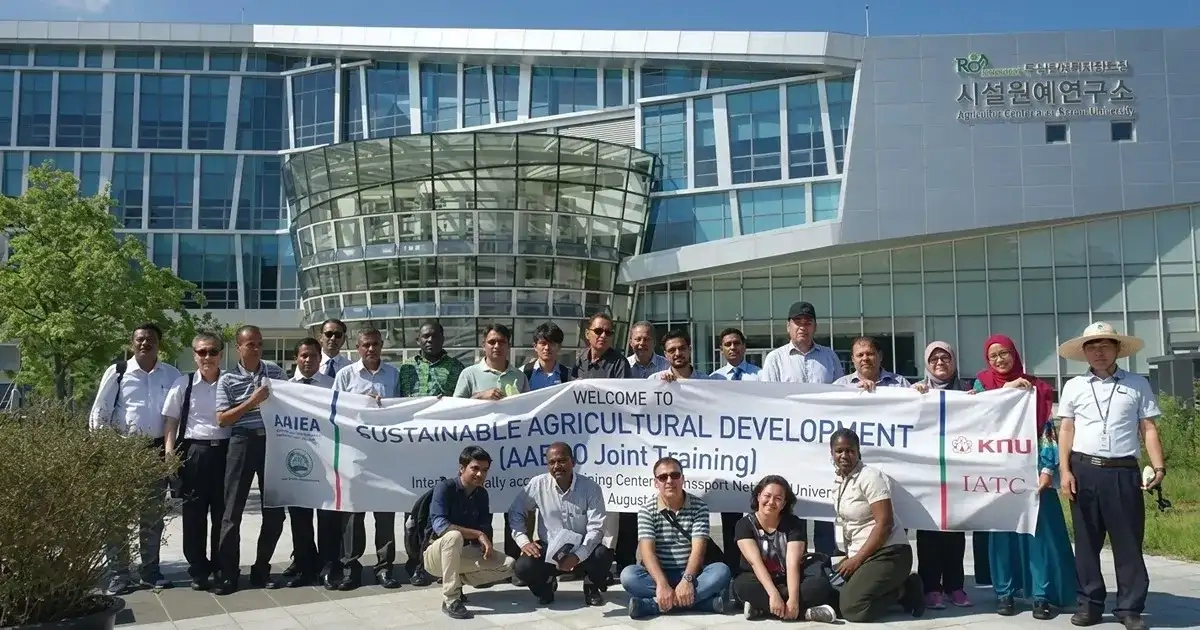


Kyungpook National University

Objectives

CREATIVITY

The ability to raise questions about existing perceptions or attitudes, and to open up new possibilities.

CRITICAL

The ability to correct existing dogma and prejudice through fundamental questioning, and to contribute to the activation of public discourse with an open-minded approach and attitude.

COMMUNICATION

the essential ability for humans as social and cultural beings to engage in relationships and live together through dialogue.

CONVERGENCE

The ability to create new knowledge and value by integrating diverse fields of study through collaboration and exchange beyond the boundaries of academic disciplines.

EXPLORATION

the ability to explore unexposed origins through persistent questioning to reach ultimate truths.

RESPONSIBILITY

the capacity to realize the common good of local communities, nations, and humanity as a whole by recognizing and responding to various problems that arise in natural and social environments.

Educational innovation for fostering creative and convergent talent

  • Introduction and expansion of a student-centered and flexible academic system
  • Cultivation of the KNU education brand
  • A virtuous cycle of educational innovation through the AAA system

Securing global leading research competitiveness

  • Establishing a system for fostering the next-generation of the KNU research brand
  • Securing excellent future research talent
  • Improving research environments through creative research support

Securing university competitiveness through specialization

  • Sustainable specialized projects
  • Education and research in collaboration with regional industries
  • Organic specialization by campus

Nurturing next-generation talent for national development

  • Fostering creative cooperative talent in basic and fundamental academic fields
  • Cultivating talent to lead the Fourth Industrial Revolution
  • Nurturing talent for prosperity and peace in Northeast Asia in an era of North-South cooperation

A university that cooperates and communicates with the local region

  • A leading university in regional industrial-academic cooperation and innovation
  • A university that grows together with the local region
  • The KNU "Edudream" that embraces future regional talent

Activating domestic and international exchange opportunities

  • Establishing a network between universities with regional cooperation
  • "It's On" key project for enhancing internationalization capacity
  • Fostering global talent and improving international competitiveness.

Main Academic Divisions (Faculties)

  • College of Humanities
  • College of Social Sciences
  • College of Natural Sciences
  • College of Economics and Business Administration
  • College of Engineering
  • College of IT Engineering
  • College of Agriculture and Life Sciences
  • College of Music and Arts
  • Teachers College (Education)
  • School of Medicine
  • College of Dentistry
  • College of Veterinary Medicine
  • College of Human Ecology
  • College of Nursing
  • College of Pharmacy
  • College of Advanced Technology Convergence
  • College of Ecology and Environmental Science
  • College of Science and Technology
  • School of Public Administration
  • Global Leaders School
  • Advanced Institute of Science and Technology

Admission

Undergraduate Admission Requirement

  • Must be a non-Korean national, and both parents must be non-Korean nationals
  • Parents and applicant holding foreign nationality(if they hold foreign nationality before starting an educational program equivalent to the high school curriculum)
  • Dual Nationality holders are not eligible


Language Proficiency:

1) Applicants must meet at least one of the following language proficiency requirements (?–?):

  • ? TOPIK Requirement: Achieve at least Level 3 on the Test of Proficiency in Korean (TOPIK or TOPIK iBT).
  • ? University-Affiliated Korean Language Program: Complete at least Level 3 of a Korean language course at a university-affiliated Korean language education institution.
  • ? English proficiency test scores: TOEFL iBT 59, IELTS (Academic) 5.5, CEFR B2, NEW TEPS 202 or higher
    ? Applicants whose native language is English may substitute language proficiency with proof of completion of higher education (e.g., graduation certificate) (English-speaking countries: United States, United Kingdom, Canada, South Africa, New Zealand, Australia, Ireland)
  • ? Korean Immigration & Integration Program (KIIP): Complete at least Level 3 of the Ministry of Justice's Social Integration Program (KIIP) or obtain at least 61 points on the preliminary evaluation.
  •  
    • ? Overseas Sejong Institute Certification: Submit a certificate of completion for the Basic Education Program issued by an overseas Sejong Institute
      (confirming completion of at least the Korean Intermediate 1 level).
      (? Certificates from the online Sejong Institute are not accepted.)
  • 2) Certain departments require applicants to meet specific language proficiency criteria to be eligible for admission.
    ? Example: Department of Korean Language and Literature – TOPIK Level 4 or higher, Department of Computer Science – TOPIK Level 4 or higher, etc.


  • All documents should be in Korean or English. Documents in other languages should be accompanied by a notarized Korean or English translation.
  • When submitting copies of documents, you must submit the original documents for verification. (Alternatively, you may submit a Certified True Copy by a Notary Public.)
  • Additional documents may be required, and for detailed information, be sure to checkthe Admissions Guide.
  • All submitted documents will not be returned.

Postgraduate Admission Requirments

  • A. International applicants must meet all of the following requirements:
    • ? Holds (or is about to hold) a Bachelor’s degree.
    • ? Must be a non-Korean national.
    • ? Both parents must be non-Korean nationals.
  • B. Applicants of Korean origin (entire education completed abroad) must meet all of the following requirements:
    • ? Holds (or is about to hold) a Bachelor’s degree.
    • ? Must be a non-Korean national.
    • ? Received their entire elementary, junior high, high school, and undergraduate education outside of Korea at a comparable and equivalent level to that which is provided in Korea.)

Doctoral Programs:

  • A. International applicants must meet all of the following requirements:
    • ? Holds (or is about to hold) a Master’s degree
    • ? Must be a non-Korean national.
    • ? Both parents must be non-Korean nationals.
  • B. Applicants of Korean origin (entire education completed abroad) must meet all of the following requirements:
    • ? Holds (or is about to hold) a Master’s degree
    • ? Received their entire elementary, junior high, high school, and undergraduate education outside of Korea at a comparable and equivalent level to that which is provided in Korea.
    • ? Must be a non-Korean national.

Language Proficiency:

  • A. Applicants must provide one of the following as proof of language proficiency:
    • ? Korean language proficiency: a TOPIK certificate for Level 3 or higher
    • ? English language proficiency: TOEFL iBT 59, IELTS (Academic) 5.5, CEFR B2, NEW TEPS 202 or higher
    • ? Native speakers of English
      *Applicants do not need to submit an English score report if they are from a country whose official language is English (USA, UK, Canada, Australia, New Zealand, Republic of South Africa, and Ireland).
    • ? Non-native speakers of English or Korean, with required ability but no test score
      * In this case, the required ability will be separately evaluated during the department interview and reported to the OIA with a confirmation letter.
  • B. Certain departments require applicants to meet specific language proficiency standards in order to apply.
    For example, the Department of Korean Language and Literature requires a minimum of TOPIK level 5, and the Department of Business Administration requires a minimum of TOPIK level 4.
    For detailed information, please check the Admissions Guide.

How To Apply For Admission

Undergraduate

Online Application

Access the how to apply Pdf here.


Graduate

Online Application

Access the how to apply Pdf here.

Admission Contacts

Email: [email protected]
Phone : +82-53-950-2434, +82-53-950-2436
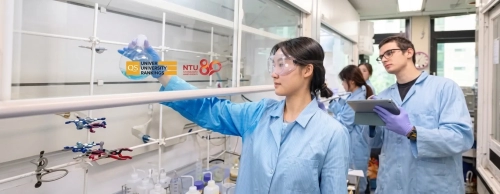
Apply For Admission

Campus Tour

Facilities

  • Classrooms
  • Library
  • Laboratory
  • Research Center
  • Accommodation
  • Sports
  • Gym
  • ICT
  • Cafeteria
  • Housing: The KNU Daegu Campus Dormitories consist of five dormitory buildings, cafeterias, and five BTL dormitory buildings. There are 2,692 rooms that accommodate 5,210 undergraduate and graduate students. Each building features a gym, shower room, computer lab, library, and laundry facility. Facilities may vary between buildings. Cheomseong-gwan, Nuri-gwan, and Boram-gwan each include a cafeteria within their own building.


School Contact

Address

80, Daehak-ro, Buk-gu, Daegu, Republic of Korea

Phone Number

+82 53-950-5114

Website Address

https://en.knu.ac.kr/main/main.htm

Social Media Pages

Accreditations

Institutional Accreditation: Fully accredited by the Korean University Accreditation Institute (KCUAI) under the Korean Council for University Education (KCUE), with certification valid through December 2027.

Global & Program Standings: Recognized nationally as a leading flagship South Korean national university, featuring specialized program recognitions and high global sustainability and impact rankings.

Vice Chancellor

Heo, Young-Woo

2024 - Present The 20th President, Kyungpook National University (KNU)

2023 - 2024 Director, BK21 Innovative Semiconductor Education and Research Center for Future Mobility at KNU

2022 - Present Vice President, South Committee of the Korean Society of Surface Science and Engineering

2020 - 2021 Vice Chairperson, Korean Association of Engineering College Deans

2019 - 2021 De... read more

an, College of Engineering / Dean, Graduate School of Industry at KNU

2018 - 2020 Review Board Member, National Research Foundation of Korea

Notable Alumni

View More Alumni

History

2024.11

Dr. Young-Woo Heo inaugurated as the 20th president

2024.03

College Of Advanced Technology Convergence established

2022.03

Graduate School of Plant Protection and Quarantine established

2021.11

Graduate School of Data Science established

2021.03

School of Convergence established

2020.10

Dr. Won-Hwa Hong inaugurated as the 19th president

2016.10

Dr. Sang-Dong Kim inaugurated as the 18th president

2015.03

School of Science Technology, Biology and Undeclared Majors established

2015.03

College of Dentistry established

2015.03

College of Medicine established

2015.03

<... read more
p>Dr. Dongchul Son inaugurated as Interim President

2014.10

Dr. Suk-Geun Hwang inaugurated as Interim President

2014.09

Dr. Sungkwang Chung inaugurated as Interim President

2012.03

College of Science and Engineering renamed College of Science and Technology.

Department of Public Administration becomes an independent school

2011.03

College of Pharmacy established

2010.09

Dr. In-Suk Hamm inaugurated as the 17th president

2010.03

Global Leaders School established

2010.03

College of IT Engineering established

2009.03

Law School established

2008.03

Sangju National University merged with Kyungpook National University

2006.09

Dr. Dong-Il Noh inaugurated as the 16th president

2006.03

School of Medicine established

2005.03

College of Nursing and School of Dentistry established

2003.03

Graduate School of Forensic & Investigative Science established

2002.09

Dr. Dal-Ung Kim inaugurated as 15th president

2000.03

Graduate School of Policy and Information and Department/ Division of Undeclared Majors established

1982.03

College of Music and Visual Arts established

1981.03

College of Liberal Arts and Sciences divided into College of Humanities and Social Sciences and College of Natural Sciences

1981.03

Graduate School of Business Administration and Graduate School of Public Health established

1981.03

Dr. Myeong-Su Han inaugurated as 9th president

1980.03

Graduate School of Public Administration established

1979.03

College of Dentistry established

1979.02

Dr. Don-Gak Suh inaugurated as 8th president

1972.03

College of Economics and Business Administration established

1972.01

Dr. Young-Hi Kim inaugurated as 6th president

1970.03

College of Engineering established

1969.03

Graduate School of Education established

1968.01

Dr. Jeong-Gi Park inaugurated as 5th president

1961.12

Dr. Chul-Soon Gye inaugurated as 4th president

1960.05

Prof. Sang-Yeol Kim inaugurated as 3rd president

1953.05

Graduate School established

1952.09

Dr. Byung-Kan Koh inaugurated as 1st president

1951.10

Colleges of Education, Medicine, Agriculture, Liberal Arts and Sciences, Law and Political Sciences combined into Kyungpook National University

1946.09

Colleges of Education, Medicine and Agriculture in Daegu upgraded to National College