
Kyungsung University is a private university located in Nam-gu, Busan, South Korea. Founded in 1955, the university was established on Christian ideals and has developed into a comprehensive institution offering programs across humanities, social sciences, business, engineering, arts, health sciences, and other fields. Its educational philosophy is based on truth, service, and freedom, with an emphasis on combining academic knowledge with practical skills and character development.
The university places considerable emphasis on student-centered education, globalization, communication, creativity, and practical education. Its current educational objective is to cultivate individuals with convergent knowledge, empathetic character, and creative sensibility, while its core competencies include self-management, digital technology, empathetic communication, and creative convergence.
| Acronym | KSU |
| Motto / Slogan | Training for the Truth, Gateway to Tomorrow with Kyungsung |
| Colour | Blue, Red, Mustard |
| Founded | 1955 |
| Location | Nam, Busan, South Korea |
| Address | 48434 309, Suyeong-ro, Nam-gu, Busan, Republic of Korea |
Kyungsung University's mission is to cultivate professional talent equipped with both competence and character who can contribute to society and serve the wider community. Its educational mission is grounded in the Christian spirit of truth, service, and freedom, while its current vision system describes its mission as achieving top-10% performance in student satisfaction, employment rate, and business reputation.
Long-term Objective
The No.1 preferred University by students in the Southeast Region
Mission
Short-term Objective
Ensuring dynamic competitiveness through fusion and close relationships
Basic Direction of Strategies
Key Strategies
Foundation Strategy
Prosperity Strategy
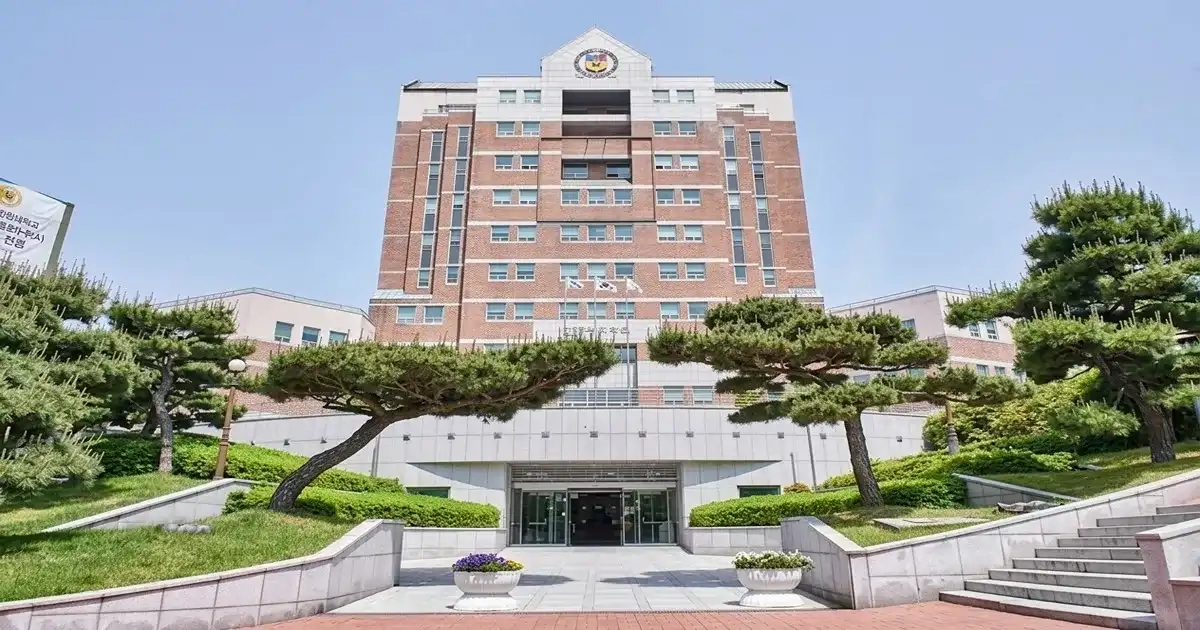
Kyungsung University is located in Busan, South Korea’s major coastal city and an important center for business, culture, tourism, and international activities. Its urban location gives students opportunities to experience Korean culture while studying in a dynamic metropolitan environment.
Kyungsung University welcomes students from different countries and promotes internationalization across its campus. International students can study alongside Korean students, experience Korean culture, develop intercultural communication skills, and build international networks.
The university emphasizes practical education that connects academic knowledge with real-world applications. Through practical learning, industry-academic cooperation, and career development initiatives, students can develop professional skills and knowledge relevant to their chosen fields.
Kyungsung University provides scholarship opportunities for eligible students, including international students. Depending on the scholarship and eligibility requirements, financial support may help reduce tuition costs and make studying in South Korea more affordable.
A prospective international applicant:
(1) must be a non-Korean,
(2) must either hold or be expected to hold a high school diploma or a certificate of high school equivalency
(3) must have obtained IELTS score of at least 5.5 (or) at least iBT TOEFL score of 71.
Exception: English native speaking countries such as USA, Canada, Australia, and etc.
Language Requirements
Korean Track
English Track
Master's Degree
Applicants must:
Doctoral Degree
Applicants must:
Language Requirements
The graduate admission guide specifies:
Korean
English
Some programs—including Global Business, Global Hospitality Management, Korean Culture Education, Global IT Engineering, Media Film Design, and certain Arts/Hospitality programs—may allow applicants to apply without submitting TOPIK/TOEFL/IELTS, subject to the program's rules.
How to Apply:
Application Procedure:
Email: [email protected]
Phone : +82-(0)51-663-4064



The current president of Kyungsung University is Professor Lee Jong-geun (???). The university's official website currently identifies him as the President of Kyungsung University.




The university's development includes the establishment of additional departments and academic programs, relocation to its present campus area, and expansion into fields including humanities, social sciences, business, science, engineering, arts, health, p... read more