
Pusan National University (PNU) is one of South Korea's major national universities and a leading research institution in the southeastern region. With campuses in Busan, Miryang, Yangsan, and Ami, PNU provides comprehensive undergraduate and graduate education. It is particularly recognized for research, engineering, natural sciences, medicine, and international collaboration.
| Acronym | PNU |
| Motto / Slogan | Service, Truth, and Freedom |
| Mascot | Sangenie |
| Founded | 1946 |
| Location | Geumjeong, Busan, South Korea |
| Address | 2, Busandaehak-ro 63beon-gil, Geumjeong-gu, Busan, 46241, Rep. of KOREA |
PNU seeks to pursue truth, serve society, and cultivate creative and globally minded talent through education and research. The university aims to create and transmit knowledge, contribute to national and regional development, and address global challenges through innovation and interdisciplinary collaboration.
PNU, the true university that lives up to the values of truth, freedom and service, is creating a new value system based on a humanitarian spirit and its insights on the trends of the times. PNU provides and realizes a future vision for society through academic research and HR development, contributing to the development of humanity and society.
The Hall of Truth
PNU pursues truth, and conducts education and research for academic advancement based on imagination and creativity. It is securing global competitiveness as a true university that represents Korea, while developing talents with creativity and extensive knowledge, who have insights on the times and are actively engaged in their communities and society as a whole.
The Cradle of Freedom
PNU safeguards freedom, the fundamental value of life, and pursues truth and education based on a spirit of co-prosperity, cooperation and harmony with the community. It is a true university that fosters mature individuals with creative and active attitudes and capabilities that can serve the development of the country and humankind.
The Birthplace of Services
A university needs to explore knowledge and education based on freedom and truth, and provide various humanitarian services for the development of society and the country. PNU is a true university, as it fosters talents eager to engage in the services required by the society, and operates volunteer activity systems for social development, lifelong education and re-education at the university level.
Purpose of Education
As a true university that represents Korea, PNU aims to foster capable talents who can teach and study in-depth academic theories and methods of applications based on the national educational philosophy of Korea and PNU’s spirit of truth, freedom and service, while contributing to development of the country and society. To this end, PNU defines the ideal PNU talents as follows:
2. Open-minded, educated individuals who respect freedom to pursure thuth and cultural diversity.
3. True, educated individuals who use their knowledge to serve the country and society
4. Capable experts armed with global knowledge and professional expertise.
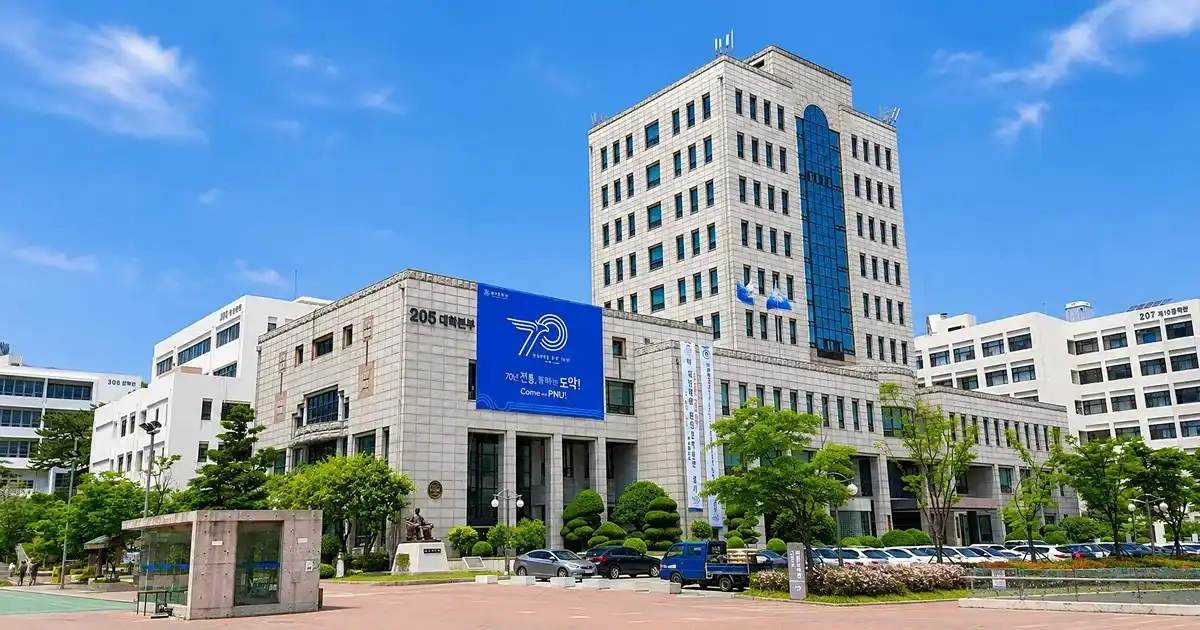
PNU is Korea’s first national university, having been established on May 15, 1946. While leading a path to industrialization and democratization, the university has fulfilled its mission as a regional hub university, actively engaged in the great journey of Korea’s modern history. PNU‘s dream of becoming a global research-oriented university is unfolding as it strives to create a university of the future by working for the betterment of students and the community.
Pusan National University (PNU) creates new values by accumulating and sharing knowledge. In the era of the Fourth Industrial Revolution, driven by AI, big data, robotics, and technological convergence, PNU aims to become a leading global research university. It serves as a national think tank for balanced regional development, nurtures globally competent talent through humanities education, and fulfills its role as a hub university in southeastern Korea.
PNU offers convergence and integrated elite education that is bringing down the walls between academic disciplines and creating new things in order to incubate creative intellectuals, and has become the think-tank of Korea that creates the future society.
PNU is strengthening its global reputation, with six academic fields ranked among the Top 101–200 in the 2017 QS World University Rankings. It partners with over 430 universities and institutions in 50 countries, promoting academic & student exchanges. Students gain international experience through foreign professors, over 1,000 annual foreign-language classes, overseas exchange and volunteer programmes that develop global expertise and cultural understanding.
Nationality
Academic qualification
Language proficiency
Requirements vary by department/programme. PNU's undergraduate international admission guide specifies Korean/English proficiency requirements depending on the chosen major, so applicants should check the current programme-specific guide before applying. PNU publishes separate 2026 Spring and Fall international undergraduate admission guides.
Master's
Doctoral
Integrated Master's–Doctoral
For the general graduate international-admission route, applicants must meet at least one of the following:
Admission Process
International applicants select a programme, complete the online application, submit the required academic and personal documents, undergo the required evaluation/interview, check the admission result, pay tuition if admitted, and receive the Certificate of Admission for visa processing.
Email: [email protected],[email protected]
Phone : +82-51-510-3856, +82-51-510-3879
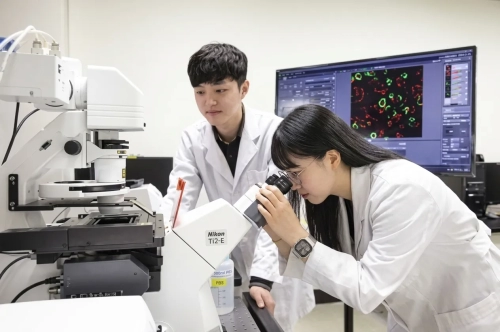

Professional Accreditation: Programs like architecture hold validation from bodies such as the Korea Architectural Accreditation Board (KAAB).
National Project Recognition: Selected and supported by the Korean government's prestigious BK21 (Brain Korea 21) project for graduate research excellence.


Founding Committee for Pusan National University Organized
Nov.1956
PNU Hospital opened.
Apr.1966
Central Library opened
Mar.1972
PNU High School established
Jul.1999
Center for Research Facilities opened
Inauguration of the 17th President, Dr. Inn-se Kim
The Graduate School of Law opened
The Undergraduate Colleg... read more
The Undergraduate School of Business opened
College of Information and Biomedical Engineering opened
Inauguration of the 21th President, Dr. Jeong-in Cha
Inauguration of the 22th President, Dr. Jae Weon Choi
University College opened
PNU’s 80th anniversary
Although the University started initially with just two faculties, the Faculty of Humanities and the Faculty of Fisheries, since then, it has grown into a major research level institution covering all the major disciplines within academia. Today, the University enjoys its reputation as one of top universities in Korea.
The University now compriseds fifteen colleges, one independent division, one general graduate school, fourprofessional graduate schools and five special graduate schools, and contributes to the development of the nation by producing prominent experts and talented leaders.
Pusan National University, marking its 80th anniversary in 2026, has become the No. 1 national university in research and educational competency, and its tradition and ability are estimated highly. More than 280,000 PNU alumni have taken responsibility for the development of their communities and the country, and about 33,500 students, 1,200 professors, and 730 faculty members are working as one to develop PNU, an institution based on the principles of truth, freedom, and service.