The Royal Military College of Canada (RMC) is Canada's military university, located in Kingston, Ontario. Established in 1876, RMC educates and trains officer cadets for leadership roles in the Canadian Armed Forces, offering programs in both official languages. The college emphasizes a unique "four pillars" approach: academics, military training, physical fitness, and bilingualism.
| Acronym | RMC |
| Nickname | RMC Paladins |
| Motto / Slogan | Truth, Duty, Valour (Verité, Devoir, Vaillance) |
| Colour | Red and white |
| Mascot | Paladin |
| Founded | 1876 |
| Undergraduate Programmes | |
| Postgraduate Programmes | 34 |
| Location | Kingston, Ontario, Canada |
| Address | Royal Military College of Canada PO Box 17000, Station Forces Kingston, Ontario CANADA K7K 7B4 |
To educate, develop, and inspire bilingual, fit, and ethical leaders who serve the Canadian Armed Forces and Canada.
To be a leader in defense-related research and education, responsive to the needs of the Canadian Armed Forces and other partners, fostering an environment of academic freedom and inquiry-based research.
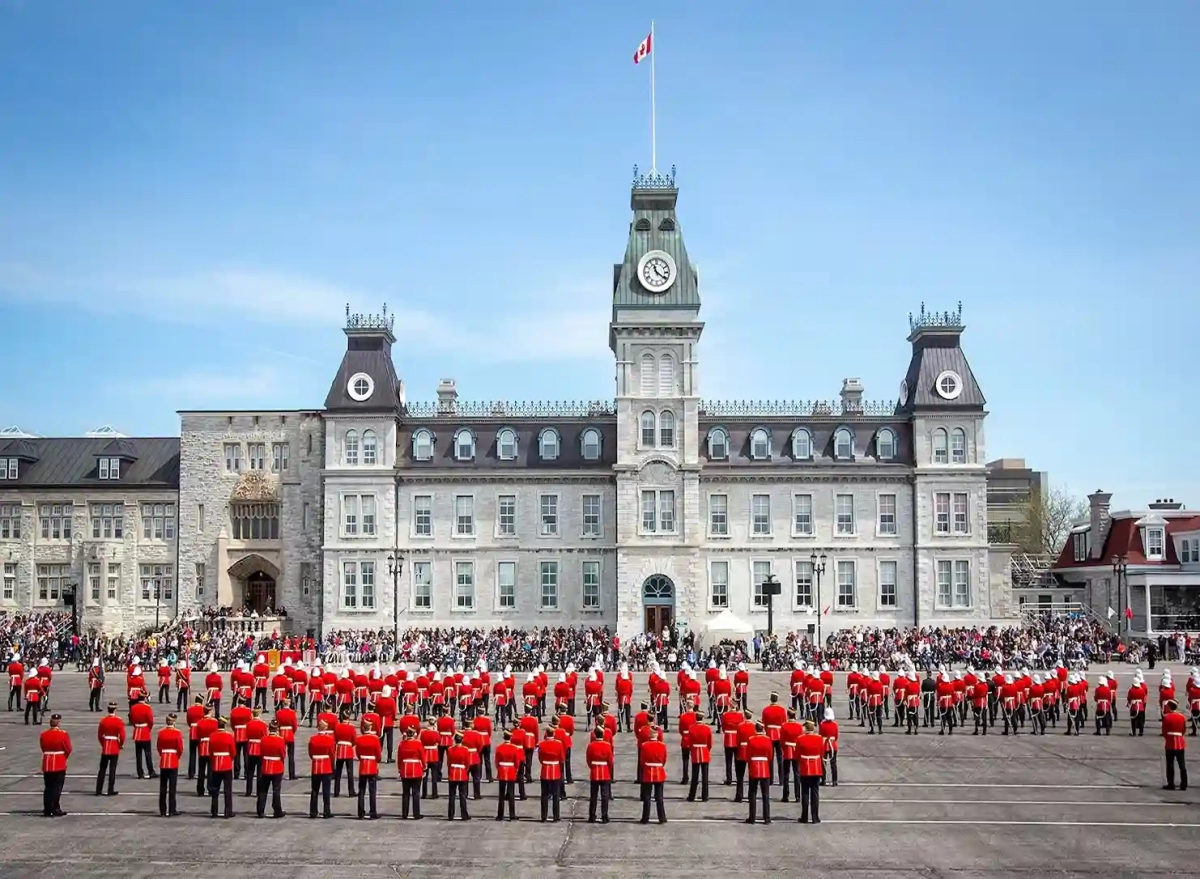
Deliver high-quality education in both official languages, tailored to the unique needs of the Canadian Armed Forces.
The Cadet Wing is part of the Training Wing which is commanded by the Director of Cadets (DCdts). DCdts is responsible to the Commandant RMC for the overall conduct, supervision, discipline and performance of the Cadet Wing. DCdts is assisted in his/her duties by the officers, Non-Commissioned Members and civilian staff of the Training Wing. The Division Commanders and Squadron Commanders of the Training Wing mentor, counsel and evaluate cadets.
Cadet life is built on four pillars: Academics, Military, Fitness, and Bilingualism. A Unit Environment is integrated to expose Cadets to CAF processes and policies. Through managing time, priorities, and leadership roles, Cadets learn balance while maintaining high standards. Guided by professional military staff, the Cadet Wing operates like a CAF unit, preparing officer cadets for future leadership in operational units.
The Cadet Wing Chain of Responsibility (CCOR) is led by the Cadet Wing Commander. The Wing has four divisions, each headed by a fourth-year Cadet Divisional Leader. Each division contains three squadrons, led by Cadet Squadron Leaders. Squadrons include flights led by Cadet Flight Leaders, and flights include sections led by third-year Cadet Section Commanders. Otter Squadron is a separate squadron for UTPNCM students.
The College is fully residential. Cadets (other than UTPNCM) live together in a military environment. All cadets are required to take part in a demanding routine designed to raise them to a high standard of physical fitness, drill, dress and deportment. Military training is designed to produce officers with a strong sense of: duty, integrity, loyalty, courage, self-discipline, self-confidence, and ésprit de corps.
Admission requirements vary by program. Check the program page for requirements.
Language requirements
Applicants who may not possess the requisite language skills for university-level study will normally be required to provide proof of their ability to study in the language of instruction for the programme to which they are applying. Such proof should take the form of official language test results. This requirement typically applies to individuals whose previous education was conducted in a language other than those normally used at this institution, and whose first language is neither English nor French.
UNDERGRADUATE:
POSTGRADUATE:
Email: [email protected],[email protected]
Phone : 613-541-6000
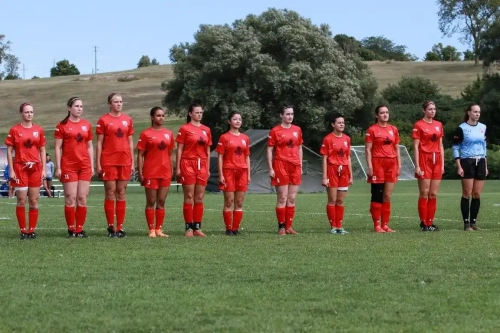
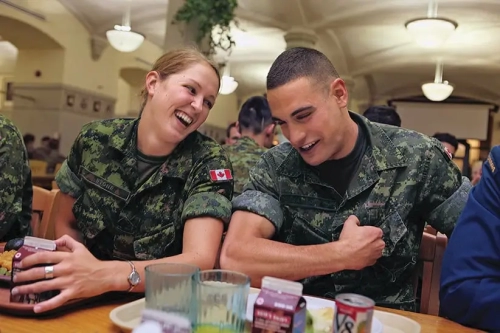
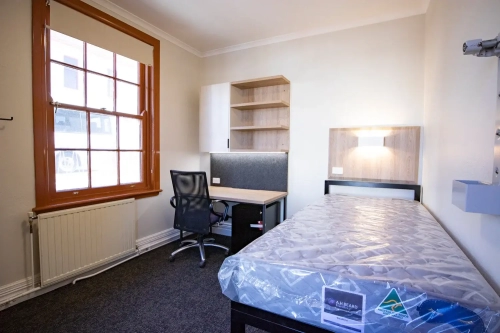

Accommodation: All ROTP officer cadets are required to live on campus. There are a combination of single and double rooms with the preference for single room allocation to senior years. All residences are co-ed. On-campus dining is provided. Cadets of the UTPNCM program do not live in residence. Full recreational facilities, including an indoor swimming pool and ice rink, are situated in very close proximity to the College at the Kingston Military Community Sports Centre (KMCSC).
Place of Worship: The RMC Chaplain Team offers spiritual, religious and pastoral care to all CAF members and their immediate family, who are posted to, attending, or working at RMC and MPG/CDA, regardless of affiliation or non-affiliation with a faith group, spiritual practice, etc. Chaplains provide regular Religious Services within their own traditions and facilitate the worship of members from other faith traditions by connecting them with local resources. Chaplains provide Pastoral Counselling and are a safe place to discuss the many challenges life in the Military presents.
Brigadier-General Godbout developed a passion for professional development and education early on in his career. He had the privilege of serving as an instructor at the Canadian Forces School of Communications and Electronics in Kingston, and as JCSP Directing Staff and NSP Programme Officer at the Canadian Forces College in Toronto. As Commander of 16 Wing Borden, he was responsible for oversight of the Canadian Forces School of Aerospace Technology and Engineering, the RCAF Academy, and the Canadian Forces School of Aerospace Control Operations.
Brigadier-General Godbout holds a Master of Arts in Defence Management and Policy from the Royal Military College of Canada, and a Master in Business Administration from Athabasca University. He is a graduate of the Joint Command and Staff Programme and the NATO Defence College Senior Course.
From 2013-2019, Dr. Scott served as the inaugural Vice-Provost (Teaching and Learning) at Queen's University, where she oversaw the implementation of a new academic quality assurance process, led research and new practices in assessing higher-order cognitive skills in undergraduate education, and co-chaired the Provost's Task Force on Truth and Reconciliation. Dr. Scott assumed additional responsibilities as Interim Associate Vice-Principal (International) in 2018-2019. During her time as Head of the Department of German Language and Literature, she led major reform to academic programming and departmental structures.
Her research focuses on sustainable development, environmental economics, game theory, decision analysis, operational research, and optimization.

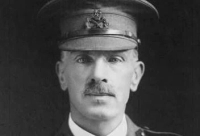


On June 1, 1876, the Military College of Canada was founded and opened its doors to the first class of eighteen officer cadets.
"The Royal Military College of Canada Degrees Act, 1959," passed by the 25th Ontario Legislature and given Royal Assent on March 26, 1959, empowers the College to confer degrees in Arts, Scienc... read more