
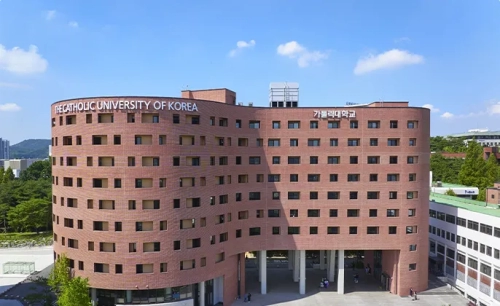
The Catholic University of Korea is a private university with a history dating back to 1855, when it began as Korea's first modern higher-education institution. Its educational philosophy is founded on respect for human dignity and the Catholic spirit of Truth, Love, and Service. The university combines education, research, and social responsibility, with particular emphasis on life-oriented education, interdisciplinary learning, internationalization, and research that addresses challenges facing humanity.
The university currently operates across three campuses: Songsim Campus in Bucheon, Songsin Campus in Seoul, and Songeui Campus in Seoul, which is associated with its medical programs.
| Acronym | CUK |
| Motto / Slogan | Ad Vitam et Veritatem: Toward Life and Truth |
| Colour | Blue and Grey |
| Mascot | Dove |
| Founded | 1855 |
| Location | Bucheon, Gyeonggi, South Korea |
| Address | Songsim Global Campus 43 Jibong-ro, Bucheon-si, Gyeonggi-do, (14662), Republic of Korea |
To cultivate professionals and global citizens who respect human dignity, pursuing the universality of truth, promoting education that honors human life, and transforming the world through the Catholic spirit of truth, love, and service. [1, 2]
A Global Leader Pioneering Life-Oriented Education and Research, CUK
A GLOBAL LEADER LEADING LIFE-ORIENTED EDUCATION AND RESEARCH
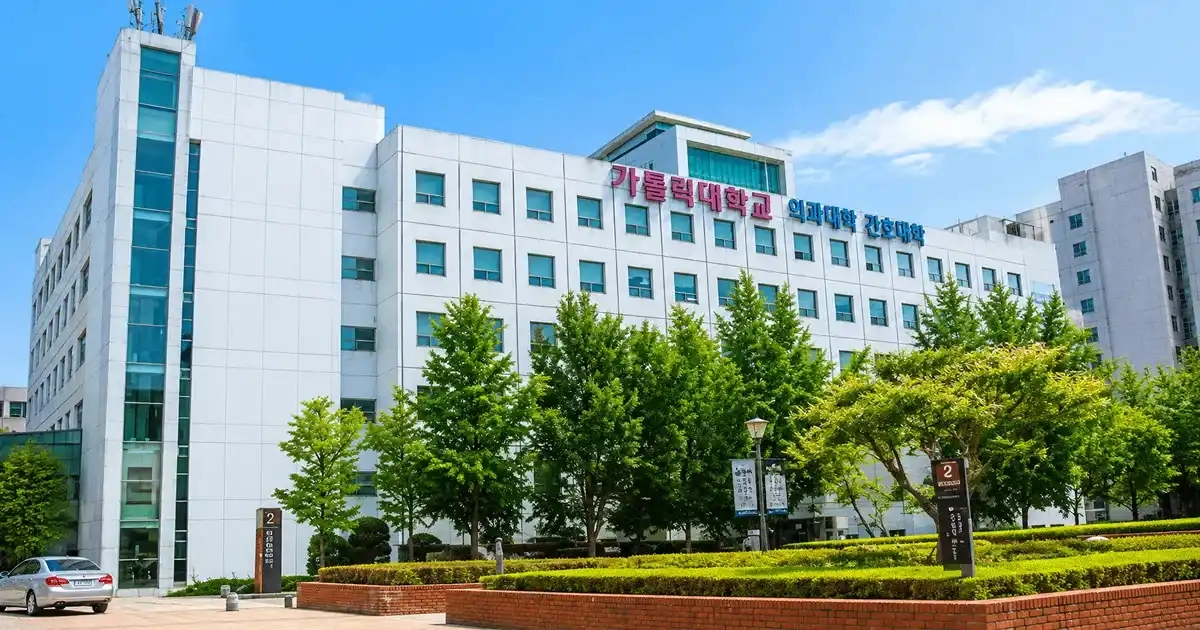
The university identifies three major educational objectives:
The university leads in future-focused fields aligned with industrial innovation, offering specialized programs in Artificial Intelligence, Data Science, Biomedical-Chemical Engineering, and digital convergence
International students can benefit from dedicated support programs, including assistance with adapting to university life and opportunities to interact with Korean and international students. Previous international students have highlighted the university's foreign-student support and Buddy Program.
Students can study areas including Business Administration, Economics, International Studies, Global Business, Data Science, Media Technology, Korean Studies, and more. The university also encourages interdisciplinary approaches to learning.
CUK has developed international partnerships and exchange opportunities, with a global network spanning 40 countries and 170 institutions (as reported for 2023). Students can participate in exchange, visiting-student and short-term international programs.
International Students:
Nationality: Both the applicant and their parents must hold non-Korean nationalities, or the student must have completed their entire education (elementary through high school/undergraduate) outside of South Korea.
Academic Background:
High school graduation (or expected graduation)
Language Proficiency:
Applicant for Ph.D. 1) Master’s degree holder or expected graduate to be conferred with a Master’s degree by Feb, 2026 2) Applicant with academic qualifications equivalent to a Master’s degree.
Language Proficiency:
Step 1 — Choose your programme
Step 2 — Check international eligibility
Step 3 — Check the language requirement
Step 4 — Prepare your documents
Step 5 — Submit the online application
Step 6 — Submit the supporting documents
Step 7 — Admission evaluation
Step 8 — Admission and enrollment
Email: [email protected],[email protected]
Phone : 02-2164-4955
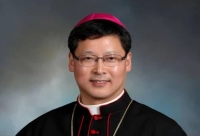
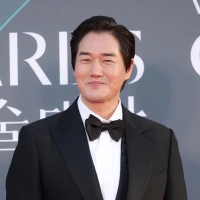
2019. 03. ~ 2023. 03.
2017. 11. ~ 2019. 02.
2017. 03. ~ ??


The history of the Catholic University of Korea is closely intertwined with the introduction of Catholicism to Korea, a period when Confucian ideology was the dominant value in the Joseon Dynasty. In the late 18th century, Joseon scholars began to academically study Catholicism, then known as Western Learning (Seohak). They formed faith communities and dedicated themselves ... read more
Despite ongoing persecution of Catholics, in 1836, three young boys, including Choi Yang-up, Choi Bang-geo, and now Saint Andrew Kim Taegon, were sent to study in Macao; Kim Taegon was ordained in Shanghai in 1845 and returned home, only to be martyred soon after.
In response to continued persecution, in 1854, three more boys were sent to study in Penang, Malay Peninsula, while efforts to train clergy and start Western-style education were initiated in various locations.
Finally, in 1855, Father Maistre founded a seminary in Baeron, Jecheon, Chungcheongbuk-do, dedicated to Saint Joseph. This institution, offering courses in Chinese, Latin, philosophy, and theology, became the first Western-style educational establishment dedicated to modern humanities in Korea. It laid the foundation for what is now the Catholic University of Korea, originally known as St. Joseph's Seminary.