
The University of Adelaide is a comprehensive public university in Adelaide, South Australia, known for its research and academic excellence. It is a member of the Group of Eight, a prestigious coalition of Australia's most research-intensive universities. The University of Adelaide has a history of innovation and impact, producing graduates who have made significant contributions to various fields.
| Acronym | UniAdel |
| Nickname | The Blacks |
| Motto / Slogan | The light (of learning) under the (Southern) Cross |
| Colour | Black and white |
| Mascot | Gus the Black Lion |
| Founded | 1874 |
| Location | Adelaide, South Australia, Australia |
| Address | THE UNIVERSITY OF ADELAIDE 5005 AUSTRALIA |
The University of Adelaide's mission statement, is to be a catalyst for innovation and knowledge creation, an engine of social advancement, and an active participant in the local, national, and global economies.
The University of Adelaide's vision is to be a leading contemporary comprehensive university of global standing.
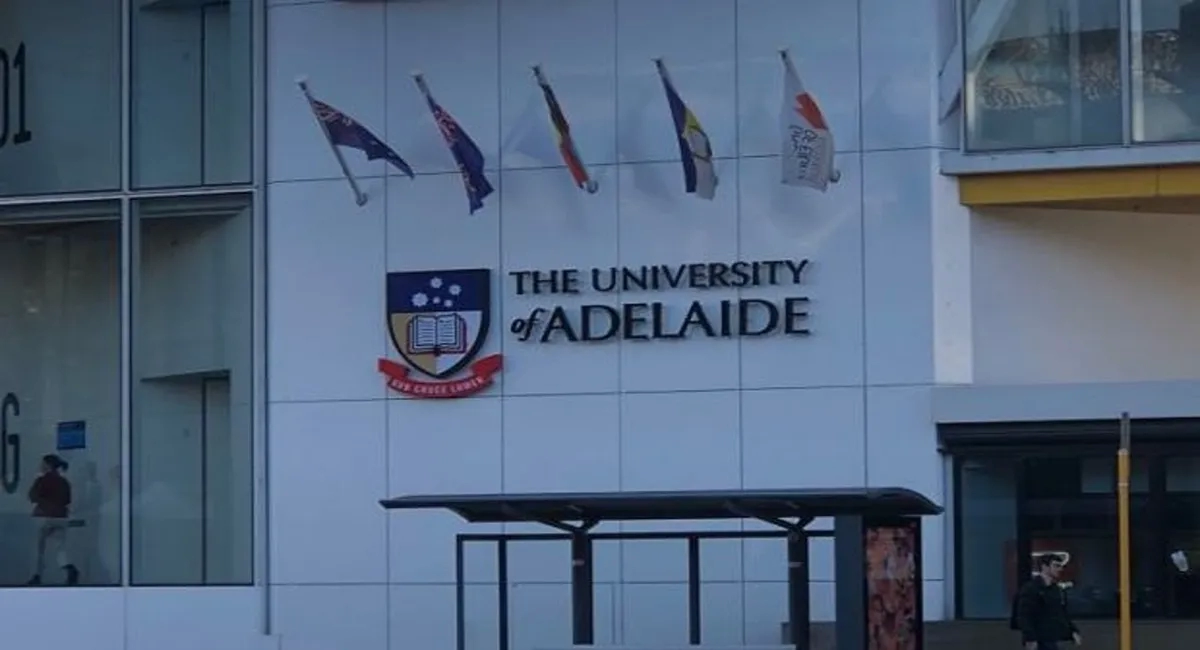
The University of Adelaide's primary objective is to be a leading comprehensive university of global standing, enabling individuals and society to reach their full potential.
We offer a range of opportunities, events and activities to socially and culturally enrich your wellness and success within and outside the classroom.
Career outcomes are a great reason to choose the University of Adelaide. We are SA’s #1 university for graduate employability. Our undergraduate and postgraduate degrees are designed to meet the jobs of the future and to prepare you for career success.
As one of our students or recent graduates, you'll have access to our Careers Service, which prepares, inspires, and empowers students to achieve successful career transitions and connect with industry. We are here to support students from all disciplines to increase employability, find opportunities, and learn career-ready skills to plan for your future.
From internships to industry events, learn how to increase your employability and kick-start your career. We have a range of information and services available to help you find opportunities and plan for your future. This support will assist you to stay self-motivated throughout your career, learn how to conduct your own research, and create a career action plan.
Complete secondary education equivalent to an Australian Year 12 qualification (such as IB, A-Levels, WAEC/NECO, etc.)
Complete at least 6 months of higher education (AQF level 7) from a recognized institution.
Complete a recognized VET qualification (Certificate IV or higher).
Each degree may require specific prerequisite subjects (e.g., maths or sciences), so it’s important to check your chosen program’s requirements in the University’s Degree Finder.
INTERNATIONAL STUDENTS:
English Language Requirements
All international students must prove English proficiency before enrolling:
Accepted English tests (common standards)
IELTS Academic
TOEFL iBT
Pearson PTE Academic
Cambridge C1 Advanced / C2 Proficiency
The exact score required depends on the program; for many undergraduate courses, a minimum of IELTS 6.0–6.5 overall is typical.
Some programs have higher English requirements and may list them on the specific course page in Degree Finder.
Some postgraduate programs also have minimum grade requirements, professional experience, or portfolio/audition components depending on the field of study.
Research Degrees (e.g., MPhil, PhD)
Additional requirements may include a research proposal and a potential supervisor’s approval.
Email: [email protected]
Phone : +61 8 8313 7335



Accommodation: The Village is the largest of the University managed student accommodation options. Situated in Adelaide’s central business district in the dynamic Central Market and Chinatown precinct, The Village offers students a well-balanced University lifestyle.
TEQSA
Professor Peter Høj AC has more than 25 years’ senior leadership experience in higher education and research and, having served as Vi... read more
During his term and under his leadership since 2021, the University has embarked on an historic merger with the University of South Australia to create a new entity – Adelaide University – which will open its doors to students from 1 January 2026. In March 2024, Professor Høj was additionally appointed as co-Vice Chancellor of Adelaide University. Having previously been Chair, Professor Høj is currently Deputy Chair of the Group of Eight, a coalition of Australia’s leading research-intensive universities. He also serves on the Australian Government’s University Foreign Interference Taskforce.
Professor Høj is a Fellow of Academies in Australia, the USA and Denmark, and has been awarded honorary doctorates from institutions including the University of Adelaide, University of South Australia, University of Queensland, La Trobe University, the University of Copenhagen, and the University of Surrey.
Andrew is a Professor of Experimental Haematology and co-directs the Myeloma Research Laboratory within the Precision Cancer Medicine Theme at the South Australian Health and Medical Research Institute (SAHMRI). He is a recognised leader in the field of mesenchymal stem cell biology and holds numerous patents covering the composition and regenerative properties of Mesenchymal Precursor Cells (MPCs), a rare cell population present in many postnatal tissues. The family of patents underpin the cell therapy company, Mesoblast Ltd. Andrew is a founding member of the Medical and Scientific Advisory Group (MSAG) of Myeloma Australia, the peak body in Australian focused on PBAC submissions, guidance documents and advocacy for myeloma. He, additionally, serves as non-executive director of AusHealth Pty Ltd and a member of a number of intramural and extramural boards.
Jodie was awarded her PhD from Monash University in 2000 and spent the years 2002-2010 working as a market research professional in industry. Her industry experience and research focus on engagement and co-creation informs Jodie’s interactive approach to teaching marketing at undergraduate, postgraduate, and executive levels.



In recent times, that spirit of innovation has only grown stronger. For example: