ListOfUni

The University of Melbourne (UoM)

Victoria, Australia
Visit School Website
  • Public Type
  • 53,963 Students
  • 9 Faculties
  • 1853Founded
  • YesAccept Int. Studs

About

The University of Melbourne is a leading international institution in Australia, known for its distinctive educational experience and global impact. It's recognized for its research contributions to addressing social, economic, and environmental challenges, and for its connections with both local and global communities. The university aims to become a hub of knowledge and research in the Asia Pacific region, focusing on global challenges and building centers of excellence. 

Acronym UoM
Nickname Unimelb
Motto / Slogan grow in the esteem of future generations
Mascot Barry the Bear
Founded 1853
Location Melbourne, Victoria, Australia
Address The University of Melbourne Grattan Street, Parkville Victoria 3010 Australia

Mission

The University of Melbourne's core purpose is to benefit society through the transformative impact of education and research.

Vision

The University of Melbourne's vision, as outlined in its "Advancing Melbourne" strategy, is to be a world-leading and globally connected Australian university with students at the heart of everything it does. 
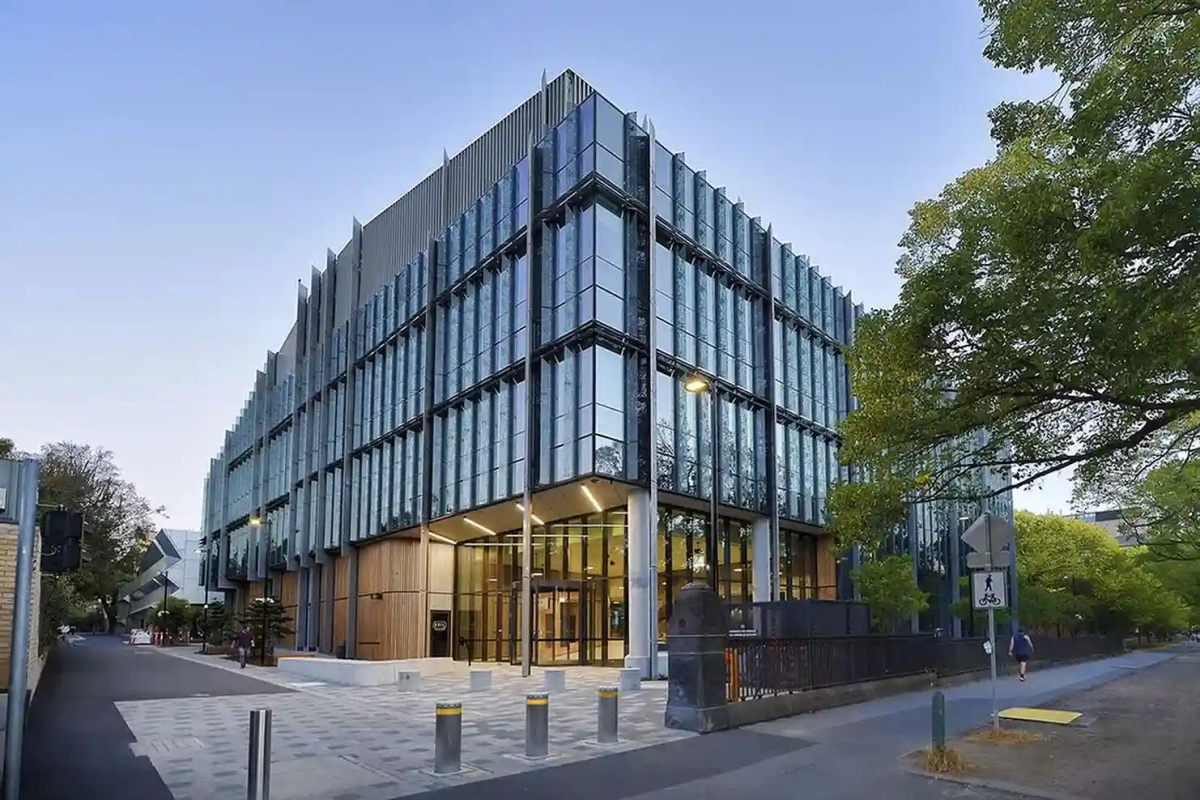
The University of Melbourne

Objectives

The University of Melbourne's primary objective is to benefit society through the transformative impact of its education and research. 

Main Academic Divisions (Faculties)

  • Faculty of Architecture, Building and Planning
  • Faculty of Arts
  • Faculty of Business and Economics
  • Faculty of Education
  • Faculty of Engineering and Information Technology
  • Faculty of Fine Arts and Music
  • Faculty of Medicine, Dentistry and Health Sciences
  • Faculty of Science
  • Melbourne Law School. 

Reasons to Study at The University of Melbourne

  1. Academic Excellence

    The University of Melbourne is world-renowned for its academic excellence and long-standing tradition of providing high-quality education. It offers several undergraduate and postgraduate programs encompassing various fields of study, including Arts, Science, Business, Engineering, Medicine, Law, and more. These programs provide students with a comprehensive understanding of their chosen disciplines, combining theoretical knowledge with practical skills.

  2. Campus and Facilities

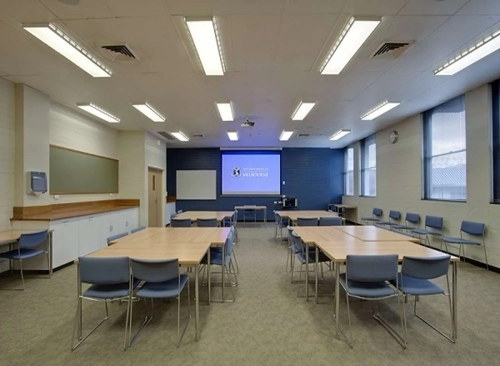
    The University of Melbourne boasts a beautiful and vibrant campus that provides students a conducive environment for learning, research, and personal growth. Modern and well-equipped learning spaces, including lecture theatres, classrooms, and tutorial rooms, have been designed to facilitate interactive and collaborative learning, incorporating the latest technologies and teaching methods.


  3. Industry Connections and Internship Opportunities

    The university strongly focuses on fostering industry connections and providing valuable internship opportunities to its students. Recognising the importance of practical experience and real-world exposure while pursuing higher education, the university has established robust partnerships with leading industries and organisations locally, nationally, and globally.

  4. Location

    The location of the University of Melbourne is one of its most appealing aspects to students. The university is situated in the heart of Melbourne, Australia’s cultural capital, and offers a vibrant and cosmopolitan environment that enhances the overall student experience.

Admission

Undergraduate Admission Requirement

View the Undergraduate Entry Requirements Page for information on the minimum eligibility requirements and the English language requirements.


Supporting Documents

  • Transcripts for your final secondary studies.
  • You must also provide the University with proof of English language proficiency. 
  • A clear, scanned colour copy of your passport is also required for identification purposes.
  • Additional documents such as personal statements, portfolios or results from aptitude tests may also be required – check your preferred degree's entry requirements before you start your application.


Postgraduate Admission Requirments

View the Postgraduate Entry Requirements Page for information on the minimum eligibility requirements and the English language requirements.

Supporting Documents

  • Copies of academic transcripts for all attempted tertiary study. Transcripts must show all subjects attempted and your academic results, including incomplete courses, study abroad or exchange subjects.
  • You must also provide the University with proof of English language proficiency. 
  • A clear, scanned colour copy of your passport is also required for identification purposes.
  • Additional documents such as personal statements, portfolios or results from aptitude tests may also be required – check your preferred degree's entry requirements before you start your application.


How To Apply For Admission

Applications are made directly to the University of Melbourne.

Admission Contacts

Phone : +61 3 9035 5511

Apply For Admission


Campus Tour

Facilities

  • Classrooms
  • Library
  • Laboratory
  • Research Center
  • Accommodation
  • Sports
  • Gym
  • ICT
  • Place of Worship
  • Cafeteria
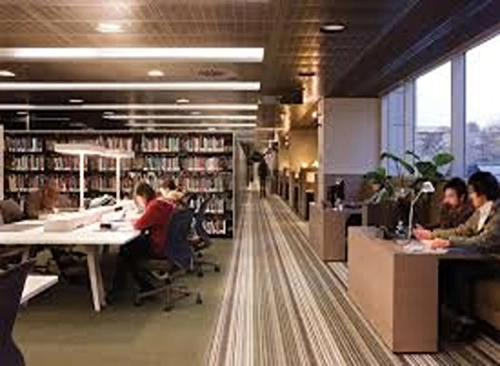
  • The University of Melbourne Library is a vast network across campuses, offering extensive physical (books, journals, unique items) and digital (e-books, databases) collections, plus vital support for research, teaching, digital curation, and media production, with dedicated spaces like the Baillieu Library and project rooms for study and collaboration, serving as a core knowledge hub for the university community. 
  • The University of Melbourne offers diverse student housing, including self-contained studio apartments, shared apartments with communal facilities, and affiliated residential colleges, providing options from independent living to a structured, social environment with meal plans. These accommodations offer amenities like furnished rooms, Wi-Fi, study areas, and are located conveniently near campus, with costs varying by type and inclusions (meals, utilities). 
  • The gym facilities include a heated 25-metre indoor lap pool, an extensive Group Fitness program featuring Yoga, Body Pump, Zumba, Pilates, HIIT, and many more, multiple workout areas that include TechnoGym cardio equipment, traditional strength training equipment, and the latest in functional training equipment.
  • The University of Melbourne provides several places of worship and multi-faith prayer facilities on and around its campuses, catering to the diverse spiritual and religious needs of its students and staff. These include dedicated spaces and access to nearby religious institutions. 
  • The University of Melbourne offers extensive, state-of-the-art laboratory facilities across various disciplines, including specialized spaces for biomedical research at the Melbourne Biomedical Precinct (like muscle performance, AI), engineering (structural, geotechnical), space research (Melbourne Space Lab), and advanced imaging (microscopy). These labs support cutting-edge research, provide advanced equipment for hire, foster collaborations with industry, and are staffed by professional teams for specialized services in areas from nanomaterials to cellular agriculture, focusing on innovation and solving global challenges. 


School Contact

Address

The University of Melbourne Grattan Street, Parkville Victoria 3010 Australia

Phone Number

+61 3 9035 5511

Website Address

https://www.unimelb.edu.au/

Social Media Pages

Accreditations

TEQSA

Vice Chancellor

Professor Emma Johnston AO

A distinguished researcher of marine environments, Professor Johnston has held multiple senior academic leadership positions at Australian Group of Eight universities, including as the Deputy Vice-Chancellor (Research) at the University of Sydney and Dean of Science at the University of New South Wales.


Academic Staff

  • Benjamin Avanzi

    Professor Benjamin Avanzi, PhD, Actuary SAA, GAICD, CERA, FIAA, is Professor of Actuarial Studies at the University of Melbourne. He has worked as an actuarial consultant in Switzerland and Canada, served as th... read more
    e Executive Chairman of the Board for a Swiss pension fund from 2006 to 2008, and has held full-time academic positions in Australia and Canada since 2008. Currently, he is also a member of the Management Board of the Theatre Royal in Hobart, Tasmania.


  • Airlie Chapman

    Professor Airlie Chapman received the Ph.D. degree from the William E. Boeing Aeronautics and Astronautics Department at the University of Washington, Seattle. She received the M.S. degree in Mathematics from U... read more
    niversity of Washington and the M.S. degree and the B.S. degree from the University of Sydney, Australia. She is currently a Professor in the Department of Mechanical Engineering at the University of Melbourne. She is the Director of the Melbourne Flight Lab and Deputy-Director of the Melbourne Space Lab.
     
  • Dr Eirini Goudeli

    Associate Professor

    Eirini Goudeli is Lecturer of Chemical Engineering at the University of Melbourne, Australia. She has a Diploma from University of Patras, Greece and PhD from ETH Zurich, Switzerland. 

  • Raymond Dagastine

    Professor Professor Dagastine is in the Department of Chemical Engineering at the University of Melbourne. He completed his degree in Chemical Engineering at the University of Delaware and then received his PhD... read more
    from Carnegie Mellon University. After which, he was awarded a US National Science Foundation International Postdoctoral Research Fellowship hosted by the School of Chemistry at the University of Melbourne.
View More Staff

Notable Alumni

View More Alumni

History

The University of Melbourne was established following a proposal by the Hugh Childers, the Auditor-General and Finance Minister, in his first Budget Speech on 4 November 1852, who set aside a sum of £10,000 for the establishment of a university. The university was established by Act of Incorporation on 22 January 1853, with power to confer degrees in arts, medicine, laws and music. The act provided for an annual endowment of £9,001, while a special grant of £20,000 was made for buildings that year. The foundation stone was laid on 3 July 1854, and on the same day the foundation stone for the State Library. Classes commenced in 1855 with three professors, all of whom, like the fo... read more
unding University Chancellor, Redmond Barry, were from Ireland. There were sixteen students; of this body of students only four graduated. The original buildings were officially opened by the Lieutenant Governor of the Colony of Victoria, Sir Charles Hotham, on 3 October 1855.