
The University of Newcastle in Australia is a public regional university known for its strong focus on industry-relevant curricula, innovative research, and commitment to student success. It offers a diverse study environment with a blend of academic excellence and a vibrant coastal lifestyle. The university emphasizes quality teaching, providing students with industry expertise and support.
| Acronym | UoN |
| Nickname | UoN |
| Motto / Slogan | I look ahead |
| Colour | Blue, black and white |
| Mascot | Hunter the Hippocampus |
| Founded | 1951 |
| Location | Newcastle, New South Wales, Australia |
| Address | Cnr King and Auckland Streets Newcastle NSW 2300 Australia |
The University of Newcastle Australia's mission is to "advance knowledge, share insights, and transform policy and practice for the benefit of all".
The University of Newcastle Australia's vision statement is: To be a world-leading university for our regions.

The University of Newcastle (Australia) objective is to be a world-leading university for its regions, focused on delivering an exceptional student experience and impactful research.
Equity seeks to create fairness and justice for marginalised people. Equity is different to equality as it is not just about providing an equal distribution of resources. The practice of equity recognises disadvantage and power imbalances and the need for tailored intentional, and comprehensive approaches to providing genuine pathways of access.
At the University of Newcastle, we stand firmly against racism in all its forms. We recognize that racism is a pervasive issue that is endemic in our society and embedded in Australian history and contemporary mainstream culture. Our commitment to fostering an inclusive and culturally responsive university requires us all to actively confront and dismantle racism.
We want our staff and students to reach their full potential. We have made it our priority to remove the structural, attitudinal, and environmental barriers that may stop a staff member or student with a disability from giving their best. The definition of ‘disability’ under the Disability Discrimination Act 1992 is broad and includes physical, intellectual, psychiatric, sensory, neurological, and learning disabilities
The University of Newcastle has a proud history of leadership in Indigenous education and engagement. But we are not complacent; more needs to be done. In partnership with the Office of the Pro Vice-Chancellor for Indigenous Strategy and Leadership and the Wollotuka Institute, we are working to ensure our commitment to Indigenous advancement is delivered.
Entry requirements vary by course. Check the course page for requirements.
Entry requirements vary by course and program. Check the course page for requirements.
Email: [email protected]
Phone : +61 2 4913 8300, +61 2 4921 5000



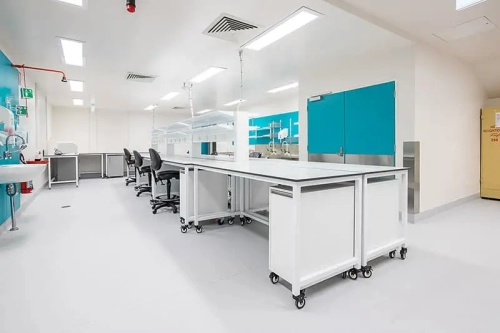
Research Center: The NHMRC Center for Research Excellence in Digestive Health aims to improve quality of life for patients with unexplained chronic gastrointestinal disorders. It brings together clinical researchers from universities, hospitals and research institutions across Australia and beyond. The center supports research, training, multidisciplinary collaboration, and translation of findings to enhance our understanding, identification and management of chronic digestive diseases
TEQSA
Prior to joini... read more
“It was a privilege to learn about the world through another’s eyes, understand the challenges they presented with and work with them to develop a broader or more effective range of skills so that no matter what life presented, they could cope better with it and have a sense of agency.”
But life had other plans because just as Juanita was completing her doctorate at the University of Western Australia an offer to join the University of Newcastle came her way. Academia on the other side of the country wasn’t initially on the table, but it presented a new and appealing opportunity. “I thought, well I do still have some questions so maybe I’ll just do this for a bit longer…” Juanita adds with a smile. “And you can imagine what happened next because the questions never end!”
Professor Elizabeth Sullivan has committed her career to putting rare maternal conditions on Australia’s public health agenda.
For much of her career, her focus was on improving outcomes for women with rare and severe medical conditions during pregnancy, such as amniotic fluid embolism, rheumatic heart disease and cancer. Then one day, an image she saw on television shocked Professor Sullivan, prompting her to expand her approach to studying rare pregnancy conditions.
“I remember being fascinated by the fact that the world could be interconnected in that way. Fascinated by global communication,” says Professor Greenberg.



The University of Newcastle began as a college of the University of New South Wales. It opened in late 1951 and accepted its first students in 1952.
It was located at Tighes Hill—on the same site as the TAFE NSW Hunter Institute, then known as a Technical College. The staff and students of the Newcastle University ... read more
In late 1964 the University of Newcastle was granted autonomy by the NSW parliament. It became an independent university in 1965.
The construction of the Great Hall demonstrated this community connection. It was funded largely by the community. Former Newcastle Lord Mayor Frank Purdue spearheaded a fundraising campaign. Community members 'bought a brick' to build the Great Hall. In 1971, the Foundation Stone was laid.
At the end of 1974, James Johnson Auchmuty, the University's Foundation Vice-Chancellor, retired. It ended a twenty year association with tertiary education in Newcastle and began a new era. He was succeeded by Don George, who inherited a much larger University and the challenge of shepherding an innovative medical program to maturity.
This period of the University's history has seen fundamental changes to the technologies with which we teach and the nature of student experience. In 1997 The Forum was opened. At the time, it was the largest gymnasium in the area. In the early days of the University, team sports, particularly Rugby, were popular. The Vice-Chancellor and other senior staff members rarely missed a game, always showing up in the University colours. By the mid-nineties this had shifted; students continued to pursue fitness as part of their University experience, but now they did so on their own schedule.