
ListOfUni

The University of Queensland (UQ)

Queensland, Australia
Visit School Website
  • Public Type
  • 57,154 Students
  • 5 Faculties
  • 1909Founded
  • YesAccept Int. Studs
  • YesDistance learning

About

The University of Queensland (UQ) is a leading Australian research and teaching institution, consistently ranked among the world's top universities. UQ aims to provide knowledge leadership for a better world, focusing on research, diversity and inclusion, and sustainability. With a strong focus on teaching excellence, UQ has won more national teaching awards than any other Australian university. 

Acronym UQ
Motto / Slogan By means of knowledge and hard work
Colour Purple
Founded 1909
Location Brisbane, Queensland, Australia
Address St Lucia QLD 4072, Australia

Mission

The University of Queensland's (UQ) mission statement is to deliver for the public good through excellence in education, research, and engagement with our communities and partners – both locally and globally. 

Vision

The University of Queensland's vision is to provide knowledge leadership for a better world. 
The University of Queensland

Objectives

The University of Queensland's vision is "knowledge leadership for a better world". Their mission is to positively influence society by engaging in the pursuit of excellence through the creation, preservation, transfer, and application of knowledge. They achieve this by fostering partnerships, inspiring the next generation, and advancing ideas that benefit the world. 

Main Academic Divisions (Faculties)

  • Business, Economics and Law (BEL)
  • Engineering, Architecture and Information Technology (EAIT)
  • Health, Medicine and Behavioural Sciences (HMBS)
  • Humanities, Arts and Social Sciences (HASS)
  • Science. 

Reasons to Study at The University of Queensland

  1. Where your future finds you

    At The University of Queensland, everything comes together—the right people, the right opportunities, and the right place at the right time. There, you’ll find a global top 50 university in Australia’s fastest-growing city, where world-class research meets a pioneering spirit. 


  2. The right people. The right connections.

    At the University of Queensland, you’ll meet like-minded people who challenge and support you and create lifelong connections. You’ll learn from Australia’s most awarded teachers and world-renowned researchers who dare to imagine.


  3. Experience a campus lifestyle like no other

    Whether you're an undergraduate, postgraduate or research student, you'll have access to purpose-built facilities designed to inspire creativity, focus and collaboration. UQ is home to a flourishing startup community and six world-class research institutes, creating an environment where innovation thrives.

  4. Scholarships

    The University of Queensland offers the most generous scholarship offering in the state, supporting students from all backgrounds to succeed in their studies.

Admission

Undergraduate Admission Requirement

To be considered for an offer to a program, you'll need to meet all the entry requirements. View the Entry Requirements Page for more information.


Supporting Documents

  • Evidence of your previous study, such as certified copies of complete academic transcripts and/or testamurs for any non-UQ studies
  • Copy of your passport or national ID card
  • Evidence that you meet the English language requirements.

Postgraduate Admission Requirments

To be considered for an offer to a program, you'll need to meet all the entry requirements. View the Entry Requirements Page for more information.

Supporting Documents

  • Evidence of your previous study, such as certified copies of complete academic transcripts and/or testamurs for any non-UQ studies
  • Copy of your passport or national ID card
  • Evidence that you meet the English language requirements.

How To Apply For Admission

Applications are made directly to UQ via the Online Application Portal.

Admission Contacts

Email: [email protected]
Phone : +61 7 3346 9872, +61 7 3346 0503

Apply For Admission

Campus Tour

Facilities

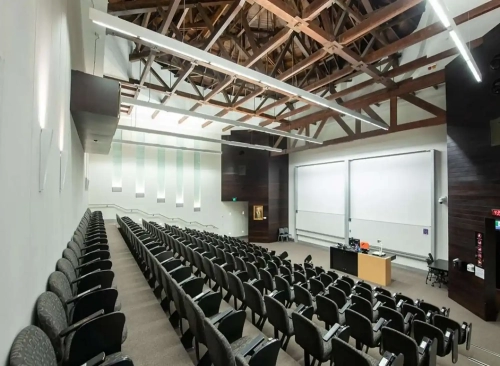
  • Classrooms
  • Library
  • Laboratory
  • Research Center
  • Accommodation
  • Sports
  • Gym
  • ICT
  • Place of Worship
  • Cafeteria
  • ICT: UQ provides free access to computers running Microsoft Windows at workstations across their campuses.
  • Library: The University of Queensland Library offers extensive, modern facilities including 24/7 study spaces with student ID access, quiet zones, soundproof booths, and tech-equipped rooms for diverse learning needs, plus printing, copying, and laptop lending. Key locations like the Central Library, Duhig Tower, and Biological Sciences Library provide various zones, assistive technology, and amenities like nap pods and EnergyPods for a comprehensive student support system, welcoming visitors during staffed hours. 
  • Sports: The University of Queensland (UQ) offers extensive sports facilities at its St Lucia campus, including the large Sport and Recreation Precinct with playing fields, courts (netball, basketball, volleyball), an Aquatic Centre (Olympic pool, 25m pool), Tennis Centre, and Athletics Centre, alongside fitness centers and community spaces, with a major new Fitness Centre under construction for a 2027 opening to enhance student, staff, and community sports and wellness experiences. 
  • Place of Worship: The University of Queensland  provides inclusive multi-faith spaces and support through its Multi-Faith Chaplaincy at St Lucia (Building 38), offering prayer rooms, a non-denominational chapel, meditation rooms, and meeting spaces for various faiths, alongside numerous student religious groups like Campus Christian Movement (CCM) and Hope Brisbane Club (HBC) that host events, Bible studies, and fellowship, fostering spiritual growth and community for students of all beliefs. 
  • Laboratories: The University of Queensland boasts over 2,300 laboratories across its campuses, featuring cutting-edge facilities for teaching and research, from advanced microscopy and mass spectrometry in the Faculty of Science to specialized mRNA manufacturing and isotope analysis at the BASE facility and Radiogenic Isotope Facility, supporting diverse fields like medicine, environment, and geoscience with high-tech equipment and flexible spaces for both students and researchers. 
  • Accommodation: The University of Queensland offers diverse, modern on-campus accommodation with options like ensuites, air-conditioned rooms, high-speed internet, communal kitchens, study areas, and social spaces, including newer residences like Kev Carmody House with rooftop pools, alongside traditional halls and houses, catering to various student needs for convenience and community at its St Lucia and Gatton campuses. 


School Contact

Address

St Lucia QLD 4072, Australia

Phone Number

+61 7 3365 1111

Website Address

https://www.uq.edu.au/

Accreditations

TEQSA

Vice Chancellor

Professor Deborah Terry AC

Professor Deborah Terry AC is a highly experienced leader in the Australian university sector – and an internationally recognised scholar in psychology. Since August 2020, Professor Terry has served as Vice-Chancellor and President of The University of Queensland (UQ). Prior to this, she was Vice-Chancellor of Curtin University in Western Australia, from 2014 to 2020. Having grown up in Perth an... read more
d Canberra, Professor Terry completed her PhD in Social Psychology at the Australian National University in Canberra. She moved to Brisbane in 1990 to begin her academic career in UQ’s School of Psychology. Between 1990 and 2014, Professor Terry progressed through a range of academic positions at UQ before moving into senior university leadership roles, eventually becoming Senior Deputy Vice-Chancellor.


Academic Staff

  • Dr. Anthony B. Halog

    Professor Dr. Anthony B. Halog is a professor at the University of Queensland specialising in circular economy, sustainability engineering, industrial ecology, and life cycle assessment (LCA/LCSA). His current ... read more
    work focuses on designing low-carbon, net-zero, and resource-efficient systems to address climate change, waste reduction, and sustainable development.


  • Nicholas Aroney

    Professor Nicholas Aroney is Professor of Constitutional Law at The University of Queensland, Director (Public Law) of the Centre for Public, International and Comparative Law and a Senior Fellow of the Centre ... read more
    for Law and Religion at Emory University. In 2010 he received a four-year Future Fellowship from the Australian Research Council to study comparative federalism and in 2021 he secured an Australian Research Council Discovery Grant to investigate the nature and function of constituent power in federal systems. He has held visiting positions at Oxford, Cambridge, Paris II, Edinburgh, Durham, Padua, Sydney, Emory and Tilburg universities.


  • Justine Bell-James

    Professor Justine Bell-James is a Professor at the TC Beirne School of Law with expertise in environmental and climate change law. She holds a PhD from QUT (2010) and was a postdoctoral research fellow at UQ's ... read more
    Global Change Institute from 2011-2013.


  • Dr Alberto Baldelli

    Senior Lecturer Dr. Baldelli joined the School of Agriculture and Food Sustainability and the Queensland Alliance for Agriculture and Agriculture and Food Innovation (QAAFI) in 2024 as a Senior Lecturer. He achieved ... read more
    his PhD from the University of Alberta in Particle Engineering; after that, he obtained a Postdoctoral Fellowship and a Research Fellowship at the Faculty of Food and Land Systems at the University of British Columbia.


View More Staff

Notable Alumni

View More Alumni

History

The University of Queensland (UQ) began in 1910, the state's first university, starting teaching in Brisbane's Old Government House in 1911, focusing on public good, and rapidly grew post-WWI, moving to the St Lucia campus, expanding with Gatton and Ipswich campuses, and becoming a major research institution known globally, embodying its founding vision of serving the public good through education and research.