
University of Science and Technology (UST) is a national graduate research university in South Korea, headquartered in Yuseong-gu, Daejeon.
Unlike a conventional university, UST uses a research-institute-based education model. Its degree programs are delivered through government-funded research institutes designated as UST Schools. Students therefore undertake their academic education alongside practical research at major Korean national research institutes.
UST's education focuses strongly on research experience, interdisciplinary convergence and practical application of science and technology. Its programs cover areas including artificial intelligence, biotechnology, energy, environment, materials, robotics, semiconductors, digital communications, basic sciences and other strategic technologies.
The Korean government's Study in Korea database reports that approximately 80% of UST courses are taught in English, making the university particularly relevant for international graduate students.
| Acronym | UTS |
| Colour | Red |
| Mascot | Pegasus |
| Founded | 2003 |
| Location | Yuseong, Daejeon, South Korea |
| Address | (34113) 217 Gajeong-ro, Yuseong-gu, Daejeon 34113, Republic of Korea |
Work alongside government-funded research institutes to cultivate talented individuals in the field of science and technology with the potential to generate future value.
Serve as a government-funded research institute university that nurtures key future talent.
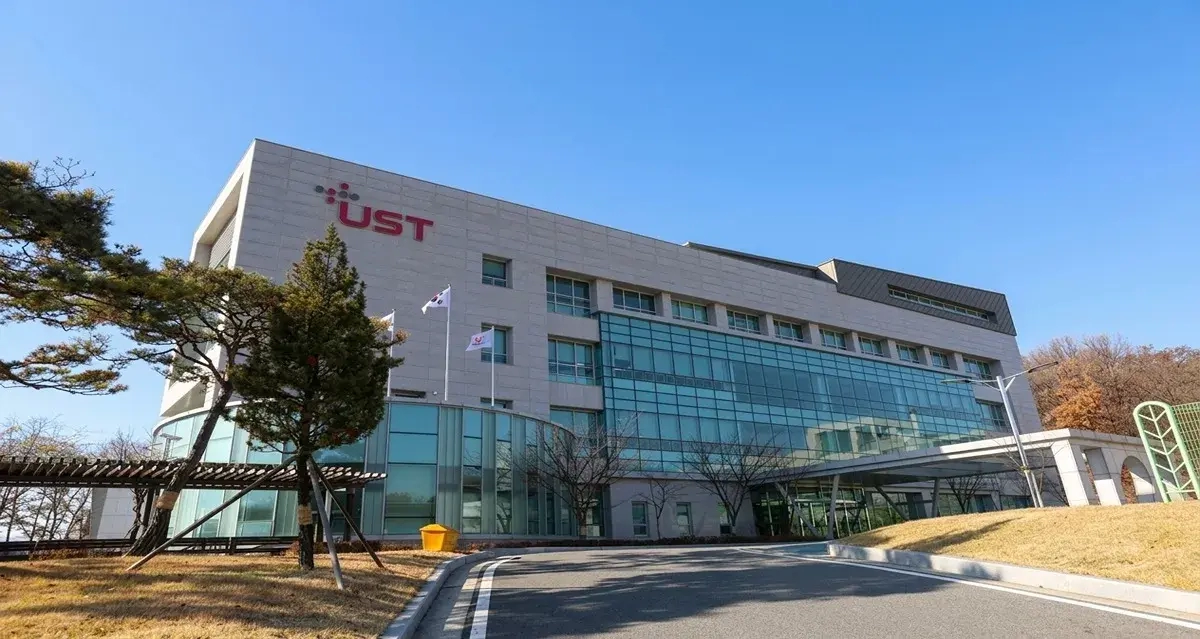
Management Goals
Establish a future-oriented model foro graduate school education in the field of science and engineering by expanding the role and duty of university headquaters and affiliated research institutes.
UST combines graduate education with Korea’s government-funded research institutes, allowing students to undertake practical research in professional research environments.
UST offers programmes in areas such as Artificial Intelligence, Biotechnology, Biomedical Science, Energy, Environmental Science, Materials Science, Nuclear Science, Robotics, Transportation, Ocean Science and Information Technology.
Students can conduct research using specialized laboratories, scientific equipment, and research infrastructure available through UST’s participating research institutes.
Its connection with national research institutes provides students with exposure to real-world research and technological development rather than relying only on classroom-based learning.
UST is for Postgraduates only.
Nationality
For the general international admission:
Educational Background
The degree requirement depends on the programme:
Master's
Bachelor's degree
Integrated Master's/PhD
Bachelor's degree
PhD
Master's degree
Applicants can also qualify if they:
If relying on an equivalent qualification, the applicant must provide supplementary documentation proving the equivalency.
Language Proficiency
Applicants must meet the minimum language score required by the particular UST School they are applying to.
The accepted tests listed include:
The exact minimum depends on the School. For most Schools, the requirement is TOEFL iBT 79 / New TEPS 277 / IELTS 6.0 / TOPIK 4, while some Schools, such as KIER, require TOEFL iBT 91 / New TEPS 309 / IELTS 6.5 / TOPIK 5.
For PhD applicants
In addition to the above, PhD applicants must provide:
6. Master's Degree Certificate
7. Master's Degree Transcript
8. Master's Thesis
9. Recommendation Letter
Step 1
Select your admission track and complete the survey
Step 2
Enter applicant information
Step 3
Write an academic and research plan
Step 4
Upload the required documents
Step 5
Personal medical check (self-assessment)
Step 6
Final review and pay the application fee
Step 7
Complete the application
Email: [email protected]
Phone : +82-42-865-2426


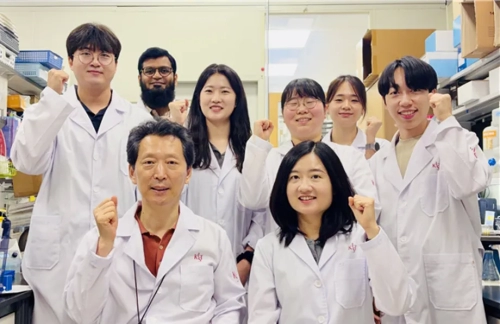
UST is a national research institute university established under the Korean government's national research-institute system. Its academic model is based on graduate education conducted in collaboration with government-funded research institutes. The Korean government's Study in Korea portal lists UST as a recognized Korean university and describes its field-research-based education system across government-funded research institutes.




UST officially began its academic operations in March 2004, when it held its first entrance ceremony. The university was designed to provide research-oriented, field-based education by integrating graduate education with the research infrastructure of Korea's government-funded research institutes.
Today, UST operates as a national research institute university, with graduate education closely ... read more