
For more than 100 years since its establishment in 1918, the University of Seoul has faithfully performed its mission to explore truth and to serve society through creative research. As a result, the University of Seoul is recognized as a well-taught university and is evaluated as a small but strong university that conducts influential and substantial research.
With all these assets, the University of Seoul will continue to produce leaders of the future Korea with challenge spirit and warm humanity, and to present a new model of prestigious universities leading the era of the Industry 4.0 through extensive support for Big Data, Artificial Intelligence, Intelligent Semiconductors, and Smart Cities. Furthermore, based on the educational and research achievements so far, the University of Seoul will play a role as a responsible public university that contributes to the development of the country and human society as well as solving problems in Seoul. The University of Seoul has grown into a prestigious university in Korea over the past 100 years, and it will become a world-class educational and research institution that rivals the world's leading universities for the next 100 years.
| Acronym | UOS |
| Nickname | Siripdae |
| Motto / Slogan | U, Our Star |
| Colour | Blue |
| Mascot | Hawk |
| Founded | 1918 |
| Location | Dongdaemun, Seoul, South Korea |
| Address | University of Seoul 163 Seoulsiripdaero, Dongdaemun-gu, Seoul 02504 KOREA |
The University of Seoul's mission is to explore truth and serve society through creative research. Its educational philosophy is guided by the motto “Truth, Creation, and Service.” UOS also aims to contribute to Seoul and society through education, research, innovation, and cooperation with local and global communities.
EDUCATIONALINNOVATION
Nurturing innovative talentswho will leadthe development offuture society
RESEARCHINNOVATION
Leading advancedconvergence researchresponding tochanging times
ACADEMIC COOPERATIONWITH INDUSTRY GOV'TFOR STARTUP SUPPORT
Expanding academic cooperationnetworks with industry andgovernment and supporting startupentrepreneurship andlifelong education
COOPERATION WITHLOCAL & GLOBALCOMMUNITIES
Coexistence and cooperationwith Seoul, local communities,and the world
ADMINISTRATIVE &FINANCIALINFRASTRUCTURE
Building university developmentinfrastructure looking ahead tothe next 100 years.
UOS is particularly renowned for urban studies, with programmes covering urban planning, administration, transportation, engineering, environmental policy, and related disciplines. Its College of Urban Sciences was established to develop practical solutions to complex urban problems, including those facing Seoul.
UOS provides scholarships for international students, including full- and half-tuition scholarships based on academic performance. For undergraduate international students, the top 10% can receive full tuition and the next 20% can receive half tuition under the stated scholarship system.
UOS places emphasis on connecting education with government, industry and real-world urban challenges. This is especially valuable for students interested in public administration, urban development, engineering, environmental studies, economics, business and policy.
UOS's strategic goals include strengthening research in basic academic fields, advancing urban science research, promoting industry-government-academia cooperation, and supporting entrepreneurship and future technologies.
1) Application fee: KRW 80,000
Nationality
The candidate AND both of his or her parents must be non-Koreans.
Applicants who are stateless or hold multiple nationalities, one of which is Korean citizenship, are ineligible to apply as
international students.
If an applicant or the applicant’s parents do NOT hold foreign nationality by birth, then the applicant must submit proof of
their renunciation or loss of South Korean (ROK) citizenship in pursuit of another nation’s citizenship. (Only for cases where an
applicant and his/her parents had all acquired foreign nationality before the applicant’s entrance to high school.)
If a applicant is adopted and acquired a foreign nationality, he/she can apply only if he/she has acquired a foreign nationality
before entering elementary school (G1)
Freshman Applicant
Graduates (or expected graduates) of regular high schools in Korea or abroad, or those recognized as having equivalent or higher academic qualifications under the law.
Transfer students
Language Proficiency Requirements
- A person who meets the above nationality and educational background requirements and meets one of the following conditions:
Freshman applicants
Has achieved (or expected) level 3 or higher on the TOPIK or TOPIK IBT
Has completed (or expected) level 3 or higher at the Korean Language and Culture Program (KLCP) of the University of Seoul
Has completed (or expected) KLCP level 4 or higher at the certified university of the International Education Quality
Assurance System (IEQAS).
Has completed the middle and high-level Korean language understanding curriculum for overseas Koreans of NIIED
Transfer applicant
Has achieved (or expected) level 4 or higher on the TOPIK or TOPIK IBT
Has completed (or expected) level 4 or higher at the Korean Language and Culture Program (KLCP) of the University of Seoul
Has completed (or expected) KLCP level 5 or higher at the certified university of the International Education Quality
Assurance System (IEQAS).
Applicants must scan and upload the above documents that are valid until the deadline for online applications.
Trial test result are not accepted.
All students of UOS must meet the Korean language requirement for graduation by obtaining a TOPIK level 4 or higher.
If you are planning to obtain a TOPIK or expected to complete a KLCP, you have to submit your examination admission ticket or proof
of enrollment when applying for admission. In this case, a TOPIK certificate or certificate of completion of KLCP must be submitted by
the period below. (If not submitted within the period, you will be disqualified.)
- Spring semester of the 2025: Until November 29, 2024 (Fri), 6PM
- Fall semester of the 2025: Until May 30, 2025 (Fri), 6PM
Among the students accepted to the University of Seoul, those who do not attain level 4 (or higher) on TOPIK or complete level 4 or
higher at the Korean Language and Culture Program of the University of Seoul are permitted to register for maximum of 9 credits
each semester and must register for the Korean Language and Culture Program (KLCP) of the University of Seoul at their own
expense until language standards are met. (Refer to following details)
Required Materials for Freshman Applicants
Any documents not written in Korean or English should be notarized in English. (original document should be attached)
All documents must be original hard copy and issued within one year of the deadline of document submission.
Be careful not to enter information incorrectly, such as Korean name, English name (based on the English name written in the
passport), date of birth, phone number, and email address.
In addition to the above documents, related documents may be requested to determine the eligibility and authenticity of the
application.
Application documents are available on the OIA website (http://oia.uos.ac.kr) to download and print.
Nationality: A person who is either ? or ? of the following:
? Applicants must be non-Korean citizens with non-Korean parents.
? Applicants who are stateless or hold multiple nationalities including Korean citizenship are ineligible to apply as
international students.
? If an applicant or the applicant’s parents do NOT hold foreign nationalities by birth, then the applicant must submit proof
of their renunciation or loss of South Korean(ROK) nationality in pursuit of another nation’s citizenship. (Note: in this case
where an applicant and his/her parents all had acquired foreign nationality before the applicant’s entrance to high school.)
? A foreign applicant or a Korean national residing abroad who has completed education equivalent to that of Korean primary
education to Bachelor’s degree in foreign countries.
? In case of ?, an applicant who has completed even one program at a Korean school during his/her entire education course is not eligible to apply.
Academic background
? Applicants’ academic degree must be from official and authorized educational institution recognized by Ministry of Education
of the applicant’s own country.
? Any school qualification exams taken in Korea or foreign countries, such as via home-schooling, GED, adult education or
language schools for primary education to Master’s degree are not deemed as a regular school curriculum.
? Master’s degree: an applicant who holds any of the following qualifications:
(1) An applicant who has obtained a Bachelor’s degree or is expected to receive it before enrollment from a domestic or
foreign university.
(2) An applicant who is recognized to have an academic background that is in equivalence to the aforementioned, according
to the Korean educational law.
? Doctor’s degree: an applicant who holds any of the following qualifications:
(1) An applicant who has obtained a Master’s degree or is expected to receive it before enrollment from a domestic or
foreign university.
(2) An applicant who is recognized to have an academic background that is in equivalence to the aforementioned, according
to the Korean educational law.
Language Proficiency Requirements
? Has achieved (or expected) level 3 or higher on the TOPIK (PBT/IBT)
? Has completed (or expected) level 3 or higher at the Korean Language and Culture Program (KLCP) of The University of Seoul (UOS).
? Has completed (or expected) level 4 or higher at the regular curriculum of an official Korean language institution of domestic
university which is certified by the International Education Quality Assurance System (IEQAS)
? Has completed intermediate or advanced level in the Korean Government Support Program for Overseas Koreans of the National
Institute for International Education (NIIED)
? Has graduated (or expected) from a Korean-related department at a foreign university
? Has graduated (or expected) from a domestic university or graduate school
? Standardized English proficiency test score (one of the following):
a. TOEFL iBT 71 (PBT 530, CBT 197) or higher
b. IELTS 5.5 or higher
c. TEPS 327 or higher
? Has submitted a written by a full-time professor of an applying department of the University of Seoul.
• Online application at http://oia.uos.ac.kr
Online applications procedure
Click ”????(Apply)” or ”??????(Proceed to the application)” ? Fill out the application
? Pay admission fee online ? Print out the application ? Send required documents with the application
Email: [email protected]
Phone : +82-2-6490-6662, +82-2-6490-6663, +82-1588-8988
University Institution Evaluation Accreditation: UOS has successfully obtained institutional accreditation for three consecutive cycles:



The University of Seoul's foundation dates back to the opening of Gyeongseong Public Agricultural School on May 1, 1918, followed by the transformation into the Seoul Agricultural Junior College in June 1950. The college was then upgraded to a four-year university and renamed as Seoul Agricultural College in March 1956 with a focus on academic research in the field of agriculture.
In March 1974, recognizing the need for university education that fits social changes and regional characteristics, agricultural departments were abolished and reorganized into urban-related departments, and the school name was changed to Seoul Industrial University. In January 1975, the mana... read more
In October 1981, to foster a genuine city university, the school name was changed to the University of Seoul, and master's and doctoral degree programs were established in the graduate school.
In March 1982, the Graduate School of Urban Administration was opened to conduct in-depth research on the ever-expanding areas of urban problems and to nurture professional intellectuals in urban studies. After completing essential affiliated institutions for university education and establishing various research institutes, the university developed a comprehensive research program, thus achieving the appearance of a well-rounded university.
On this foundation, the university was reorganized as a comprehensive university on November 6, 1986, and began operating as the current-day University of Seoul from the 1987 academic year.
In March 1990, the Graduate School of Business Administration was established to nurture competent business leaders, and in March 1991, the Graduate School of Industry was opened to cultivate advanced technical personnel, thus establishing a system to explore various academic fields extensively.
Since establishing a sister university relationship with the University of Akron in Ohio in August 1986, the University of Seoul signed exchange agreements with Tokyo Metropolitan University, Yokohama National University, Tokyo Gakugei University, and Hiroshima Women's University in Japan, as well as Budapest University in Hungary, University of Lodz in Poland, Morehead State University in Kentucky, and University of Technology Sydney in Australia.
Furthermore, under the motto of "truth, creation, and service," the University of Seoul teaches and researches academic fields that contribute to the nation and human society. The basic goals of our university are: to become a specialized and prestigious university in urban science-related disciplines; to serve Seoul citizens and contribute to city administration; and to lead higher education in the 21st century. Especially to foster and develop as a university centered on urban science, the College of Urban Sciences was established in 1997, providing education and research that can present comprehensive solutions to metropolitan problems through theoretical research and education along with practical approaches. In April 1998, to respond to the era of globalization and informatization and for higher-dimensional urban policy research, existing urban-related affiliated research institutes were integrated to establish the Institute of Urban Science. In 1999, to preserve the independence and characteristics of art studies, art-related departments were separated from the College of Liberal Arts and Sciences to establish the College of Arts.
In 2000, the University of Seoul opened its Anti-Corruption Administrative System Research Institute as well as the Urban Disaster Prevention and Safety Research Institute in January, and established the Business Incubation Center in March. From March, to firmly establish the foundation as a research-centered university in urban science, the Graduate School of Urban Administration was expanded and reorganized into the Graduate School of Urban Sciences, and the Graduate School of Taxation was opened to nurture tax professionals, along with the Graduate School of Education to cultivate advanced personnel in the field of education.
In July 2001, the College of Arts was renamed the College of Arts and Sports, and the Department of Sports and Leisure Studies was newly established. In October, the E-Government Research Institute was opened to successfully implement Seoul's e-government administration. In February 2004, the Local Tax Research Institute was established, and in March, the Graduate School of Design was founded to nurture design professionals.
In April 2004, the Industry-Academic Cooperation Foundation was established, and the Design and Sculpture Building was newly constructed and opened. In September 2004, the College of Digital Media was abolished, and the College of Liberal Arts and Sciences was separated into the College of Humanities and the College of Natural Science, reorganizing the university's educational structure. Additionally, the administrative organization was rationally restructured, including the establishment of the Institute of International Education to enhance global competitiveness and changing the name of the Electronic Computation Center to the Computing and Information Services.
In August 2005, the UOS Campus Master Plan was prepared with the goal of the university's 100th anniversary in 2018, establishing an annual development plan for rational space adjustment and efficient operation. In September, the Seoul Regional Environmental Technology Development Center, designated by the Ministry of Environment, was attracted to our university to resolve environmental complaints in Seoul, conduct environmental policy research and development, and nurture technical personnel.
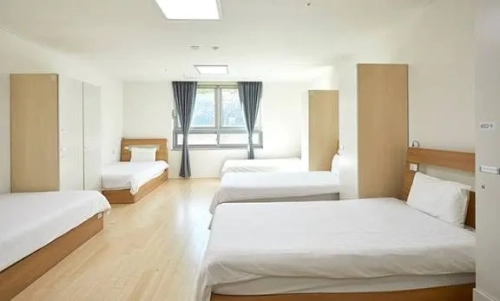
As the engineering education accreditation program was implemented starting with the 2006 academic year freshmen, the Engineering Education Support Center was opened in April 2006 to support the revision of department-specific curricula necessary for engineering education accreditation. Additionally, in August 2006, a dormitory with a total of 309 rooms was opened, and in January 2007, the university obtained the highest grade in the International Architectural Education Accreditation for the first time in Korea.
In January 2020, organizational restructuring was carried out, including the establishment of a vice president system, the creation of the Future Innovation Institute, and the separation of the graduate school administration office, to effectively deal with external relations and current issues, strengthen the internal management system, and establish and lay the foundation for a future innovation promotion system. In April, two advanced departments (Department of Artificial Intelligence, and Department of Convergence and Applied Chemistry) were established to nurture professional talents in advanced technology and new industry fields. In May, the remodeling of the basement of the Student Union Building was completed, and in June, the Urban Science Big Data and AI Research Institute was established to lead the 4th Industrial Revolution. In September, the Student Future Design Semester System curriculum was implemented, and the IR Center was established to strengthen data-based comprehensive performance management and research systems. In November, the 1st UOS President's Cup E-Sports Tournament was held, and the expansion of the Architecture and Civil Engineering Building was completed. In December, with the completion of the Youth UP Platform, various youth startup programs are planned to be supported. In addition, the university was selected for large-scale government financial support projects, including 1.1 billion won for the High School Education Contribution University Support Project, 2.0 billion won for the LINC+ 4th Industrial Revolution Innovation Leading University Project, 14 billion won for the 4th stage BK21 Project, and 2.5 billion won for the International Cooperation Leading University Nurturing and Support Project.
In January 2023, the Engineering Research Institute was opened, and the Engineer of the Year Award ceremony was held to boost the morale of those who contributed to the development and academic research in the field of engineering. In February, the UOS Convergence Building was completed, addressing the shortage of education and research space for science and engineering departments and creating safe laboratories, resulting in a reborn pleasant education and research environment. In March, Dr. Won Yong-gul took office as the 10th President of UOS. In May, the University Job Plus Center was opened to provide youth-specific one-stop career and employment services for students, graduates, and local youth until February 2028. In June, the University of Seoul was selected as a participating university in the 2023 Advanced Field Innovation Convergence University Project's "Next-Generation Communications" field, organized by the Ministry of Education and the National Research Foundation of Korea, contributing to cultivating talent in advanced fields through flexible faculty and academic systems and corporate participation projects. In August, the 2023 Seoul Policy Sharing International Conference was held with the participation of about 120 invited guests and urban officials from 22 countries, including the Deputy Minister of Land Management, Urban Planning and Construction of Cambodia, to confirm the University of Seoul's contributions to the international community and Seoul's major current issues as well as to promote mutual development between cooperative cities and Seoul through future policy sharing. Additionally, the Intelligent ?Wave Energy Research Center (RCC) was opened to focus on developing core and original technologies for intelligent microwave energy systems. In September, a public debate of the Tuition Normalization Public Discussion Committee was held, with about 200 students, professors, and staff members participating in in-depth discussions on university development and tuition increases. In October, the University of Seoul was selected for the Climate Change Specialization Graduate School Support Project and plans to cultivate specialized personnel to respond to climate change through industry-academia cooperation. In November, the 2023 UOS Industry-Government-Academia Cooperation Festival was held to share outstanding achievements in university industry-government-academia cooperation and provide a platform for exchange, including promotion of companies and institutions.
To nurture global leaders, academic exchange agreements have been signed with prestigious foreign universities, and as of February 2024, various academic and student exchange activities are being conducted with 393 universities in 62 countries. Through the International Student Exchange Program (ISEP), which the university joined in July 2015, student exchange activities have become possible with about 260 schools worldwide. The number of universities with exchange agreements by region is 64 in North America, 157 in Asia, 145 in Europe, 5 in Oceania, 17 in Latin America, and 5 in Africa.
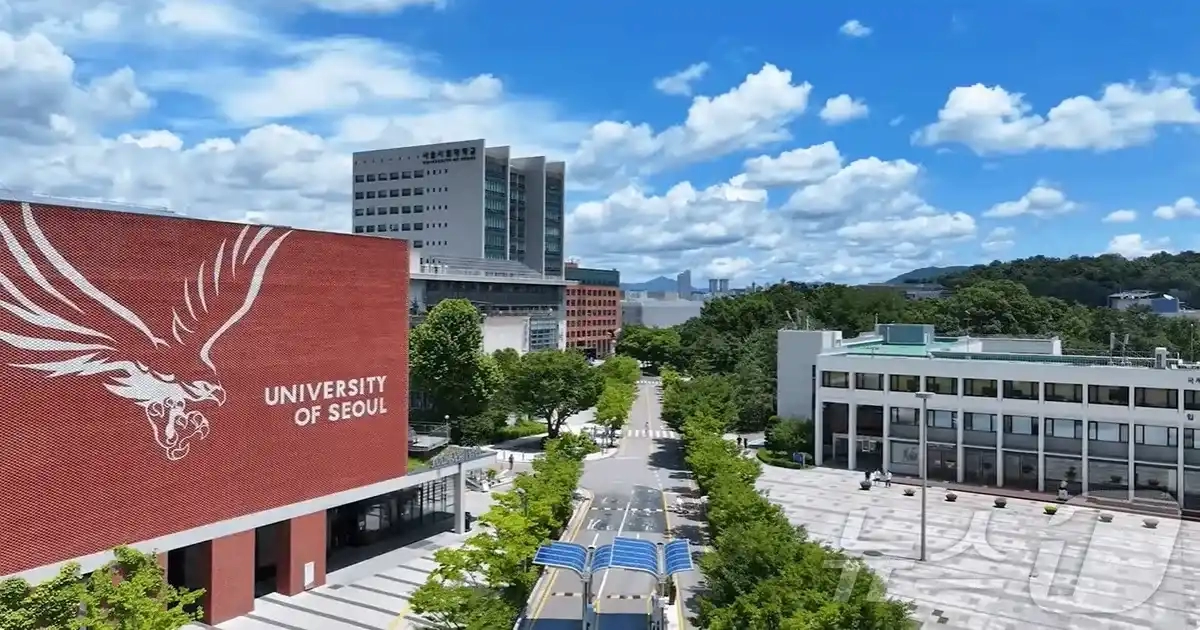
Located on a 434,004 m² campus at the foot of Baebongsan Mountain in the historic neighborhood of Jeonnong-dong, the University of Seoul has been producing professional talents required by the nation and society for 100 years. As a result of the university working together with the city to strengthen its academic foundation, it currently has 8 colleges with 39 departments and schools with a total admission quota of 1,747 students, and 10 graduate schools with a total admission quota of 1,316 students. To date, more than 70,000 graduates are playing pivotal roles in various sectors of society, and over 10,000 current students are dedicated to academic research and character development on campus.