
Founded in 1827, the University of Toronto has evolved into Canada’s leading institution of learning, discovery, and knowledge creation. It is proud to be among the world’s top research-intensive universities, driven to invent and innovate.
| Acronym | UToronto |
| Nickname | Varsity Blues |
| Motto / Slogan | Like a tree through the ages |
| Colour | U of T Blue (Hex: #1E3765) |
| Mascot | True Blue the Beaver |
| Founded | 1827 |
| Undergraduate Programmes | |
| Postgraduate Programmes | 200 |
| Location | Toronto, Ontario, Canada |
| Address | University of Toronto 27 King's College Circle Toronto, Ontario M5S 1A1 Canada |
Dedicated to fostering an academic community in which the learning and scholarship of every member may flourish, with vigilant protection for individual human rights and a resolute commitment to the principles of equal opportunity, equity, and justice.
To be a global leader in higher education, research, and innovation, contributing to the betterment of society through excellence in teaching, learning, and discovery.
Advance and disseminate knowledge through teaching and research
Foster critical thinking, innovation, and creativity
Promote equity, diversity, and inclusion within the academic community
Engage with local and global communities to address societal challenges
Arts & Science, Applied Science & Engineering, Medicine, Law, Music, Nursing, Pharmacy, Dentistry, Information, Forestry, Kinesiology & Physical Education, Architecture, Landscape & Design, Social Work, and others.
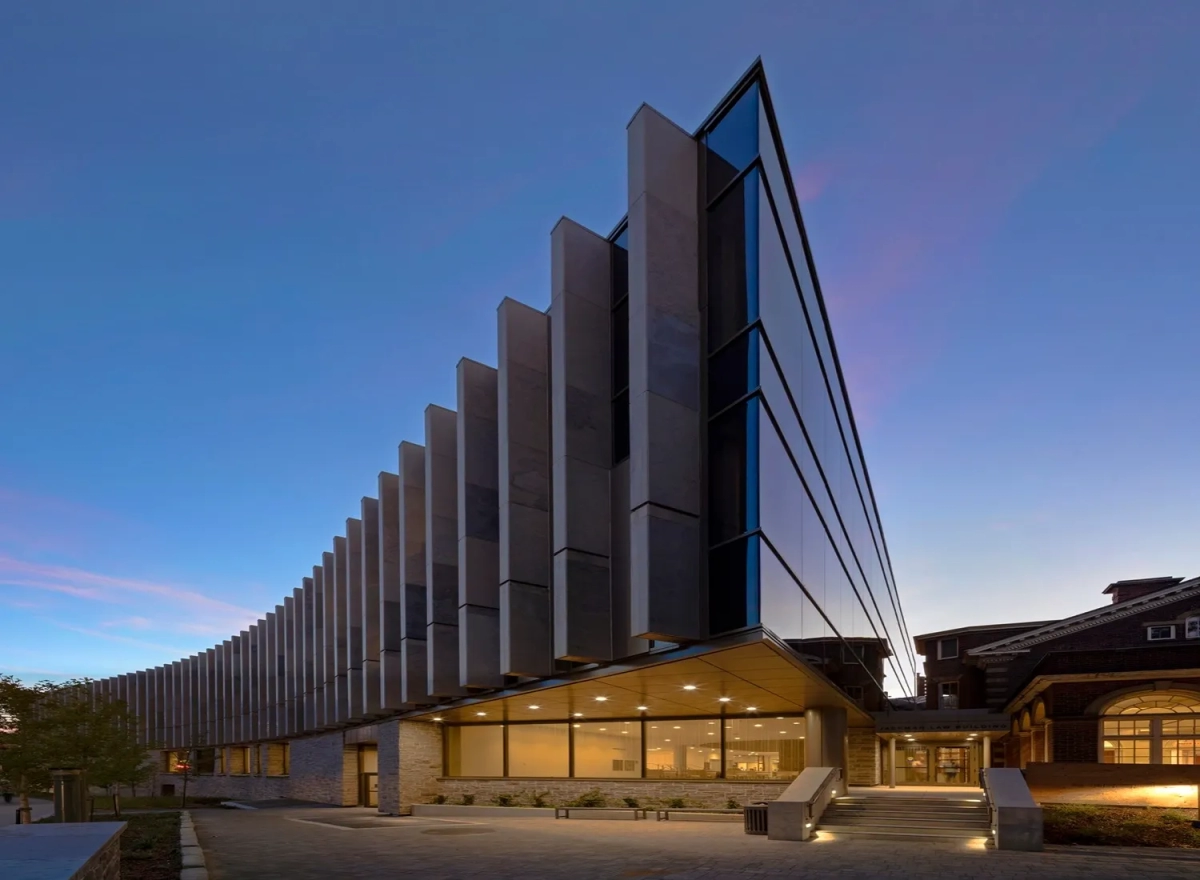
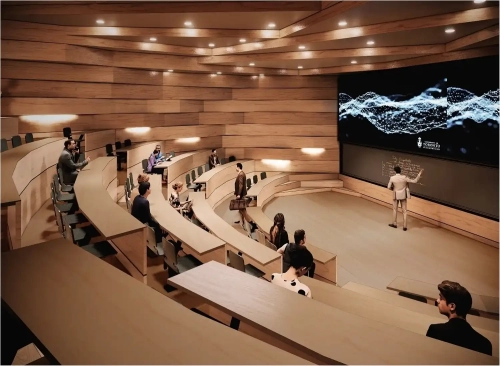
Enjoy a coffee in a historic building over 100 years old, relax in one of our lush green spaces, discover our world-class athletic facilities, lose track of time in our beautiful library collections, or find a hidden nook to study. We have some amazing spaces across all three campuses and invite you to discover them.
Toronto and the surrounding region is consistently ranked as one of the most diverse urban centres in North America. Toronto attracts great businesses, restaurants, entertainment and community events are everywhere you turn – and that’s what makes it a fantastic region in which to live and learn. U of T is connected to its local and global communities through a number of initiatives that link our students, staff and faculty with those around us.
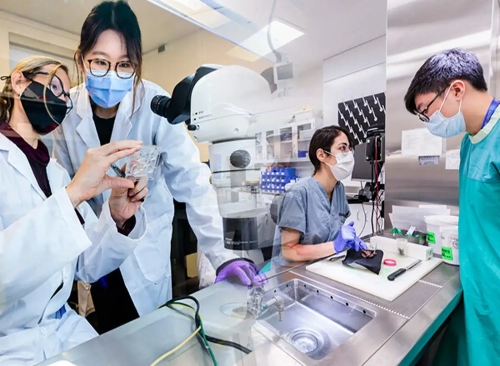
Does the thought of sitting in a classroom for hours make you restless? Us too. We invite you to take advantage of the amazing experiential opportunities available to all our students. Get involved with our diverse community, join a club, and discover your learning pathway at U of T.
The University of Toronto embraces Diversity and is building a culture of belonging that increases our capacity to effectively address and serve the interests of our global community. We strongly encourage applications from Indigenous Peoples, Black and racialized persons, women, persons with disabilities, and people of diverse sexual and gender identities.
Entry requirements vary by program. Check the program page for program-specific requirements.
English Language Proficiency: All applicants must demonstrate a high level of English proficiency. If English isn’t your first language, you may need to provide proof through an approved test, unless you qualify for an exemption. Learn more about English language requirements.
For master’s programs and full-time special students, an appropriate bachelor’s degree, or its equivalent, with a final-year average of at least mid-B from a recognized university.
For doctoral programs: an appropriate master’s degree, or its equivalent, with an average of at least B+ from a recognized university, or demonstrated comparable research competence. Some departments admit directly to the doctoral program from a bachelor’s degree for highly qualified candidates (minimum average A- required).
Many graduate units (departments, centres, and institutes) have higher minimum requirements than the minimum SGS requirements. As we receive many more applications each year from excellent candidates than we have placements available, meeting the minimum admissions requirement does not necessarily guarantee admission.
Use the international degree equivalencies tool to see which international credentials are required for master’s and doctoral admissions at U of T.
All applications to U of T start with the Ontario Universities' Application Centre (OUAC). You will need to:
The initial application is simple. It only asks for basic biographical details and your program choice(s). There are no transcripts or other supplemental application requirements to submit at this point!
About a week after we receive your application from the OUAC, you'll receive an email from us with instructions on how to log into the Join U of T applicant portal, or the Engineering Applicant Portal. In the portals, you will:
The portals are also the place where you will apply for residence, financial aid, and more.
Email: [email protected]
Phone : +1 416-978-2190, +1 416-978-6614


Member of the Association of American Universities (AAU)
Member of the U15 Group of Canadian Research Universities
Affiliated with Universities Canada
A widely respected scholar, teacher, mentor and administrator, President Woodin is a Professor in the Department of Cell & Systems Biology and former Dean of the University’s Faculty of Arts & Science — Canada’s largest and most compre... read more
Joe is currently a professor in the department of Political Science as well as in the Munk School of Global Affairs and Public Policy in the Faculty of Arts and Science. Joe previously held the Roz and Ralph Halbert Professorship of Innovation at the Munk School from 2013 to 2023, as well as the Canada Research Chair in Health, Democracy, and Development for two full terms, 2006 to 2016. He was the Director of the Asian Institute at the Munk School from 2005 to 2014.
After completing her BA in English at Victoria University in her native Aotearoa - New Zealand, Alex attended Oxford as a Rhodes scholar, where she earned an MSt and DPhil. She went on to postdoctoral fellowships at Balliol College, Oxford, and Darwin College, Cambridge, before joining UTM in 2004.
Since then, she has championed public education for the public good, both as a professor of global book history and as a leader across U of T. Alex’s classes – recognized in 2010 with UTM’s highest teaching award – turn interpretation into a shared activity, in which the play of different student perspectives produces meanings richer than any one person could imagine alone.
In 2020 he launched the BlackNorth Initiative, an organization which works to combat racism in business. He joined Dragons' Den in 2021 for the show's 16th season. He has written his autobiography "No Bootstraps When You’re Barefoot", honoring his grandmother.[citation needed]
Hall was awarded an honorary doctorate from the University of Toronto in 2023. In 2024, he was elected to serve as the university's 35th chancellor.
He is a Professor in the Temerty Faculty of Medicine’s Departments of Psychiatry, and Pharmacology and Toxicology. He is a recipient of numerous awards and has led several large clinical programs, including the mood disorders program at Hamilton Psychiatric Hospital, which received the American Psychiatric Services Gold Achievement Award. Professor Young has published more than 250 peer-reviewed journal articles and has held more than 35 peer-reviewed grants. In 2015 he received the Colvin Prize for Outstanding Achievement in Mood Disorders Research and was the recipient of the Canadian College of Neuropsychopharmacology Medal in 2013. Professor Young is a Fellow of the Canadian Academy of Health Sciences. He is currently a Senior Scientist at the Centre for Addiction and Mental Health (CAMH), where he also served in previous appointments as Executive Vice-President Programs and as Physician-in-Chief.



On March 15, 1827, a royal charter was formally issued by King George IV, proclaiming “from this time one College, with the style and privileges of a University ... for the education of youth in the principles of the Christian Religi... read more