
Brandeis University is a private research university located in Waltham, Massachusetts. Founded in 1948, it was established on the principles of academic excellence, social justice, and inclusivity. The university is committed to fostering a diverse community of scholars and students who pursue knowledge with a strong emphasis on ethical responsibility and public service. Brandeis offers a broad liberal arts education alongside professional studies, nurturing critical thinking and preparing students for leadership in a changing global society.
| Nickname | Judges |
| Motto / Slogan | Truth, Even Unto Its Innermost Parts |
| Colour | Blue |
| Mascot | The Judge and Ollie the Owl |
| Founded | 1948 |
| Location | Waltham, Massachusetts, United States |
| Address | Brandeis University, 415 South St, Waltham, MA 02453, United States |
Brandeis University is a community of scholars and students united by their commitment to the pursuit of knowledge and its transmission from generation to generation. As a research university, Brandeis is dedicated to the advancement of the humanities, arts and social, natural and physical sciences. As a liberal arts college, Brandeis affirms the importance of a broad and critical education in enriching the lives of students and preparing them for full participation in a changing society, capable of promoting their own welfare, yet remaining deeply concerned about the welfare of others.
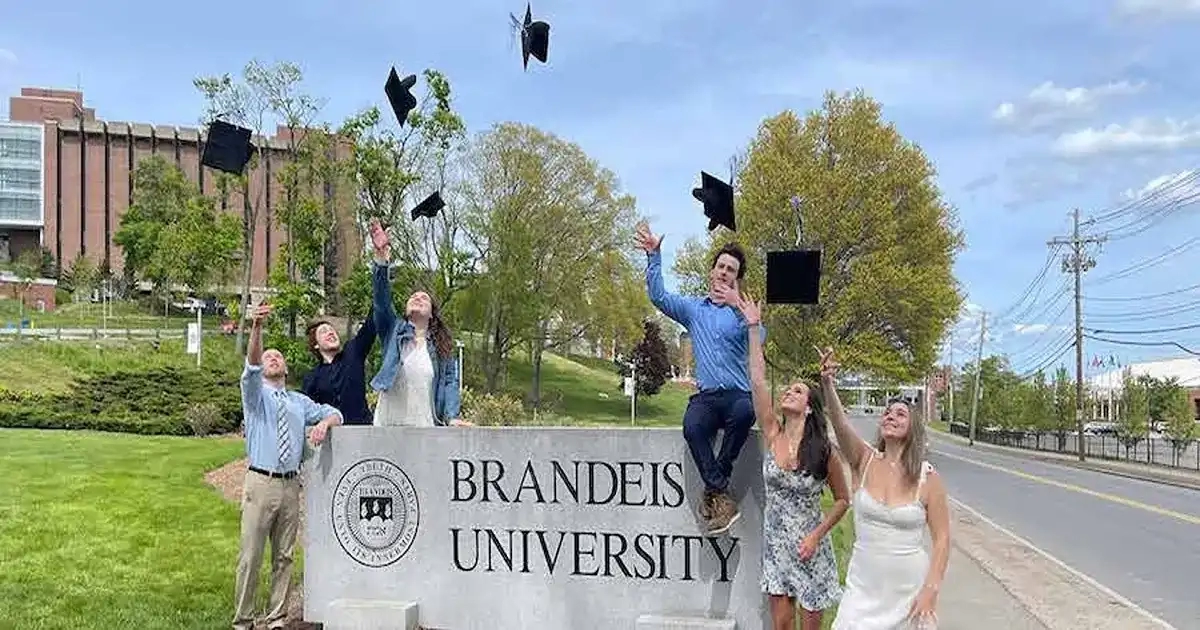
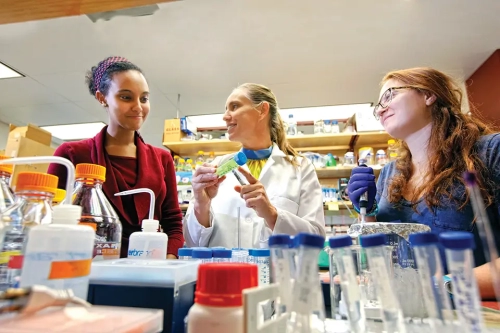
At Brandeis, students are empowered through a close-knit, welcoming community and a shared commitment to changing the world. As a medium-sized, top-tier research university, Brandeis offers rare access to faculty, strong peer connections, outstanding undergraduate research, and flexible academics—letting you combine interests or take graduate-level courses. Here, your path is truly your own.
Brandeis was established in 1948 by the American Jewish community at a time when Jews and other ethnic and racial minorities, and women, faced discrimination in higher education. Our visionary founders established a nonsectarian research university that welcomed talented faculty and students of all backgrounds and beliefs. From the outset, Brandeis focused on undergraduate education while building a pioneering research enterprise.
Ask yourself what truly inspires, energizes and moves you. You're likely to find Brandeisians — in class, in clubs and activities and out in the world — who share those passions. At Brandeis, you'll discover and explore so many ways to create change. Whether through groundbreaking scientific discovery, volunteering in your community or simply questioning the status quo, we empower you to make a difference — and pursue a lifetime of impact.
UNDERGRADUATE:
POSTGRADUATE:
International Students:
International Students:
English Proficiency Exam Requirement for Application
Applicants must show proof that they have received an acceptable score on an English-language exam in order to be eligible for admission. Applicants who belong in one of the groups below are exempt from this requirement:
Applicants required to submit results from an English-language exam will be prompted to do so during the application process. To fulfill this requirement, they must submit an official score report from one of the following:
Please note that we do not accept ETS MyBest scores, IELTS One Skill Retake scores, or scores from the TOEFL Essentials exam. Applicants should check with the appropriate testing agency to ensure that their scores are still valid and that the agency will be able to send an official score report.
UNDERGRADUATE:
POSTGRADUATE:
Email: [email protected],[email protected]
Phone : +1 781-736-3500, +1 781-736-3410



New England Commission of Higher Education
Levine has a history of being a transformational leader.
Serving as President of Teacher... read more
As President of the Woodrow Wilson National Fellowship Foundation (now the Institute for Citizens & Scholars) from 2006 to 2019, Levine greatly expanded the organization’s reach and impact. Under his leadership, the Foundation launched a fellowship program that collaborated with 31 universities in six states to recruit and prepare STEM teachers for careers in high-need schools.
Prior to returning to Brandeis in her current role, Fierke was provost and executive vice president at Texas A&M University. Before that, she was dean of the Rackham Graduate School and vice provost for academic affairs, graduate studies, at the University of Michigan, where she also served as chemistry department chair for nearly a decade, and was the Jerome and Isabella Karle Distinguished University Professor of Chemistry.
A world leader in her field, Fierke is the recipient of the American Chemical Society’s Repligen Award in Chemistry of Biological Processes, the Protein Society’s Emil Thomas Kaiser Award, and the American Society for Biochemistry and Molecular Biology’s Mildred Cohn Award in Biological Chemistry for her contributions in the application of chemistry to the study of enzymes. Her research has been funded by the National Institutes of Health and a number of other agencies and foundations, including the National Science Foundation, the American Heart Association, the American Cancer Society, the Office of Naval Research and the Keck Foundation.
Dine has experience in a variety of areas of university administration and student services, including career services, residential life, orientation, women's center, student activities and registrar's office.
Before coming to Brandeis, Dine worked at a variety of institutions, including Macalester College, University of Minnesota, University of Cincinnati and Wesleyan University.
Since 2002, La Creta served as the executive director for technology and capital projects for Brandeis International Business School. He is also the program chair for the Masters of Science in technology management at Brandeis Graduate Professional Studies, as well as an adjunct professor since 2008.
La Creta has more than 20 years of experience working in technology and communications. In addition, he is active within several local and national IT consortia, presenting on change management and organizational leadership.
Prior to joining Brandeis, Ainbinder served as vice president and general counsel at Emerson College, where she provided legal guidance and direction on governance, risk management and institutional priorities, among other areas directly relevant to higher education. Before her time at Emerson, she held a number of roles and leadership positions in the legal field, including as a partner in the litigation group of intellectual property boutique Sunstein, LLP, and as senior in-house litigation counsel at Osram Sylvania.
Ainbinder earned a BA from Brown University and a JD from Boston College Law School, and is a past president of the Women’s Bar Association of Massachusetts.




Smith's son, C. Ruggles Smith, was desperate for a way to save something of Middles... read more
Alpert had worked his way through Boston University School of Law and co-founded the firm of Alpert and Alpert. Alpert's firm had a long association with the New York, New Haven and Hartford Railroad, of which he was to become president from 1956 to 1961. Alpert was chairman of Brandeis from 1946 to 1954, and a trustee from 1946 until his death. By February 5, 1946, Goldstein had recruited Albert Einstein, whose involvement drew national attention to the nascent university. Einstein believed the university would attract the best young people in all fields, satisfying a real need.
In March 1946, Goldstein said the foundation had raised $10 million that it would use to open the school by the following year. The foundation purchased Middlesex University's land and buildings for two million dollars. The charter of this operation was transferred to the foundation along with the campus. The founding organization was announced in August and named The Albert Einstein Foundation for Higher Learning, Inc. The new school would be a Jewish-sponsored secular university open to students and faculty of all races and religions.