
Founded in 1912, Rice University combines the benefits of a liberal arts college with the resources of a major research university. It offers a rigorous curriculum, a collaborative culture, and a commitment to excellence in teaching and research.
| Acronym | RICE |
| Nickname | The Owls |
| Motto / Slogan | Letters, Science, Art |
| Colour | Blue and GrayBlue and Gray |
| Mascot | Sammy the Owl |
| Founded | 1912 |
| Undergraduate Programmes | |
| Postgraduate Programmes | 13 |
| Location | Houston, Texas, United States |
| Address | Rice University, 6100 Main St., Houston, Texas |
Rice University aspires to groundbreaking research and unsurpassed education for the betterment of our world. We fulfill this mission by cultivating curiosity to advance discovery, fostering connections to enhance collaboration, and empowering diverse leaders in an inclusive learning community that promotes excellence and student success through a culture of care.
To train, nurture, and equip men and women in the fear of God for excellence in all areas of life
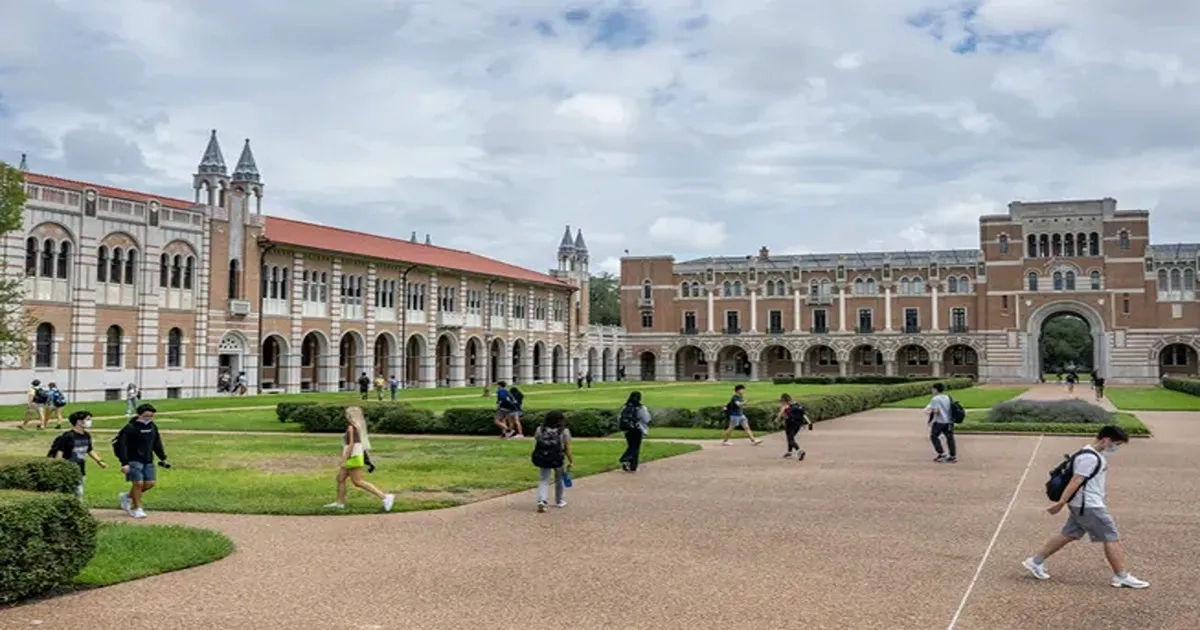
Excellence at Rice means never settling for good when better is possible. “When I first arrived, I was struck by the beautiful campus and high-quality education, research, and service. But I was surrounded by people—trustees, alumni, faculty, students, staff—who believed Rice could improve. I’m proud to be part of a community that constantly strives to do better.” — David Leebron
Our community’s success rests on respect for one another, reflected in daily interactions. At Rice, we value learning from and connecting with people from diverse backgrounds. Every act of care contributes to our culture of support, summed up in HCIH—“How can I help?” We extend hospitality and assistance to all members of our community.
Integrity is one of the strongest threads in Rice’s cultural fabric. In the classroom, office, lab, field of play, in our residential colleges and in our community engagement, we are guided by our commitment to honesty and doing what’s right. This value is embodied in the notion of Rice’s honor and our Honor Code. We accept nothing less than complete academic and research integrity.
Responsibility is something fundamental to a mission-driven academic community. We take responsibility for making Rice better, and also for our own happiness and success. We take responsibility for our actions and words, and understand how they may impact our friends and colleagues. We especially take responsibility for our mistakes. That way we can learn from them and even translate failure into success.
Entry requirements vary by program and course. Check the program page for requirements.
International Students:
View the program page for requirements as an international applicant.
Entry requirements vary by program and course. Check the program page for requirements.
UNDERGRADUATE:
POSTGRADUATE:
Email: [email protected]
Phone : 713-348-7423

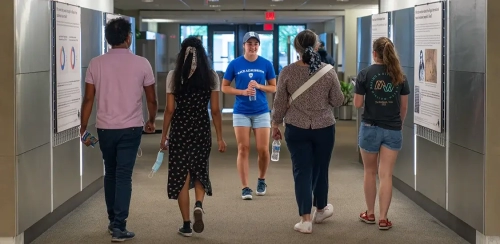
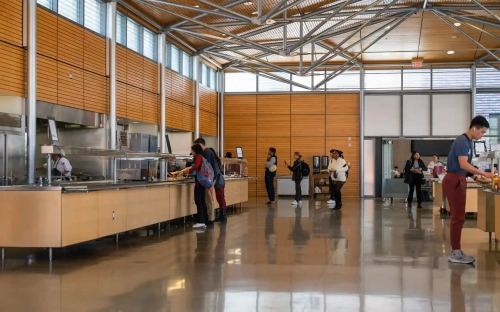
Sport: A wide array of recreational programs and services has been created and are offered in an effort to increase knowledge about and provide opportunities for the development of healthy behavior patterns. All are designed to encourage a lifetime of health and wellness for the students, faculty and staff of Rice University by promoting the physical, social and emotional benefits of physical activity.
Southern Association of Colleges and Schools Commission on Colleges (SACSCOC).
During his time as president, DesRoches has launched a period of strategic growth at Rice, increasing the number of undergraduate and graduate students by 20% while maintaining the university’s low student-to-faculty ratio and deep commitment to excellence and access. Under his leadership, DesRoches has overseen the hiring of a record number of faculty, established new majors, increased the university’s research awards, launched several new centers and institutes and forged new partnerships and programs in the Houston area, including the Texas Medical Center. He is a proponent of the international role of education and research and has launched Rice Global India in Bengaluru to increase collaboration between Rice and one of India’s rapidly growing high-tech cities. DesRoches also has helped grow and strengthen Rice’s presence in Europe and Latin America.
As provost, Dittmar oversees Rice’s academic enterprise, including direct reporting relationships for the deans of eight schools, dean of undergraduates, dean of graduate and postdoctoral studies, vice president for global, and other key leaders, including joint supervisory responsibility for the vice president for enrollment. Dittmar recently created a chief data officer overseeing business intelligence, reporting to the provost to support data-informed decision-making. She co-led a transformation of the university’s budget process and oversees the academic budget in partnership with the executive vice president for Operations, Finance and Support. Over the last three years, Dittmar has led the development and implementation of the university’s strategic plan, Momentous, which establishes the university’s direction for the next decade.
Yvonne serves as the vice president for enrollment and dean of admissions and financial aid at Rice University where she has launched an innovative financial aid program, the Rice Investment aimed at helping low- and middle-income families understand how much aid they will qualify prior to applying. Before joining Rice, she earned widespread recognition as vice dean and director of admissions at the University of Pennsylvania, where she was widely recognized as one of the leading innovators in higher education admissions and strategic thinking. Her work led to a fundamental change in the evaluation process at hundreds of colleges and universities. Romero has been a featured speaker at the NYT Higher Education Forum, has been highlighted for her innovations in the Chronicle of Higher Education, and is a frequent speaker at a number of convenings focused on innovation and equity in higher education.
Elaine has published nine books, over 150 academic articles, and led nearly twenty national and international research projects on religion, science, institutional culture, and workplace religious diversity. Her work is widely recognized for revealing how pluralism—when understood and supported—can be an asset rather than a liability in professional life.
Known for building interdisciplinary teams and convening global gatherings, Elaine brings clarity to topics often burdened by division rather than dialogue.
Her current work focuses on religious diversity in the workplace, mentoring as a model of institutional leadership, and how faith and science intersect in public life.
His tenure as dean has also ushered in a new Office of Belonging and Engagement, established a relationship with The Consortium for Graduate Study in Management, and increased the enrollment of underrepresented minority students. He formed an operations faculty group, led successful and growing entrepreneurship initiatives at Rice, and integrated a global field experience into the curriculum for every MBA student.
An economist and professor of strategic management, Peter also teaches MBA classes on leadership and has instilled the core values of being attentive, responsive and kind as central to the culture of Rice Business.


The lawyer, Albert T. Patrick, then claimed that Rice had changed his will to leave the bulk of his fortune to Patrick, rather than to the creation of Rice's educational institute. A subsequent investigation led by the District Attorney of New York resulted in the arrests of Patrick and of Rice's butler and valet Charles F. Jones, who had been persuaded to administer chloroform to Rice while he slept. Rice's friend and personal lawyer in Houston, Captain James A. Baker, aided in the discovery of what turned out to be a fake will with a forged signature. Jones was not prosecuted since he cooperated with the district attorney, and testified against Patrick. Patrick was found guilty of conspiring to steal Rice's fortune and he was convicted of murder in 1901 (he was pardoned in 1912 due to conflicting medical testimony). Baker helped Rice's estate direct the fortune, worth $4.6 million in 1904 (equivalent to $125 million in 2024), towards the founding of what was to be called the Rice Institute, later to become Rice University. The board took control of the assets on April 29 of that year.