
Duke University is a private research university in Durham, North Carolina, United States. Founded by Methodists and Quakers in 1838, the school moved to Durham in 1892. In 1924, tobacco and electric power industrialist James Buchanan Duke established the Duke Endowment, and the institution changed its name to honor his deceased father, Washington Duke.
| Nickname | The Blue Devils |
| Motto / Slogan | Eruditio et Religio |
| Colour | Duke Blue and White |
| Mascot | Blue Devil |
| Founded | 1838 |
| Undergraduate Programmes | |
| Postgraduate Programmes | 80 |
| Departments | 80 |
| Location | Durham, North Carolina, United States |
| Address | Duke University 2080 Duke University Road Durham, NC 27708 |
We serve Duke University by working to create a community of students who embrace growth, collaboration, creativity, integrity, and a sense of inclusion. We strive to identify and enroll students who demonstrate intellectual strengths, a love of learning, a sense of imagination and open-mindedness, and a commitment to their communities; we seek students who make things better and treat others well.
In creating our community we particularly seek students who honor and collectively represent a wide range of talents, backgrounds, lived experiences, and perspectives. We believe a diverse community better prepares students for an enriching undergraduate experience and lives of meaning and impact. We will consider each applicant as an individual, and consider especially the context of their unique circumstances and the disparity in opportunities and resources facing students, families, schools, and communities.
We are committed to upholding and promoting Duke’s commitment to equity. We will communicate internally and externally with honesty and clarity, and will treat our colleagues with respect, understanding, and kindness.
As we look ahead to our second century, our strategic vision is an invitation for all of us—faculty, students, staff, alumni, and friends of the university—to think together about our turn to the future, about how we can remain true to the Duke we have always been while charting our course toward the Duke we are destined to become.
Together, we will marshal our collective talents toward addressing the great challenges of our day, define a new twenty-first-century model of the research university, foster a more inclusive and equitable campus and world, partner with purpose in service to our community, and advance humankind.
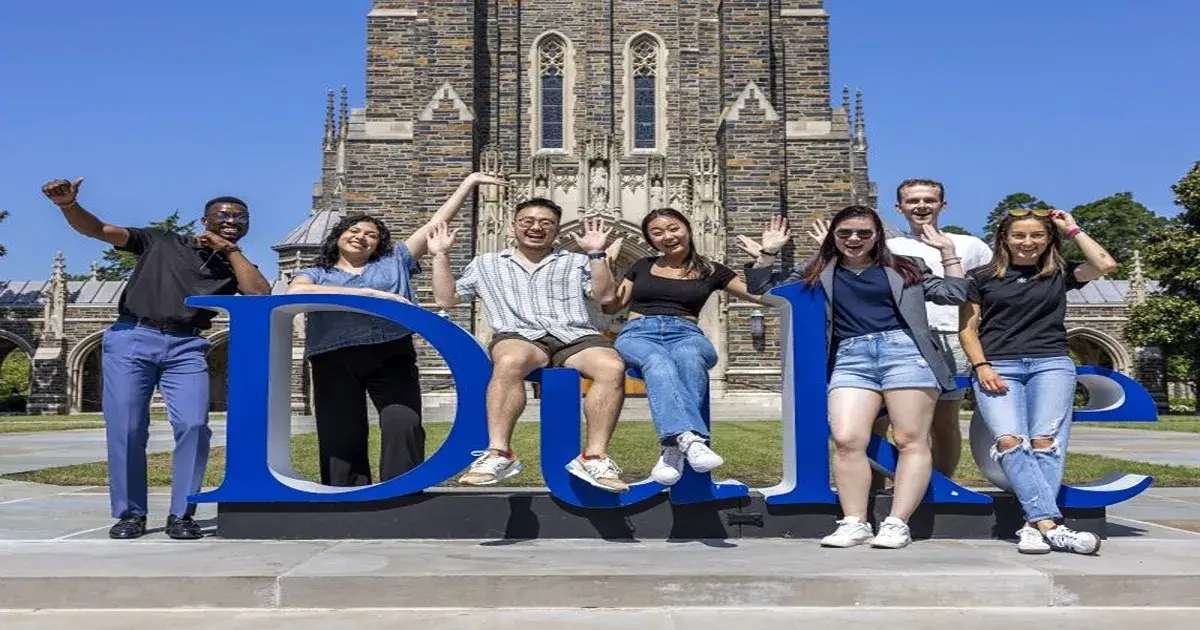
Duke is a haven for intellectual curiosity that offers opportunities to grow and diverge from well-trodden paths. See where our focus on collaboration can take students and faculty.
Our unwavering investment in faculty development — through robust mentoring, leadership training and innovative recruitment — creates an environment where educators thrive and inspire. Paired with exceptional students eager to engage and excel, this dynamic partnership is what makes Duke a truly outstanding community for learning, discovery and growth.
At Duke, research fuels innovation and impact, bringing together disciplines to tackle global challenges and spark breakthroughs in health, technology, and society. Duke’s approach to interdisciplinary inquiry lowers barriers to collaboration by connecting researchers across schools, fostering exchange of ideas, providing sequenced funding, and facilitating partnerships among schools and interdisciplinary units.
The Duke experience can take you beyond our home city. We offer travel and learning opportunities, no matter your discipline. We have affiliated schools at Duke Kunshan and Duke-NUS Medical School, and we welcome students from across the globe.
Entry requirements vary by course and program. Check the application page for requirements.
Entry requirements vary by course and program. Check the application page for requirements.
Email: [email protected]
Phone : (919) 684-3214(919) 681-3257,



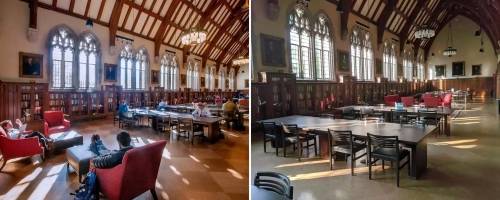
Accommodation: Duke Access and Accommodation Services provides leadership to the University and University Health System efforts to ensure an accessible, hospitable working and learning environment for people with disabilities while ensuring compliance with federal and state regulations. We serve as a centralized clearinghouse on disABILITY-related information, procedures and services.
Library: The purpose of our library system is to enable the best scholarship, research and study. You may spend a few hours or the entire day in one of our libraries. Find out what Duke’s libraries have to offer and check out the great treasures we’ve listed.
Southern Association of Colleges and Schools Commission on Colleges (SACSCOC)
Prior to coming to Duke, Price served as Provost of the University of Pennsylvania and was the Steven H. Chaffee Professor in the Annenberg School for Communication and Professor of Political Science in the School of Arts and Sciences. As Provost and chief academic officer, he advanced initiatives to strengthen the faculty and expand interdisciplinary research; guided the development of new forms of teaching and learning, both in the classroom and in the digital world; expanded the University’s global presence; and enhanced arts and culture on campus, shepherding the creation of the Sachs Program for Arts Innovation. He led Penn’s role as one of the first partners with Coursera, the online open learning platform, and served as Chair of Coursera’s University Advisory Board. He joined Penn in 1998 after 11 years at the University of Michigan, where he was Chair of the Department of Communication Studies and a Faculty Associate of the Center for Political Studies.
Prior to his appointment at Duke, Ennis was senior vice president for finance and administration at Johns Hopkins for ten years. Ennis led several innovative initiatives to strengthen the finances of the university resulting in significant growth in its cash and net assets. He also helped enhance the university's benefit programs through meaningful investments in childcare facilities and vouchers and established birth recovery and parental leave policies.
Dr. Gallimore is responsible for the academic enterprise at Duke, including supporting Duke faculty members and students in their teaching, learning, and research activities. Key priorities include strengthening discovery and translation through the Duke Science and Technology initiative; supporting inclusive excellence; advancing Duke’s global engagement; developing Duke’s strategy for artificial intelligence (AI); and expanding crucial philanthropy through the “Made For This” campaign. In 2024, he launched two programs designed to foster open inquiry and constructive dialogue from a broad range of perspectives: the Provost's Initiative on the Middle East and the Provost's Initiative on Pluralism, Free Inquiry and Belonging.
Klotman was appointed as Duke’s first executive vice president for health affairs in June 2023 and assumed her new role on July 1, 2023. She was named dean of the School of Medicine in January 2017 and was appointed to a second five-year term in 2022. Prior to her appointment as dean, Klotman served with distinction as chair of the Department of Medicine in the Duke University School of Medicine for seven years.
Klotman earned her undergraduate and medical degrees from Duke University. She completed her internal medicine residency and a fellowship in Infectious Diseases in the Department of Medicine at Duke before joining the faculty as assistant professor of medicine. She joined the National Institutes of Health in 1991, where she was a member of the Public Health Service and trained and worked in the Laboratory of Tumor Cell Biology under the direction of Robert C. Gallo, MD.
As the university’s chief research and innovation officer, ... read more
Before coming to Duke in January 2022, Lodge served as vice chancellor for research and senior associate dean for research for the School of Medicine at Washington University in St. Louis (WUSTL). There, she was responsible for WUSTL’s research development, ethics, education, compliance and research administration systems, and earned a reputation for encouraging innovation and entrepreneurship.



The school was organized by the Union Institute Society, a group of Methodists and Quakers under the leadership of Reverend Brantley York, and in 1841, North Carolina issued a charter for Union Institute Academy from the original Brown's Schoolhouse. The state legislature granted a rechartering of the academy as Normal College in 1851, and the privilege of granting degrees in 1853. To keep the school operating, the trustees agreed to provide free education for Methodist preachers in return for financial support by the church, and in 1859 the transformation was formalized with a name change to Trinity College and the adoption of the motto "Eruditio et Religio," meaning "Knowledge and Religion."
This era was a time of important firsts. In 1871, Chi Phi was organized as the school's first student social organization. In 1878, Mary, Persis, and Theresa Giles became the first women to be awarded degrees. At that time, women were allowed only as day students.[3] In 1881, Yao-ju "Charlie" Soong from Weichau, China, enrolled, becoming the school's first international student.