

Established in 1972, Rush University encompasses four colleges: Rush Medical College, the College of Nursing, the College of Health Sciences, and the Graduate College. The university is part of the Rush University System for Health, emphasizing excellence in patient care, education, research, and community service.
| Motto / Slogan | ministrare per scientiam in English: Minister through scientific knowledge |
| Colour | Green and Gold |
| Founded | 1972 |
| Location | Chicago, Illinois, United States |
| Address | Rush University 600 S. Paulina St. Chicago, Illinois 60612 |
RUSH University champions a learning environment in health and biomedical sciences through collaboration, education, research and equity for our students, faculty, staff and the communities we serve
RUSH University is a model for improving health through innovative research and transformative education in a culture of excellence and equity.
Our commitment to diversity, equity, and inclusion is at the center of everything we do and everyone we serve. An inclusive community of faculty, staff, residents, and students is here to support you through your training and education journey at Rush. The resident-run Diversity, Equity, and Inclusion Committee provides mentoring, networking, advising and professional development opportunities for residents, fellows, and medical students.
The Rush Center for Clinical Wellness was established in 2020 to create a culture of wellness and provide expanded mental health support services for all students, trainees, faculty and staff at Rush. The center is meant to be a safe space to improve the well-being of its visitors while creating an optimal healing environment.
Community service is at the heart of what we do at Rush. Through the Rush Community Service Initiatives Program (RCSIP), there is an opportunity for Rush University students, faculty, residents, fellows and staff to use their distinct skills and talents to make a difference in our community and beyond.
Entry requirements vary by program. View the program page for program-specific requirements.
View the admission requirements on the program page.
Email: [email protected]
Phone : (312) 942-3589


Higher Learning Commission (HLC)
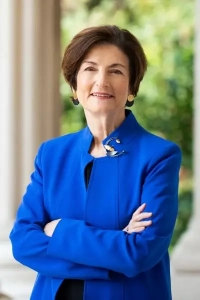
As president and chief academic officer, Higgins is responsible for the whole of Rush University with an innova... read more
As chief clinical and academic officer and senior vice president of Rush, Higgins leads academic and clinical integration across Rush, ensuring alignment of clinical programs with the university and clinical locations including Rush Oak Park Hospital, Rush Copley Medical Center and affiliated sites.



Powered by passionate faculty, students, researchers, residents and fellows, RUSH University today continues the traditions of outstanding health care education, research and community service that have been with us from the very beginning.
Deep roots
Even when Chicago was just a village of 4,000 people, RUSH's founders recognized the need for quality medical care.
In 1837, the Illinois state legi... read more
Many great names in the history of American medicine — William Heath Byford, Christian Fenger, Nicholas Senn, Ludvig Hektoen, Frank Billings, James Bryan Herrick and Arthur Dean Bevan, to name a few — have served as faculty here, contributing to the understanding of diseases and the development of treatments, as well as raising medical education standards.
In addition, RUSH Medical College awarded David Jones Peck, MD, a doctor of medicine degree in 1847, making him the first African-American man to receive this distinction from an American medical school.
Successful evolution
RUSH faculty established a teaching hospital, Presbyterian Hospital, in 1883. The Presbyterian Hospital School of Nursing, a forerunner of today's College of Nursing, was founded in 1903.
In 1956, Presbyterian Hospital merged with nearby St. Luke’s Hospital, which was founded in 1864. Their nursing schools also united to create the Presbyterian-St. Luke’s Hospital School of Nursing. In 1969, RUSH Medical College merged with Presbyterian-St. Luke’s Hospital to create RUSH-Presbyterian-St. Luke’s Medical Center. RUSH University was established in 1972. The College of Nursing and Allied Health Sciences joined RUSH Medical College the following year.
James A. Campbell, MD, served as RUSH University’s first president. Under his guidance, the institution expanded from two to four colleges, adding the College of Health Sciences in 1975 and the Graduate College in 1981.
Campbell chose Luther Christman, PhD, RN, FAAN, to serve as the founding dean of the College of Nursing. The first male dean of an American nursing college, Christman introduced nursing reform and new education standards at every opportunity.
From 1984 to 2002, Leo M. Henikoff, MD, served as University president. This was a period of expansion of research at RUSH, including construction of the Cohn Research Building.
Growing for the future
The first decades of the 21st century have been a period of tremendous growth for both RUSH University and the medical center, known today as RUSH.
RUSH-Presbyterian-St. Luke’s Medical Center was renamed RUSH University Medical Center in September 2003 to reflect the importance of education and research to the medical center’s patient care mission.
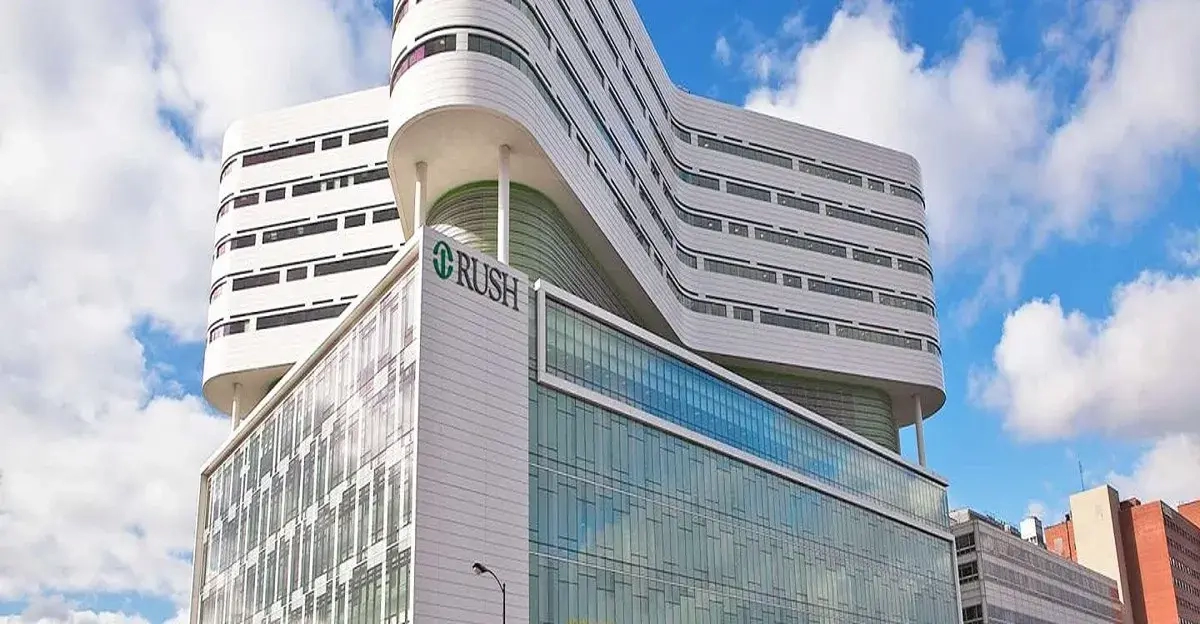
In 2012, RUSH opened the distinctive butterfly-shaped Tower building, which has already become a Chicago icon. Many of our students, residents and fellows now train in this leading-edge facility.
In the years ahead, RUSH University looks to expand further, on campus and online, and continue to play a role in transforming health care through innovative research and education.