ListOfUni

California Institute of Technology (CIT / Calt)

California, United States
Visit School Website
  • Private Type
  • 2,369 Students
  • 1891Founded
  • Science and TechnologySpecialization
  • YesAccept Int. Studs
  • YesDistance learning

About

Caltech is a world-renowned science and engineering institute that marshals some of the world's brightest minds and most innovative tools to address fundamental scientific questions and pressing societal challenges.

The Institute manages JPL for NASA, sending probes to explore the planets of our solar system and quantify changes on our home planet. Caltech also owns and operates large-scale research facilities such as the Seismological Laboratory and a global network of astronomical observatories, including the Palomar and W. M. Keck Observatories; and cofounded and comanages LIGO.


Acronym CIT / Calt
Nickname Caltech
Motto / Slogan The Truth Shall Make You Free
Colour Orange and White
Mascot The Beaver
Founded 1891
Location Pasadena, California, United States
Address 1200 East California Boulevard Pasadena, California 91125

Mission

The mission of the California Institute of Technology is to expand human knowledge and benefit society through research integrated with education. We investigate the most challenging, fundamental problems in science and technology in a singularly collegial, interdisciplinary atmosphere, while educating outstanding students to become creative members of society.


Vision

  • To be a leading global science and engineering research institution.
  • To tackle fundamental scientific questions and pressing societal challenges.
  • To cultivate diverse perspectives and challenge preconceptions for broader research and ideas. 
California Institute of Technology

Main Academic Divisions (Faculties)

  • Biology and Biological Engineering (BBE)
  • Chemistry and Chemical Engineering (CCE)
  • Engineering and Applied Science (EAS)
  • Geological and Planetary Sciences (GPS)
  • Humanities and Social Sciences (HSS)
  • Physics, Mathematics and Astronomy (PMA)


Reasons to Study at California Institute of Technology

  1. Caltech's Commitment to an Inclusive Environment

    Caltech does not discriminate or permit discrimination by any member of its community on the basis of sex, race, color, religion, national origin, citizenship, ancestry, age, marital status, physical or mental disability, medical condition, genetic information, pregnancy or perceived pregnancy, gender, gender identity or expression, sexual orientation, protected veteran status, or any other characteristic or condition protected by state and federal law.
     

  2. Caltech Commitment to Sustainability

    Caltech harnesses transformative insight and innovation from across science and engineering disciplines to safeguard the planet's resources and mitigate the effects of global climate change through scholarship and practice. Our legacy of field- and policy-defining breakthroughs continues as we prepare all students to leverage the power of fundamental research, cutting-edge instrumentation, and computation in the pursuit of science-driven sustainability solutions.


  3. Every Class, A Master Class

    After Caltech, you’ll work with inspiring people whose excellence pushes you further. But here, you have a rare chance to learn directly from world-class faculty dedicated to your growth. Many have won top prizes or lead world-changing research. They teach at Caltech because their greatest contribution to the future is you.


  4. One University, United by Research

    Nine out of ten Caltech students conduct research while here, regardless of their major. You may work at the Jet Propulsion Laboratory or Laser Interferometer Gravitational-Wave Observatory, or participate in an exchange program in China or Iceland. And you don’t need prior experience: With at least one Ph.D.-level researcher for every Caltech undergraduate, you’ll learn the ropes quickly enough.


Fees

Undergraduate Tuition

Indigenous Students USD 65,622

Postgraduate Tuition

Indigenous Students USD 68,001

Admission

Undergraduate Admission Requirement

Entry requirements vary by program and course. Check the program page for requirements.

International Students:

  • For students in the IB curriculum, we require Higher Level Math. For students in the GCE A-Level curriculum, we require A-Level Maths. Students in India must complete both year X and XII state board or CBSE examinations. For further questions, reach out to [email protected].

Transcripts and Letters of Recommendation

We require official documents (transcripts) that note your class titles, grades, and predicted grades/scores (if applicable); the transcript must be sent to us directly from your school. If the language of instruction in your school is not English, we require the original document and an English translation. Consider asking an English teacher or school official to translate the document. Caltech admissions officers are trained to understand your education system, so there is no need to translate or convert grades to the American system

Standardized Test Scores

We require either the SAT or ACT test scores. In addition to the SAT or ACT scores, if you have taken AP or IB examinations, you will be asked to submit those scores as well.

English Proficiency Exams

Caltech will challenge your English skills, and we want to make sure that you will thrive in our classrooms and community. English Proficiency Exam scores are required of all international applicants unless 1) your native language is English or 2) English is the primary language of instruction in your secondary school. For non-Native English speakers where English is the primary language of instruction in your secondary school, Caltech strongly recommends an English Proficiency Exam score. We accept the Duolingo English Test (DET), IELTS, or the TOEFL.

Postgraduate Admission Requirments

Applicants must have completed a bachelor's degree or the equivalent before beginning graduate study. Applicants who already hold a Ph.D. degree will not be considered for a second Ph.D. degree. Transcripts from each college or university attended, three letters of recommendation, a CV, and essays are required components of the application and are carefully and equally weighed during the evaluation process. GRE policies differ substantially among the various graduate programs, and therefore applicants must refer to the GRE policy for their specific graduate program. Most of the funding sources require work authorization. As a consequence, matriculation into the PhD program requires evidence of work authorization, unless special compensation can be arranged with the admitting option.

Supporting Documents

  • Transcripts from each college or university attended
  • Three letters of recommendation
  • Resume or Curriculum Vitae
  •  Essays 

How To Apply For Admission

Admission Contacts

Email: [email protected],[email protected]
Phone : +1 626-395-6341, 626-395-6346
Apply For Admission

Campus Tour

Facilities

  • Classrooms
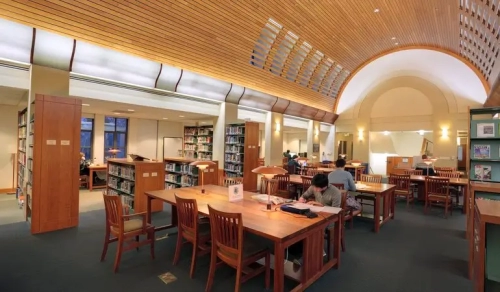
  • Library
  • Laboratory
  • Research Center
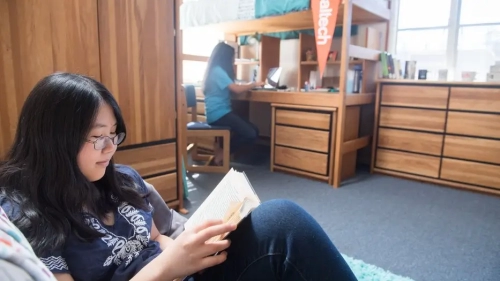
  • Accommodation
  • Hospital
  • Sports
  • Gym
  • ICT
  • Cafeteria
  • Research Center: Caltech is home to more than 50 research centers and institutes. Some 90 percent of Caltech undergraduates participate in research during their time here.


  • Sport: Eighteen Division III varsity teams, plus a broad offering of club and intramural sports and other informal recreational activities, draw participation from 80% of the student body.


School Contact

Address

1200 East California Boulevard Pasadena, California 91125

Phone Number

+1 (626) 395-6811

Website Address

https://www.caltech.edu/

Accreditations

  • WASC Senior College and University Commission (WSCUC): The primary accrediting body for Caltech.
  • ABET (Accreditation Board for Engineering and Technology): For specific engineering programs. 

Vice Chancellor

Thomas F. Rosenbaum

Thomas F. Rosenbaum is the ninth president of the California Institute of Technology and Professor of Physics. He is an expert on the quantum mechanical nature of materials, conducting research at Bell Laboratories, IBM Watson Research Center, and the University of Chicago, where he served as Vice President for Research and for Argonne National Laboratory and then provost, before moving to Caltech... read more
in 2014. He received his bachelor's degree in physics with honors from Harvard University and a Ph.D. in physics from Princeton University. He serves on the Society for Science & the Public's Board of Trustees, as General Member of the Aspen Center for Physics, and the American Academy of Arts & Sciences Los Angeles Program Committee.

Academic Staff

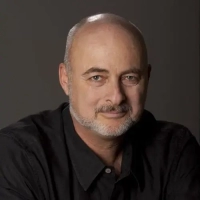
  • David Tirrell

    Provost As Caltech's provost, David Tirrell, Ross McCollum-William H. Corcoran Professor of Chemistry and Chemical Engineering, serves as the chief academic officer of the Institute; establishes policies... read more
    and procedures concerning academic programs, including teaching and research;  oversees faculty and academic appointments and promotions; is responsible for the academic budget; and acts for the president in his absence. The six division chairs and two vice provosts report directly to the provost. 

    Michelle Effros, George Van Osdol Professor of Electrical  Engineering, and Jennifer Jackson, William E. Leonhard Professor of Mineral Physics, are the Institute's vice provosts. The vice provosts help oversee research and education policies and procedures, including sponsored research policies and proposal authorizations, the technology transfer program, the Postdoctoral Scholars Office, the libraries, research compliance (including administering the Institute's policies on scientific misconduct and conflict of interest), the Council on Undergraduate Education, the Staff and Faculty Consultation Center; the Student-Faculty Programs Office (which administers SURF and related programs), and the Center for Teaching, Learning, and Outreach.


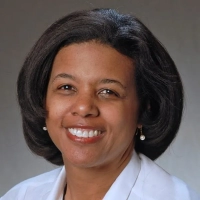
  • Jennifer Jackson

    Vice Provost Vice Provost Jennifer Jackson is the William E. Leonhard Professor of Mineral Physics in the Seismological Laboratory, which is within the Division of Geological and Planetary Science... read more
    s. She earned her Bachelor's degree from the University of Illinois at Urbana-Champaign (UIUC) and Master's degree from the University of Notre Dame, in South Bend, Indiana. She returned to UIUC for her doctoral degree. After earning her Ph.D. in 2005, she held positions as Visiting Scientist at the Advanced Photon Source of Argonne National Laboratory and Postdoctoral Fellow at the Carnegie Institution for Science in Washington DC. She joined the Caltech faculty in 2007 and was named the William E. Leonhard Professor in 2020.


  • Jennifer Lum

    General Counsel Prior to joining Caltech's Office of the General Counsel, Ms. Lum served as a United States Magistrate Judge in the Central District of California handling both civil and criminal matters. She was pre... read more
    viously an Assistant United States Attorney in the United States Attorney's Office in Los Angeles, California, where she prosecuted complex white collar fraud cases with an emphasis on financial institution fraud. She served as Chief of the Major Frauds Section and supervised the investigation and prosecution of complex white collar crime investigations and trials, including cases involving financial institutional fraud, securities fraud, computer crimes, Internet fraud, intellectual-property crimes, and insurance fraud. While she was at the United States Attorney's Office, Ms. Lum received the U.S. Department of Justice Director's Award for Superior Performance.  Prior to being a federal prosecutor, Ms. Lum worked in private practice in Los Angeles where she focused on general business litigation and served as a law clerk to United States District Judge Dickran Tevrizian. 


  • Kevin Gilmartin

    Vice President and Faculty Dean of Students Kevin Gilmartin studies social and political developments in British literature and print culture during the Age of Revolution, an era of social and political upheaval in Europe and the Americas from ... read more
    the late eighteenth century through the first half of the nineteenth century. Looking beyond literary texts, his research considers newspapers, periodicals, pamphlets, and other print forms to produce a more nuanced and finely grained account of the politics of literary culture. Primarily
     
View More Staff

Notable Alumni

View More Alumni

History

Founded as Throop University in 1891 in Pasadena, California, and renamed the California Institute of Technology in 1920. In September 1891, Pasadena philanthropist Amos Throop rented the Wooster Block building in Pasadena for the purpose of establishing Throop University, a forerunner to Caltech. In November of that year, Throop University opened its doors with 31 students and a six-member faculty. Throop might have remained simply a good local school had it not been for the arrival in Pasadena of astronomer George Ellery Hale. The first director of the Mount Wilson Observatory, Hale became a member of Throop's board of trustees in 1907 and began molding the school into a first-class instit... read more
ution for engineering and scientific research and education. By 1921, Hale had been joined by chemist Arthur A. Noyes and physicist Robert A. Millikan. These three men set the school, which by then had been renamed the California Institute of Technology, firmly on its new course. Millikan and his successors (Lee DuBridge, Harold Brown, Marvin Goldberger, Thomas Everhart, David Baltimore, Jean-Lou Chameau, and now Thomas F. Rosenbaum) have led the Institute to its current academic and scientific preeminence. To learn more, visit the Caltech Archives.