Dublin City University (DCU) is a young, dynamic and ambitious university with a distinctive mission to transform lives and societies through education, research and innovation. Since admitting its first students in 1989, DCU has grown to a student body of over 20,000 from over 120 different countries across five campuses.
The University has earned a reputation as Ireland’s university of enterprise, through its strong, active links with academic, research, and industry partners both at home and overseas. It develops highly sought-after, well-rounded graduates who are ready for the workforce and eager to apply their knowledge and skills in a broad range of settings.
DCU’s campuses are located in the Glasnevin-Drumcondra area of north Dublin, and the university offers a wide range of programmes across its faculties – including Business, Science & Health, Engineering & Computing, Humanities & Social Sciences, and Education.
The university has gained a strong reputation nationally and internationally, with notable rankings in global university listings and a leading record for graduate outcomes and research quality.
A core component of the DCU Strategy 2023-2028 is to enhance international engagement, and further to this we are expanding the number of international students attending our programmes each year.
| Acronym | DCU |
| Nickname | DCU |
| Founded | 1975 |
| Location | Dublin, Leinster, Ireland |
| Address | Dublin City University DCU Glasnevin Campus, Dublin 9, Ireland |
To transform lives and societies. Through education, research and innovation, we are focused on delivering real impact, and addressing global challenges in collaboration with our partners and stakeholders.
To design, implement and research new blended, on-line and digital (BOLD) models of education which help to transform lives and societies.
Dublin City University has been ranked 59th in The Times Higher Young University rankings for 2024, having been ranked 89th in 2023. DCU is now the top ranked Young University in Ireland, ahead of Maynooth University, the University of Limerick and Technological University Dublin.
Entrepreneurial, innovative, and creative, DCU is future-focused with a strong track record for careers advice and employability. We encourage and facilitate students to gain practical, real-world experience by doing internships and practicum-based projects and providing industry-based learning. As a graduate of DCU, you can apply for the Graduate Visa Scheme, which enables you to work full-time in Ireland post-graduation for one or two years depending on your degree type.
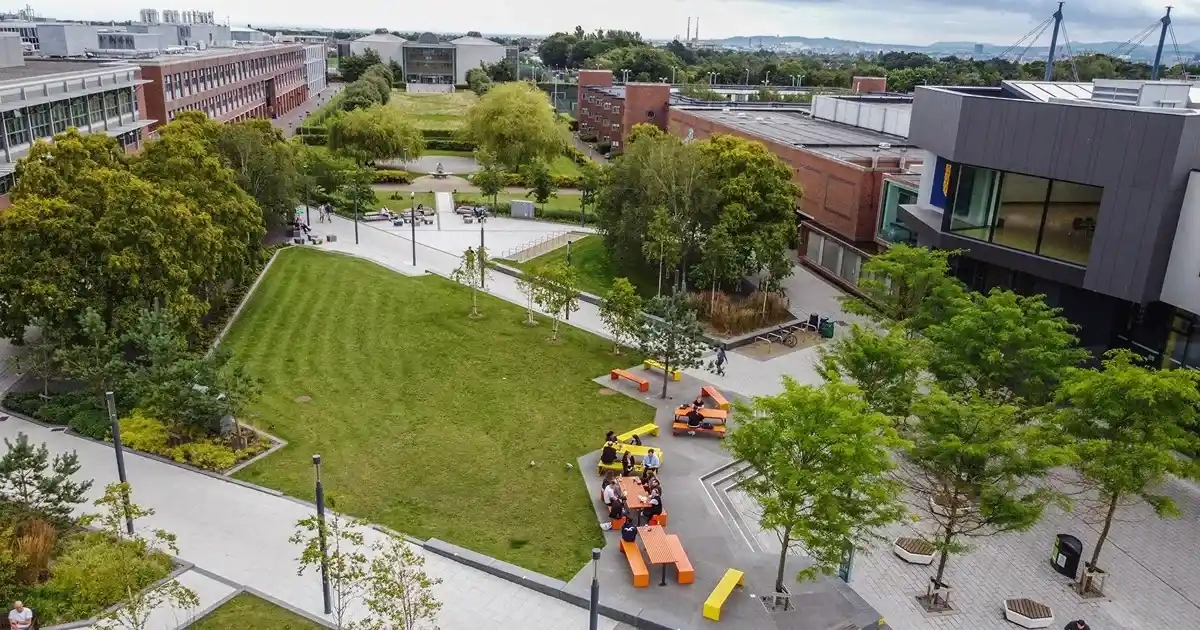
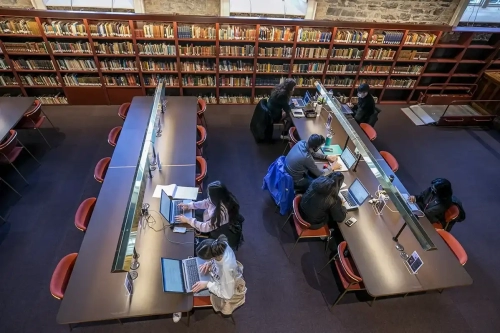
The 'U' Student Centre is a cornerstone of our main Glasnevin Campus; this is where you will find the NuBar, study and relaxation spaces, the Students’ Union office and the Leadership & Life Skills Centre run by Student Support & Development. As a student at DCU, you have access to state-of-the-art study facilities, three world-class libraries and free WiFi across campus.
DCU is at the vibrant heart of Ireland's capital city, Dublin. With three unique campuses in the bustling Glasnevin-Drumcondra area, all within easy reach of the city centre and major amenities. Dublin is a city steeped in culture and history and was founded by the Vikings over 1,000 years ago. It is also a great springboard for exploring the beautiful mountains, coastline, and countryside located on the city's doorstep.
Course Entry Requirements
Published requirements are the minimum entrance requirements for consideration to a DCU Undergraduate degree programme. In addition to general entry requirements, some programmes may also have a specific course requirement in a specific subject.
Please visit the DCU programme pages above to confirm the entry requirements for the programme you are interested in. Applicants must meet the general and programme entry requirements.
Please use the Country and Qualifications table below to determine the qualification which can be considered for entry to a DCU undergraduate programme.
Non EU - Meeting English Language Requirement (ELR)
Applicants that apply through DCU’s Application Portal and have not yet completed their final exam or are awaiting results for one of DCU’s eligible English Language Requirements (ELR) tests must upload a “holding document”. The applicant must confirm the name of the English language test they are taking and the expected examination result date. This can be uploaded under the “Evidence of English Language proficiency” in the supplemental items and documents section.
Applicants who meet all other requirements for the programme with the exception of ELR and follow the process outlined above, may receive a conditional offer. Once completed, the applicant must provide the ELR documentation through the DCU application portal. Applicants must meet all requirements and conditions of their conditional offer before a full offer may be processed.
**In the event applicants with outstanding English Language Requirements do not follow the process outlined above, the application will not be assessed until all required documentation has been received through the DCU application portal.
Applicants must meet the published entry requirements for each programme at DCU. For further information about entry requirements for each program, visit the relevant postgraduate programme webpage.
Non-EU postgraduate applications are assessed on a case by case basis dependent on the application submitted and any supporting evidence provided. All postgraduate applications will need to be submitted via our application portal and an eligiblity decision can only be confirmed following a full assessment. You can find more information on this via our 'How to Apply' page.
Non-EU Meeting English Language Requirement (ELR)
Applicants that apply through DCU’s Application Portal and have not yet completed their final exam or are awaiting results for one of DCU’s eligible English Language Requirements (ELR) tests must upload a “holding document”. The applicant must confirm the name of the English language test they are taking and the expected examination result date. This can be uploaded under the “Evidence of English Language proficiency” in the supplemental items and documents section.
Applicants who meet all other requirements for the programme with the exception of ELR and follow the process outlined above, may receive a conditional offer. Once completed, the applicant must provide the ELR documentation through the DCU application portal. Applicants must meet all requirements and conditions of their conditional offer before a full offer may be processed.
Undergraduate:
Applicants presenting Non-EU qualifications should apply through the DCU student application portal, available here. Here's a quick step by step guide if you need help with your application. Please note that documentation uploaded in support of your application must not be password protected. Any documentation that is password protected or ineligible to our admissions team will cause delays in your application and possibly result in your application not being assessed or deemed unsuccessful. The closing date for international undergraduate programmes is 1st July.
Please visit the individual programme page which will outline the closing date and entry requirements for each programme. The undergraduate programme course listing by faculty is available here.
For application and admission support please visit here or email [email protected].
Postgraduate:
All Applicants must apply through DCU's Student Application Portal which is available here. Here's a quick step by step guide if you need help with your application. Please note that documentation uploaded in support of your application must not be password protected. Any documentation that is password protected or ineligible to our admissions team will cause delays in your application and possibly result in your application not being assessed or deemed unsuccessful.
Please visit the individual postgradute programme page which will outline the closing date, entry requirements and will also direct you to the appropriate application portal for that programme. The postgraduate course listing by faculty is available here.
Please ensure that if you are applying as an international applicant, that you submit your application and all required documentation in support of your application by the published deadline of July 1st. Applications received after this date may not be processed for your desired programme.
Email: [email protected],[email protected]
Phone : +353 (0) 1 700 5338


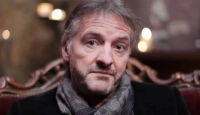
He is a Fellow at the Unive... read more
Professor Keogh is a Chartered Director (IoD) and a member of the Council of Dublin Chamber of Commerce. He has served on a variety of boards including the non-partisan Women for Election and the British Irish Chamber of Commerce. A passionate educator, he plays a leadership role across the sector. He is a Council member of the European University Association and Chairman of the Board of Management of Clongowes Wood College.
Prof Sinnott has previously worked in both market research and in education. She is an IRCA certified Internal Quality Auditor and a member of the Marketing Institute of Ireland. Since leading DCU Business School to AACSB accreditation in 2015 she has served on a number of AACSB peer review panels and as mentor to a number of International business schools. She is a member of the AACSB Continuous Review Committee and the European Advisory Panel. She is the Aurora Champion in DCU and sits on the University’s Women in Leadership Steering Group.


In 1979, the institution was located on a... read more
In 1986 the International Study Group on Technological Education was set up to examine the future of the National Institute for Higher Education at Dublin and Limerick, and in its report state that it should be elevated to university status with naming:
...the NIHE Dublin having the title Dublin City University or the University of Leinster.
Ultimately the title "Dublin City University" was chosen and this was confirmed by the Dublin City University Act of 1989.
The early focus of the institution was, in particular, on science and technology, although it has also had from the start a business school. It later developed a presence also in the performing arts and in the humanities. DCU is also famous for its programme of work placement or INTRA (INtegrated TRAining), which was the first such programme in Ireland.
DCU has been providing Irish and foreign adults with flexible access to higher education for over 35 years. In 1982 the National Distance Education Centre was located at DCU and for many years offered programmes in the traditional "distance education" mode of delivery. It changed to Oscail – DCU Online Education in 2004 to reflect the reality that its programmes were increasingly designed with large elements of online support. In 2013, DCU launched the National Institute for Digital Learning (NIDL) with the Open Education Unit as part of the new institute. This Unit manages online courses and degree programmes offered to Irish residents and students around the world through DCU Connected.
There was a plan in 2002 to base the headquarters of the Irish Academy for the Performing Arts in DCU, but this was later scrapped.