
Founded in 1845, they've been inspiring students for 180 years. University of Galway has earned international recognition as a research-led university with a commitment to top quality teaching. Following construction of the iconic Quadrangle building, the University opened its doors four years later to the first cohort of just 68 students.
University of Galway has grown massively in size and reputation since then, with a student population today of over 19,000. Over the past decade, they have been steadily increasing their global reach and reputation. According to QS World University Rankings, they are now ranked in the top 2% of universities worldwide and the top 100 universities in Europe. Ranked Ireland's #1 university for sustainable development in the Times Higher Education World Rankings (THE), we're not just about excellence in teaching; they're about shaping a better world.
| Motto / Slogan | Deo Favente With God's Favour |
| Colour | Maroon and White |
| Founded | 1845 |
| Location | Galway, Connacht, Ireland |
| Address | University of Galway, University Road, Galway, Ireland H91 TK33 |
To foster a vibrant community of students and staff, where distinguished learning, impactful research, and creative thinking are shared with the world.
They will fulfil this mission over the coming years with renewed vision, and with our eyes firmly on the opportunities and challenges ahead.
University of Galway will be a leading global university, renowned for our distinctive areas of research, recognised as an institution of choice for our teaching and scholarship, celebrated for our outstanding engagement with wider society, and enriched by a dynamic network of partnerships.
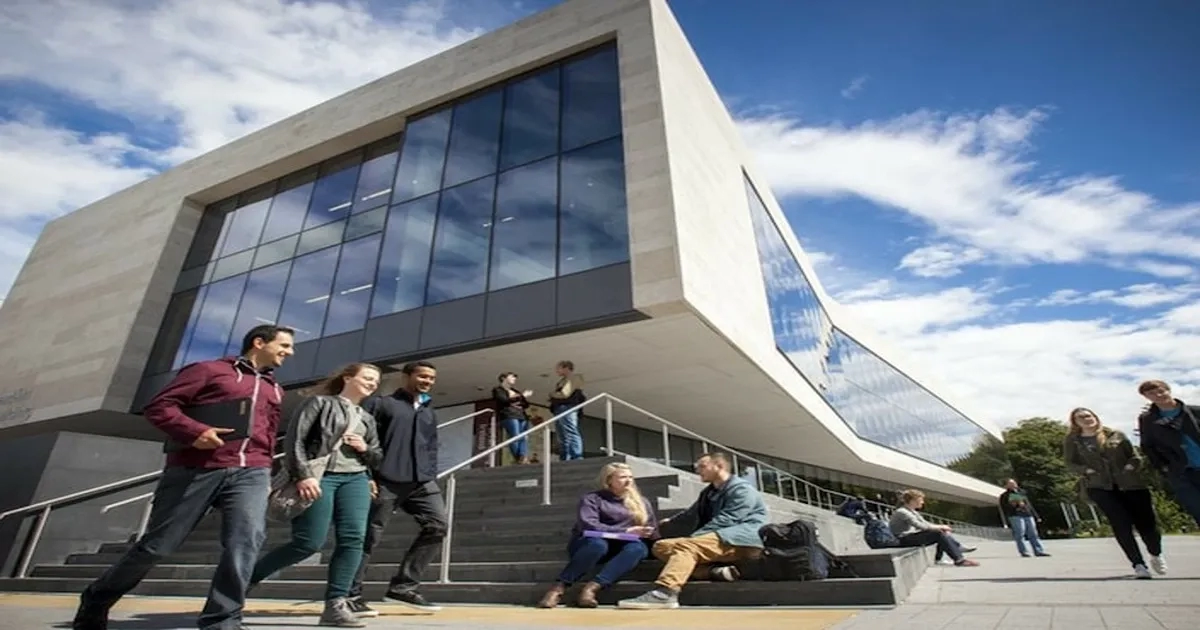
University of Galway is a leading international center for the creative arts, with strong specialisms in Drama, Film, Creative Writing, Digital Media, Publishing and more. We offer unique and innovative courses at undergraduate, MA, and PhD level, including practice-based PhDs – and we place strong emphasis on blending academic skills with practical experience.
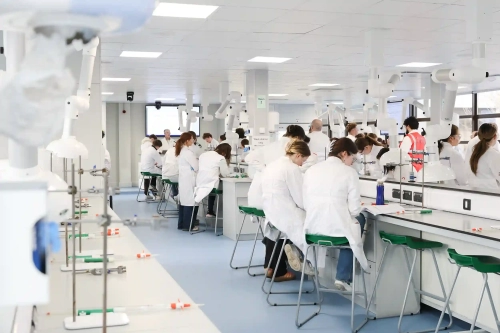
At the University of Galway, we take a multi-disciplinary research approach. Researchers work across the spectrum from fundamental research to clinical and translational projects. Their approach brings together science, engineering, medicine, psychology, economics, and clinical and translational science.
The application fee is €100
View the course-specific requirements on the course page. Applications for almost all full-time undergraduate degree courses are processed through the CAO system. Application for admission to undergraduate courses must be made in accordance with the regulations and procedures and timetable described in the CAO Handbook. The CAO Handbook is confined to giving information on how to apply for admission. Applicants should not attempt to complete this application form without first referring to the undergraduate information literature on courses and minimum entry requirements.
You need a pass in at least six subjects in the Leaving Certificate in accordance with College requirements with:
You should pick your subjects based on the requirements for entry to your desired course.
All subjects of the Leaving Certificate are accepted for matriculation registration purposes, with the exception of Gaeilge Bonnleibhéal (Irish Foundation Level).
The subject Mathematics (Leaving Certificate - Foundation Level) will be accepted for matriculation purposes, but not as a substitute for the subject ’Mathematics’ in courses for which the subject ’Mathematics’ is currently an entry requirement. Entry points will not be awarded for this subject.
GCE and GSCE
You need a pass in at least six subjects in accordance with College requirements with at least:
You should pick your subjects based on the requirements for entry to your desired course.
For details of the current list of GCE and GCSE subjects accepted for matriculation purposes, you should go online to the NUI Web site.
Other External Examinations
If you want to apply for matriculation registration at University of Galway using the results of examinations other than the Leaving Certificate, GSE, GCSE and the Matriculation examination, you should contact the Admissions Office or www.universityofgalway.ie/admissions
The subjects you pass and the standard you attain in these examinations must be in accordance with the College requirements. It must be sufficient to entitle you to be considered for exemption from matriculation registration as a whole.
INTERNATIONAL APPLICANTS:
International (Non-EU) students outside of Ireland or the European Union should refer to the International Office for full information on admission procedures and how to apply for Undergraduate Courses (except Medicine) at the University of Galway.
All International (Non-EU) applicants for Medicine should refer here.
Entry requirements vary for each programme. Check individual programme webpages for specific requirements before you apply for any of our postgraduate programmes.
You will need an active email account to use the website and you'll be guided through the system, step by step, until you complete the online form.
Folllow the application tips for how to apply advice. You can apply online for most postgraduate courses here.
Email: [email protected]
Phone : +353 91-492408

AACSB
Professor Burn served as Director of an Academic Health Science Centre, the Newcastle Health Research Partnership, which works to deliver improvements to health and wellbeing for the over 3 million people living in the Northeast of England and North Cumbria. Professor Burn will become President of the International Parkinson & Movement Disorder Society in October 2025.



At midday on Tuesday October 30, 1849, the first students walked through the historic Archway into the Quadrangle to begin their studying and learning, four years on from the University being founded in 1845 as Queen’s College Galway.
To mark the anniversary, the University has launched a number of celebrations under the banner “A Legacy of Learning: 1849-2024".
Mighty Oaks from Little Acorns Grow
Staff, students and alumni are being invited to “adopt an oak”. Some 68 oak saplings - one to remember each one of our first st... read more
Update: This initiative proved very popular, and we are already oversubscribed. We have now closed the registration form. Thank you for your interest.
Drawing on a number of heritage collections, the Library team have compiled a selection of evocative photos of students and the campus from the earliest years of the University. To mark the continuing Legacy of Learning, a competition has been launched asking students to recreate or situate one of the historic photos in a contemporary setting.
The University Library has launched an exhibition to spotlight 100 objects from its collections, which represent both the working practice of librarians over the decades, as well our unique and rare archives and special collections. The Library’s history and development can be viewed through the prism of these objects, which were drawn together through a project led by Marie Boran, Special Collections Librarian, and include images from books, manuscripts, archival collections, letters, photographs, newspaper issues, library furniture, stationery and artefacts. This exhibition is open to the public in the foyer of the Hardiman Building from 24 October 2024 to 31 December 2024.
Charlie Byrne’s Bookshop in Galway city centre is renowned for its creative window displays. To mark the University’s anniversary of A Legacy of Learning, a display of books written by Galway graduates over the decades has been created to celebrate the impact of students and scholars over 175 years, running for the month of November 2024.
In 2016, to commemorate 100 years since the Easter Rising, colleagues from the Discipline of History compiled an exhibition relating to the University's role in the events of 1913-19. 'A University in War and Revolution, 1913-19' includes photographs from the time and details how staff and students - both male and female - participated in World War I in Europe and the Irish independence movement at home. It includes a sobering record of those students who lost their lives fighting in the war.
The Quadrangle first opened its doors to 68 students on 30th October 1849 and the University, then known as Queen's College was born. The University was one of three Queen's Colleges, the others located in Cork and Belfast.
The Quadrangle building, built in local limestone in a Tudor Gothic architectural style, is modelled on Christ Church at the University of Oxford. The 'Quad' still stands proudly at the heart of the University today as a testament to its past. It is now used primarily for administrative purposes and houses the offices of the President and the Vice-Presidents.
In the first academic year, 1849 -1850, the University began with three faculties, Arts, Medicine and Law but there were also schools of Agriculture and Engineering. Female students later joined the student body and in 1906 Alice Perry graduated from the college, believed to be the first female engineering graduate in the world to receive a first class honours degree in civil engineering
There are many historical buildings on campus, such as the James Mitchell Museum, established in 1952. This geological museum contains high quality collections sampling a significant diversity of the planet's geology, with a fine display of fossils, minerals and rocks.
The University has had four different names:
Newer parts of the University sprang up in the 1970s, including the iconic Arts/Science Concourse designed by architects Scott Tallon Walker. The 1990s also saw considerable development including the conversion of an old munitions factory into a student center.
Since 2000, the University has invested over €500 million in new buildings and facilities across campus. The early 2000s saw the addition of the Cairnes Building, Áras Moyola and the award-winning Engineering Building, all located in the north campus.
In the 2010s, they added a new Biomedical Science research center, the Lifecourse building, the O'Donoghue Center for Drama, Theatre and Performance, the new Human Biology building, and additional student accommodation in our Goldcrest Village apartments.
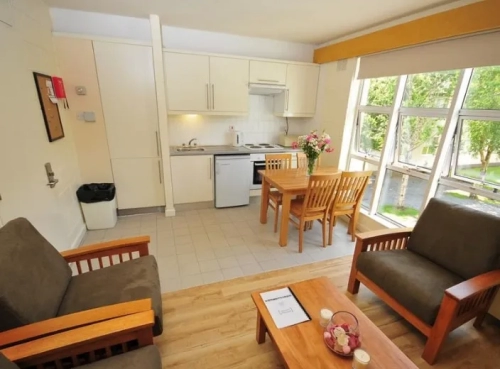
In the 2020s, they added 674 additional student beds to our campus residences in the Dunlin Village apartments.
In 2024, they began construction on a new Library and Learning Commons in the Central Campus. 175 years after their first students walked onto campus, this exciting new development promises to deliver new ways to engage students in learning, academic skills, technology and teamwork.