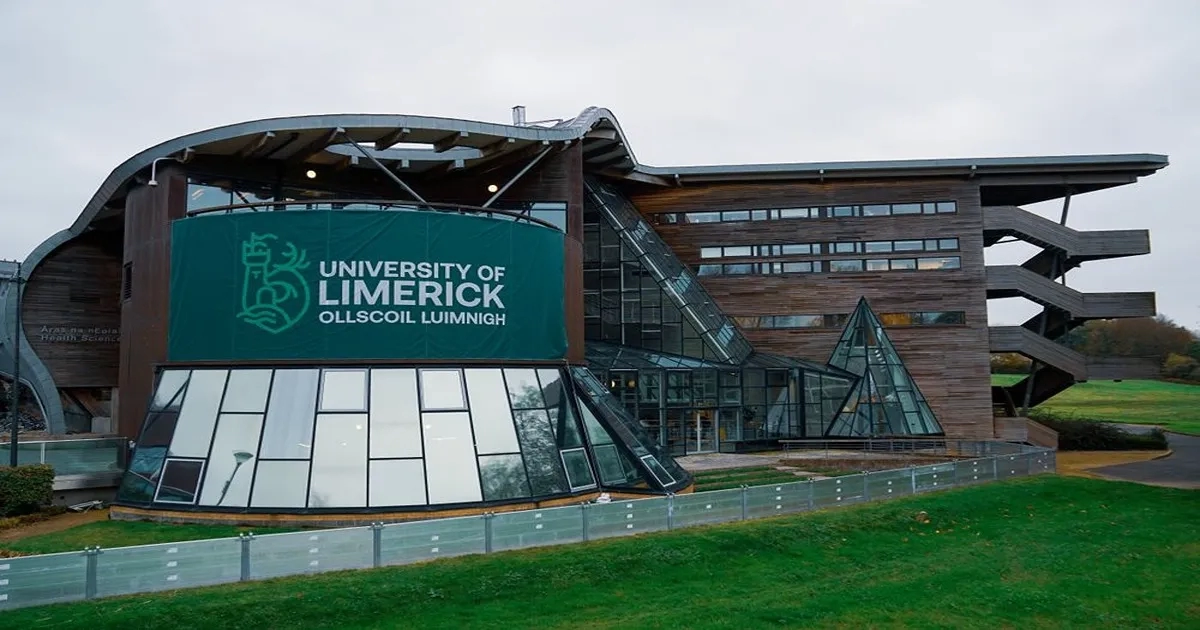
University of Limerick (UL), is located in the Wild Atlantic Gateway city of Limerick on the west coast of Ireland.
With over 18,000 students, including more than 3,300 internationally mobile students each year, UL is an independent research-led university offering undergraduate and postgraduate programmes across Arts, Humanities and Social Sciences; Education and Health Sciences, Science and Engineering and the Kemmy Business School.
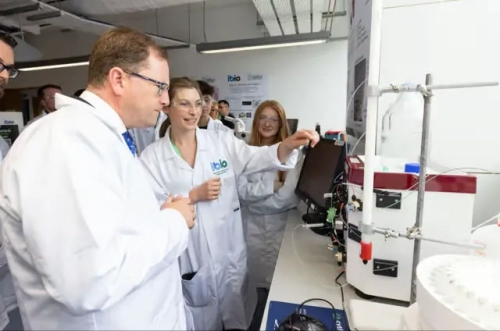
With strong links to business and industry, UL excels at translational research, which aims to accelerate the practical application of academic research to benefit society.
Furthermore, UL’s Cooperative Education programme – one of the largest of its kind in the EU –places over 2,000 students in paid and semi-paid work experience in industry, business and the professions across the globe. 30% of those Coop placements are internationally located and these valuable work experiences make UL graduates more employable, which is why the UL graduate employment rate is 15% higher than the national average.
With the largest Erasmus+ programme in Ireland, UL is Ireland’s European university with international reach while a survey of Irish students recently voted UL as Ireland’s most popular university with a satisfaction rating of 85%.
UL also offers a range of online programmes co-designed with industry to enable upskilling and reskilling for professional development. UL also houses some of the most innovative and successful research centres in Ireland. The Nexus Innovation Centre is a growing community of international researchers and entrepreneurs which supports new businesses and the creation of jobs.
We research and educate to create a sustainable and equitable future for all.
Main Academic Divisions (Faculties)
Faculty of Arts, Humanities and Social Sciences
Faculty of Education and Health Sciences
Kemmy Business School
Faculty of Science and Engineering
Irish World Academy of Music and Dance
Reasons to Study at University of Limerick
Excellent Academic Reputation
University of Limerick is recognized for delivering high-quality teaching, innovative learning, and internationally respected degree programmes. Its commitment to academic excellence equips students with the knowledge and skills needed for successful global careers.
Outstanding Graduate Employability
The university is renowned for producing highly employable graduates through career-focused education, practical learning, and strong employer partnerships. Students graduate with valuable experience that enhances their competitiveness in the global job market.
Cooperative Education Programme
The University of Limerick operates one of Europe's largest cooperative education programmes, enabling students to gain paid industry experience during their studies. This practical training develops professional skills and significantly improves employment prospects after graduation.
Strong Industry Connections
Through partnerships with leading multinational companies and public organizations, students gain access to internships, research collaborations, networking opportunities, and career pathways that prepare them for success in competitive industries worldwide.
Fees
Undergraduate Tuition
Indigenous StudentsEUR 400 - EUR 15,922
International StudentsEUR 400 - EUR 28,000
Postgraduate Tuition
Indigenous StudentsEUR 3,000 - EUR 17,916
International StudentsEUR 3,000 - EUR 25,800
Admission
Undergraduate Admission Requirement
Detailed information regarding the recognised qualifications from each EU/EFTA/UK country can be found on the CAO website.
This document outlines the recognition of the school leaving examinations for each EU/EFTA/UK country and includes details on the recognition of multi-national qualifications, such as the European Baccalaureate and the International Baccalaureate.
English Language Requirements:
Applicants whose first language is not English must provide evidence of this competence by achieving the minimum standard in a recognized English language test, as outlined below.
Proficiency test results must normally have issued within two years before the start of your course.
International Applicants:
Applications can be made from the relevant Undergraduate or Postgraduate programme page using the ‘Apply Now’ button.
On each programme page you will find:
Course overview
Programme content (modules)
Entry Requirements
Tuition Fees
Course Director details
Postgraduate Admission Requirments
Applications can be made from the relevant programme page using the ‘Apply Now’ button. Programme content (modules), Entry Requirements and Fees can also be found on the programme page.
For country-specific entry requirements, please contact International Recruitment Officer for Europe: [email protected] or [email protected].
International Applicants:
Applications can be made from the relevant Undergraduate or Postgraduate programme page using the ‘Apply Now’ button.
On each programme page you will find:
Course overview
Programme content (modules)
Entry Requirements
Tuition Fees
Course Director details
How To Apply For Admission
UNDERGRAUATE:
Generally, if you are eligible for EU fees and applying for the first year of an undergraduate degree, you must apply via the Central Applications Office (CAO). The CAO handbook gives details of application procedures and closing dates.
POSTGRADUATE:
Click here for Taught Programmes, choose the programme of your choice
Read ‘Entry Requirements’ to find out the documents required to be uploaded with your application. At the time of applying applicants must upload their educational documents (UL graduates do not need to upload UL Transcripts).
Click APPLY NOW, then ‘new user’. From there you will create a username and password, please take note of these in case you need to save the application and return to it later. Remember to use upper and lower case letters, numbers and symbols in password. If you experience any difficulties creating an account please check the type of browser you are using - Google Chrome can cause problems in some instances. If you have previously submitted an application to the University via the online application but are unable to remember your password - please use the forgotten password.
UPLOAD required documents - as set on under "What to include with your application" on the entry requirement section of the programme webpage
Pay an application fee of €50 (electronic transfer) which allows you to apply for two postgraduate programmes in one online application. The application fee must be paid through the portal and cannot be submitted via TransferMate.
Conference and Sports Campus: University of Limerick Conference and Sports Campus offers a unique and versatile venue for conferences and events. Located near Shannon International Airport and close to Limerick City, we boast modern meeting rooms, top-tier sports facilities, and high-quality catering.
Cafeteria: The variety of catering options available, from casual outdoor barbecues to more formal dining experiences, ensures that there is something for every type of event or audience. The ability to tailor menus according to specific requirements, whether dietary or cultural, reflects a commitment to providing a personalized and high-quality service. This emphasis on food as a key element of the event experience not only enhances the overall atmosphere but also supports the University of Limerick’s reputation as a top-tier venue for conferences and social events. Whether delegates are gathered in one of the on-campus cafés or at a more formal banquet, they are likely to enjoy an authentic, local taste of Ireland that complements the event's professional and welcoming tone.
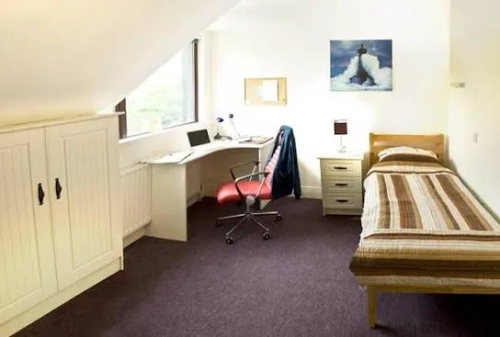
Accommodation: Accommodation is provided across six charming residential villages, offering a total of 2,700 rooms, all equipped with Wi-Fi. Each village has its own unique character and is set in beautifully landscaped surroundings. The modern complexes feature 1,500 en-suite rooms, each sharing a spacious kitchen/lounge area within the apartment. Additionally, there are 1200 standard rooms housed in comfortable residences.
University of Limerick is a research-led, energetic and enterprising institution with a proud record of innovation and excellence in education and scholarship. We value creativity, curiosity and excellence in our inclusive community which is committed to social good. We have a truly international reach through our network of over 4,011 research collaborations across 130 countries and an Alumni of 120,000 worldwide. 20% of the University student body are international students from 100+ countries and 30% of the student population take part in international placements.
The Faculty of Science & Engineering has a number of programmes that are accredited by a wide range of Professional, Statutory and Regulatory Bodies (PSRBs). Our external accreditations signify quality assurances from national and international peers in addition to ensuring graduates are professionally qualified and recognized.
Shane is a graduate of the University of Limerick (B.A., 1994), the University of Wales, Aberystwyth, (Ph.D, 1998), and University College Cork (MA, 2007). Shane worked as a Professor of Law in UCC before he joined UL in 2014. Prior to this, he worked in the University of Wales, Aberystwyth and WIT. He was head of the School of Law between 2014 and 2020 in UL. During this period, he established ex... read more
tensive links with An Garda Síochána that has involved the introduction of several new programmes for that organisation. He also successfully co-tendered for and launched an ambitious new research programme at the School of Law to help improve the effectiveness of the youth justice system in Ireland. The programme is funded by the Department of Justice and is led by Prof. Sean Redmond. During his tenure, the Law School won the AIB Private Banking Award for Best Law School in Ireland (2017), a DELTA award for disciplinary excellence in teaching and learning (2018), and postgraduate Law programme of the year (2018). Prof. Kilcommins also oversaw the redesign and refurbishment of the Law School and the establishment of a new law library and A&L Goodbody Appeal Moot Courtroom in the library extension. He also co-led the tender to provide training in commercial and company law to the Revenue Commissioners (2019-2024). The School was ranked in the top 100-200 Law Schools in the World (QS Rankings) in 2021.
In April 2026, Professor Shane Kilcommins was appointed President at University of Limerick, Ireland.
Executive Dean of the Faculty of Education and Health SciencesProfessor Deirdre McGrath was appointed to the interim post of Executive Dean of the Faculty of Education and Health Sciences in March 2023.
A native of Limerick, Professor McGrath graduated wit... read more
h a medical degree from University College Cork in 1991. Having undertaken the early years of her postgraduate training in Cork, she moved to the UK to complete her specialist training. While in the UK she worked as a researcher at the National Heart & Lung Institute of the Royal Brompton Hospital and, at the Clinical Genomic Unit of the Imperial College of Science, Technology & Medicine and was awarded a Doctorate in Medicine degree with Imperial College, University of London. She was subsequently appointed as a substantive Consultant in General & Respiratory Medicine and Honorary Senior Lecturer in Medical Education at St Georges University & NHS Trust. It was here that she became involved formally in medical education and led to her completing a Masters in Medical Education degree with the University of Dundee.
Interim Provost/ Deputy PresidentProfessor Ledwith is a graduate of N.I.H.E Limerick where, in 1983, she obtained a degree in Electronic Engineering. She began her career as a product development engineer and later product... read more
development manager in small, high-technology firms. In 1992, she moved to UL as the Centre Manager of Power Electronics Ireland, a government-funded initiative supporting Irish companies. After completing an MBA at the University of Limerick she joined the KBS as a lecturer in Entrepreneurship and Technology Management. Since then, Prof Ledwith has held a range of different roles across UL including Director, Centre for Project Management, KBS; Assistant Dean of Research (Adult and Continuing Education), SEN; Director of Continuing and Professional Education, Dean of Graduate and Professional Studies, and most recently Director HCI and UL@Work.
Executive Dean of Faculty Science and EngineeringProfessor Stanton is an alumnus of UL having graduated with a BSc in Materials Science in 1995. Following a Masters in Physics Research at Royal Holloway University of London, he returned to UL to com... read more
plete his PhD.
During his time at UL Professor Stanton became a member of the Materials and Surface Science Institute (MSSI). In this period, his research was focused on developing and characterising bioceramic-titanium coating methods and on a variety of projects with Aughinish Alumina.
Interim Director of Marketing, Communications and Public AffairsRobert is a Chartered Civil Engineer having graduated in 1984 from University of Galway. He worked in various construction and facilities management roles in the private and public sectors until joini... read more
ng the University in 2003. As Director of the Buildings and Estates Department, Robert is responsible for all aspects of the physical development of the University campus and the management of the maintenance of the campus buildings and grounds.
According to founding president Edward M. Walsh, the mayor of Limerick applied for a college of the planned Queen's University of Ireland to be established in the city. However, in 1850, Queen's College, Belfast, Cork and Galway were established instead. In 1908 there was an attempt to link the National University of Ireland and Mungret College, about five kilometres from Limerick. Mungret offered bachelor's- and master's-level courses in the faculty of arts, with degrees conferred by the Royal University of Ireland, from 1888 to 1908. The university was dissolved in 1909 and replaced by the National University of Ireland, marking the end of tertiary education at Mungret. Degrees were awarde... read more
d to students at Mungret College by the NUI from 1909 to 1912 to accommodate students who had matriculated at the Royal University.
The campaign for a university in Limerick began in earnest by the late 1950s. The Limerick University Project Committee was founded in September 1959 by the mayor of Limerick in 1957, Ted Russell. Another supporter, Dermot Kinlen, was a High Court judge and the first state inspector general of prisons and places of detention. Russell and Kinlen received honorary degrees from the university in 2002