
The University of Applied Sciences Northwestern Switzerland (FHNW) is located in various towns and cities. Here you will find an overview by location.
The FHNW 2035 strategy is the FHNW's compass for the next decade. It forms the basis for the strategies and development plans of the FHNW's universities as well as for the performance mandates for 2025–2028, 2029–2032 and 2033–2036 from the supporting cantons to the FHNW.
The FHNW 2035 strategy consists of the following elements:
With its 2035 strategy, FHNW aims to strengthen its attractiveness and future viability and contribute to overcoming major societal challenges.
The present FHNW 2035 strategy was developed through a broadly supported process that began in August 2021 with a joint strategy retreat of the University Council and the Executive Board, and was further refined in various workshops with members of the FHNW community and within the FHNW Executive Board. The University Council adopted the 2035 strategy on December 4, 2023.
| Acronym | FHNW |
| Motto / Slogan | Ten schools, one goal |
| Colour | Bright Orange (Primary) with dark grey accents |
| Founded | 2006 |
| Undergraduate Programmes | |
| Postgraduate Programmes | 25 |
| Location | Brugg, Aargau, Switzerland |
| Address | Bahnhofstrasse 6, 5210 Windisch, Switzerland |
They educate innovative, responsible specialists and managers for an interconnected and ever-changing world.
The core mission across FHNW is to empower people to assume social, economic, and cultural responsibility. While individual faculties tailor their focus, the overarching institutional mission emphasizes connecting people, knowledge, and ideas to tackle the major issues of our time, such as New Work, Future Health, and Zero Emission.
Open, dialogical, creative – the FHNW shapes futures." FHNW unpacks its vision through these four core pillars.
Open, dialogical, creative – futures are being shaped at FHNW
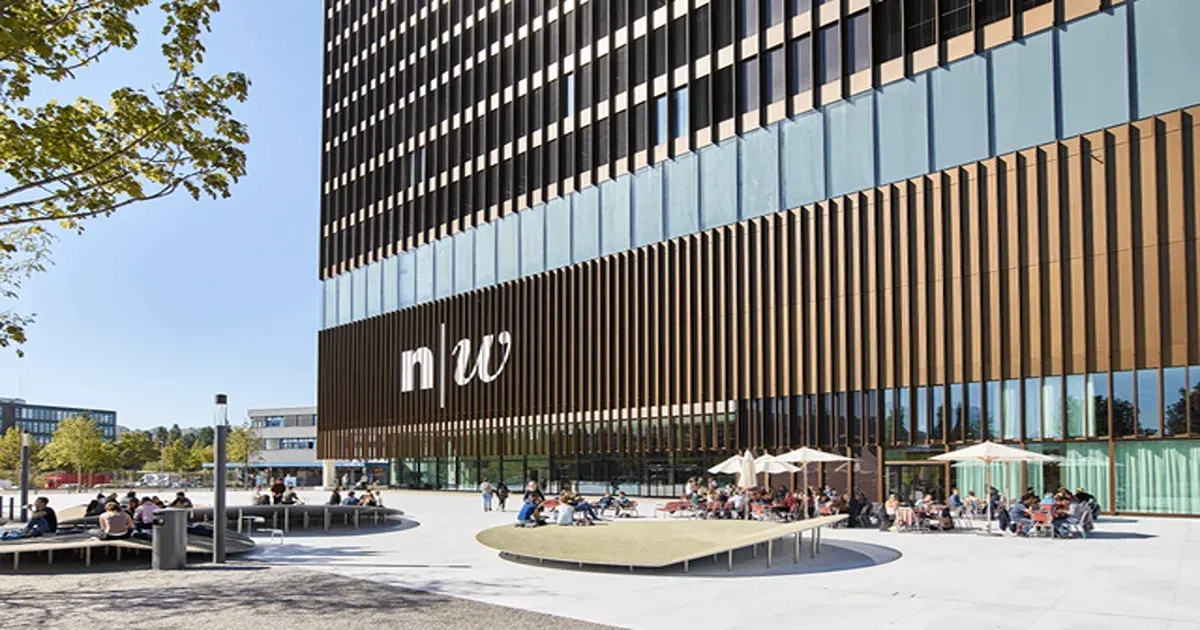
The ten universities of applied sciences of the FHNW cover a wide range of disciplines and enable diverse, multidisciplinary research. The expertise of the lecturers and researchers, the excellent infrastructure, and the regional, national, and international networks of the FHNW provide ideal conditions for addressing a wide range of issues in science, business, politics, culture, and society.
The FHNW is an inspiring place for encounters and impactful interaction. It sees itself as a campus-based university that consciously connects and integrates teaching, research, and practice. This presence is reflected in the interaction of people and manifests itself in the excellently equipped on-site campus as well as in the virtual realm.
People from over 60 nations work and study at the FHNW. The FHNW benefits from this diversity and prepares its students for the challenges of a globalized economy and society. The FHNW's international commitment includes partnerships with foreign universities and institutions, participation in European research programs, and the implementation of trinational and multilingual degree programs.
Theory is important – but it only becomes truly valuable when applied. At FHNW, you work with real-world problems right from the start. Lecturers bring current experience from research and professional practice, and project work with companies and organizations is part of everyday student life. This way, you develop skills that are in demand on the job market – and not just skills that exist on paper.
FHNW graduates are in high demand on the job market. Employers value the combination of sound specialist knowledge and practical experience. Whether in business, social work, education, engineering, or culture, you will qualify for professional fields where skilled workers are urgently needed. Your studies at FHNW are not simply an education, but a true springboard for your career.
The world is changing rapidly – ??and with it, the demands placed on professionals. FHNW consistently aligns its degree programs with the topics of tomorrow: digitalization, sustainability, healthcare, and the future of work. You're not learning for yesterday's working world, but for the challenges yet to come.
Studying at FHNW is more than just personal growth. You'll engage with relevant issues – from sustainable development and social cohesion to technological solutions for global problems. Through practical projects, you can tackle real-world challenges during your studies. Here, you'll learn to take responsibility and use your knowledge to make a real difference.
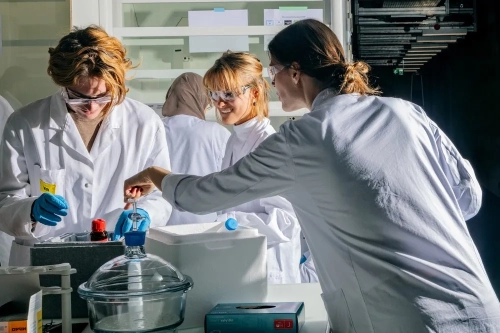
Modern learning requires modern spaces and room for interaction. At FHNW, you'll find state-of-the-art laboratories, studios, workshops, and learning environments – tailored to your field of study and equipped with the latest technology. Digital tools and platforms complement the offerings and enable you to work flexibly and regardless of location.
At FHNW, you actively engage with subject matter – through project work, interdisciplinary teams, simulations, and practical labs. The teaching concepts are continuously developed and based on current findings in higher education didactics. This way, you not only learn content, but also how to independently explore new topics.
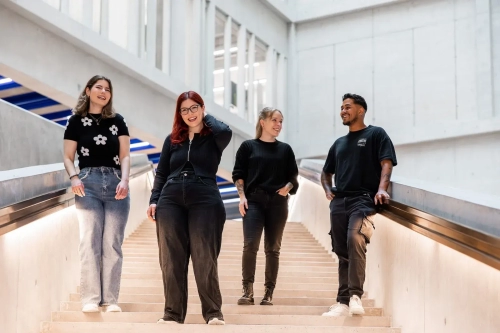
Learning is most effective in an inspiring environment. At FHNW, you'll experience a collaborative atmosphere – with dedicated and approachable lecturers and fellow students from diverse backgrounds. Excellent support and an open university culture create the ideal environment for your growth.
Registration fee CHF 200
Admission requirements vary by course and program. View the course-specific requirements on the program page.
Language Requirements:
The required language depends on the programme.
Common requirements include:
Admission requirements vary by course and program. View the course-specific requirements on the program page.
Language Requirements:
The required language depends on the programme.
Common requirements include:
Common application documents include:
4. Submit Your Online Application
Applications are submitted through the FHNW online admissions portal. You will upload all required documents and complete the application form. Some programmes may require interviews, portfolios, or additional assessments.
Email: [email protected]
Phone : +41 56 202 70 70, +41 56 202 99 33
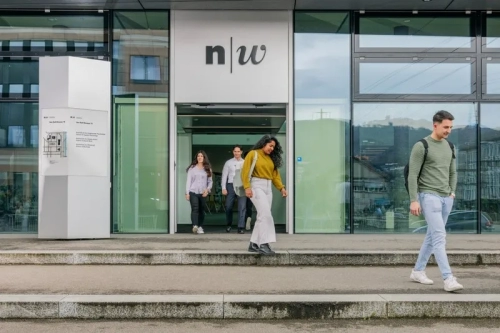
Swiss Accreditation Council: Recognized under the Higher Education Act (HEdA), guaranteeing FHNW's status as an officially recognized Swiss University of Applied Sciences. This accreditation is carried out by the Swiss Agency of Accreditation and Quality Assurance (AAQ)
The FHNW was founded on January 1, 2006, based on a state treaty between the cantons of Aargau, Basel-Landschaft, Basel-Stadt, and Solothurn. It was created from the merger of the Aargau University of Applied Sciences (FHA), the Basel University of Applied Sciences (FHBB), the Solothurn University of Applied Sciences (FHSO), and the Basel University of Education and Social Work and the Solothurn University of Education. Since 1 January 2008, the Basel Academy of Music and the Schola Cantorum Basiliensis are part of the FHNW.