
ListOfUni

Université de Fribourg (UNIFR)

Fribourg, Switzerland
Visit School Website
  • Public Type
  • 10,000 Students
  • 6 Faculties
  • 1889Founded
  • YesAccept Int. Studs
  • YesDistance learning

About

The University of Fribourg is a place where learning, research, employment and events all happen at the same time. Its innovative force makes it an important mover in the commercial and cultural life of the region. Since it attracts students and researchers from every part of Switzerland and from all over the world it has shaped life in the bilingual city of Fribourg since it was founded in 1889.

The University of Fribourg encompasses six faculties where people study, teach and research. These are Arts and Humanities, Science and Medicine, Management, Economics and Social Sciences, Education, Law and Theology. As well as these there are numerous interdisciplinary institutes and centres of excellence. The approximately 10,000 students in the Bachelor, Masters and PhD programs receive first-class personal support from over 800 professors, lecturers and research assistants.


Acronym UNIFR
Motto / Slogan Scientia et Sapientia, Knowledge and Wisdom
Colour Blue and White
Founded 1889
Location Fribourg, Fribourg, Switzerland
Address University of Fribourg Av. de l'Europe 20 CH-1700 Fribourg

Mission

The University of Fribourg is committed to excellence in teaching, research, and service to society. It seeks to provide high-quality education, promote scientific inquiry, foster critical thinking, and contribute to social, cultural, and economic development through knowledge creation and dissemination.


Vision

The university aims to be a leading bilingual and internationally recognized institution, advancing knowledge through innovative research, interdisciplinary collaboration, multicultural dialogue, and responsible engagement with society.
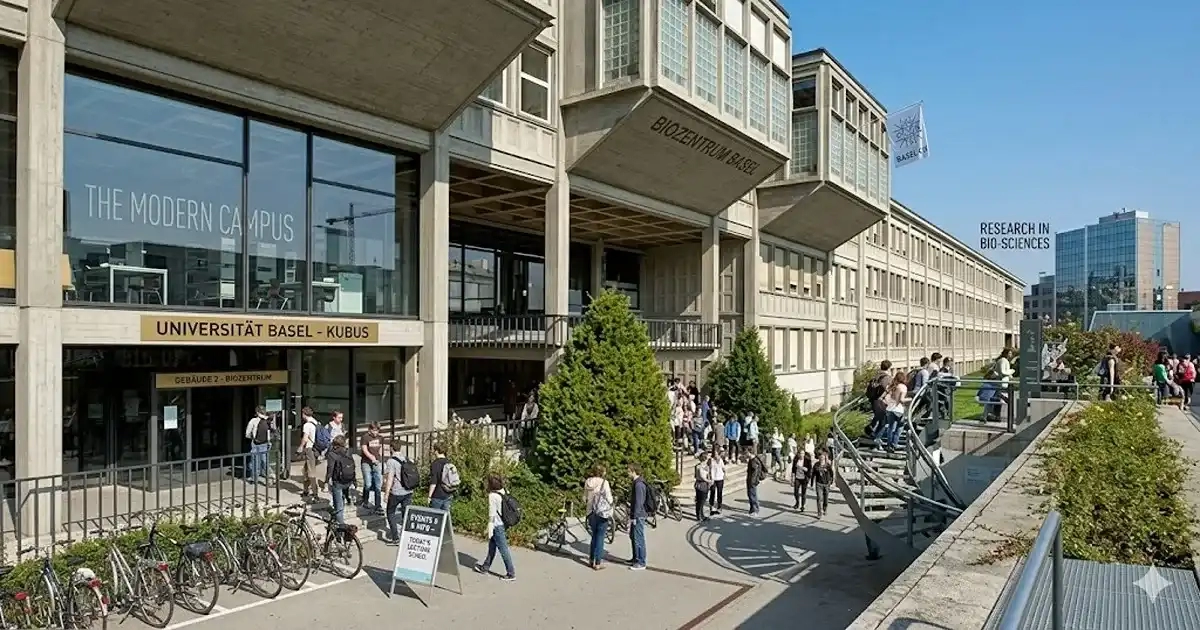
Université de Fribourg

Main Academic Divisions (Faculties)

  1. Faculty of Theology
  2. Faculty of Law
  3. Faculty of Management, Economics and Social Sciences
  4. Faculty of Humanities
  5. Faculty of Education
  6. Faculty of Science and Medicine
  7. Interfaculty

Reasons to Study at Université de Fribourg

  1. Personal Contact in Learning and Teaching

    Great emphasis is placed on direct contact between the teaching staff and students because we believe that this is the optimal way to further the development of each individual.


  2. Bilingual Studies: Unique in Europe

    As the only bilingual university in Switzerland, the University of Fribourg offers a wide range of courses of study in French, German or both. There are also a number of courses with an international aspect which are offered in English. Languages are not only studied here, but they form part of everyday life in the University community.


  3. Centers of Excellence

    With their work in the centres of excellence and on research projects, our committed researchers continually contribute to extending the horizons of knowledge in all disciplines. In doing so, their attention is constantly focused on solving society’s current and future challenges. The University of Fribourg also enjoys an excellent international reputation in research.


Fees

Undergraduate Tuition

Indigenous Students CHF 1,440
International Students CHF 1,740

Postgraduate Tuition

Indigenous Students CHF 360 - CHF 1,440
International Students CHF 1,740

Admission

Undergraduate Admission Requirement

Entry requirements vary by degree. View the degree page for specific requirements.

The general criteria of an upper secondary school-leaving certificate

A foreign upper secondary education is considered to be based on a formal general education if it is substantially equivalent to a Swiss maturity, particularly where the branches studied and the total duration of the school education (12 years) are concerned.
It is essential that the required subjects be respected for the last three years of the upper secondary education.

Furthermore, if the upper secondary studies have been carried out in several different educational systems, the diploma is recognised only if:

  • the last three years of studies were equivalent to the Swiss upper secondary level of education.
  • each of the past three years has been successfully completed.

For more details on the upper secondary school-leaving certificate criteria, please refer to the directives and the swissuniversities recommendations.


Proof of adequate language proficiency

It is important that future Bachelor students master French or German in order to be able to follow courses and communicate both orally and in writing, whatever the chosen degree programme. The level required in French or in German corresponds to a B2 level of the European Council’s Common European Framework of Reference for Languages.

Proof of French or German language proficiency

Postgraduate Admission Requirments

Entry requirements vary by degree. View the degree page for specific requirements.


Proof of adequate language proficiency 

If you wish to study at a Master’s level in the following fields, you must provide proof of adequate language proficiency:

  • Master of Medicine: proof of adequate language proficiency in French or German
  • Master’s degree at the Faculty of Law: proof of adequate language proficiency in French or German
  • Master of Arts in International and European Business: proof of adequate language proficiency in English
  • Master of Science in Data Analytics & Economics: proof of adequate language proficiency in English
  • Master of Science in Bioinformatics and computational Biology: proof of adequate language proficiency in English
  • Master of Science in Environmental Biology: proof of adequate language proficiency in English
  • Master of Science in Molecular Life and Health Sciences: proof of adequate language proficiency in English
  • Specialized Master of Science in Digital Neuroscience: proof of adequate language proficiency in English

The level required corresponds to a B2 level of the European Council’s Common European Framework of Reference for Languages.

How To Apply For Admission

Online applications through Inscruni are aimed exclusively at people who are not currently registered at the Unifr. If you are currently registered at the Unifr and have an active MyUnifr account, you must on no account apply through Inscruni.

Any request from a student registered at the Unifr (e.g. change of degree programme, early start to master studies ("master anticipé"), master studies following a bachelor’s degree, etc.) must in principle be submitted on the MyUnifr portalException: if you are currently registered at the Faculty of Science and Medicine, please consult the information available on the Faculty website.

Online application on Inscruni

The validation of the online application for admission must be done within the deadlines given in the section "Application periods".

 You can apply online even if you have not yet finished your studies or obtained your school-leaving certificate.

 We recommend applying as early as possible as the processing of an application for admission takes several weeks.

Admission Contacts

Email: [email protected]
Phone : +41 26 300 70 20, +41 26 300 60 20

Apply For Admission

Campus Tour

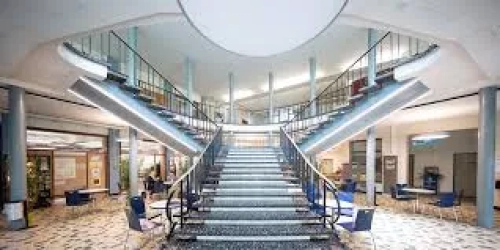
Facilities

  • Classrooms
  • Library
  • Laboratory
  • Research Center
  • Accommodation
  • Sports
  • Gym
  • ICT
  • Cafeteria
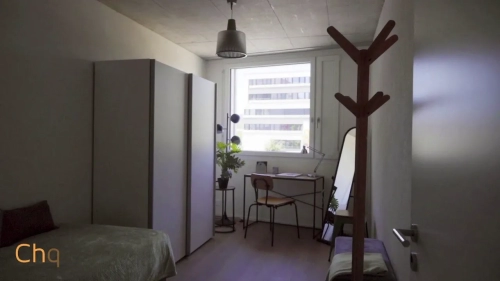
  • Housing: Looking for somewhere to live close to the campus at a reasonable price? In Fribourg, unlike in many other Swiss cities, this is still possible. There are several student hostels which offer inexpensive rooms. The student accommodation service Apartis has rooms for about 365 CHF. If you prefer not to live in this kind of arrangement, have a look at the accommodation service of the AGEF (General Student Association of Fribourg University).
     
  • Library: The University of Fribourg has a central library (BCU) as well as several decentralized libraries (faculties, institutes and interfacultary) spread over the University's various sites. The decentralised libraries are organised in six documentation centres, which are coordinated by the Coordination Office.


  • Sports: The University Sports Service offers a varied programme that promotes physical, mental and social balance in student life. It provides a platform for exploring different sporting disciplines, whether for beginners wishing to learn from scratch or for sports enthusiasts keen to hone their skills. Students have the opportunity to take part in matches with like-minded people, engage in unrestricted training and dedicate themselves to an activity over several days, or even weeks, through intensive courses. As well as balance, the sports department offers opportunities to focus on health-related themes. Whether it's prevention, strengthening or even the rehabilitation of physical weaknesses, Unisportuni is versatile and focused on all areas.

School Contact

Address

University of Fribourg Av. de l'Europe 20 CH-1700 Fribourg

Email Address

[email protected]

Phone Number

+41 26 300 95 90

Website Address

https://www.unifr.ch/home/en/

Social Media Pages

Accreditations

  • Medical Program Accreditation: Medical degree programmes are accredited in accordance with Swiss federal requirements for medical professions. 
  • Teaching Qualifications Recognition: Teacher education and pedagogical-therapy programmes are recognized by the Swiss Conference of Cantonal Ministers of Education, ensuring national professional recognition and mobility

Vice Chancellor

Katharina Fromm

Katharina M. Fromm was born in Germany and grew up in France, Germany and the USA. She studied chemistry at the University of Karlsruhe and at the Ecole des Hautes Etudes des Industries Chimiques (now ECPM) in Strasbourg, France. She received her PhD for work on organometallic compounds at the University of Karlsruhe, where - after her Habilitation at the University of Geneva in 2002 - she establi... read more
shed a research group. Soon after, she accepted an SNSF (Swiss National Science Foundation) research professorship at the University of Basel. In October 2006, she commenced work as a full professor (Chair of Inorganic Chemistry) at the University of Fribourg.

The work of her research group is centred on the bioinorganic chemistry of silver, silver compounds and nanoparticles, for example on their antimicrobial effect. A further research area is that of new compounds and nanomaterials for batteries. In the NCCR (National Centre of Competence in Research) "Bioinspired Materials", the group is investigating polymers with new mechanophores.

Academic Staff

  • Chantal Martin Sölch

    Vice-Rector for Course and Continuing Education Offerings After completing bilingual studies in Psychology and Neurobiology at the University of Fribourg (Switzerland), Prof. Dr. Chantal Martin Soelch carried out her PhD research at the Paul Scherrer Institu... read more
    te (Villigen, Switzerland) using neuroimaging methods to investigate the brain’s reward system and received her PhD from the University of Fribourg in 2000. At the same time, she was working at the Memory Clinic of the Psychiatric University Hospital, Zurich, as a neuropsychologist. She then worked as Senior Lecturer in the Department of Psychology at the University of Basel for five years before being appointed research fellow at the National Institute of Mental Health (NIMH), Bethesda, USA, for two years. Returning to Switzerland, she worked as Head Psychologist and Head of the research division of the Clinic for Psychiatry and Psychotherapy at the University Hospital of Zurich.
  • Prof. Bernard Ries

    Vice-Rector International Relations, Digitalization and Young Researchers Bernard Ries gained a PhD in mathematics from the Ecole Polytechnique Fédérale de Lausanne in 2007. Between 2008 and 2009, he was a Postdoctoral Research Fellow at Columbia University (USA) in the D... read more
    epartment of Industrial Engineering and Operations Research. He then worked as an Assistant Professor at the University of Warwick (UK), before becoming an Associate Professor in the Department of Computer Science and Mathematics at the University of Paris Dauphine (France). He was also Deputy Director of the Laboratory of Analysis and System Modelling for Decision Aiding (LAMSADE) between 2013 and 2015. Having arrived at the University of Fribourg in 2015, he now leads the research group Decision Support & Operations Research with Marino Widmer.


  • Anne Crausaz Esseiva

    Academic Director Anne Crausaz Esseiva has been the University of Fribourg’s Academic Director since 1 September 2020.

    After studying biochemistry and obtaining her doctorate at the University of Fribourg, she ... read more
    worked for several years in Bern in various organisations associated with universities, such as the Swiss Agency for Accreditation and Quality Assurance (AAQ), the Rectors' Conference of the Universities of Applied Sciences and swissuniversities, where she was in charge of the research department.Anne Crausaz Esseiva has been the University of Fribourg’s Academic Director since 1 September 2020.
  • Jean-Louis Berger

    Vice-Rectorate Teaching and Quality Assurance Jean-Louis Berger grew up in the canton of Geneva, where he obtained a commercial matura and then studied education sciences at the University of Geneva, graduating with a licentiate in 2003. After wo... read more
    rking professionally and for associations with children and adults with disabilities, he completed a doctoral thesis in education sciences in 2008. Between 2008 and 2009, he completed a postdoctoral fellowship at the Combined Program in Education and Psychology, University of Michigan in Ann Arbor. From 2009 to 2020, he was a professor, co-director of the “Learning and Support Processes” research area and area coordinator within the Master of Science in Vocational Education and Training at the Swiss Federal Institute for Vocational Education and Training (Swiss Federal University for Vocational Education and Training SFUVET). Between 2018 and 2021, he held the position of European editor for the journal Mesure et évaluation en éducation. 
View More Staff

Notable Alumni

View More Alumni

History

1763

Academy of Jurisprudence
The Age of Reason brings forth renewed efforts in the Catholic areas of Switzerland to counter the lack of education. With the founding of an Academy of Jurisprudence in 1763, the first step is taken towards a university.

Founding of the University of Fribourg
The Grand Council of the Canton of Fribourg resolves to bestow on the City Council the power to set in motion the “provisional opening of one or other university faculty”. ("1889-1989 Geschichte der Universität Freiburg Schweiz", 1991) The driving force behind the founding of the University is the Fribourg Councillor Georges Python. ... read more

The winter semester of 1889/1890 begins on 4th November 1889 with lectures in the Faculty of Humanities and Jurisprudence, attended by 29 students. At Easter in 1890 the Faculty of Theology follows with its program of studies.

1971

University Crèche
The crèche is established with the help of the “Vereinigung der Schweizerischen Akademikerinnen“ (Association of Swiss Women Graduates). To begin with, the University places several rooms in the Student Centre at their disposal, but the demand is so strong that, later on, available buildings are fitted out and leased by the University. From 1994 on, additional space is added outside the campus.

15th October 1998

In the 1998/1999 academic year there are, for the very first time, more women (56.6%) than men studying at UNIFR. In conjunction with the general increase, the proportion of women students has been rising markedly since the beginning of the 1960’s: between 1955 and 1975 it leaps from 7.3% to 24%. In 2012 women students make up around 60%.

15th October 2001

New logo
In 2001 the University of Fribourg receives a new face. Under the direction of Rector Paul-Henri Steinauer a new logo is introduced which replaces the old one dating from 1953 with its half-length figure of the enthroned Christ as Judge of the World.

28th October 2005

Pérolles 2 is inaugurated
In the autumn of 2005 the Faculty of Economics and Social Sciences as well as the Institutes of Information Technology and Sport move into a new building. 6 years before, the voting public of Fribourg agreed to the Pérolles 2 building project by the significant majority of 83.7%.

2013

Corporate Design
Since the middle of October 2013 the University of Fribourg has been facing the world with a fresh new visual image. Even after 125 years, the Alma Mater remains true to its identity which is characterised by its long tradition, bilingualism, internationality, its high academic standards and the principle of always putting people first. Its revamped visual appearance is designed to underscore the University’s identity and make it easier to see the University as a whole, the main focus being on its performance and offerings.