
Established in its modern form in 2000 with roots dating back to the 17th century, the University of Lucerne is a public, non-profit institution. It operates six core faculties and academies: Theology, Humanities and Social Sciences, Law, Economics and Management, Health Sciences and Medicine, and Behavioural Sciences and Psychology. Characterized by its motto Die persönliche Uni (The Personal University), the school prides itself on small class sizes, strong interpersonal relationships, and an interdisciplinary curriculum that bridges local Swiss values with global networks. Students and researchers focus heavily on cultural, societal, and health-related fields, working closely with international institutions like the World Health Organization. [1, 2, 3, 4, 5]
| Acronym | UNILU |
| Motto / Slogan | Die persönliche Uni, The personal uni |
| Founded | 2000 |
| Departments | 26 |
| Location | Lucerne, Lucerne, Switzerland |
| Address | University of Lucerne, Frohburgstrasse 3, P.O. Box 6002, Lucerne |
The personal university
Personal relationships and dialogue are important to them. they form a research, teaching, learning and working community shaped by respectful interactions, appropriate participation, transparent communication, attractive working conditions and mutual trust. Students receive high-quality teaching with a good supervisory relationship and fair performance assessments. All members of the university (researchers, lecturers, students, and technical and administrative staff) help to shape the university and take responsibility for its development.
1. A focus on people and community
Their research focuses on everything that has defined, defines and will define humans in their individual and social existence: how they believe and hope, think and talk, cooperate and govern, make decisions and take action, become and stay healthy, behave, and experience their world. As an academic institution, their fields of specialization include: theology, cultural studies, social sciences, law, economics and management, health sciences, medicine and behavioral sciences and psychology.
2. Responsible action via internal and external partnerships
They take their responsibility very seriously and are committed to: transparency; effective cooperation; adherence to rules; provision of ideal infrastructure; efficient use of resources; provision of an ideal research, learning and working environment; and careful handling of resources. We ensure independence, neutrality and impartiality in research and teaching, and they are forward-looking, open to dialogue, and innovative. They set great store by diversity and actively promote equal opportunities and combat discrimination.
3. Committed to five activities
Their mission is to carry out scientific research and teaching with a focus on public policy, to promote the development of young talent and academic further education, and to provide services to the public. They strive for excellence in research and teaching. Their research is scientifically sound, solution-oriented, interdisciplinary and innovative. They offer their students targeted support by providing training and skills for the current and future working world.
4. Rooted in Lucerne – connected to the world
They have regional, national and international networks in academia, education, culture, business, politics and society. They are rooted in central Switzerland, the canton of Lucerne and the cultural city of Lucerne, as well as having links outside of the German-speaking region with the national and international research and teaching community. They also cultivate a global academic network with respected partner institutions.
5. Future-oriented and relevant to society
Their work seeks to help expand knowledge and understanding, develop society as a whole, and improve quality of life. The main pillars of this are scientific professionalism and the social relevance of research topics. They use the potential of digitalization to enhance the quality and efficiency of research, teaching and administration.
6. Self-critical and open to improvement
They regularly review whether they are achieving the goals we have set themselves.
(approved by the University Council on 27 June 2018, mention of behavioral sciences and psychology added in January 2023)
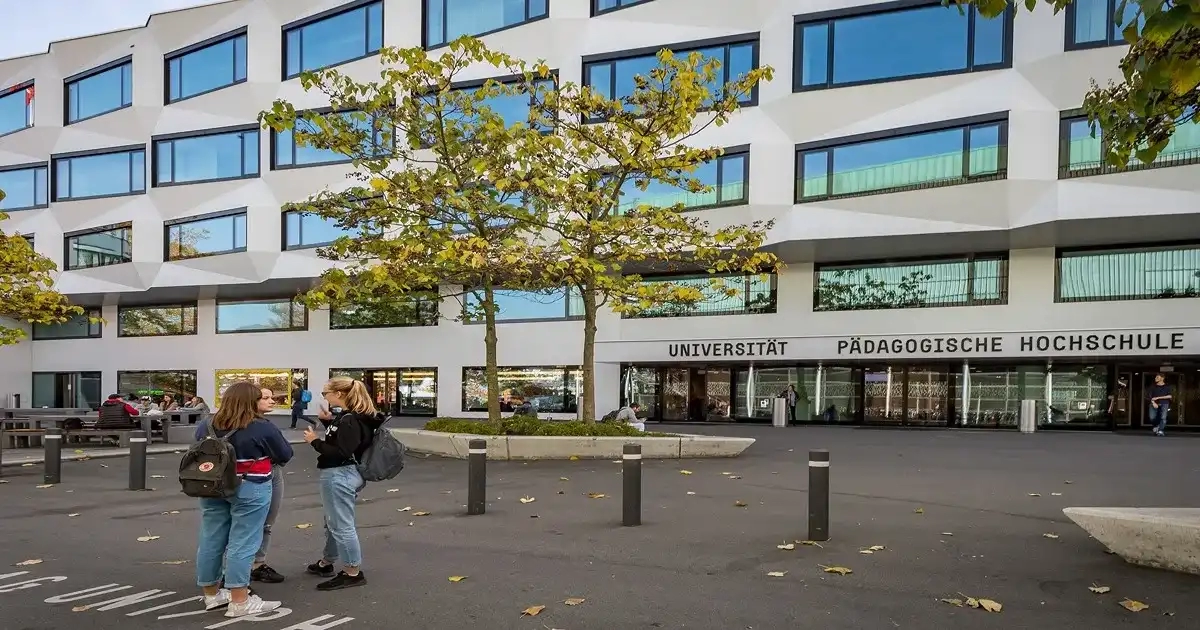
The University of Lucerne traces its roots back to the 16th century, but it has only existed as a modern university since 2000. Today, Switzerland's youngest university has around 4,100 students and over 700 employees. Around 750 people are pursuing further education to receive certificate qualifications.
Cultural and social sciences, law, economics, health/medicine, theology, psychology: The University of Lucerne, with its focus on the humanities, offers diverse study opportunities in areas related to people and their institutions. The interconnectedness of different disciplines enables unique combinations of subjects.
A learning-friendly environment and direct contact with lecturers are essential prerequisites for successful studies. The University of Lucerne offers precisely this with its manageable size and personal atmosphere.
The University of Lucerne has established a network of partner universities worldwide. This enables interested students to complete a semester abroad. At the same time, the international students at the University of Lucerne bring an international flair.
The professors at the University of Lucerne have high standards regarding the quality of their teaching and their research. Students benefit from this – the courses are stimulating and supported by the lecturers' research.
Graduates of the University of Lucerne have excellent job prospects. This is also underscored by a survey conducted by the Federal Statistical Office. Former students of Switzerland's youngest university now hold responsible positions in business, administration, and non-profit organizations.
A fee of CHF 100 is charged for registration and processing.
Requirements vary by program and country-specific requirements. View the requirements on the program page.
a. A copy of an official identification document (passport or identity card) and, where applicable, a copy of the residence permit
b. A passport photo (JPG format)
c. A curriculum vitae (including all schools and higher education institutions attended, including those not completed)
d. Proof of eligibility for admission to higher education (e.g., a secondary school leaving certificate or a Bachelor’s degree)
e. Additional documents relevant to the respective admission assessment, such as school transcripts from the final three years of schooling in the case of foreign secondary school certificates, proof of successful completion of entrance or supplementary examinations, higher education diplomas (Bachelor’s/Master’s degrees), transcripts of records, and diploma supplements
f. Where applicable, proof of sufficient language proficiency (in accordance with Chapter V) g. Any additional documents required by the University of Lucerne on a case-by-case basis
Requirements vary by program and country-specific requirements. View the requirements on the program page.
a. A copy of an official identification document (passport or identity card) and, where applicable, a copy of the residence permit
b. A passport photo (JPG format)
c. A curriculum vitae (including all schools and higher education institutions attended, including those not completed)
d. Proof of eligibility for admission to higher education (e.g., a secondary school leaving certificate or a Bachelor’s degree)
e. Additional documents relevant to the respective admission assessment, such as school transcripts from the final three years of schooling in the case of foreign secondary school certificates, proof of successful completion of entrance or supplementary examinations, higher education diplomas (Bachelor’s/Master’s degrees), transcripts of records, and diploma supplements
f. Where applicable, proof of sufficient language proficiency (in accordance with Chapter V) g. Any additional documents required by the University of Lucerne on a case-by-case basis
Additional documents to be submitted when applying for a doctoral programme:
a. Confirmation of supervision
b. Any additional documents required by the University of Lucerne on a case-by-case basis.
You can register for Bachelor's, Master's and doctoral degree programmes via the UniPortal.
Email: [email protected],[email protected]
Phone : +41 41 229 50 60
The Swiss Accreditation Council has accredited the University of Lucerne in accordance with the Higher Education Act (HEdA).
From February 2020 to January 2024, he held the position as Dean of the Faculty of Humanities and Social Sciences.
Martin Hartmann has been President of the University of Lucerne since August 2024.
1997 - 2002
Academic assistant at the Institute for Public Law at the University of Bern
1991 - 1997
Studied law at the Universities of Berne and Lausanne (lawyer)
since Aug. 2022
Vice-Rector for University Development.
Franca Contratto also acts as an expert for authorities and for lawmaking projects - for example, in 2012/13 with a view to the drafting of the Swiss Financial Services Act (FinSA). In 2024, she was invited to join the circle of European Company Law Experts, an independent group of experts with representatives from various EU member states (Benelux, Germany, England, France, Italy, Austria, Poland, Portugal, Spain, Sweden) and Switzerland, which deals with current regulatory developments in the area of European company and financial market law.



The University of Lucerne traces its roots back to a theological school from the confessional era. It thus has the same historical background as the universities of Geneva, Lausanne, Berne and Zurich.
It was only in the 20th century, however, that the process of expansion and reorganisation began in Central Switzerland: in 1938, the school of higher education became a theological faculty, which received academic degree granting status in 1970. However, an initiative to expand the university to five faculties failed in a referendum in 1978.
It was n... read more
In 2005, the Federal Council decided to recognise the University of Lucerne as a Swiss university in accordance with the University Promotion Act. In September 2011, the University of Lucerne moved into its new headquarter at Frohburgstrasse 3, right next to the railway station and the KKL.
The "Yes" vote in the November 2014 referendum on the revision of the University Act paved the way for a fourth faculty, the Faculty of Economics and Management. The latter commenced operations in the 2016 autumn semester.
A further milestone was the launch of the new Department of Health Sciences and Medicine, which reported directly to the President, at the beginning of August 2019. The revision of the University Act, which came into force on February 1, 2023, transformed the new department into a faculty. Meanwhile, a new Faculty of Behavioural Sciences and Psychology was established.
2000: On 21 May, the people of Lucerne give the green light with a 72 per cent ‘yes’ vote, bringing the University Act into force and laying the foundation for the university in its current form. To mark the occasion, Director of Education Ulrich Fässler (left) and Founding Rector Professor Walter Kirchschläger have the Prosecco ready. On 1 October, the university officially begins operations with two faculties: the Faculty of Theology (TF) and the Faculty of Humanities. (Image: Neue Luzerner Zeitung/Peter Fischli)
2001: A third faculty is added to the university’s first two - the Faculty of Law (RF) is officially opened on 22 October. Founding Dean and Professor Paul Richli highlights a key feature: new students benefit from personal support through a mentoring programme, ensuring the best possible start to their studies. Today, with over 1,000 students, the RF is the third-largest law faculty in German-speaking Switzerland. (Image: Audience at the opening ceremony in the Casino Lucerne)
2007: The Faculty of Humanities is now called the Faculty of Cultural and Social Sciences (KSF). Lectures are held at various locations, including the Bourbaki cinema and the hall of the former Hotel Union (picture). The KSF offers a range of integrated degree programmes that are unique in Switzerland.
2011: Together with the Central Switzerland University for Teacher Education (PHZ; now PH Lucerne) and the Central and University Library (ZHB), the University of Lucerne moves into the former post office building on Frohburgstrasse - next to the railway station, KKL and almost directly on the lake. Various illuminations light up the façade on the open day. (Image: ©profifoto.ch/Michael Kessler)
2016: Founding Dean Professor Christoph Schaltegger, Rector Bruno Staffelbach, and Director of Education Reto Wyss (from left) symbolically cut a red ribbon to mark the opening of the Faculty of Business, Economics, and Informatics (WF), the university’s fourth faculty.
2020: The "Joint Medical Master" is launched. This Master's in Human Medicine is a joint degree programme offered by the Universities of Lucerne and Zurich. A key feature is its strong integration with the Central Switzerland healthcare network, with partner institutions including the Lucerne Cantonal Hospital (LUKS) and the Swiss Paraplegic Centre (SPC). (Image: Oliver Oettli)
2020: The university opens its first externally funded institute. Romed Aschwanden, then Managing Director, and Professor Boris Previši?, Director, celebrate the official launch of the Uri Institute "Kulturen der Alpen" (Cultures of the Alps), which began operations in autumn 2019. Additionally, the Ecumenical Institute, established in 1998 as part of the former "university college" within the Faculty of Theology, continues to exist.
2023: The Faculty of Health Sciences and Medicine (GMF) is established as the university’s fifth faculty, having previously existed as a department since 2019. Founding Dean and Professor of Health Economics, Stefan Boes, remarks: "The faculty's focus is unique in Switzerland." (Image: Sarah Stadelmann)
2024: The establishment of the ‘Zug Institute for Blockchain Research at the University of Lucerne’ was approved by the Zug Cantonal Council. Nine new chairs are planned for the institute, which was initiated jointly with the Lucerne University of Applied Sciences and Arts. It is the latest of five institutes with external sponsorship. (Image: ©istock.com/Rafael_Wiedenmeier)
2024: The university enhances its human sciences profile with the addition of a sixth faculty. The Faculty of Behavioural Sciences and Psychology (VPF) begins operations. Among its first professors are Karin Hediger, Andrew Gloster, Helen Wyler, Matthias Ertl, and Dario Cazzoli (from left). (Image: Roberto Conciatori)