

Founded in 1789, Georgetown is the nation's oldest Catholic and Jesuit university. Drawing upon the 450-year-old legacy of Jesuit education, it provides students with a world-class learning experience focused on educating the whole person through exposure to different faiths, cultures, and beliefs.
| Acronym | GU |
| Nickname | The Hoyas |
| Motto / Slogan | Utraque Unum |
| Colour | Blue and Gray |
| Mascot | Jack the Bulldog |
| Founded | 1789 |
| Location | Washington, D.C., Washington, D.C., United States |
| Address | GeGorgetown University 37th and O Streets, N.W. Washington, D.C. 20057 |
It is Georgetown University’s mission to educate the mind, body and spirit through a world-class learning experience rich with real-world experiences, civic engagement and exposure to different faiths, cultures and beliefs.
Drawing from the ideals and principles of the Jesuit tradition, Georgetown University fosters an environment where students can develop their unique gifts and insights through reflection, service and intellectual inquiry. Georgetown University students are challenged to engage in the world and become men and women in the service of others, especially the most vulnerable and disadvantaged members of the community.
Georgetown University has always worked for the common good. We instill a set of values in our students — who are tomorrow’s leaders. Today, we’re continuing to deepen our impact through an expanding presence on the global stage and research initiatives that respond to the world’s most complex challenges.
As the world changes, so must the way we teach and learn. At Georgetown, preparing students to become tomorrow’s changemakers means instilling a global mindset, breaking disciplinary silos and immersing students in real-world experiences.
DC is a hub for international leaders, making this the perfect place to explore solutions for challenges that cross borders. Across our campuses, we’re applying a global lens to environmental, health and other issues that affect the world’s well-being.
Our research community collaborates across the university’s campuses and around the world. We’re probing frontiers in the physical, natural and social sciences, tackling data to shape public policy and investigating how society can use technological advances to improve our world.
Entry requirements vary by course. Check the course page for requirements.
International applicants to Georgetown follow the same application procedure and deadlines as US citizens. All candidates (including non-US citizens or non-permanent residents) are reviewed without consideration of a student’s financial resources. Thus, it is not necessary to send a Statement of Finances with your application. Plainly stated, our “Need-Blind” admissions policy applies to everyone.
Georgetown University requires submission of SAT and/or ACT scores as part of our holistic application review process. Candidates for admission should submit official score reports from the College Board and/or ACT.
Requirements vary by program and course. Check the course page for requirements.
Admission to a degree program may be granted to applicants:
Email: [email protected]
Phone : (202) 687.3600, (202) 687.5084
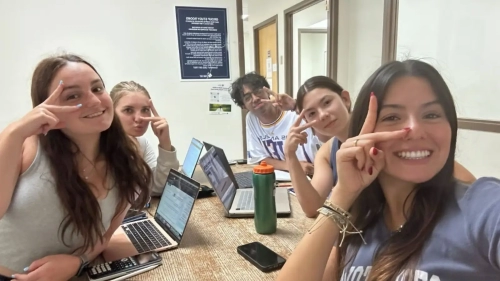
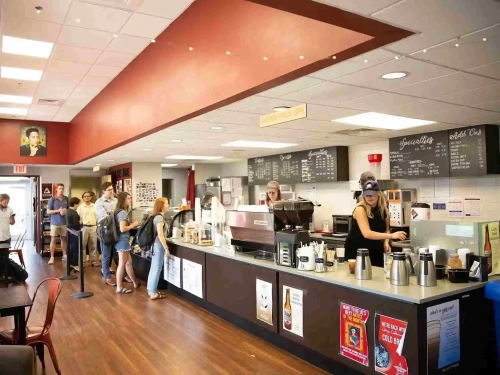
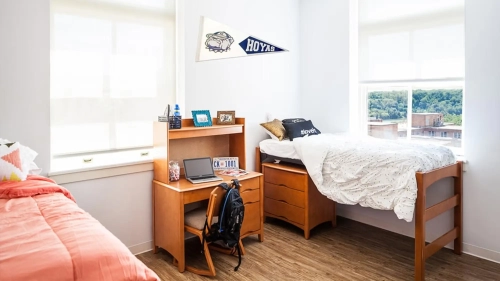
Research Center: By tackling some of the most critical intellectual and social issues of the day, Georgetown’s faculty and researchers demonstrate their commitment to academic excellence and serving others. Our researchers explore a diverse range of issues – from the science of drug discovery to dialogue on religious identity – making us a community devoted to understanding and improving the world around us.
Sport: Run, cycle, swim and play. We’ll support your mind, body and soul, whether you’re striving for personal fitness or glory on the field or court. Access wellness coaching, personal training, and fitness classes. Join teams ranging from intramural to club. Enjoy top fitness facilities, and even Red Cross certifications, on your path to wellness.
Library: Pursue research at Georgetown’s libraries, which include more than 3.5 million holdings. Whether your focus is on a specific discipline, interdisciplinary areas or emerging fields, our libraries offer academic resources, a maker hub, collaborative spaces and more. Explore our specialized legal, medical, scientific, bioethical and theological collections.
Middle States Commission on Higher Education.
He will begin his new role on July 1, 2026. Peñalver has served as the 22nd president of Seattle University, a Catholic, Jesuit institution, since 2021. He was ... read more
Peñalver will succeed Interim President Robert M. Groves, who has led Georgetown for the past year after former President John J. DeGioia stepped down from his role in 2024 to recover from a stroke.
Prior to joining Georgetown, from 2009-2012, he was director of the U.S. Census Bureau (presidential appointment with Senate confirmation), a position he assumed after being director of the University of Michigan Survey Research Center, professor of sociology, and research professor at the Joint Program in Survey Methodology at the University of Maryland.
In 1997, Ms. Mattson joined the John F. Kennedy Center for the Performing Arts, where she served as Senior Vice President for Development for the Center, the National Symphony Orchestra (NSO), and the Washington National Opera (WNO). Her responsibilities included the management of all fundraising, special events and volunteer activities. In addition to managing an increase in annual contributions from $22 million to $85 million, Ms. Mattson launched the Kennedy Center’s first nationwide endowment campaign in the late 90s, securing commitments of more than $80 million. She also designed and executed a $175 million capital campaign to fund the Center’s expansion.
Joe has been at Georgetown since 2002 and previously served as Associate Dean of the McCourt School of Public Policy (during Joe’s time there it was called the Georgetown Public Policy Institute). Joe helped to establish several new graduate and certificate programs and taught courses to both pre-career and mid-career graduate students. Joe led the move of the school from the Car Barn to Old North in 2010. In 2006, Joe was selected by the graduating class to receive the Leslie Whittington Award for outstanding faculty. Prior to his service at Georgetown, Joe worked for over 15 years in government service. Most of his federal career was with the U.S. Department of Defense, where he worked on budget, acquisition, and legislative matters in a variety of assignments. Joe was appointed to the Senior Executive Service and entered federal service through the prestigious Presidential Management Fellowship Program.




In 1789, Carroll secured the deed to one acre of land on a hilltop overlooking the village of Georgetown. He was appointed Archbishop of Baltimore in 1808.
Classes began in 1792. Within the first year, attendance grew to more than 40 students – some as far away as the West Indies. In 1817, the school awarded its first two bachelor’s degrees.
The Civil War (1861-1865) nearly closed Georgetown, as the student body dropped from 313 to 17 between 1859 and 1861. A total of 1,141 st... read more
After the Second Battle of Bull Run in Manassas, Virginia, in 1862, several campus buildings were turned into a temporary hospital. To mark the end of the Civil War, Georgetown students selected the colors blue and gray as the school’s official colors in 1876.
Georgetown established the School of Medicine in 1851 and the Law School in 1870. Patrick F. Healy, S.J., the university’s president between 1873 and 1882, was the first African American to earn a Ph.D. and the first to head a major U.S. university. Healy dramatically reformed the university’s curriculum with a new emphasis on history and the natural sciences and started construction on the Flemish Romanesque-style Healy Hall in 1877.