ListOfUni

Harvard University (HU)

Massachusetts, United States
Visit School Website
  • Private Type
  • 24,596 Students
  • 1636Founded
  • YesAccept Int. Studs
  • YesDistance learning

About

Harvard is devoted to excellence in teaching, learning, and research, and to developing leaders who make a difference globally.

Acronym HU
Motto / Slogan Veritas, the Latin word for "Truth,"
Colour Black and Crimson
Mascot John Harvard
Founded 1636
Location Cambridge, Massachusetts, United States
Address Harvard University Massachusetts Hall Cambridge, MA 02138

Mission

The mission of Harvard College is to educate the citizens and citizen-leaders for our society. We do this through our commitment to the transformative power of a liberal arts and sciences education.

Beginning in the classroom with exposure to new ideas, new ways of understanding, and new ways of knowing, students embark on a journey of intellectual transformation. Through a diverse living environment, where students live with people who are studying different topics, who come from different walks of life and have evolving identities, intellectual transformation is deepened and conditions for social transformation are created. From this we hope that students will begin to fashion their lives by gaining a sense of what they want to do with their gifts and talents, assessing their values and interests, and learning how they can best serve the world.

Vision

Harvard College sets the standard for residential liberal arts and sciences education. We have committed to creating and sustaining the conditions that enable all Harvard College students to experience an unparalleled educational journey that is intellectually, socially, and personally transformative.
Harvard University

Objectives

Harvard University's core objectives are to provide world-class education, advance knowledge through research, and prepare individuals for leadership and service, fostering critical thinking, innovation, and ethical responsibility, all wi

Main Academic Divisions (Faculties)

  • Harvard College
  • Harvard Graduate School of Arts and Sciences
  • Harvard Business School
  • Harvard Law School
  • Harvard Medical School
  • Harvard Kennedy School
  • Harvard School of Engineering and Applied Sciences
  • Harvard Graduate School of Design
  • Harvard T.H. Chan School of Public Health
  • Harvard School of Dental Medicine
  • Harvard Divinity School
  • Harvard Extension School
  • Harvard Radcliffe Institute

Reasons to Study at Harvard University

  1. Global Academic Excellence

    • Harvard is consistently ranked among the top universities in the world.
    • Renowned for excellence across arts, sciences, law, medicine, business, engineering, and public policy.
    • Taught by world-class faculty, including Nobel laureates and global thought leaders.
  2. Strong Financial Aid & Scholarships

    • Harvard offers need-based financial aid and is need-blind for undergraduate admissions, including international students.
    • Many students attend tuition-free, depending on family income
  3. Career & Leadership Opportunities

    • Excellent career placement and networking through a powerful global alumni network.
    • Strong links with top employers, startups, NGOs, and governments.
  4. Outstanding Research Facilities

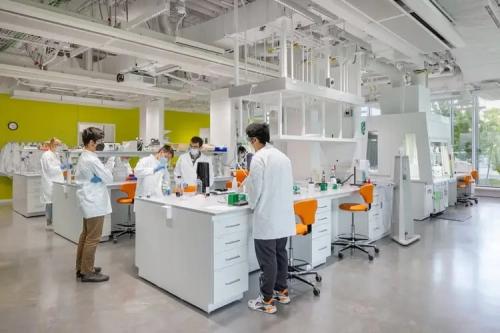
    • Access to cutting-edge laboratories, libraries, museums, and research centers.
    • Home to the largest academic library system in the world.

Fees

Undergraduate Tuition

International Students USD 59,320

Postgraduate Tuition

International Students USD 57,328 - USD 73,600

Admission

Undergraduate Admission Requirement

View the entry requirements for your course and program.

Postgraduate Admission Requirments

View the entry requirements for your course and program.

How To Apply For Admission

  • Apply Directly

Admission Contacts

Email: [email protected]
Phone : +1?617?495?2789, +1?617?495?5315
Apply For Admission

Campus Tour

Facilities

  • Classrooms
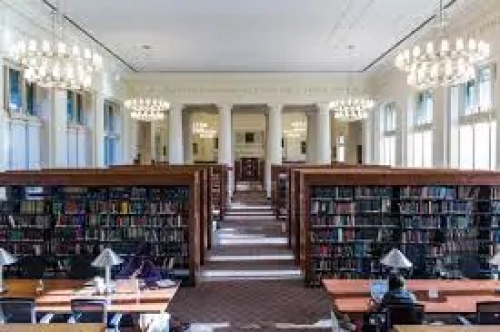
  • Library
  • Laboratory
  • Research Center
  • Accommodation
  • Sports
  • Gym
  • ICT
  • Cafeteria

Library: Established in 1638, Harvard Library is the oldest library system in the United States. Harvard Library is a multi-library system with several locations across the University’s campus and beyond.


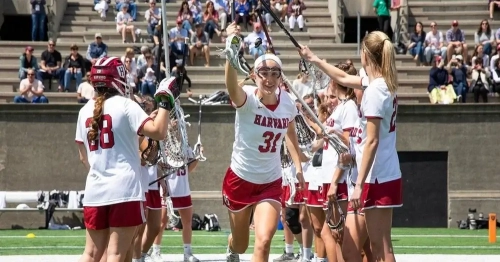
Sport: For those unfamiliar, curling is the strategic, high-energy sport you may have seen during the Winter Olympics, the one with sweeping, sliding stones, and teams huddled over the ice calling line. Originating in Scotland and popular throughout Canada and Scandinavia, curling is gaining enthusiasm across the United States as well.


School Contact

Address

Harvard University Massachusetts Hall Cambridge, MA 02138

Email Address

[email protected]

Phone Number

+1 617-495-1000

Website Address

https://www.harvard.edu/

Accreditations

New England Commission of Higher Education (NECHE)
Vice Chancellor

Alan M. Garber

Alan M. Garber was named president of Harvard University on August 2, 2024 after serving as interim president since January 2, 2024. Garber was Harvard’s provost and chief academic officer from 2011-2024. He is also the Mallinckrodt Professor of Health Care Policy at Harvard Medical School, a Professor of Economics in the Harvard Faculty of Arts and Sciences, Professor of Public Policy in t... read more
he Harvard Kennedy School of Government, and Professor in the Department of Health Policy and Management in the Harvard T.H. Chan School of Public Health. An economist and physician, he studies methods for improving health care productivity and health care financing.


Academic Staff

  • John F. Manning

    Provost John F. Manning is Harvard University’s Provost and the Dane Professor of Law at Harvard Law School. Manning was the Morgan and Helen Chu Dean and Professor of Law at Harvard Law School from 2017–... read more
    2024. He joined the HLS faculty in 2004, and was the Bruce Bromley Professor of Law from 2007–2017 and Deputy Dean from 2013–2017. Prior to coming to Harvard, Manning was the Michael I. Sovern Professor of Law at Columbia Law School, where he began teaching in 1994. Manning teaches administrative law, federal courts, legislation and regulation, separation of powers, and statutory interpretation. His writing focuses on statutory interpretation and structural constitutional law. Manning is a co-editor of Hart & Wechsler’s Federal Courts and the Federal System (6th ed., 2009) (with Richard Fallon, Daniel Meltzer, and David Shapiro), and Legislation and Regulation (2d ed., 2013) (with Matthew Stephenson). Prior to entering teaching, Manning served as an assistant to the Solicitor General in the U.S. Department of Justice (1991–94), an associate in the D.C. office of Gibson, Dunn & Crutcher (1989–91), and an attorney-advisor in the Office of Legal Counsel in the U.S. Department of Justice (1986–88). He served as a law clerk to Hon. Antonin Scalia on the Supreme Court of the United States (1988–89) and to Hon. Robert H. Bork on the U.S. Court of Appeals for the D.C. Circuit (1985–86). Manning graduated from Harvard Law School in 1985 and Harvard College in 1982. He is a member of the American Academy of Arts and Sciences.
  • Andrea Baccarelli

    Dean of the Faculty Andrea Baccarelli, MD, PhD, is the Dean of the Faculty at the Harvard T.H. Chan School of Public Health. An internationally recognized scientist and thought leader, Dr. Baccarelli’s pioneering work ... read more
    has transformed our understanding of how environmental factors reshape the human epigenome and impact long-term health. Elected to the National Academy of Medicine for his groundbreaking research, he has also explored diverse molecular mechanisms, from epitranscriptomics to the microbiome, helping guide public policies and advance global health innovations. Recognized as one of the world’s most highly cited scientists, Dr. Baccarelli’s influence spans research, education, and policy.
  • Tomiko Brown-Nagin

    Dean, Harvard Radcliffe Institute Brown-Nagin has served as dean of Harvard Radcliffe Institute since 2018. During her tenure, she has helped recruit excellent faculty to Harvard, expanded Radcliffe’s renowned fellowship program to ... read more
    academics and artists from a broad array of institutions, and more than doubled the number of Harvard students who engage with Radcliffe through interdisciplinary research, courses, and activities.
  • Dean Nonie Lesaux

    Dean of the Harvard Graduate School of Education Nonie K. Lesaux, Roy E. Larsen Professor of Education and Human Development, is the 13th dean of the Harvard Graduate School of Education (HGSE).  A member of the HGSE faculty si... read more
    nce 2003, Lesaux’s research focuses on strategies and innovations to improve learning opportunities and literacy outcomes for children and youth. Her teaching focuses on literacy development and reform, early learning, and leading system-level change.
     
View More Staff

Notable Alumni

View More Alumni

History

On October 28, 1636, Harvard, the first college in the American colonies, was founded. Despite popular opinion (and a certain statue) John Harvard did not found Harvard, but he was the first major benefactor and he donated half of his estate and his library of more than 400 books to the School.

Harvard University was officially founded by a vote by the Great and General Court of the Massachusetts Bay Colony. Harvard is perhaps best-known because of its enduring history of innovation in education. But even die-hard Harvard buffs are not likely to know all of these Harvard firsts and historical snippets.

1607: John Harvard, the College’s fu... read more

ture namesake and first benefactor, was baptized at St. Saviour’s Church (now Southwark Cathedral), London.


1635: John Harvard received his M.A. from Cambridge University, England.


1636: First College in American colonies founded. The “Great and General Court of the Governor and Company of the Massachusetts Bay in New England” approves £400 for the establishment of “a schoale or colledge” later to be called “Harvard.”

1637: The Great and General Court orders the “colledge” established one year earlier to be located at Newetowne (renamed “Cambrige” in 1638).

2024: Professor Gary Ruvkun is awarded the Nobel Prize for the discovery of microRNA and its role in post-transcriptional gene regulation.