
Founded in 1937, Pepperdine University is committed to the highest standards of academic excellence and Christian values. The university offers a diverse range of programs across its five schools, emphasizing purpose, service, and leadership.
| Nickname | Wave |
| Motto / Slogan | Freely ye received, freely give |
| Colour | Blue and Orange |
| Mascot | Willie the Wave |
| Founded | 1937 |
| Location | Malibu, California, United States |
| Address | 24255 Pacific Coast Highway Malibu, CA 90263 |
Pepperdine is a Christian university committed to the highest standards of academic excellence and Christian values, where students are strengthened for lives of purpose, service, and leadership.
Pepperdine University will be a preeminent, global, Christian university, known for the integration of faith and learning, whose graduates lead purposeful lives as servant-minded leaders throughout the world.
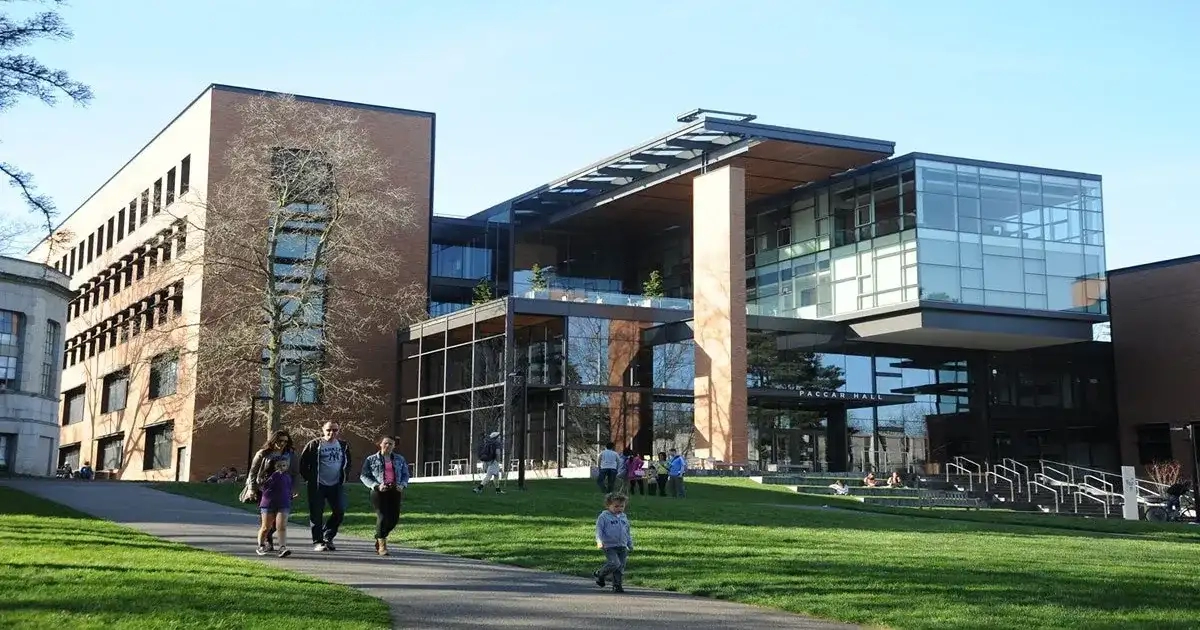
Pepperdine is a private Christian liberal arts university committed to academic excellence and Christian values. It supports veterans and military-connected students, preparing them for lives of purpose, service, and leadership. Through rigorous programs, faculty mentorship, research opportunities, and lectures, Pepperdine develops well-rounded, future leaders.
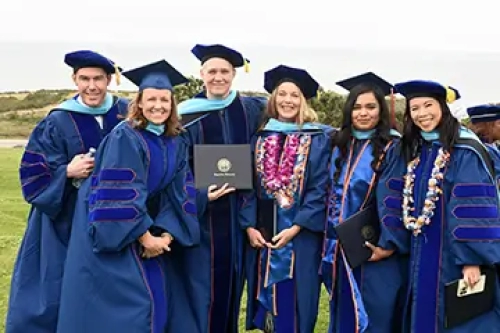
Pepperdine participates in the Yellow Ribbon Program, matching VA contributions to fully cover tuition for eligible students. Veterans receive priority registration, and since 2022, veterans and active-duty service members are honored at graduation with a red, white, and blue cord in recognition of their service and sacrifice.
Pepperdine University boasts top-ranked graduate and undergraduate programs, with separate schools dedicated to business, education and psychology, law, liberal arts, and public policy. At Pepperdine, we engage in the pursuit of knowledge at its highest level and provide an array of practical, hands-on opportunities that bring it down to earth.
Helping others is part of our mission. Pepperdine offers students myriad ways to be of service right here in Southern California, as well as around the world, sponsoring a variety of transformative service opportunities abroad.
UNDERGRADUATE:
POSTGRADUATE:
Entry requirements vary by program and course. Check the program page for requirements.
Entry requirements vary by program and course. Check the program page for requirements.
UNDERGRADUATE:
POSTGRADUATE:
Email: [email protected]
Phone : 3105064246, 3105064280



WASC Senior College and University Commission (WSCUC)
Recognized globally for his transformative work in international justice reform, Gash has devoted himself to advancing the rule of law in developing countries and, since 2010, has visited Uganda nearly 30 times with Pepperdine students and alumni to support the country's judiciary, having served as a specialist advisor to the High Court of Uganda since 2012.
In 2016 he published his first book, Divine Collision: An African Boy, An American Lawyer, and Their Remarkable Battle for Freedom, which chronicles how his life and the Ugandan criminal justice system were dramatically changed as a result of meeting a Ugandan teenage prisoner during Gash's first visit to Uganda. The following year, Revolution Pictures released the award-winning documentary REMAND about the work of the Sudreau Global Justice Program at Pepperdine Law, which Gash led as its director from 2012 to 2019.
A lifelong member of the Pepperdine community and Churches of Christ, Jackson received her first introduction to the University when her father, M. Norvel Young, became its third president in 1957. Throughout the following four decades, the Youngs cultivated the growth of the University, playing instrumental roles in the development of the student body and the move from Pepperdine's original campus location in South Los Angeles to the nationally recognized location in Malibu.
Jackson has continually served Pepperdine University in key leadership roles since 1979. She began her decades-long career at Pepperdine as the assistant director of student life and soon advanced to the director position. Under the leadership of President David Davenport in the late 1980s, she worked with student leaders to design and launch the Pepperdine Volunteer Center, a center where students, staff, and faculty members live out the University mission by engaging in service opportunities and building lasting partnerships within the community. In her role as founding director, Jackson developed the managing board and launched the earliest campus-wide volunteer programs.
The provost also oversees critical University departments each supporting student and faculty academic endeavors, including the Center for Faith and Learning, Information Technology, the Institute for Entertainment, Media, and Sports, the Office of Institutional Effectiveness, the Office of the Registrar and OneStop, the Office of Student Accessibility, and the Office of Research, Grants, and Foundation Relations, and Student Affairs.
Brewster earned his bachelor's degree in science education from Lubbock Christian University. He earned his PhD in cell biology and biochemistry from Rice University, followed with a postdoctoral fellowship at McLaughlin Research Institute for Biomedical Sciences.




In 1909 Pepperdine, then 23 years old and a newlywed, founded Western Auto Supply Company, a specialty retail chain of stores that supplied automobile parts and accessories, with an initial investment of five dollars. Serving a nation just beginning its love affair with the automobile, Western Auto grew at an exponential rate and eventually operated approximately 1,200 stores across the U... read more
Pepperdine had always exercised a spirit of generosity and charity, and was a man who understood himself as a steward and caretaker of the assets that God had entrusted to him. That sense of stewardship matured into a call of destiny when he observed the alarming rate at which Christian young men and women lost interest in their faith after going on to higher education. He determined that he would dedicate his fortune to creating and endowing a college that would provide the best education possible, managed by administrators and taught by professors who would support students in their Christian belief.
George Pepperdine College
On September 21, 1937, the new campus of George Pepperdine College hosted 2,000 attendees gathered to witness the opening of the school. Speakers that day included California governor Frank Merriam, Los Angeles mayor Frank L. Shaw, the college's first president Batsell Baxter, and founder George Pepperdine. Among the crowd were the college's first students, 167 young men and women from 22 states and two foreign countries. Mr. Pepperdine clearly stated his intentions for the school on that day: "Our college is dedicated to a twofold objective: First, academic training in the liberal arts . . . Secondly, we are especially dedicated to a greater goal—that of building in the student a Christ-like life, a love for the church, and a passion for the souls of mankind."
During his 15-year tenure (1985 to 2000), President Davenport intentionally shifted the operational paradigm of the University away from a traditional, hierarchical structure of administration, with a central "ivory tower" and subordinate silos of educational power and influence at each of the schools. Davenport often invoked the metaphor of knowledge as light, passed in all directions through an optical network both transparent and clear. This change in thinking evolved twofold into a collaborative management model wherein both outsiders and University administrators could provide input and feedback, and into the enhanced independence of the schools for the purpose of allowing them to autonomously develop innovative programs to meet the ever-changing needs of students.
When Andrew K. Benton was named the seventh president of Pepperdine University in 2000, he celebrated the successful $313 million conclusion to the University's second capital campaign, “Challenged to Lead,” but he then issued five more challenges to meet: challenges to expand resources, enhance diversity, strengthen connection to heritage, create a sense of community, and emphasize scholarship and culture. The project of the University at the turn of the 21st century was thus to strengthen these areas, proving to be no small task in the turbulent times of the century’s first decade.
Constantly Changing, Yet Unchanging
Many changes in school location, personnel, policy, and curriculum have come and gone over its eight decades, but today Pepperdine remains distinct and committed to its founder's belief in the value of an alternative in American higher education that improves the intellect and brings the heart of the student under the influence of Christ. Each September on Founder’s Day, the entire University community gathers to recall and renew the dedicatory address of George Pepperdine, in which he states the school’s raison d'etre:
"I am endowing this institution to help young men and women to prepare for a life of usefulness in this competitive world and help them build a foundation of Christian character and faith which will survive the storms of life."
As long as young men and women continue to seek livelihood and spiritual calling in their lives, the mission of Pepperdine University is ever sustained as it continuously seeks to provide students both.