
Located between Geneva, Bern, and Zurich, the University of Neuchâtel comprises four faculties and welcomes some 4,200 students, 50% of whom come from other Swiss cantons and 22% from abroad. It offers numerous bachelor's degrees, as well as master's programs in Arts and Humanities, Law, Sciences, and Economics, many of which are innovative and all recognized by the Bologna Declaration, thus being compatible with European standards.
The University of Neuchâtel thus offers a wide range of studies and research in innovative fields that address societal needs. These fields are encompassed within thirteen teaching and research themes in which the University of Neuchâtel possesses key expertise, across all faculties, as identified in the 2027 strategic vision.
The University of Neuchâtel employs nearly 780 full-time equivalent staff members, 70% of whom are dedicated to teaching.
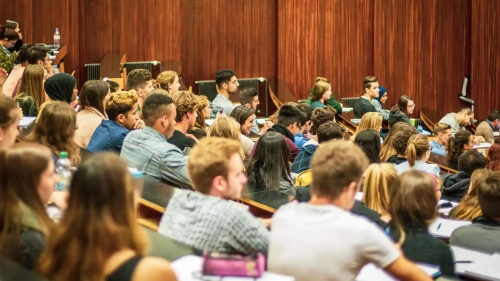
The institution is known for its close relationship between students and professors, in an atmosphere that promotes quality supervision, exchanges and conviviality.
| Acronym | UniNE |
| Founded | 1838 |
| Undergraduate Programmes | |
| Postgraduate Programmes | 28 |
| Location | Neuchâtel, Neuchâtel, Switzerland |
| Address | University of Neuchâtel, Avenue du 1er-Mars 26, 2000 Neuchâtel, Switzerland. |
According to its 2027 Strategic Vision, UniNE strives to be a reference institution in targeted higher education and interdisciplinary research. The university's vision centers on operating as a dynamic hub that is deeply integrated into regional and international academic networks, while directly responding to real-world societal problems.
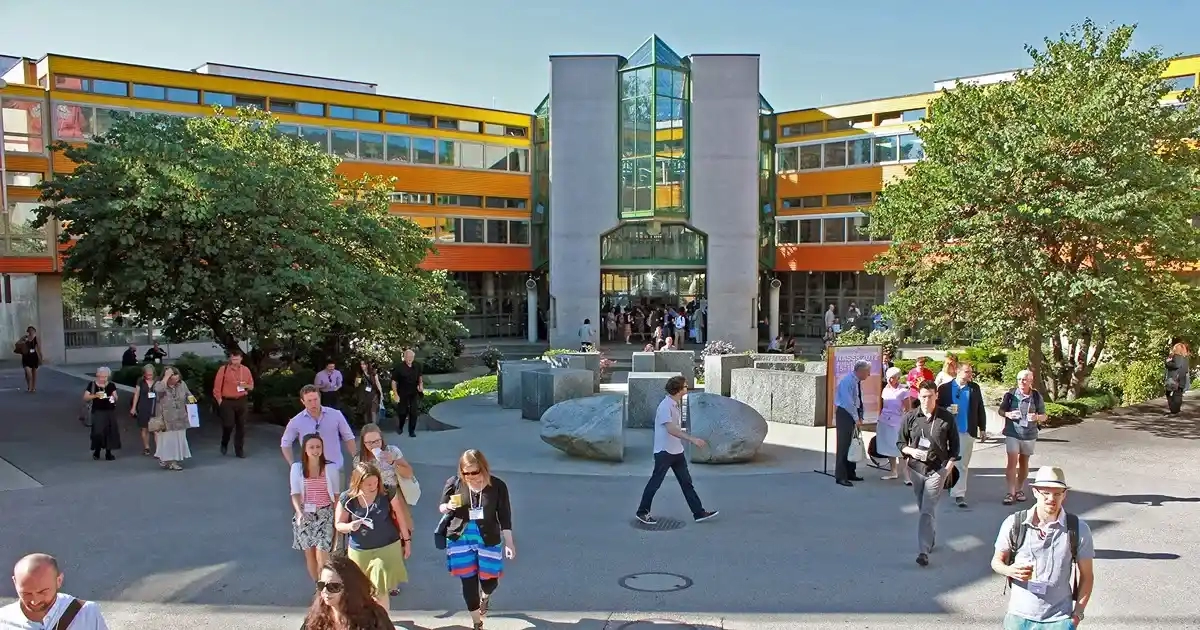
The University of Neuchâtel (UniNE) is in the French-speaking part of Switzerland, between Geneva, Bern and Zurich. With a stunning backdrop provided by lake and the Alps beyond, it hosts more than 4000 students, with 42% coming from other Swiss cantons and 22% from abroad.
With its four faculties – Arts and Humanities, Science, Law, and Economics and Business – the UniNE is a university offering a substantial and comprehensive range of courses.
The UniNE’s courses are constantly evolving to reflect society. With its commitment to innovation in communication and technology, the UniNE is at the heart of the Fourth Industrial Revolution; every day, its teaching and research seek out effective answers to the ethical, economic, legal and cultural consequences of innovation in our society. By choosing the UniNE, students face the challenges of “Society 4.0” head-on.
Every year, the university collects testimonials from students. In these videos, they share insights into their experiences at UniNE, their choice of programs, and what inspires them in life.
A fee of CHF 100.- is charged for an application made on the basis of a foreign diploma. This amount is deducted from the first semester tuition fees for students admitted to UniNE. If the person is refused or does not start their studies during the concerned semester, the administrative fees will not be reimbursed.
To be admitted to the University of Neuchâtel, you must hold a high school diploma or an equivalent qualification. Specific requirements may apply depending on the country where the diploma was obtained.
Foreign diploma
Many foreign qualifications allow you to enroll at the University of Neuchâtel. You will find the specific requirements for each country in the Admission Requirements document.
Depending on the circumstances, you may be asked to take a further exam or a French test.
French level
Target audience
Non-French-speaking candidates holding a foreign diploma and who are not required to take the ECUS exam must present a certificate proving they have acquired level B2 of the CEFR (see Admission requirements).
The following person is exempt from presenting a certificate:
If applicable
If you wish to have ECTS credits obtained or courses validated in another higher education institution recognized, you must attach the equivalency application form.
The prerequisite for access to a Master program is a successfully completed Bachelor program in a related subject.
A Bachelor degree obtained in a non-related subject and/or in a foreign country gives its holder access to Master programs under certain conditions. Further requirements may be asked (e.g. 30 or 60 additional ECTS before the Master program, additional studies during the Master program).
For admission to specialized Master programs, the University sets additional requirements, equally applicable to all candidates.
Before the deadline, applicants send the application form, online or paper version, with the documents below :
All documents (not written in French, German, English, Italian or Spanish) must be translated into French or English by a certified translator.
Only completed files will be considered.
Successful applicants will then receive an admission certificate (which is essential to obtain a visa) and will be asked to present certain documents, in particular the original qualifications.
Email: [email protected]
Phone : +41 32 718 10 00
Institutional Accreditation (Switzerland)



1909
With a decree of the Grand Conseil of Neuchâtel, the Academy of Neuchâtel was officially named the University of Neuchâtel on the 18th May. In 1910, it was expanded by the addition of a commercial sciences department, and all its faculties received the right to award doctorates
1919
The Fédération des étudiants neuchâtelois (FEN) was constituted.
2009
The student body first numbered over 4000 members.
2016
The UniNE appeared among the World’s Top Twenty Universities with fewer than 5000 students, according to the Times Higher Education rankings.