

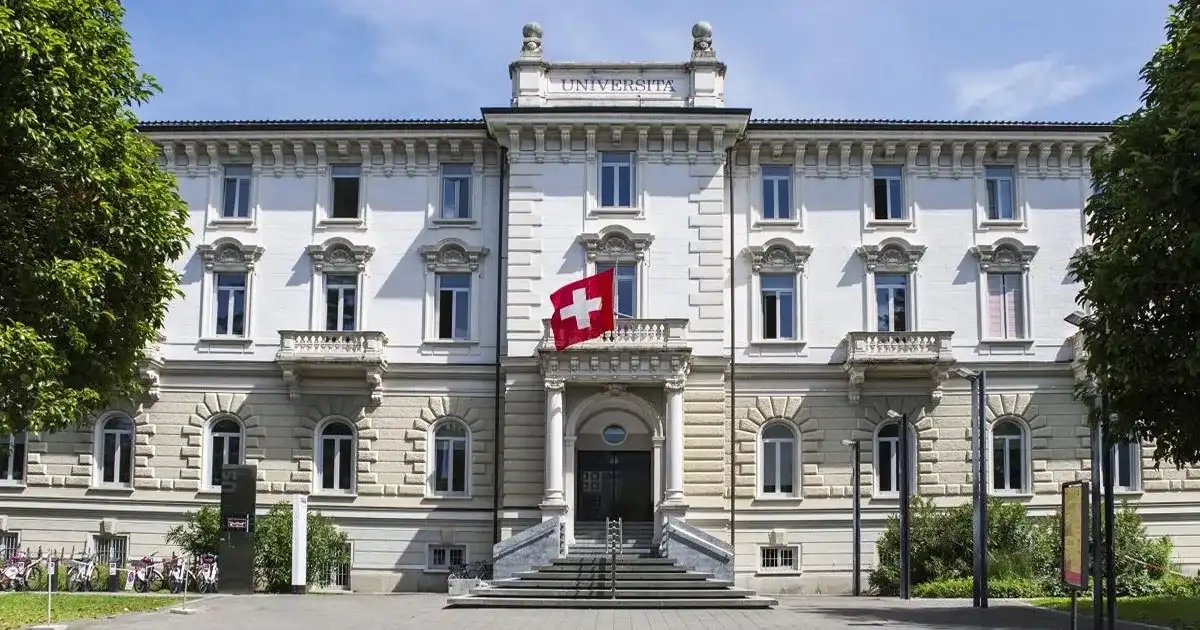
Università della Svizzera italiana (USI) is one of the 12 certified public universities in Switzerland and member of swissuniversities. It is organised in six Faculties and is active in several study and research areas, among which: architecture, communication sciences, computational science, data science, economics, health studies, humanities, informatics, law, medicine and biomedicine.
USI is a young and lively university, a hub of opportunity open to the world where students are offered a quality interdisciplinary education in which they can be fully engaged and take centre stage, and where our researchers can count on having the space to freely pursue their initiative.
4'749 students and 1'591 professors and researchers, hailing from 115 countries, convene every day on the four campuses in Lugano, Mendrisio and Bellinzona. The relatively small size of the campuses encourages the free flow and open exchange of ideas. USI encourages faculty, students and researchers to develop their potential, and appreciates their curiosity and willingness to experiment with new ways of thinking, learning, teaching and working.
Established in 1996, USI is in constant evolution, always taking on new challenges while remaining true to its three guiding principles: quality, openness and responsibility.
| Acronym | USI |
| Founded | 1996 |
| Location | Lugano, Ticino, Switzerland |
| Address | Università della Svizzera italiana Via Buffi 13 6900 Lugano, Switzerland |
Based on the Law that regulates the Università della Svizzera italiana, USI mission consists of:
USI aspires to become the natural choice for those yearning to grow intellectually, humanly, and responsibly.
USI envisions to be a way for the future and strives to be known as:
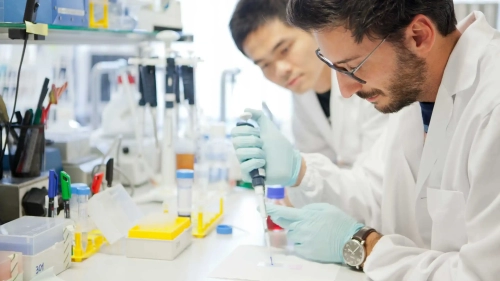
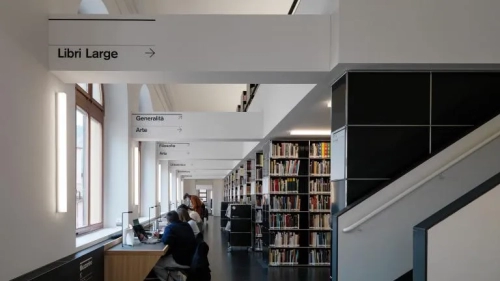
Applicants in possession of a Swiss or foreign secondary education diploma (considered to be equivalent) are eligible for the undergraduate programme according to the following Sections.
For language requirements (Italian/English language certificate), please refer to the ‘Admission’ section of each programme.
Admission to USI master's programmes requires a Bachelor's degree from a university or another Swiss academic institution, or a foreign Bachelor's degree from an equivalent institution that is recognized or accredited in the country of origin, in a field identical or related to the chosen master's programme.
The following requirements specifically apply:
The Bachelor's degree must be completed prior to starting the Master's programme. The term may be postponed in case some assessments are recorded, or the Bachelor thesis is defended later on, on a case-to-case basis
The Bachelor's degree gives access to a Master's programme in the same field.
Admission to programmes in other fields can be subject to the addition of levelling courses by assessment of the competent Faculty in charge of evaluating the application.
Faculty regulations or study plans may specify the essential theoretical and practical foundations required and establish any minimum quality requirements regarding the acquisition of knowledge and skills (e.g., minimum grade, course content and methods, additional courses).
Students who have exceeded the number of attempts to pass exams (definitive failure) in any Swiss or foreign university cannot be admitted to the same Faculty or subject area (Art. 6, Regulations for admissions and enrolment).
Please refer to the individual Master programme websites in the Admissions section.
Admission of candidates with academic curricula other than those indicated for each Master's programme above is assessed individually. Programme directors may require such candidates to include additional courses in their study plans when deemed essential for their academic curriculum.
Admission to English-language Master’s programmes at USI requires a good command of English. Applicants whose previous degree was obtained in a language other than English are required to provide an internationally recognized language certificate at the B2+ level as defined by the Common European Framework of Reference for Languages (CEFR), or an equivalent test result (e.g., TOEFL, IELTS, etc.).
UNDERGRADUATE:
Application procedure
The application procedure vary by program. Please read the relevant instructions for your program of choice.
Upon receipt of the application form, the University verifies compliance with the admission requirements and communicates the outcome of the application to the candidate. Admission requirements are specified on the respective pages of each program.
POSTGRADUATE:
Application procedure
The application procedure vary by program. Please read the relevant instructions for your programme of choice.
Upon receipt of the application form, the University verifies compliance with the admission requirements. Admission requirements are specified in the respective pages of each program.
All applicants will be informed in writing on the outcome of their admission request. Final matricultation completes the admission procedure for admitted candidates.
The candidate must fill out the online application form
Email: [email protected]
Phone : +41 58 666 4795


Gabriele Balbi is a full professor of media studies at the Institute of Media and Journalism (IMeG), Faculty of Communication, Culture and Society, USI Università della Svizzera italiana (Switzerland). Among his institutional roles at USI, he is Interim Rector, Pro-Rector for Education and University Life at U... read more
In the academic community, he is currently chair of the ICA Communication History Division, a member of the steering committee of the MediaHistory.ch association, and a member of the Section Committee of the Film, Media, and Visual Studies Section at the Academia Europeae. He also served as chair of the ECREA Communication History Section from 2018 to 2022.
He earned a Bachelor's and Master's degree in Communication Sciences from the University of Turin in 2002 and 2004, and a PhD in Communication Sciences and Social History of Communication from USI in 2008. He has taught and conducted research at the universities of Harvard, Maastricht, Columbia, Westminster, Oxford, Northumbria, Perugia, Augsburg, Concordia, and Bologna.
Finally, in March 2024 he took up the role of Pro-rector for Internationalization.
President of the USI Personnel Commission and Secretary of the Conciliation Commission provided for by the CCL, she was a member of the Academic Senate from 2019 to 2023, actively contributing to institutional and regulatory projects.
Cristina led the EMBA's digital transformation and co-designed, with the Scientific Director, its recent value reformulation.
She was included among the “101 Successful Women in Ticino” in 2022.


USI saw the light ten years after the failure of the project for a post-graduate continuing education institution in Ticino (CUSI, Centro universitario della Svizzera italiana), by the initiative of a number of concerned citizens and leading intellectuals determined to maintain the essential elements of statesman Stefano Franscini’s vision, a founding father of modern Ticino who as early as 1844 underlined the importance of higher education in Ticino. At the time, the Canton south of the Alps was poor, rural and with high levels of illiteracy, and Franscini saw in education, at not only basic but also advanced levels, a powerful means for ... read more
A way for the future
Over a century after the original ideas of Stefano Franscini, in the 1990s Ticino had become a wealthy region with an affluent services industry, but was also hit by a major economic crisis. In this context, the founders of USI saw in our university the opportunity for new development and empowerment of a region to be acknowledged for its role within the Federal state and in the world.
The two initial projects
USI is the result of the combination of two projects initiated in the 1990s:
The coming together
The ‘marriage’ of the two projects is celebrated by Giuseppe Buffi, assisted by Mauro Martinoni and Mauro Dell’Ambrogio, and is enacted on October 3rd, 1995, with the Ticino parliament (Grand Council) approval of the Law on the Università della Svizzera italiana, thus establishing a public university with three faculties, designed to stand out for their novelty within the Swiss university system:
The beginning of classes
One year later, upon formal approval by the Swiss Science and Innovation Council, on October 21st, 1996 USI opened its doors to the first enrolled students and gave its first classes.
Explore those early moments here
Ticino becomes a university canton
Soon after the first Dies (March 8th, 1997), in the year 2000, the first degrees were awarded and, at the same time, the definite acknowledgement of the Federal Council was announced, certifying Ticino with the status of Cantonal University.
Federal Councilor Ruth Dreifuss, during a speech given at the first Dies academicus on March 8th, 1997, was keen in outlining the events that led to the creation of USI: “those with a purpose will find ways to achieve it”.
A timeline of events that lead to the creation of a university in southern Switzerland
1588
A document preserved in the historical archives of the City of Lucerne provides evidence of the first attempts to establish a university in Lugano, at first by Somascan Fathers, then by the Jesuits – both failed.
1844
The Parliament of the Canton Ticino (Grand Council) approves the project of Stefano Franscini for the creation of an academic institution in Ticino (“Accademia Ticinese”), but the project is shelved, due to the financial troubles of the Canton and to the rivalries between the cities of Locarno, Bellinzona and Lugano.
1912-1960
Throughout the first half of the 20th century, several discussions took place and at least new three attempts were made, none of which were successful.
1985
The Grand Council approves the project for an institute of continuous education, the “Centro Universitario della Svizzera italiana” (CUSI), but the project was rejected by referendum in 1986.
1991
At the celebrations for the 700th anniversary of the Swiss Confederation, Federal councilor Flavio Cotti gives as peech in Poschiavo, underlining the potential for the Italian-speaking regions of
the country to contribute in the academic and scientific sector and, as such, the need for a new initiative on the subject.
1992-1994
Mario Botta takes the cue from Roland Crottaz (President of the ETH Board) for the creation of an Academy of Architecture. Then, mandated by the Ticino government, he designs a project together with Cantonal minister Giuseppe Buffi for its realization.
1993
The City of Lugano mandates Mauro Baranzini, Sergio Cigada and Lanfranco Senn to draft detailed project for the creation of two Faculties in Lugano. Luigi Dadda and Remigio Ratti join the team two years later.
1995
In March, the City Council of Lugano approves the project for the creation of two Faculties, one of Communication Sciences and one of Economics.
In October, the Ticino Parliament approves the Bill for the Università della Svizzera italiana, with the two Faculties in Lugano and the Academy of Architecture in Mendrisio.
1996
The Swiss Science Council gives the green light to the creations of the Università della Svizzera italiana. On October 21, 1996, at 8:30am, the first lectures are given on the Lugano and Mendrisio campuses.
2000
Together with its first degrees awarded, USI is fully accredited by the Federal Council, thus conferring Ticino the status of university Canton.
2001
USI is one of the first universities in Switzerland to adopt the higher education framework established by the Bologna Declaration.
2004
The Faculty of Informatics is established under the auspices of the first President of USI, Marco Baggiolini (January 1997 – August 2006).
2007
The Institute of Italian Studies is established.
2008
The new Institute of Computational Science is created within the Faculty of Informatics.
2010
The Institute of Research in Biomedicine (IRB, Bellinzona) is affiliated to USI.
2011
Prof. Michele Parrinello (Faculty of Informatics) receives the Marcel Benoist Prize, the most important scientific award in Switzerland, for his work in the field of computational science.
2014
The Faculty of Biomedical Sciences is established under the auspices of the second President of USI, Piero Martinoli (September 2006 – August 2016).
2016
A new organisational model comes into force, and Boas Erez, becomes the first Rector of USI (September 2016 – May 2022). The Institute of Oncology Research (IOR, Bellinzona) is affiliated to USI.
2017
The Academic Senate holds its first meeting.
2019
The Faculty of Communication Sciences becomes the Faculty of Communication, Culture and Society. The new exhibition venue of L’ideatorio in Cadro is inaugurated.
2020
The Istituto ricerche solari Aldo e Cele Daccò (IRSOL, Locarno) is affiliated with USI. The Student Corporation is established.
2021
The Facoltà di Teologia di Lugano (FTL) is affiliated to USI. The new Lugano East Campus and the new Bellinzona Campus are inaugurated.
2023
The first medical doctors trained at USI graduate. The first joint graduation ceremony of the Lugano Faculties is held.
2024
The Casa della sostenibilità in Airolo is inaugurated.
2025
The Institute of Translational Research (IRT), a joint USI-EOC institute, is established.
On the initiative of Rector Luisa Lambertini (July 2023 – December 2025), the first open day for the general public, UniVerso, is held.
USI signs and ratifies the Magna Charta Universitatum (MCU 2020).