

UIUC is the flagship campus of the University of Illinois System. It pioneers innovation, transformative education, and impactful research addressing global challenges. Students, faculty, and alumni contribute to discovery, creativity, and societal advancement.
| Acronym | UIUC |
| Nickname | Fighting Illini |
| Motto / Slogan | Learning and labor |
| Colour | Orange and Blue |
| Founded | 1867 |
| Undergraduate Programmes | |
| Postgraduate Programmes | 20765 |
| Location | Champaign, Illinois, United States |
| Address | University of Illinois, Urbana-Champaign, Illinois, United States |
The mission of the Office of the Vice Chancellor for Access, Civil Rights & Community is to guide the University of Illinois Urbana-Champaign in its efforts to create a campus community that is welcoming, accessible, and equitable for all.
The university aspires to be the pre-eminent public research university with a land-grant mission and global impact.
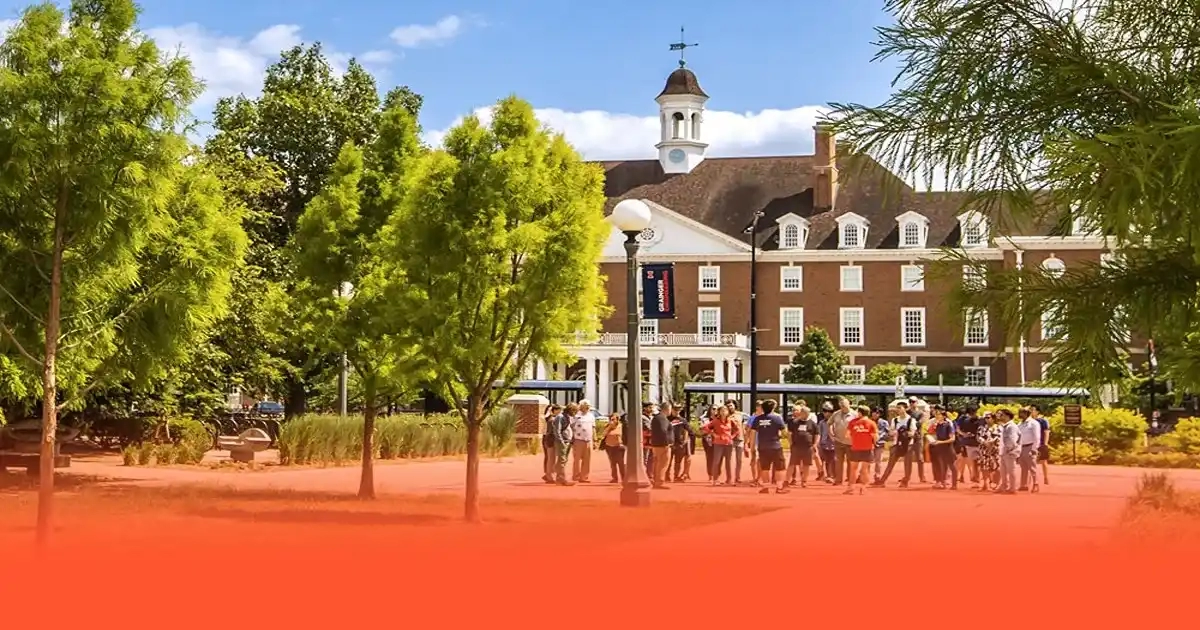
The hope for our work is to increase access to educational, research, employment, and business opportunities, for all people, at the University of Illinois Urbana-Champaign. The university aspires to be the pre-eminent public research university with a land-grant mission and global impact.
Illinois students and scholars make significant and lasting contributions toward a better future. Our transformative learning experiences, in and out of the classroom, are designed to produce alumni who strive to better understand and address society’s most pressing challenges. And our historical foundation of pioneering research since our founding in 1867 means that the university produces countless innovations that continue to shape our modern world.
… we’re a pirate-themed amusement park! Just kidding. But we’re not kidding when we say you won’t just find academics at the University of Illinois Urbana-Champaign?—you’ll find a community. Our campus is like an entire town, made up of professors, squirrels, and many, many, many students. And our town welcomes everyone.
Illinois is like a landing with hundreds of staircases, ramps, and slides—because there are no set paths here. At Illinois, students shape their own college experience with countless opportunities beyond the classroom. From campus jobs to local roles via Handshake, learners can build skills, explore interests, and design a journey that fits their goals.
Our campus may be large, but so is our support system. You’ll never feel lost—we’re a people-centered university committed to helping you through every high and low. Students benefit from services like the Career Center, Minority Student Affairs, Financial Aid, Disability Resources, Legal Services, cultural and resource centers, and dedicated departmental advising.
UNDERGRADUATE:
Application fee $75
Before starting the application, be sure to have a copy of your high school transcript, any test score results you're planning to include, and a credit card if you plan to pay the application fee upon submission.
You'll provide your high school courses/grades, choose your major and a second choice, complete our writing prompts, and list your extracurricular activities, honors, and awards. You can also decide whether you want us to use your ACT/SAT scores in our review. We'll use all information submitted with your application to determine admission into campus honors programs and award merit-based scholarships.
List your high school courses and grades exactly as they appear on your transcript. After you apply through Common App, we'll email you a link to report this information once you submit the application. We'll require an official transcript only if you enroll.
Test Scores (if provided)
We are test-optional, meaning you're not required to submit ACT and/or SAT test results when you apply. Depending on whether or not you report ACT or SAT scores, a TOEFL iBT, IELTS, or Duolingo English Test may be required.
ACT/SAT
If you choose to report your scores, enter your highest test scores for the ACT composite and/or the SAT total without super-scoring, along with the highest sub-scores you earned in each category regardless of test date. We don't require or use the ACT writing test. We'll require official scores only if you enroll. Our SAT code is 1836, and our ACT code is 1154.
TOEFL iBT/IELTS/Duolingo English Test
If you're including these scores, you should report your highest TOEFL iBT (do not use MyBest score), IELTS Academic, IELTS Online, or Duolingo English Test score and highest sub-scores, regardless of test date. Test scores that will be used to fulfill the English proficiency requirement must be taken within two years of the applicant's date of enrollment in the university. The TOEFL iBT Special Home Edition will be accepted for fall 2026, but a decision has not been made for future terms.
We'll require official scores only if you enroll. Our TOEFL iBT code is 1836. IELTS scores should be sent electronically via your testing center to the following account name: University of Illinois Urbana Champaign Undergraduate. Duolingo English Test scores should be sent electronically to the following account name: University of Illinois, Urbana Champaign Undergraduate Admissions.
International Applicants:
You should also be aware of some additional information and requirements.
All applicants are strongly encouraged to read through all sections of the Application Instructions before beginning and completing their graduate application. The application instructions contain critical information about the application and admission requirements at Illinois.
Minimum Requirements:
International Applicants:
UNDERGRADUATE:
POSTGRADUATE:
Email: [email protected],[email protected]
Phone : 217-333-0302
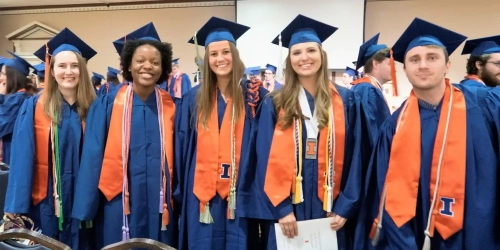
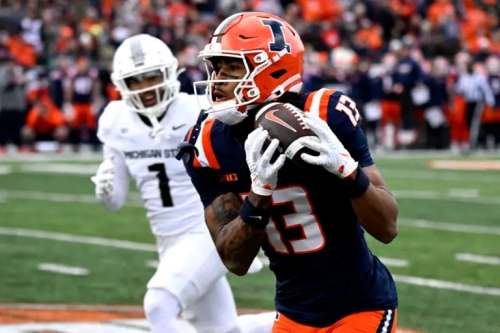
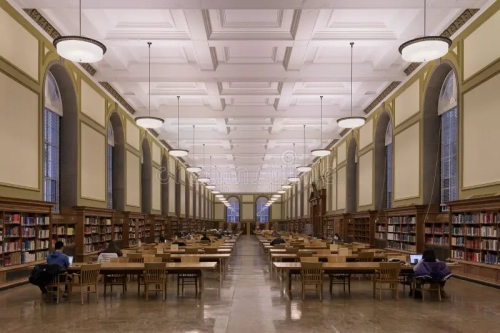
Library: The University Library is committed to creating and maintaining an environment that “advances the university’s goals by striving to ensure unfettered access to information…” Within that commitment is the understanding that every user has unique needs when it comes to spaces, consultations, technology, and resources. To that end our focus is not simply the removal of obstacles but to work towards an agile, universally designed experience for all users.
The University of Illinois Urbana-Champaign is accredited, most recently in 2020, by the Higher Learning Commission (known prior to 2014 as the North Central Association of Colleges and Schools). The university will undergo its Assurance Review in April 2024 and will undergo its next comprehensive evaluation in 2029-2030.
Chancellor Isbell is a computationalist, researcher, educator, and advocate for the idea that higher education creates opportunity, drives progress, and broadens our understanding of the world. His research has focused on artificial intelligence and machine learning, with an emphasis on how those systems interact with humans in responsible and inclusive ways. Isbell’s home as an Illinois faculty member is the Siebel School of Computing and Data Science in The Grainger College of Engineering.
Through multiple initiatives aimed at increasing participation in higher education, Isbell has become a respected leader in higher education reform. Although he is a computationalist by training, he values the critical thinking demanded of every discipline and considers it central to the purpose of education. He is an award-winning teacher who has been recognized internationally for his work in providing high-quality, accessible education at scale.
Born and raised in Panama, Dr. Guerra received her Ph.D. in Educational Leadership and Organizational Development and an M.A. in Sociology and Communication from the University of Louisville.




The library, which opened with the school in 1868, started with 1,039 volumes. Subsequently, President Edmund J. James, in a speech to the board of trustees in 1912, proposed to create a research library. It is now one of the world's largest public academic collections. In 1870, the Mumford House was constructed as a model farmhouse for the school's experimental farm. The Mumford House remains the oldest structure on campus. The original University Hall (1871) was the fourth building built; it stood where the Illini Union stands today.
The University of Illinois' Undergraduate Library (UGL) was constructed underground to preserve open space on campus and to prevent casting shadows on the adjacent Morrow Plots, the oldest continually used experimental agricultural fields in the United States. This unique design inspired The Other Guys, a student a cappella group, to create the "Morrow Plots Song," humorously explaining that the library was built underground "'Cause you can't throw shade on the corn". The song has become a beloved piece among students and alumni, celebrating the university's history and traditions.