
ListOfUni

University of Kansas (KU)

Kansas, United States
Visit School Website
  • Public Type
  • 26,876 Students
  • 1865Founded
  • YesAccept Int. Studs
  • YesDistance learning

About

KU is a comprehensive research and teaching university that serves as a center for learning, scholarship, and creative endeavor. Since 1909, KU has been a member of the Association of American Universities (AAU), a distinction held by only 71 distinguished public and private universities.

Acronym KU
Nickname Jayhawks
Motto / Slogan Videbo visionem hanc magnam quare non comburatur rubus (Latin)
Colour Crimson and Blue
Mascot Centennial Jay, Big Jay, Baby Jay, Jay Doc (Medical Center)
Founded 1865
Location Lawrence, Kansas, United States
Address Strong Hall 1450 Jayhawk Blvd. Lawrence, KS 66045

Mission

"To educate leaders, build healthy communities, and make discoveries that change the world

Vision

KU Lawrence-Edwards

"To be an exceptional learning community that lifts each member and advances society."

KU Medical Center 

"To improve lives and communities in Kansas and beyond through partnership and innovation in education, research and health care."
University of Kansas

Main Academic Divisions (Faculties)

  • College of Liberal Arts & Sciences
  • School of Architecture & Design
  • School of Business
  • School of Education & Human Sciences
  • School of Engineering
  • School of Health Professions
  • School of Journalism & Mass Communications
  • School of Law
  • School of Medicine
  • School of Music
  • School of Nursing
  • School of Pharmacy
  • School of Professional Studies
  • School of Public Affairs & Administration
  • School of Social Welfare

Reasons to Study at University of Kansas

  1. Strong Academic Reputation

    The University of Kansas (KU) is a respected public research university offering high-quality programs in business, engineering, health sciences, journalism, education, and the arts. Degrees are globally recognized and career-focused.


  2. Affordable Tuition & Scholarships

    KU is considered more affordable than many U.S. universities and offers scholarships for international students, helping reduce overall study costs.


  3. Research & Career Opportunities

    As a major research institution, students gain hands-on experience through research projects, internships, and industry partnerships that improve employability after graduation.


  4. Career Preparation & Post-Study Opportunities

    Students benefit from career services, networking opportunities, and Optional Practical Training (OPT), allowing international graduates to gain U.S. work experience.

Fees

Undergraduate Tuition

Indigenous Students USD 11,638
International Students USD 31,084

Postgraduate Tuition

Indigenous Students USD 8,806 - USD 14,676
International Students USD 20,712 - USD 22,012

Other Fees

UNDERGRADUATE:

  • Application fee of $40

POSTGRADUATE:

Your application fee will vary depending on your status.

  • Domestic degree-seeking: $65
  • International degree-seeking: $100
  • Certificate-seeking: $40
  • Non-degree-seeking: $40

Admission

Undergraduate Admission Requirement

  • Self-reported GPA and your official or unofficial transcript.
  • If applicable, HiSET high school equivalency exam scores.
  • We highly encourage you to submit your ACT and/or SAT test scores. The scores will not negatively impact your admission eligibility but may be used in professional school admission decisions.

International Students:

  • A minimum grade point average of 2.5 on a 4.0 scale for all previous coursework, including transfer coursework.

Applications from undergraduate freshman and transfer students must include the following:

  • KU’s $90 application processing fee, payable by credit card. We cannot waive this fee nor accept the Common App fee waiver form.
  • English proficiency scores sent to KU by your testing agency. Scores are used to either determine readiness for degree coursework or placement in appropriate ESL courses as needed. While scores must be included with your application, a minimum English proficiency score is not a requirement for admission. Learn more about English requirements.
  • Proof of high school graduation particular to your country. Transfer students with more than 24 transferable credit hours do not need to supply these credentials. Learn more about admission requirements and credentials.
  • Academic records. We can accept unofficial transcripts as part of the application, however, KU must receive official transcripts before you enroll in an academic program. Transfer applicants who have attended colleges or universities inside the U.S. must submit official transcripts as part of their application.
  • If applicable: Educational Gap Statement. If, after high school, there was a period of time longer than three months that you were not enrolled in any educational program, you must write a short statement about your activity during that time. If you attended courses of any kind, include that information.
  • If applicable: Third-party release page. Complete this part of the application if receiving outside assistance with your application from a recruitment agent, organization or other person.
  • If applicable: SAT or ACT scores. Check the requirements for your school to see if it includes a score.

Postgraduate Admission Requirments

Applicants must meet the following minimum requirements for admission to any graduate program at KU:

  • Proof of a bachelor's degree (and any post-bachelor’s coursework or degrees) from a regionally accredited institution, or a foreign university with substantially equivalent bachelor's degree requirements
  • Proof of English proficiency for non-native or non-native-like English speakers


International Students:

Supporting Documents

  • A resume or curriculum vitae
  • Writing samples
  • A personal statement
  • Exam test scores
  • Minimum GPA
  • Letters of recommendation

How To Apply For Admission

UNDERGRADUATE:

  • You can apply directly using the KU application or you can apply through Common App. But please submit only one application.


POSTGRADUATE:

  • Submit an Online Application.

Admission Contacts

Email: [email protected],[email protected]
Phone : +1 785-864-3911, +1-785-864-3140
Apply For Admission

Campus Tour

Facilities

  • Classrooms
  • Library
  • Laboratory
  • Research Center
  • Accommodation
  • Hospital
  • Sports
  • Gym
  • ICT
  • Cafeteria
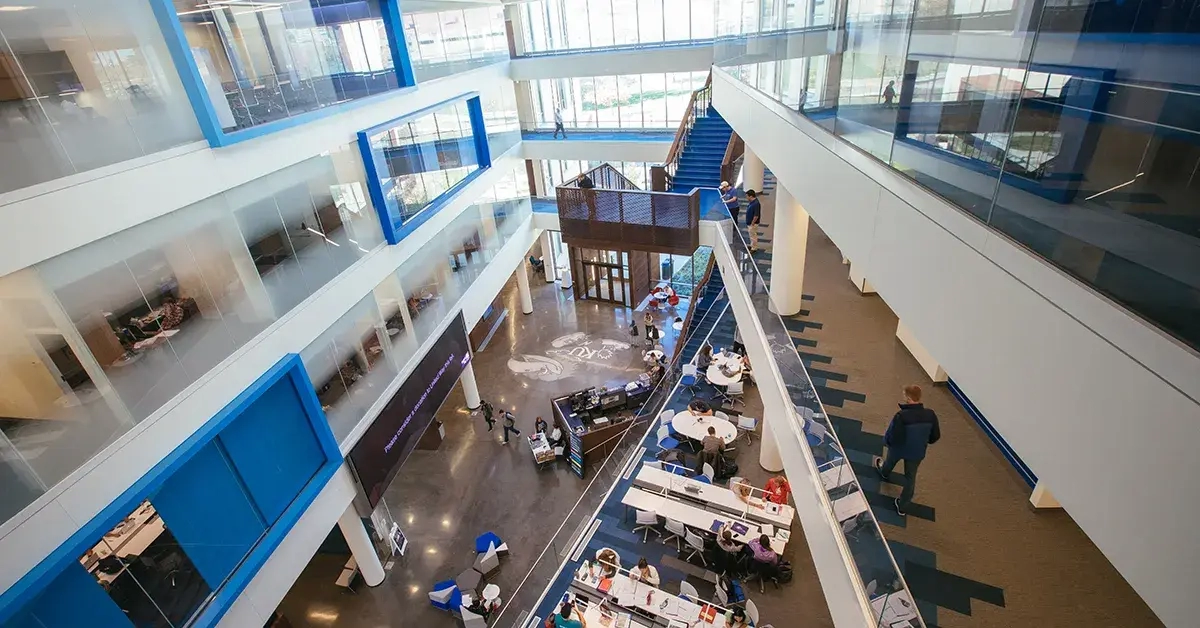
  • Library: KU Libraries empower learners to connect with, navigate through, and question an ever-expanding information landscape to become critical thinkers and engaged citizens.


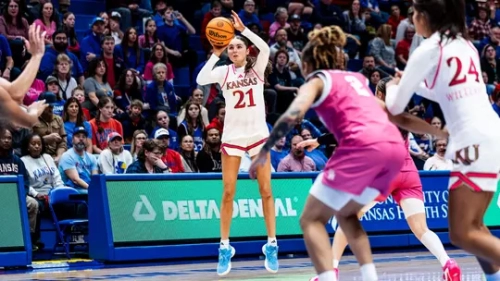
  • Sports & Athletics Facilities: Modern athletic complexes used for NCAA sports competitions. Allen Fieldhouse basketball arena (one of the most iconic college arenas in the U.S.). Football stadium, tennis center, volleyball arena, track & field complex, and soccer facilities


School Contact

Address

Strong Hall 1450 Jayhawk Blvd. Lawrence, KS 66045

Phone Number

+1-785-864-2700

Fax Number

785-864-5017

Website Address

https://www.ku.edu/

Social Media Pages

Accreditations

Higher Learning Commission

Academic Staff

  • Douglas A. Girod

    Chancellor Douglas A. Girod began as the 18th chancellor of the University of Kansas in July 2017. In this role, Chancellor Girod leads KU's mission to educate leaders, build healthy communities and make discove... read more
    ries that change the world. Chancellor Girod has established a bold vision for the University of Kansas to be a destination for top scholars from across the world, an engine of economic growth for Kansas, and one of the nation’s leading research universities. In pursuing this vision, Chancellor Girod seeks to elevate the university’s national stature and enhance KU's membership in the Association of American Universities.


  • Corinne Bannon

    Chief Strategy & Data Officer and Vice Chancellor Corinne Bannon has served the University of Kansas in a newly expanded role as Chief Strategy and Data Officer and Vice Chancellor since November 2024, reporting directly to Chancellor Girod. Corinne ... read more
    oversees the Office of Analytics, Institutional Research, and Effectiveness (AIRE), a One KU central data and analytics office that helps university leaders and constituents measure and advance KU’s strategic priorities.

    AIRE manages the development and maintenance of KU’s data warehouse, enterprise analytics tools, institutional surveys, special studies to inform decision-making, and the submission of federal and state-mandated reports.

  • Barbara Bichelmeyer

    Chief Academic Officer, Provost and Executive Vice Chancellor for KU Lawrence Barbara Bichelmeyer, Ph.D., serves the University of Kansas as Provost/University Chief Academic Officer and Executive Vice Chancellor of the main campus in Lawrence and the Edwards Campus in Overland... read more
    Park. As Provost she oversees academic standards and planning as well as student engagement and faculty development activities. As Executive Vice Chancellor she oversees and coordinates the mission of the KU main campus and leads the Jayhawks Rising strategic plan for KU Lawrence and Edwards, guiding faculty, staff and students toward the vision of being an exceptional learning community that lifts each member and advances society. The plan is informed by three institutional priorities: Research & Discovery, Student Success and Healthy & Vibrant Communities. This plan recognizes that higher education at KU is a unique economic enterprise that centers the talent development of students, faculty and staff to serve the growth and aspirations of the state, the region, the nation and the world.


  • Jeff DeWitt

    Chief Financial Officer and Senior Vice Chancellor Jeff DeWitt is a seasoned financial administrator with more than 30 years of experience in complex public sector roles. In his role, he oversees all finance and business dimensions of the university a... read more
    nd reports directly to the chancellor.

    Before joining KU, Jeff served as the chief financial officer for the District of Columbia, where he was responsible for a $16.9 billion annual budget and a six-year capital improvement program of $8.2 billion. In this role, he oversaw 1,700 staff spanning functions such as tax and revenue administration, investments, financial reporting, accounting, legislative review, internal audit and risk management. His responsibilities included oversight of CFOs for the University of the District of Columbia, the United Medical Center Hospital, the Washington Convention Center and Sports Authority, and all District agencies, including public and charter schools.


  • Heath Peterson

    President of KU Alumni Association Heath Peterson, a Hugoton, Kansas, native, has devoted more than two decades to serving the University of Kansas and advancing the mission of the KU Alumni Association, culminating in his appointment ... read more
    as the Association’s 10th president in November 2015. In this role, Heath leads efforts to foster lifelong connections and relationships that strengthen the University and celebrate the enduring legacy of excellence shared by its students, alumni, faculty, staff and friends.


View More Staff

Notable Alumni

View More Alumni

History

On February 20, 1863, Kansas Governor Thomas Carney signed into law a bill creating the state university in Lawrence. The law was conditioned upon a gift from Lawrence of a $15,000 endowment fund and a site for the university, in or near the town, of not less than forty acres (16 hectares) of land. If Lawrence failed to meet these conditions, Emporia instead of Lawrence would get the university.

The site selected for the university was a hill known as Hogback Ridge (later known as Mount Oread), which was privately donated by Charles L. Robinson, the Republican governor of the state of Kansas from 1861 to 1863, and one of the original settlers of Lawrence, Kansas. Robinson and his wife ... read more

Sara bestowed the 40-acre (16 ha) site to the State of Kansas in exchange for land elsewhere. The philanthropist Amos Adams Lawrence donated $10,000 of the necessary endowment fund, and the citizens of Lawrence raised the remaining money themselves via private donations. On November 2, 1863, Governor Carney announced Lawrence had met the conditions to get into the state university, and the following year the university was officially organized. The school's Board of Regents held its first meeting in March 1865, which is the event that KU dates its founding from. Work on the first college building began later that year. The school opened for classes on September 12, 1866, and the first class graduated in 1873. According to William L. Burdick, the first degree awarded by the university was a Doctor of Divinity, bestowed upon noted abolitionist preacher Richard Cordley.

During the early development of the University of Kansas, Chancellors Joshua Lippincott, Francis H. Snow, and Frank Strong, along with the Kansas Board of Regents, worked to establish the university as not only a center for higher education but also a representative agency of the state. Snow, who served from 1890 to 1901, emphasized scientific research and public engagement, while Strong, beginning in 1902, advanced the university’s role in public service. This vision aligned with the sentiments expressed by Professor M. S. Ward, who stated in 1891 that “Students should find in the University preparation for all the various pursuits and callings of society. The ultimate aim of our own State University ought to be [promoting] the highest Christian culture, an ample professional training, [which] will make our civilization the highest possible on earth.”