
Founded on November 4, 1861, the University of Washington is one of the oldest universities on the West Coast of the United States. It has grown into a globally recognized institution known for its strong academics, research output, and industry connections.
| Acronym | UW |
| Nickname | Huskies |
| Motto / Slogan | Lux Sit |
| Colour | Purple and Gold |
| Mascot | Harry the Husky (costumed) and Dubs II (live Alaskan Malamute) |
| Founded | 1861 |
| Location | Seattle, Washington, United States |
| Address | 1410 NE Campus Pkwy, Seattle, WA 98195, United States |
The primary mission of the University of Washington is the preservation, advancement, and dissemination of knowledge.
The University of Washington educates a diverse student body to become responsible global citizens and future leaders through a challenging learning environment informed by cutting-edge scholarship.
Discovery is at the heart of our university.
We discover timely solutions to the world’s most complex problems and enrich the lives of people throughout our community, the state of Washington, the nation and the world
At the University of Washington, diversity, equity, inclusion and belonging are integral to excellence. We value and honor diverse identities, experiences, and perspectives, strive to create accessible, welcoming, and respectful learning environments, and promote access, opportunity, and justice for all.
The University of Washington is connected around the globe. Thanks to our incredible faculty and researchers, we yield a world of opportunity for students through study abroad, research, internships, and classroom experiential learning. We take pride in our global impact on local, national, and international communities.
Throughout more than 150 years of history, the UW has demonstrated an extraordinary track record of inventions and discoveries with impact across the globe. Consistently ranked the most innovative public university in the world, there is no limit to what we can achieve.
Sustainability is part of the fabric of our university, and our actions have a broad impact beyond our campuses. People and groups across the UW are working for a sustainable future. Learn more about sustainability in campus operations, academics, and the student experience.
UNDERGRADUATE:
INTERNATIONAL APPLICANTS:
POSTGRADUATE:
Entry requirements vary by program and course. Check the program and course page for requirements.
International students must submit English proficiency test scores that meet the minimum requirement for admission. Learn more about English proficiency.
Read more about requirements on our Admissions Help and FAQs page.
GPA:
English Language Proficiency:
International Applicants:
For more information, please visit our comprehensive page for International Applicants.
UNDERGRADUATE:
POSTGRADUATE:
Email: [email protected],[email protected]
Phone : 206 685 2630, +1 206-543-9686
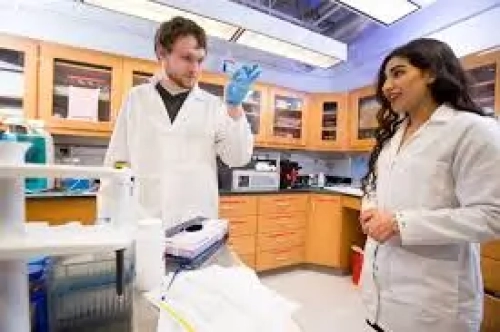
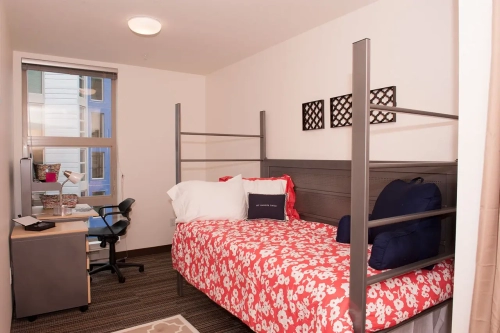
Library: UW Libraries are a diverse network of exceptional spaces, collections, services and teams that support teaching, learning and research across all UW campuses. With deep expertise across subject areas including publishing, digital scholarship, data services and more, the Libraries provides access to resources and information that are essential to UW innovation and impact – on campus and around the globe. UW Libraries is recognized for its unique and rare collections, especially those that document local and regional histories and culture as well as its distinctive and international collections. The Libraries’ Preservation and Conservation Center is a cornerstone of UW Libraries services, ensuring that the University’s collections remain accessible for generations of future scholars.
Northwest Commission on Colleges and Universities (NWCCU)
As the University’s academic and budget officer, Dr. Serio leads the faculty and allocates resources to promote each student’s academic experience and success.
Dr. Serio (she/her pronouns) came to the UW from the University of Massachusetts Amherst, where she was provost and senior vice chancellor for academic affairs. A professor of biochemistry and molecular biology, Dr. Serio previously served at UMass Amherst as associate chancellor for strategic academic planning and dean of the College of Natural Sciences. She has also held research and professorial positions at the University of Arizona, Brown University and Yale University.
Dr. Dellit leads UW Medicine as an integrated clinical, research and learning health system with a single mission to improve the health of the public, for all people. UW Medicine consists of a family of clinically integrated organizations including Airlift Northwest, Harborview Medical Center, UW Medical Center, UW Medicine Primary Care, UW Physicians, and the UW School of Medicine. The Fred Hutchinson Cancer Center serves as UW Medicine’s cancer program. UW Medicine also has close affiliations with Seattle Children’s Hospital and the VA Puget Sound Health Care System and Boise VA Medical Center. The UW School of Medicine is among the top medical schools in the country combining a focus on primary care and rural medicine with innovative complex specialty care and world-leading biomedical research.
Under his leadership, the State Relations Office supported state financial aid and key legislation benefiting the University and its students, including the passage of the Workforce Education and Investment Act of 2019. Prior to his work at the UW, he served on staff for former U.S. Representatives Derek Kilmer and Norm Dicks as well as a legislative assistant in the Washington State Senate.

In 1861, scouting began for an appropriate 10 acres (4 ha) site in Seattle to serve as a new university campus. Arthur and Mary Denny donated eight acres, while fellow pioneers Edward Lander, and Charlie and Mary Terry, donated two acres on Denny's Knoll in downtown Seattle. More specifically, this tract was bounded by 4th Avenue to the west, 6th Avenue to the east, Union Street to the north, and Seneca Streets to the south.
John Pike, for whom Pike Street is named, was the university's architect and builder. It was opened on November 4, 1861, as the Territorial University of Washington. The legislature passed articles incorporating the university, and establishing its Board of Regents in 1862. The school initially struggled, closing three times: in 1863 for low enrollment, and again in 1867 and 1876 for shortage of funds. Washington awarded its first graduate Clara Antoinette McCarty Wilt in 1876, with a Bachelor of Science degree.