ListOfUni

Marino Institute of Education (MIE)

Leinster, Ireland
Visit School Website
  • Private Type
  • 1904Founded
  • YesAccept Int. Studs
  • YesDistance learning

About

Marino Institute of Education (MIE) is a teaching, learning and research community committed to promoting inclusion and excellence in education. We have a long and proud involvement with education, specifically initial teacher education (ITE), dating back over 100 years.

Our association with Trinity began in 1976, when the first intake of lay students registered for the Bachelor in Education (B.Ed.) course. In July 2011, this relationship was further strengthened with the formalisation of an agreement which places MIE under the joint trusteeship of the Congregation of Christian Brothers European Province and Trinity College Dublin, the University of Dublin.

Acronym MIE
Nickname MIE
Founded 1904
Departments 5
Location Dublin, Leinster, Ireland
Address Marino Institute of Education Griffith Avenue, Dublin 9, D09 R232, Ireland.

Mission

Inspired by the Christian vision, Marino Institute of Education is a teaching, learning and research community committed to promoting inclusion, quality and excellence in education for the public good. The dignity and potential of each person and the pursuit of a just society and a sustainable planet are central to our life, work and service.
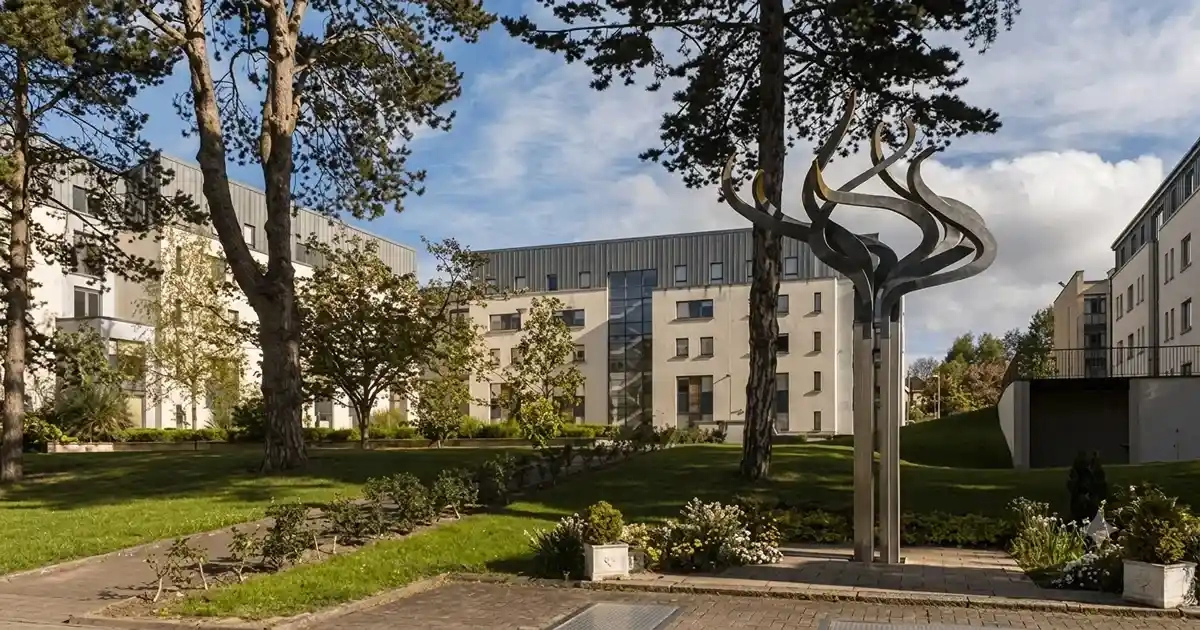
Marino Institute of Education

Objectives

To be a distinctive voice in enabling a just, sustainable and transformative education for all.

Reasons to Study at Marino Institute of Education

  1. Students Supports

    Every student in Marino Institute of Education is assigned a personal tutor from the academic staff who is there to support you during your studies. If necessary, you may avail of support from the Institute's Health Service, the Disability Service, Chaplaincy, or the Student Counselling Service.

  2. Location

    Marino's beautiful campus provides the perfect setting for students to live and study. Relax and enjoy plenty of green space, the sports pitches, local shops, bars and restaurants, all while having Dublin city on your doorstep.

  3. Trinity Degree

    Experience Marino Institute of Education's excellent standards of education and have your studies accredited by Trinity College Dublin, the University of Dublin, which is Ireland's highest-ranked university, with a global reputation for excellence in teaching, research and innovation. A Trinity degree is an asset for educators who intend to stay in Ireland as well as those who will travel abroad for work or adventure.

  4. Vibrant Student Community

    Marino Institute of Education is a vibrant and friendly community where you quickly get to know colleagues and make lifelong friends in a positive and welcoming environment. Students benefit from strong, interactive classroom experiences where their voices are heard and valued.

Fees

Undergraduate Tuition

Indigenous Students EUR 7,000

Postgraduate Tuition

Indigenous Students EUR 7,000

Admission

Undergraduate Admission Requirement

Entry requirements vary by course and program. View the program page for specific requirements.

English Language Requirement

  1. All applicants to MIE are required to provide official evidence of proficiency in the English language.
  2. The following international English language proficiency tests are accepted by MIE for the purpose of admission (specific scores are detailed in the drop-down below):
    • International English Language Testing System (IELTS Academic)
    • Duolingo English Test 3
    • Test of English as a Foreign Language (TOEFL)
    • Cambridge English Qualifications
    • Pearson English International Certification
  3. English language proficiency tests score must be dated within two years prior to the start of your course.
  4. Minimum scores in these tests are benchmarked according to the descriptions of language proficiency contained in the Council of Europe's Common European Framework of Reference for Languages: Learning, Teaching, Assessment (CEFR).
  5. Applicants for postgraduate courses who have completed a primary degree through the medium of English may request an exemption from the requirement to present an English proficiency qualification. Exemptions will only be considered if the application is otherwise complete and submitted. The applicant must provide a formal document from the awarding institution clearly stating their prior degree was delivered wholly through English. Requests for exemption should be made to the course leader. Exemption requests approved by the course leader will be considered by the Admissions Team.
  6. Specified High School/Secondary Examinations are accepted in lieu of English language proficiency tests.
  7. The drop down below shows the standardized English proficiency tests accepted at MIE, with scores required divided into bands. There are two distinct requirement bands: Band B (Standard Entry) and Band C (Higher Entry). Every course will be associated with one of these bands, as set out in the course proposal or subsequent approval by Academic Council, the MIE Associated College Degrees Committee (ACDC), the Undergraduate/Graduate Studies Committee and University Council. Specific rationale must be advanced for a course to adopt the Higher Entry band. The band required depends on the course or programme being applied for and is identified on the relevant course/programme page.

MIE's standard English requirements for undergraduate and postgraduate admissions are:

International English Language Testing System (IELTS)

Duolingo English Test

Test of English as a Foreign Language internet-based Test (TOEFL iBT)

Cambridge English Qualifications

PTE Academic - Pearson English International Certification

2nd level qualifications

Postgraduate Admission Requirments

As an international student you can choose from the different courses on offer at MIE. Please visit the programme directory to find out more about these courses.

None of the Level 9 Master in Education Studies (MES) programmes meet the minimum requirements for a Stamp 2 study visa. 

Both the Professional Master of Education (Primary Teaching) and the Máistir Gairmiúil san Oideachas (Bunmhúinteoireacht) both have specific Irish language entry requirements, without exception, and may therefore not be suitable for international applicants.

The following postgraduate course meets the minimum requirements for a Stamp 2 study visa.

Entry requirements vary by course and program. View the program page for specific requirements.

English Language Requirement

  1. All applicants to MIE are required to provide official evidence of proficiency in the English language.
  2. The following international English language proficiency tests are accepted by MIE for the purpose of admission (specific scores are detailed in the drop-down below):
    • International English Language Testing System (IELTS Academic)
    • Duolingo English Test 3
    • Test of English as a Foreign Language (TOEFL)
    • Cambridge English Qualifications
    • Pearson English International Certification
  3. English language proficiency tests score must be dated within two years prior to the start of your course.
  4. Minimum scores in these tests are benchmarked according to the descriptions of language proficiency contained in the Council of Europe's Common European Framework of Reference for Languages: Learning, Teaching, Assessment (CEFR).
  5. Applicants for postgraduate courses who have completed a primary degree through the medium of English may request an exemption from the requirement to present an English proficiency qualification. Exemptions will only be considered if the application is otherwise complete and submitted. The applicant must provide a formal document from the awarding institution clearly stating their prior degree was delivered wholly through English. Requests for exemption should be made to the course leader. Exemption requests approved by the course leader will be considered by the Admissions Team.
  6. Specified High School/Secondary Examinations are accepted in lieu of English language proficiency tests.
  7. The drop down below shows the standardized English proficiency tests accepted at MIE, with scores required divided into bands. There are two distinct requirement bands: Band B (Standard Entry) and Band C (Higher Entry). Every course will be associated with one of these bands, as set out in the course proposal or subsequent approval by Academic Council, the MIE Associated College Degrees Committee (ACDC), the Undergraduate/Graduate Studies Committee and University Council. Specific rationale must be advanced for a course to adopt the Higher Entry band. The band required depends on the course or programme being applied for and is identified on the relevant course/programme page.

MIE's standard English requirements for undergraduate and postgraduate admissions are:

International English Language Testing System (IELTS)

Duolingo English Test

Test of English as a Foreign Language internet-based Test (TOEFL iBT)

Cambridge English Qualifications

PTE Academic - Pearson English International Certification

2nd level qualifications

How To Apply For Admission

The application process for international students, for MIE programmes is designed to be transparent, timely and supportive, ensuring that applicants are kept informed at each stage.


1. Submit an Application

Applicants submit a completed application together with all required supporting documentation, including academic transcripts, proof of English language proficiency (where applicable), and any programme-specific documentation.


2. Acknowledgement of Application

Applications are acknowledged by the Admissions Office within 10 working days of receipt.


3. Review of Documentation

The Admissions Office reviews the application to ensure that all required documentation has been received. Where additional information, clarification or supporting documentation is required, the applicant will be contacted and advised of what is needed before the application can progress.


4. Assessment of the Application

Once all required documentation has been received, the application is assessed against the published entry requirements. Depending on the programme, the next stage may include:

  • a review of the application by the relevant Programme Team
  • an interview with the applicant, where required
  • consideration of prior qualifications, where applicable


5. Decision

Once the application is complete and all necessary information has been received, MIE endeavours to communicate the outcome to the applicant within 10 working days. If, for any reason, additional time is required to complete the assessment, the Admissions Officer will inform the applicant, explain the reason for the delay, and provide an updated timeframe for a decision.


6. Acceptance of Offer

Successful applicants are invited to accept their offer of a place within the timeframe specified in their offer letter. Following acceptance, applicants receive further information relating to enrolment, induction and the commencement of their programme.


7. Appeals

Applicants who are unsuccessful have the right to appeal the admissions decision in accordance with MIE's Admission, Access and Transfer Policy. Information on the appeals process, including how to submit an appeal and the applicable timelines, is provided with the decision correspondence. There is no fee associated with submitting an appeal.

Admission Contacts

Email: [email protected]
Phone : +353 1 805 7700

Apply For Admission

Campus Tour

Facilities

  • Classrooms
  • Library
  • Laboratory
  • Research Center
  • Accommodation
  • Sports
  • Gym
  • ICT
  • Cafeteria
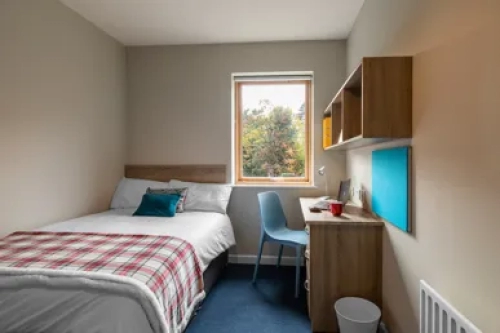
  • Accommodation: On campus accommodation at MIE is provided by eber – www.eber.life – and is conveniently located on campus. The accommodation is close to the city centre, and is well serviced by Dublin Bus, with a stop directly opposite the campus gates. Local amenities include shops, restaurants, a supermarket, pharmacy and a sports park.  The apartments are recently refurbished to suit the students’ needs, with modern furnishing and appliances. Each student has their own bedroom with a small double bed, and their own bathroom fitted with a shower. A key card system is in place for secure and convenient access to your apartment. Security cover is provided to ensure the safety of residents.


  • ICT: The IT & eLearning Department support all teaching, learning and business activities across MIE campus.  The IT & eLearning team also conduct implementation projects throughout the year, under the MIE Digital Strategy, as part of the wider Institutional Strategic Plan. We support staff and students in their work and operate an IT Support Helpdesk in case of any queries from Monday to Friday 0800 to 1700.  These hours are subject to change during student holidays. You can also email the IT Support Helpdesk, please make sure you put a 'subject' in the email header.  The email address is provided to you during IT Induction.


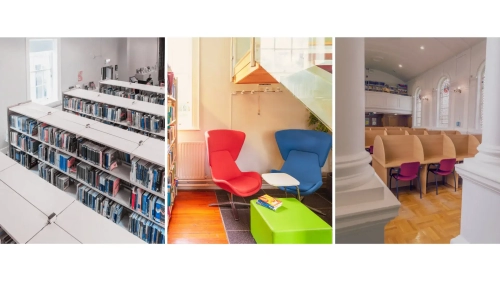
  • Library: The Library of Marino Institute of Education is housed in St. Patrick's Hall and caters to over 1000 students and staff through the provision of print and online resources and services.


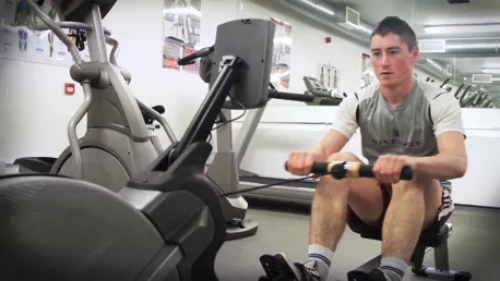
  • Gym: All students have access to MIE's modern gym facilities. The campus has many playing fields as well as a large indoor gymnasium that is suitable for basketball, badminton and indoor football.


  •  Cafeteria: MIE has a modern and spacious canteen featuring fresh food daily. MIE also has a cosy coffee shop located in the heart of the campus, allowing students to relax and socialise over some hot beverages.


  • Sports: MIE, visible from the top deck of the Hogan Stand in Croke Park, has ambitious plans for the year ahead. Buoyed up by victory last year in the Corn na Mac Léinn (Div. 3) final during Sigerson Cup weekend in Belfast, the men’s football team now in Division 2 are intent on having a right go at the Trench Cup (Div. 2) and gaining promotion to the top flight. Early rounds in the upcoming league pit Marino against much bigger and stronger opponents in NUIG, GMIT, Dundalk IT and Blanchardstown IT, but with all bar four of last year’s team on board and with some new players being added to the panel, ambitions remain high.

School Contact

Address

Marino Institute of Education Griffith Avenue, Dublin 9, D09 R232, Ireland.

Phone Number

+353 1 805 7700

Website Address

https://www.mie.ie/

Social Media Pages

Accreditations

Trinity College Dublin. 

Marino Institute of Education (MIE) is an associated college of Trinity College Dublin, the University of Dublin (TCD). Most of MIE’s academic programmes are validated, quality assured and accredited by Trinity College Dublin, the University of Dublin. MIE and TCD's relationship has deepened through the development of a joint academic strategy to promote closer and more extensive collaborations in teaching and research, including joint activities between the two institutes. Through the implementation of this joint academic strategy the strengths of TCD will be leveraged with those of MIE to enhance existing relationships and promote new synergies. TCD and the Christian Brothers are co-trustees of MIE. All full-time registered students at MIE have full access to the TCD Disability Service and TCD Counselling Service.

Vice Chancellor

Professor Teresa O'Doherty

Prof. Teresa O’Doherty was appointed President of Marino Institute of Education in May 2018 and an Adjunct Professor, School of Education, Trinity College Dublin in 2020.

A teacher educator and scholar for more than thirty years, Prof  O’Doherty qualified as a primary teacher in 1984 (Mary Immaculate College Limerick). She completed her Master’s in Education at NUI Maynooth in 198... read more

9 and was awarded her PhD in Education from the University of Limerick in 1997. She taught initially in O’Hely and O’Rourke Girls’ National School, Kilmallock (1984-1991) before being appointed to An Mhodh Scoil, Bealach Uí Chonaill, Luimneach (1991-1997). 

Prof O’Doherty held a permanent lectureship in Education and the position of Assistant Dean, Research for the College of Education at the University of Limerick from 1997-2003 and was appointed Senior Lecturer at Mary Immaculate College Limerick in 2003. She became Principal Lecturer and Head/Dean of the Faculty of Education there in 2005, a position she held until her appointment to MIE.


Academic Staff

  • Seán Delaney PhD

    Registrar and Vice President (Academic Affairs) Seán Delaney has been a teacher educator in Marino Institute of Education in Dublin since 1999. He is Registrar and Vice President (Academic Affairs). His teacher education and research activities ar... read more
    e informed by his primary teaching experience which spanned eleven years; during that time he taught all primary class levels and spent one year as principal of a nine-teacher school in Kilkenny City. He was a member of the English (primary) sub-committee of the National Council for Curriculum and Assessment. In 1998 he was named the Fulbright-Ireland Boyer Scholar in Education and he studied at Harvard University where he was awarded a Master’s Degree in Education. In 2008 he received his PhD in Teaching and Teacher Education from the University of Michigan. His dissertation, entitled “Adapting and Using U.S. Measures to Study Irish Teachers’ Mathematical Knowledge for Teaching,” was supervised by Professor Deborah Ball. He subsequently authored a report for the Irish Department of Education and Science on “Irish Primary Teachers’ Mathematical Knowledge for Teaching.” His research interests are in the practice of teaching, teacher education, mathematics education, teacher knowledge, and comparing professional knowledge across countries.
  • Cian Mackey

    CFO & Professional Services, Vice President
  • Joan Kiely EdD

    Dean of Education: Curriculum & Childhood
  • Aimie Brennan PhD

    Dean of Education: Policy, Practice and Society Dr Brennan is Dean of Education: Policy, Practice and Society, Principal Lecturer in Education, and course leader of the B.Sc in Education Studies at Marino Institute of Education. With a PhD in Socio... read more
    logy from UCC, Dr Brennan began her career in the field of social research, before pursuing a passion for teacher education where she has supported pre-service teachers from early years to post-primary education. Her research and teaching interests are in the areas of the sociology of education, teacher education policy and education research, and she is currently leading cross-border, longitudinal and collaborative research projects in each of these areas. Dr Brennan is an active member of the higher education community, Secretary of the Educational Studies Association of Ireland, and serving on the Teaching Council Research Engagement Group, and the National Advisory Group for Student Engagement in Higher Education (NStEP). She is also founder and coordinator of the Student Teacher Education Research (STER) project, a student-staff partnership project in Higher Education that publishes a national peer-reviewed e-journal of education student research.
View More Staff

Notable Alumni

View More Alumni

History

Marino Institute of Education (MIE), located in Dublin, Ireland, has a history rooted in the Irish Christian Brothers and their commitment to education. Initially established on lands acquired in 1881, it served as a generalate, novitiate, training college, and practice school.