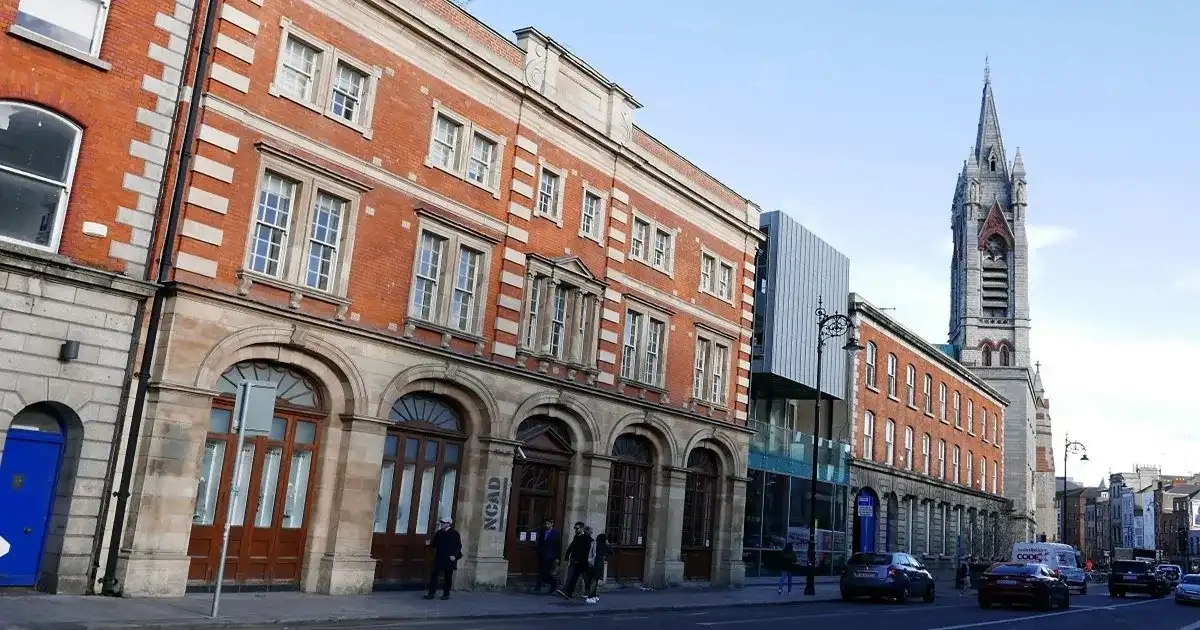
National College of Art and Design occupies a unique position in art and design education in Ireland, offering the widest range of art and design degrees at undergraduate and postgraduate level.
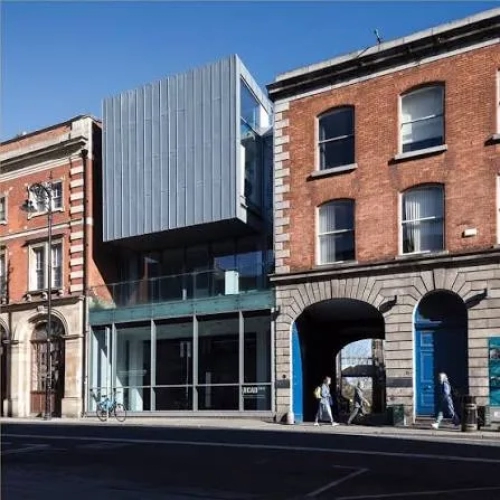
Many of the most important Irish artists, designers and art teachers have studied or taught in the College. It has long been the central and most important art and design educational institution in Ireland. The College's campus is situated in Thomas Street, in the historic Liberties area of Dublin. In 1998 the College opened its new wing, the School of Design for Industry, and now houses all of its activities on the Thomas Street campus or nearby.
| Acronym | NCAD |
| Nickname | NCAD |
| Founded | 1746 |
| Location | Dublin, Leinster, Ireland |
| Address | 100 Thomas Street, Dublin 8, Ireland |
NCAD's mission is to lead the development of visual art and design by empowering students to shape the contemporary world. It provides educational excellence to help learners realize their creative potential, design responsibly, and use art as a catalyst for positive global change.
Changing the world through bold and curious thinking, making and doing.
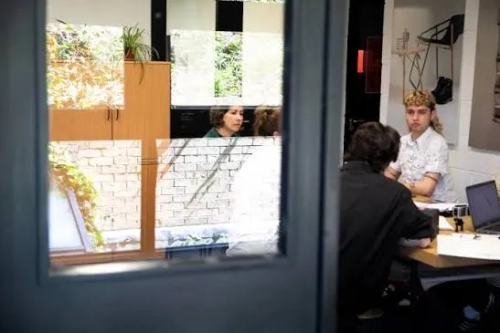
At NCAD you will experience small learning groups in studio, tutorials and seminars. We believe you learn as much from your peers as from your tutors and lecturers and that the creative process is not an individual solitary activity.
Studying at NCAD is also about your journey as a student which we hope will be full of delight and discovery. We hope you will be enriched by the experience of working within a creative community, exploring your own creative response to the world around you and being actively engaged socially and culturally with your peers and the wider world.
Hearing the experiences of international students who have studied at NCAD is a great way for you to get a genuine insight into life as a student here, so in the video below, a small number of our international student body will provide some brief details about their time studying at NCAD and living in Dublin.
NCAD is where artists, designers, and makers from around the world come to think curiously, experiment boldly, and challenge ideas to shape the future of art and design. So, while based in Dublin, our curriculum and research are connected globally.
English Language Requirements
All programmes in NCAD are taught through English. International Applicants are asked to provide proof of their English Language Proficiency.
Full details of acceptable tests and the standard required can be found at the following link English Language Requirement.
Portfolio
Applicants applying for Studio Courses in NCAD are expected to present a portfolio as part of their application.
Details on portfolio submission can be found here.
Essential Documents
You will need to supply a number of documents to support your application. This is achecklist of what you will need to have ready:
Document Description
When uploading documents please make sure you label them clearly in the description box.
English Language Requirements:
All programmes in NCAD are taught through English.
International Postgraduate Applicants are asked to provide proof of their English Language Proficiency.
Full details of acceptable tests and the standard required can be found at the following link - English Language Requirement
If you are an EU/EFTA undergraduate applicant, please follow this link. If you are a postgraduate applicant, please follow this link
International/Non-EU applications are submitted via the NCAD website. International Applicants do not apply through the CAO (Central Applications Office).
Step 1: Click on the relevant link in the Apply Now Tab | Step 2: Fill in your details
Step 3: Upload your Supporting Documents
You can also submit your application even before you upload the necessary documents.
You can not add new documents after you have submitted.
Additional documents can be sent to [email protected] and we will upload them on your behalf.
Step 4: Pay the application fee & submit your application to NCAD
If you are applying for multiple Postgraduate Programmes then you are only obliged to pay the application fee once.
Complete your application as far as the fee payment page
Click save + exit
Email [email protected] and let us know you are ready to submit and we will submit the application on your behalf.
Email: [email protected],[email protected],[email protected]
Phone : + 353 1 636 4200
Department of Education and Skills of Ireland
Sarah Glennie was born and reared in Cambridge and has a BA in Art History from Bristol University and an MA in Museum and Curatorial Studies from Manchester University. She began work in the arts at Tate St. Ives and Kettle's Yard Gallery, Cambridge.
Strategic leader in higher education and culture. Currently Director of the National College of Arts and Design.




The National College of Art and Design occupies a unique position in Art and Design Education in Ireland. It offers the largest range of Art and Design degrees in the State at undergraduate and postgraduate level and is the only Irish University institution specialising in Art and Design.
Many of the most important Irish artists, designers, and art teachers have studied or taught in the College and it has long been central to art and design education in Ireland. Our graduates include leading contemporary artists Shane Berkery, Genieve Figgis, and R.H. Quaytman; celebrated illustrator Gordon Brewster, television presenter Jennifer Buckley, Gerard Byrne, artist who represented Ireland at the 52nd Venice Biennale; stained glass artist Harry Clarke; painter Phoebe Donovan; early modernist artist and designer Beatrice Elvery; C18th portrait painter Hugh Douglas Hamilton; C20th realist painter Sean Keating, a narrator of modern Irish history; fashion designer and businesswoman Orla Kiely; stained glass artist Richard King; musician Dónal Lunny; Irish-American painter Flora Mitchell, modernist painter Evin Nolan; leading figure in Irish art William Orpen; artist and republican Grace Plunkett; Expressionist painter Nano Reid; fashion designer Simone Rocha; writer, editor, critic, poet and painter George William Russell; performance artist Anne Seagrave; botanical artist Lydia Shackleton, footwear designer Eileen Shields; artist and political activist Estella Solomons, artist and Bauhaus student Stella Steyn; designer and broadcaster Ciaran Sweeney; writer, artist and Soho bohemian Patrick Swift; London milliner Philip Treacy; C18th history painter Henry Tresham; and leading figure in the Irish literary revival of the late C19th, William Butler Yeats.
The origins of the College date from 1746, when a private drawing school was taken over and run by the Dublin Society. Throughout the 18th Century there were three schools covering figure drawing, landscape, ornamental drawing, and architecture drawing. A school of modelling was added in 1811 and from 1854 the institution was controlled by the Department of Science and Art, London. In 1877 it was renamed the Dublin Metropolitan School of Art and the Department of Education in the new Irish State took control in 1924. Twelve years later it became the National College of Art and in 1971 the National College of Art and Design was established by an Act of the Oireachtas. The College is governed by a board (An Bord) appointed by the Minister for Education and Skills.
The early 1970s were a turbulent time in the history of the college when students pressed to make the college more accessible and more relevant to the needs of Irish society. Many of the reforms were acheived when the college underwent a significant restructuring in the mid 1970s. Lucy Sherry writes 'We can be thankful for the students and staff of 1971 who reframed an institution that has contributed to the revitalisation of the Irish arts scene over the years. Irish art is a fledgling field of enquiry – its youth have created both challenges and opportunities for its practitioners.'
From 1975 NCAD pioneered undergraduate art and design degrees, including BA and BA Joint Honours Degree. Postgraduate research degrees have been offered since the late 1980’s. In 1996 NCAD became a Recognised College of the National University of Ireland and remains the sole provider of art and design education with in the university sector.
In 1998 the College opened a new wing, the School of Design for Industry and now houses all of its activities on the Thomas Street campus in the centre of Dublin. Since 2005 PhD Research has been undertaken together with post-doctoral research. NCAD’s primary degree awards are Level 8 on the National Framework of Qualifications, but offers courses from Level 6 to Level 10.
NCAD’s Library houses NIVAL, the National Visual Arts Library, supported by the Arts Council of Ireland, which is a unique resource on the Island for research in art and design, containing papers, documents, and archives of Irish artists, designers, and organisations.
NCAD has over 1,300 full time students and a further 700 students who take award and non-award bearing part-time classes. The College has four Schools, Design, Education, Fine Art, and Visual Culture. In 2013 the curriculum was consolidated into an integrated three year undergraduate programme and a two year postgraduate degree (3+2) with the option to continue to PhD study (+3).
Artists and designers of international repute teach or give special lectures in the College. Exchange programmes with colleges and universities in Europe and the United States now take place annually and individual staff members are linked to numerous professional organisations at home and abroad. NCAD is a member of the Europe League of Institutes of the Arts.
NCAD has regularly reinvented itself - and the current process of change is typical of that developmental momentum reflecting change in the sector and society – in order to meet the highest expectations of the Society and the State.