ListOfUni

Royal Irish Academy of Music (RIAM)

Leinster, Ireland
Visit School Website
  • Private Type
  • 1848Founded
  • YesAccept Int. Studs
  • YesDistance learning

About

The Royal Irish Academy of Music is Ireland’s oldest conservatoire, ranked in the top 50 institutions in the world for the performing arts. We train gifted musicians from all over the world for careers in music performance, composition and pedagogy. Our graduates are innovative and reflective, with skills that enable them to take on the challenge of a life in the creative arts with confidence and zest.

Our teaching staff includes many international prize-winners and principals of professional orchestras in Ireland. It also includes individuals whose names have become synonymous with music education in Ireland. These experienced teachers are passionate about working with talented students to unlock their artistic potential.

Acronym RIAM
Nickname RIAM
Founded 1848
Undergraduate Programmes
Postgraduate Programmes 4
Location Dublin, Leinster, Ireland
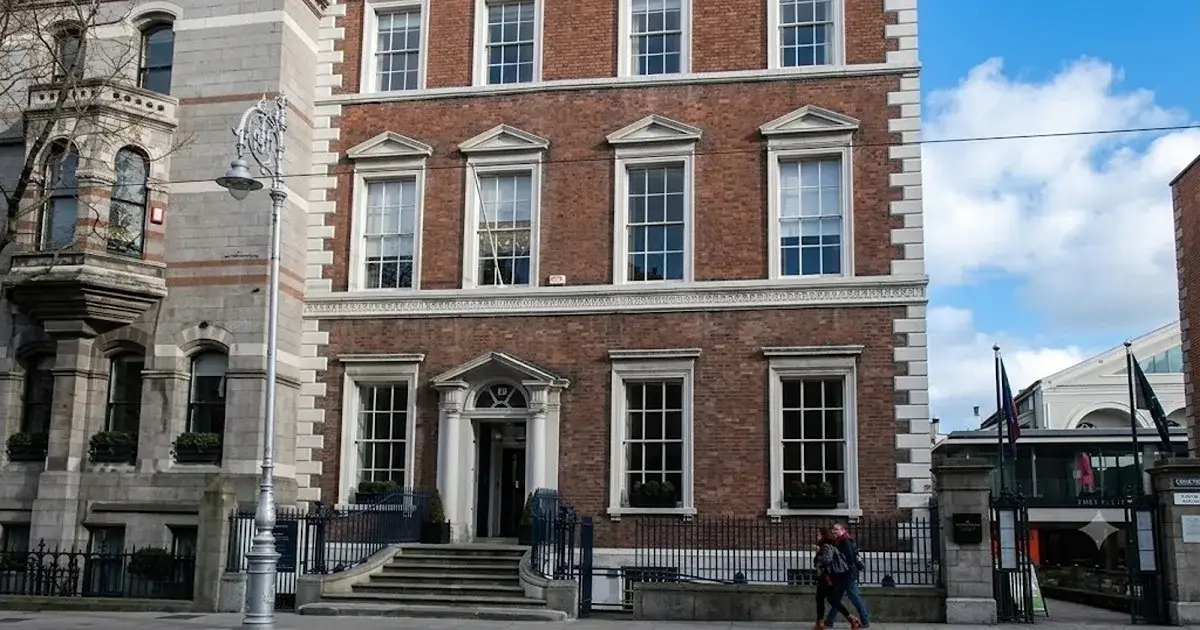
Address Royal Irish Academy of Music, 36-38 Westland Row, Dublin D02 WY89
Royal Irish Academy of Music

Admission

Undergraduate Admission Requirement

We teach all classes through English. If your first language is not English and you have not been educated through the medium of English, you must have one of the following English language qualifications: 

  • Cambridge English Qualifications - Minimum overall score of 162-169 on the Cambridge English scale, i.e. minimum Grade B2 First or Proficiency Certificate. Recommended Sub-scores: minimum 160 per paper. 
  • Duo Lingo English Test: Minimum overall score of 95, no individual sub-scores below 90 
  • International English Language Testing System (IELTS Academic) IELTS 5.5. Recommended no individual band below 5.5 (Undergraduate)
  • Pearson English International Certification Minimum overall score of 46-50,  recommended no section scores below 42-45 (Undergraduate courses)
  • Test of English as a Foreign Language (TOEFL iBT) Minimum overall score of 55-60 with a minimum score in writing of 16 (and no skill below 14–16).
  • Trinity College London - Trinity ISE II (B2) with at least a pass in each skill category.

Musical standard 

Your Principal Study should be of a standard equivalent to Grade 7 with Distinction of the RIAM  Exams, or the ABRSM.  

For further exam preparation material we recommend candidates should source Music Workout Level 7. You can buy it from our Irish based Stockists listed here.

Supporting Documents

  1. Undergraduate applicant's School Leaving Examination Certificate or High School Transcripts. Include forecast results if final results are not available (PDF format). Please note if documents are not in English, the documents should be translated and notarized. 
  2. NON-EU applicants, passport details under a passport number and expiry date 
  3. For applicants whose first language is not English, RIAM will accept the following English language qualifications for admissions:
    •    Cambridge English Qualifications - 
    •    Duolingo English Test
    •    International English Language Testing System (IELTS Academic)
    •    Pearson English International Certification
    •    Test of English as a Foreign Language (TOEFL)
    •    Trinity College London

For further information on English language requirements 

Undergraduate: Entry Requirements (Undergraduate) | RIAM

     4. SAT or ACT results (If available, US undergraduate applicants only) (PDF format)

     5. A Recommendation and Academic Reference ( two letters) 

     6. The recommendation letter can be from someone who can attest to your musicality, accomplishments and potential.

     7. The academic reference can be from a secondary school/high school teacher or lecturer/professor ( including a principal study teacher)

    8. Repertoire list detailing what pieces you have studied and performed to give the audition committee a sense of your musical background and depth. Your repertoire list may be longer or shorter, depending on years of study.

     9. Postgraduate applicant's CV providing an overview of career to date ( 1- 2 pages PDF format)

    10. For Postgraduate applicants, a 500-word maximum word statement detailing why you wish to study at RIAM

    11. Students applying for the Doctor in Music Performance (DMus) should also provide examples of written work, including essays or articles. 

   12. For Doctorate applicants, we require a minimum of a one-page proposal from all doctorate applicants on your chosen dissertation topic. Please include information on existing secondary sources in your area of research. 

   13. Application Fee: Euro 100 (Payable online by Credit or Debit Card)

Postgraduate Admission Requirments

You should have attained a 2:1 or higher in your undergraduate degree, which need not be in music performance.  

If you do not have an undergraduate degree, you are eligible to apply at postgraduate level. In this case you can be assessed though the recognition of prior learning process. For more information on this, please check the RIAM Recognition of Prior Learning Policy.  

We teach all classes through English. If your first language is not English and you have not been educated through the medium of English, you must have one of the following English language qualifications: 

Master's Degree

  • Cambridge English Qualifications - Minimum overall score of 162-169 on the Cambridge English scale, i.e. minimum Grade B2 First or Proficiency Certificate. Recommended Sub-scores: minimum 160 per paper. 
  • Duo Lingo English Test: Minimum overall score of 95, no individual sub-scores below 90 
  • International English Language Testing System (IELTS Academic) IELTS 5.5. Recommended no individual band below 5.5 
  • Pearson English International Certification Minimum overall score of 46-50,  recommended no section scores below 42-45 
  • Test of English as a Foreign Language (TOEFL iBT) Minimum overall score of 55-60 with a minimum score in writing of 16 (and no skill below 14–16).
  • Trinity College London - Trinity ISE II (B2) with at least a pass in each skill category.

Doctorate

  • Cambridge English Qualifications - Minimum overall score of 180 on the Cambridge English scale, i.e. minimum Grade C1 in Advanced or Proficiency Certificate 
  • Duolingo English Test:  Minimum overall score of 110/160, no individual sub-scores below 105  
  • International English Language Testing System (IELTS Academic) Minimum overall score of 6.5, no individual band below 6 
  • Pearson English International Certification: Minimum overall score of 63, no section scores below 59 
  • Test of English as a Foreign Language (TOEFL iBT) Minimum overall score of 79, with a minimum score in writing of 21 
  • Trinity College London - Trinity ISE III Upper B2 (C1) with at least a strong pass or  merit in each skill category 

Musical standard 

Successful postgraduate candidates will normally give a performance at audition that tackles challenging repertoire, is technically assured, and demonstrates some individuality of musical ideas. 

Supporting Documents

  1. Postgraduate applicant's degrees Transcripts and degree award. Include forecast results if final results are not available (PDF format). Please note if documents are not in English, the documents should be translated and notarized.
  2. NON-EU applicants, passport details under a passport number and expiry date 
  3. For applicants whose first language is not English, RIAM will accept the following English language qualifications for admissions:
    •    Cambridge English Qualifications - 
    •    Duolingo English Test
    •    International English Language Testing System (IELTS Academic)
    •    Pearson English International Certification
    •    Test of English as a Foreign Language (TOEFL)
    •    Trinity College London

For further information on English language requirements 

Postgraduate: Entry Requirements (Postgraduate) | RIAM

     4. SAT or ACT results (If available, US undergraduate applicants only) (PDF format)

     5. A Recommendation and Academic Reference ( two letters) 

     6. The recommendation letter can be from someone who can attest to your musicality, accomplishments and potential.

     7. The academic reference can be from a secondary school/high school teacher or lecturer/professor ( including a principal study teacher)

     8. Repertoire list detailing what pieces you have studied and performed to give the audition committee a sense of your musical background and depth. Your repertoire list may be longer or shorter, depending on years of study.

     9. Postgraduate applicant's CV providing an overview of career to date ( 1- 2 pages PDF format)

     10. For Postgraduate applicants, a 500-word maximum word statement detailing why you wish to study at RIAM

      11. Students applying for the Doctor in Music Performance (DMus) should also provide examples of written work, including essays or articles. 

     12. For Doctorate applicants, we require a minimum of a one-page proposal from all doctorate applicants on your chosen dissertation topic. Please include information on existing secondary sources in your area of research. 

    13. Application Fee: Euro 100 (Payable online by Credit or Debit Card)

How To Apply For Admission

For a step-by-step guide to RIAM's online application system, please refer to these handy guides detailing each step of the application.

Apply for Undergraduate

  • Start your application by selecting the institution you are applying to at RIAM. You are applying to RIAM Undergraduate & Postgraduate
  • Create your RIAM Application Account by adding your basic details
  • Log into your RIAM Application Account
  • Start your RIAM Application


Apply for Postgraduate

  • Start your application by selecting the institution you are applying to at RIAM. You are applying to RIAM Undergraduate & Postgraduate
  • Create your RIAM Application Account by adding your basic details
  • Log into your RIAM Application Account
  • Start your RIAM Application


Admission Contacts

Email: [email protected]
Phone : +353 (0) 1 6325300
Apply For Admission

Campus Tour

Facilities

  • Classrooms
  • Library
  • Laboratory
  • Research Center
  • Accommodation
  • Sports
  • Gym
  • ICT
  • Cafeteria
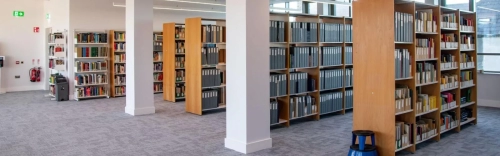
  • Library: The library provide an attractive, spacious and light-filled venue for learning and research. In addition to the main reader area, there is a separate Seminar/Quiet Study area attaching the library. They are located on level 4 of the new teaching building, easily accessible via the lift and stairwells. 


  • Accommodation: Finding suitable accommodation in  Dublin can sometimes be difficult, and we would recommend that you organize this as soon as you have been made an offer to study at RIAM. You first need to decide whether you would like to live in student residences or consider alternative options. Each student will have his/ her own preference, and both forms of accommodation have advantages and disadvantages. They often find that students studying for one year (for example, a postgraduate programme) prefer to live in a student residence. Students coming to study in the first year of a three- or four-year degree programme tend to live in a student residence for the first year and then explore the possibility of moving off-campus with friends.


  • RIAM ICT is making it easier than ever for you to reset your password when it expires or if you ever happen to forget it. We have collaborated with Microsoft to use their Self-Service Password Reset (SSPR) utility and have rolled out this service to all RIAM Users. Please complete the registration process by browsing to Register for Password Reset. Complete the sign-up process using your existing username i.e. [email protected] and current network password.


School Contact

Address

Royal Irish Academy of Music, 36-38 Westland Row, Dublin D02 WY89

Email Address

[email protected]

Phone Number

+353 (1) 6325300

Website Address

https://www.riam.ie/

Social Media Pages

Accreditations

Trinity College Dublin

Vice Chancellor

Professor Deborah Kelleher

Appointed Director of the Royal Irish Academy of Music (RIAM) in October 2010, Deborah Kelleher has played an integral role in the strategic development of the institution’s international profile, outreach, estate, and academic courses.

Milestone achievements include the revision of undergraduate and postgraduate degrees with industry-focused specialisms; RIAM Podium, the Centre for Perfor... read more

ming Ensembles, which trains musicians for orchestras and large ensembles; the founding of Ireland’s first Historical Performance Department with foundation partners The Irish Baroque Orchestra; and the creation of the Open Youth Orchestra of Ireland (OYOI) a flagship ensemble for inclusive creativity.

Academic Staff

  • Dr. Lynsey Callaghan

    Head of Programmes, Research & Academics Lynsey Callaghan was appointed Head of Research and Programmes in December 2020. 

    Lynsey combines performance experience, pedagogical training, and academic research to facilitate inclusion... read more

    , equitability, and a sense of belonging in a range of musical contexts. Following a degree in music education (Trinity College Dublin and DIT Conservatory of Music) and a master’s degree in performance (Royal Irish Academy of Music), Lynsey undertook an interdisciplinary PhD in Trinity College Dublin. Her output—academic scholarship and practice-related research—is thoroughly interdisciplinary and wide-ranging. She draws on a diversity of investigative methods that are associated with a range of disciplines, including medieval musicology, the history of music theory, manuscript studies, the history of education, mobility studies, post-translation studies, gender studies, and music education.
  • Mark Mahoney

    Head of Marketing
  • Bill Ryan

    Head of Information Technology & Digital Strategy
View More Staff

Notable Alumni

View More Alumni

History

Founded in 1848, the Irish (later Royal Irish) Academy of Music is Ireland’s oldest musical teaching institution. Among its founders were Francis and Joseph Robinson, John Smith, Samuel Pigott, Charles Graves and John Stanford. Opening on 1 March 1848, the Academy held its first classes at the Antient Concert Rooms in Great Brunswick Street (now Pearse Street).

By 1855, it was clear that a reorganisation of the Academy was necessary. A new committee was formed and the reconstituted Academy opened at 18 St Stephen’s Green on 12 February 1856.

In 1870, the Academy secured a government grant and, on 29 October 1870, it moved to its present home at 36 Westland Row. Numbers 37 and... read more

38 Westland Row were acquired in 1915.

In 1872, as the result of a visit by Queen Victoria’s second son, the Duke of Edinburgh, the Academy successfully petitioned the Queen to become its patron. The Irish Academy of Music became the Royal Irish Academy of Music by royal command.