
The University of Greifswald formerly known as Ernst-Moritz-Arndt University of Greifswald, is a public research university located in Greifswald, Germany, in the state of Mecklenburg-Western Pomerania.
Founded in 1456, it is one of the oldest universities in Europe, with generations of notable alumni and staff having studied or worked in Greifswald. As the fourth oldest university in present Germany, it was temporarily also the oldest university of the Kingdoms of Sweden (1648–1815) and Prussia (1815–1945), respectively. Approximately two-thirds of the 10,179 students are from outside the state, including international students from 90 countries all over the world.
| Colour | Blue and White |
| Mascot | The Griffin (Gryphon) |
| Founded | 1456 |
| Location | Greifswald, Mecklenburg-Vorpommern, Germany |
| Address | University of Greifswald, Domstraße 11, 17489 Greifswald |
As passed by the Rectorate on the 10th October 2012 following the recommendation from the Extended Senate on the 19th September 2012
The University of Greifswald is amongst the oldest universities in the German-speaking countries, founded in 1456 following an initiative from citizens of the Hanseatic town of Greifswald, to whom there is still a strong connection today.
During the course of its changing political history, the University has managed to win, retain and expand its reputation as a location for international research and high quality teaching. Due to its geographical location in the Baltic region and the region’s history, the University strives to maintain and expand its strong academic contacts throughout the world, but in particular to partners in Poland, in the Baltic States and in Scandinavia. The University of Greifswald’s special position in the German university landscape is thus strengthened by its specific aptitude for the cultural diversity of the Baltic region, as well as the northern and eastern European points of view in terms of scientific research.
Research and teaching at the University is committed to the freedom and autonomy of thought. The University regards research, teaching and studying as one entity, which is to be fostered and developed in cooperation with the individual academic disciplines. Conscious of its long history and its social, economic and cultural responsibility, the University consistently strives for new academic concepts and teaching methods and transfers its research results into specific fields of application.
The University invites people of all origins and convictions to take part in academic education, to work together to enhance knowledge and to train proficiency in all areas of human life and social existence. This means that the University, its members as researchers, teaching staff and students, are expected to stand up for a free, civil and democratic society and to advocate the peaceful coexistence of humans and nations. A driving power for the University of Greifswald is the consciousness of its own history and the demands of the future, which will have to be tackled by research.
The Mission Statement expresses the way the University of Greifswald sees itself, but at the same time is to be used as an orientation for future-changing decisions in the following core areas of its activities:
To be a forward-thinking, sustainable, and cosmopolitan university that addresses the challenges of a changing environment, fostering innovation and interdisciplinarity, while achieving carbon neutrality by 2030.
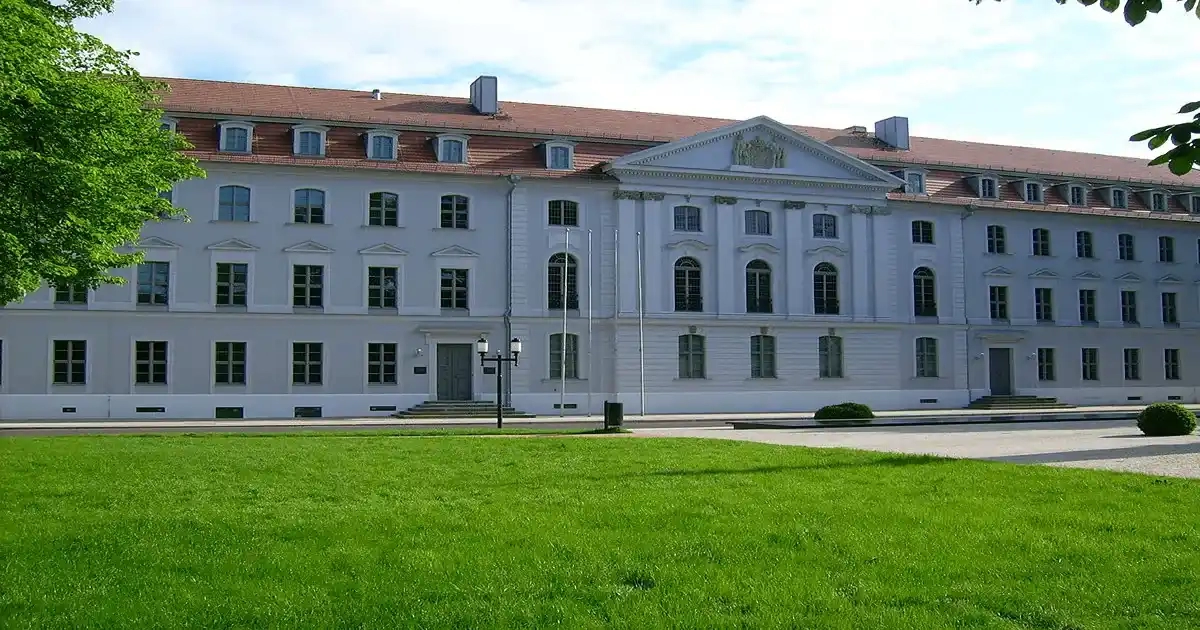
The University of Greifswald dates back to 1456 and has since then continued to develop innovatively with the times and adapt to new circumstances. To improve transparency, the University's institutions publish strategy papers. These formulate goals, values and set focal points for the development of the University. For a better overview, all of the University's strategy papers are sorted alphabetically and linked below.
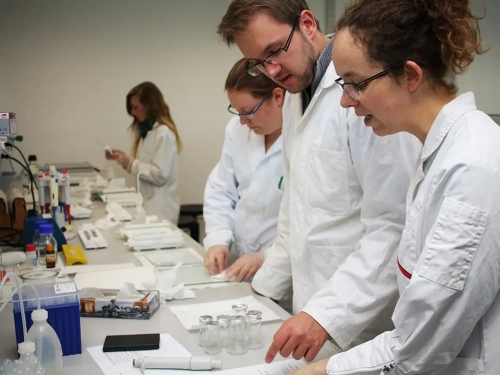
The University of Greifswald is a research university. Its research strength mainly originates in the intensive interdisciplinary collaboration of the five faculties, including University Medicine. Cutting-edge research evolves in close collaboration with regional, national and international research partners and is based on the solid foundation provided by an excellent research infrastructure.
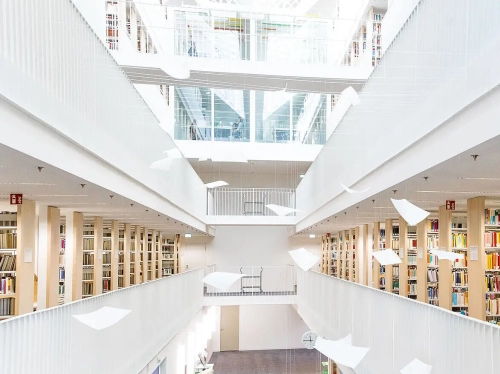
The University of Greifswald offers high-quality, research-led teaching in modern and restored historic buildings. With excellent infrastructure, small class sizes, and dedicated staff, students receive strong academic support. The university has five faculties offering 131 degree programs, including interdisciplinary options, plus 13 continuing education courses.
The University of Greifswald plays a key role in regional development, driving economic and social growth. It promotes innovation through idea competitions, supports start-ups, and transfers research into industry. Its applied research also addresses local challenges, including improving healthcare in rural and structurally weak areas.
The University of Greifswald provides an excellent student-staff ratio, committed teachers who care about their students, small practical and seminar groups, and innovative forms of teaching and learning.
The University of Greifswald provides its International guests with excellent supervision. The International Office is happy to advise and support regarding study-related, legal, and social questions.
Fee for Student Body (Studierendenschaftsbeitrag) in accordance with § 4 of the Studierendenschaft’s Fee Regulations: € 11.00
Student Services Fee (Beitrag zum Studierendenwerk) in accordance with § 2 of the Studierendenwerk’s Fee Regulations (from winter semester 2018 onwards): € 93.00
Re-Registration Fee according to the valid University Fee Regulations: €6.00
Only for freshers: Enrolment Fee according to the valid University Fee Regulations: €31.00
In order to successfully apply for a full degree programme at the University of Greifswald, please make sure that you fulfil all the necessary requirements:
To be eligible for a Master's degree at the University of Greifswald, you must meet certain admission requirements . One requirement for all Master's programs is that you have obtained a first professional university degree (usually a Bachelor's degree).
Furthermore, some Master's programs have admission restrictions with a fixed number of places, i.e., a numerus clausus (NC). Even if you already meet the entry requirements for these Master's programs, you still need to apply for a place.
For entry requirements: Most Master's programs have special admission requirements. View the program page for requirements.
These application documents must be uploaded exclusively to the applicant portal. Please refrain from sending any documents by mail.
Then apply online via the portal https://my.uni-assist.de/. Please note that any application is subject to a fee.
Please upload all required documents (see below) as simple scan via your My assist account. Please do not send any documents by post.
Uniassist will check whether you fulfil the formal admission requirements for your desired degree programme and inform you by e-mail whether your application documents have been forwarded to the University of Greifswald.
As soon as we have received your documents from Uniassist, we will check whether you fulfil all the subject-related requirements for the desired degree programme.
Please take note of the following information:
1. Required Ducuments via online portal Uni Assist:
Please note that all certificates must be submitted as an officially certified translation (English or German). Find more information on legal attestation and translations here
2. Information for EU/EEA Citizens
3. Dates and Deadlines for International Students
4. Recognition of Previous Study Achievements for Admission Requests to More Advanced Semesters
Email: [email protected]
Phone : +49 3834 420 1296


As a state university in Mecklenburg-Western Pomerania, its programs meet rigorous German standards.
2017-2021, Vice-Rector for Research and Transfer, International Affairs, and Equal Opportunities
1994-1998, PhD at the Technical University of Munich, at the Institute of Microbiology there
1988-1994, Studied biology at the Tech... read more
since 2007, Curator and Assistant Professor (wiss. Mitarbeiter), Zoological Institute and Museum, University of ... read more
2001 - 2002, Research Assistent, Zoological Institute and Museum, University of Greifswald, Germany


The University of Greifswald was founded on the initiative of the local mayor Heinrich Rubenow, after Emperor Frederick III and Pope Callixtus III had given their approval and the Pomeranian Duke Wartislaw IX placed it under his protection.
Heinrich Rubenow became the university's first rector. The founding was celebrated in Greifswald Cathedral, St. Nicholas'... read more
Due to its location on the Baltic Sea and Greifswald's membership in the Hanseatic League, the university maintained close ties with the Scandinavian countries and the Baltic region from an early stage. From 1648 to 1815, following the division of Pomerania in the Peace of Westphalia, it belonged to Swedish Pomerania. During this period, it was significantly influenced by Swedish science policy. Today, the Baltic region remains a key research focus of the University of Greifswald.
From 1815 to 1933, the university belonged to Prussia and developed into a modern research university.
During the Nazi era, the university faced the challenge of adapting to the realities of the dictatorship. In the course of this transformation, the university evolved into an institution that taught Nazi ideology, was involved in armaments research, and participated in Nazi injustices. At the end of World War II, the university was closed. It reopened on February 15, 1946.
During the subsequent period of the GDR until 1990, the university, which was called the Ernst Moritz Arndt University of Greifswald from 1954 to 2018, was strongly ideologically influenced. Research and teaching were subject to the control and influence of the Socialist Unity Party of Germany (SED).
Today, the University of Greifswald sees itself as a modern research university. Its research strength derives primarily from the intensive interdisciplinary collaboration of its five faculties, including the University Medicine department.
We invite you to take an insight into the multifaceted history of our university and to learn about the developments and traditions of one of the oldest universities in Northern Europe.