ListOfUni

Universität Trier

Rhineland-Palatinate, Germany
Visit School Website
  • Public Type
  • 12,000 Students
  • 6 Faculties
  • 1970Founded
  • YesAccept Int. Studs
  • YesDistance learning

About

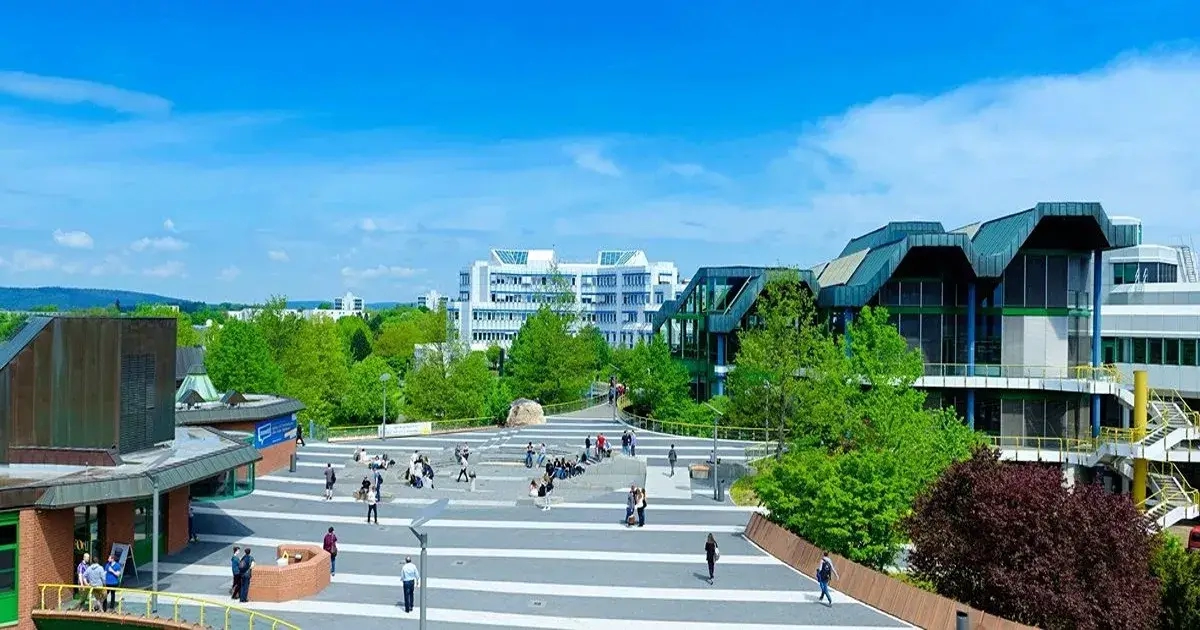
The University of Trier conducts socially relevant research and teaching at the cutting edge – with a strong focus on digitalization, interdisciplinarity, and diversity . With approximately 10,000 students and 2,000 employees, the university's teaching and research center on people and their relationship to society, law, economics, and the environment. Its unique location in the heart of Europe , along with cross-border projects and collaborations, distinguishes the university. Short distances on a green campus , a vibrant academic life, and an open-minded culture offer numerous opportunities to make a difference.

Trier University represents many diverse aspects: Founded in 1970 in Germany’s oldest city, Trier University is a young and vibrant institution with roots dating back as far as the 15th century. Its focus on the Humanities and Social Sciences is complemented by the fields of Law, Business & Economics, Geography & Environmental Sciences as well as Psychology and Nursing Sciences. In total, there are six faculties covering more than thirty subject areas and several Englishtaught Master programs.
 

Nickname Uni Trier
Colour Blue and White
Founded 1970
Location Trier, Rhineland-Palatinate, Germany
Address University of Trier, Universitätsring 15, 54296 Trier, Germany

Mission

… we create innovation. We confidently strive for further development and are motivated to actively shape the future.

Through our research, we generate knowledge and develop practical solutions for regional and global challenges in a complex world. We take responsibility by using our professional expertise to make a significant contribution to nature and society, as well as a sustainable future.

Our research succeeds through a goal-oriented approach, the courage for critical reflection, and the pursuit of excellence. Our university is a place where ideas have room to develop and a constructive culture of learning from mistakes is cultivated.

Our unique professional diversity and the combination of different disciplinary perspectives promote the development of innovative research approaches and broaden our view beyond our own discipline.


… we share knowledge. We share our expertise and insights with each other and with society.

Teaching is just as important to us as research and closely intertwined with it. We train and develop the specialists, leaders, and teachers of tomorrow and are aware of this special responsibility. We achieve good teaching through diverse learning opportunities and the close relationship between students and instructors. Researchers at all career stages receive valuable impetus for their development from a vibrant culture of exchange.

Through dedicated science communication, we shape public discourse in the city, the region, and beyond. We encourage each other to contribute diverse ideas to promote the values ??of an open, democratic society.

Our practical collaborations and dialogue with citizens offer us new perspectives. We support knowledge transfer and start-ups to make our knowledge beneficial to society.

… we bridge boundaries. We want to build bridges – between societies, spaces, times, and our academic disciplines.

Firmly rooted in the region, we look far beyond national borders. International cooperation and the promotion of stays abroad are essential for us. At the same time, we advocate for open dialogue and cultivate a warm and welcoming culture.

Our unique location in the Greater Region and in proximity to Belgium, France, and Luxembourg gives us a key position. This allows us to collaborate closely in research and teaching and to mutually benefit from each other. We also learn, teach, and conduct research with an awareness of our cultural heritage in the city and region.

We are convinced that bridging disciplinary boundaries opens up new perspectives on complex problems. International networking and interdisciplinary research are our strengths.


…we are a university together . Our close-knit campus culture is characterized by respectful and friendly interaction. Collegiality, tolerance, and fairness are our core principles.

We see our university as a place where everyone has the opportunity and the freedom to develop their full potential. Through targeted support and services, we assist each other to achieve our common goals.

An inclusive and diverse academic community that values ??all university members equally is of particular importance to us. We embrace cultural and academic diversity and are committed to ensuring access to high-quality education for everyone.

Our university is more than the sum of its parts. Together, we bear responsibility for its further development, its successes, and its influence in the region and beyond.
Universität Trier

Main Academic Divisions (Faculties)

  1. Faculty of Educational Science and Education, Philosophy, Psychology, Nursing Science
  2. Faculty of English Studies, Computational Linguistics & Digital Humanities, German PhilologyJapanese Studies, Classical Philology, Media Studies, Phonetics, Romance Studies, Sinology, Slavic Studies.
  3. Faculty of History, Art History, Politics, Classical Archaeology, Egyptology, Papyrology
  4. Faculty of Business Administration, Economics, Social Sciences, Mathematics, Computer Sciences
  5. Faculty of Law
  6. Faculty of Spatial and Environmental Sciences

Reasons to Study at Universität Trier

  1. Global Partnerships and International Exchange Opportunities

    The University of Trier offers a wide range of collaborations with partner universities abroad. Over 200 partner universities in Europe and numerous exchange programs with North America, Latin America, Australia, and Asia enable students from all over the world to study with us as part of an exchange mobility program. title


  2. Make New Friends

    Not only in your classes but also while participating in exciting extracurricular activities, including sports disciplines and outdoor activities, radio, cinema, choir, orchestra, and much more.

  3. Study Abroad Experience and Academic Enrichment at Trier

    At the University of Trier, nominated exchange students can explore a wide range of courses and enrich their studies with a German perspective based on their interests. The university offers flexible learning opportunities across disciplines, and an introductory seminar helps international students adjust smoothly to academic and student life in Trier.

  4. Introductory Seminar for New Students at the University of Trier

    Before the start of university courses, the University of Trier offers a free, one-and-a-half-week introductory seminar. This is a varied orientation program designed to help you get to know the University of Trier and settle into the city of Trier. Participation in the introductory seminar is mandatory. The seminar consists of three main components.


Admission

Undergraduate Admission Requirement

Formal admission requirements

The formal admission requirements are stated in the General Examination Regulations of the University of Trier and in the Examination Regulations of the Department of Economics for the M.Sc. Economics.

Language requirements

Applicants who do not hold the German degree of the "allgemeine oder fachgebundene Hochschulreife" have to prove their language proficiency in English. Further information can be found here.

View the admission requirements on the international applicants page.

Postgraduate Admission Requirments

Entry requirements vary by program. View the requirements on the program page.

Language requirements

Applicants who do not hold the German degree of the "allgemeine oder fachgebundene Hochschulreife" have to prove their language proficiency in English. Further information can be found here.

View the admission requirements on the international applicants page.

How To Apply For Admission

Apply now

Applications for studies at the University of Trier can be submitted online via our application portal PORTA.

Click here to submit your application via PORTA

Admission Contacts

Email: [email protected],[email protected],[email protected]
Phone : +49 651 201-2805
Apply For Admission

Campus Tour

Facilities

  • Classrooms
  • Library
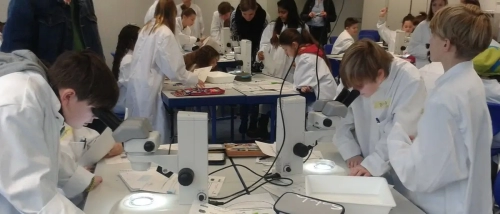
  • Laboratory
  • Research Center
  • Accommodation
  • Sports
  • ICT
  • Cafeteria
  • Library: Founded in 1970, together with the university. Provisional location in the premises of today's Trier University of Applied Sciences (Schneidershof). The library's total area is 20,649 m², of which 1,690 m² is dedicated to Reading Room F, which opened on Campus II in May 2006. The shelf capacity is 61,026 linear meters. The library offers 1,559 workstations, including 207 computer workstations.


  • IT Service: The ZIMK, as a central facility of Trier University, is the competence and service center for information, media, and communication technology. We operate the IT infrastructure, such as email and web services, servers, networks, and workstations, and provide services including IT project support, IT support, and software development. We ensure the secure, stable, and sustainable use of IT resources across the entire campus.


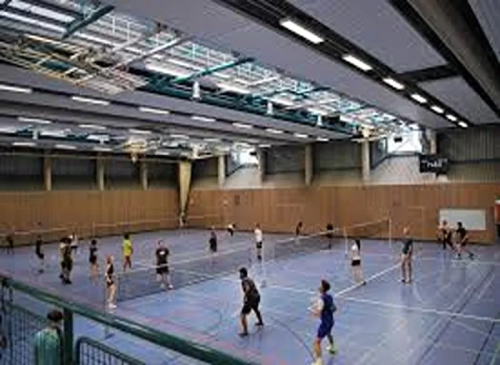
  • Sports: While we focus on organizing courses and the general sports program on campus, the AStA Sports Working Group is responsible for supporting students in their participation in tournaments and competitions. The Sports Working Group has funding available to cover participation costs upon application.


  • Cafeteria: During themed weeks , the cafeteria regularly takes its guests on a culinary journey. Events like the Valentine's Day dinner and the summer cafeteria, which attracts visitors with special dishes and a relaxed atmosphere, are also long-standing traditions. Guests can even create their own personal favorite burger at the burger generator . The student union offers a wide range of fair-trade products in its cafeterias and cafés , such as Caffè Correct. And everyone can benefit from the expertise of the cafeteria's chefs in cooking and baking classes .


School Contact

Address

University of Trier, Universitätsring 15, 54296 Trier, Germany

Email Address

[email protected]

Phone Number

+49 651 201-0

Website Address

https://www.uni-trier.de/

Social Media Pages

Accreditations

  • System Accreditation
    is optional, and enables the institution to self-accredit its study programmes. The accreditation is limited in time for a period of eight years.
  • Programme Accreditation
    applies for Bachelor and Master degree programs of state or state-recognized universities in Germany. The accreditation is obligatory unless the institution has a valid system accreditation.

Vice Chancellor

Prof. Dr. Eva Martha Eckkrammer

The University of Trier is a research-intensive university with a distinctive profile. Its range of subjects can contribute significantly to solving current societal problems. I have made it my goal to further develop its strengths by sharpening its profile and to make it even more international as a university in the heart of Europe, in order to jointly open up new opportunities for the future �... read more
� sustainably and equitably.


Academic Staff

View More Staff

Notable Alumni

View More Alumni

History

Before its re-establishment in 1970, there had already once been a university in Trier. Founded in 1473 as a ‘higher school’, 120 students were enrolled at the academic institution in the early years. However, the turmoil of the French Revolution put an end to this institution: under French occupation, the university was closed in 1798 after 325 years of existence. Three information pillars in front of historic buildings in Trier city centre tell the story of the old university.

Trier then had to wait until 1970 for the return of a university, which was established in the form of the Trier-Kaiserslautern dual university. The first lecture was held on 15 October 1970. 356 young peop... read more

le began their studies at one of the three Faculties in Trier. 27 professors and 30 lecturers were busy establishing teaching and research at the new university. The students were treated to free theatre tickets and a free meal in the canteen.

The unusual construction of the joined university was designed in such a way that there would ultimately be two independent universities. The split was finalised in 1975 and both Trier University and the Kaiserslautern University became independent.

  • 1990
    The Graduate Research Training Group ‘Social Security in Open Industrial Societies’ is established.
    A professorship for Yiddish Studies is established.
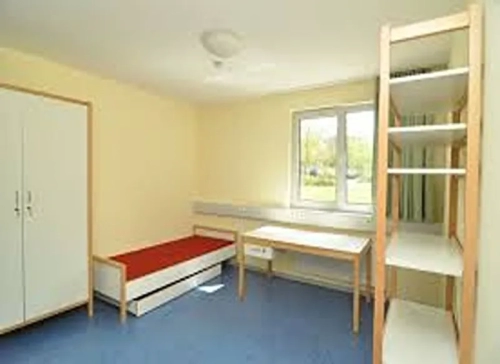
    A further 133 places in halls of residence are made available on campus.
     
  • 1991
    The ‘student house’ is completed, the AStA and the Studierendenwerk move into their new offices.
    The DM third-party funding building is completed in the summer.
    The E-building can be occupied in the winter semester 1991/92.
    Prof Dr Hans-Heiner Kühne becomes Vice President.
     
  • 1992
    The Faculty of Theology is given offices on the university campus.
    The student residence ‘Kleeburger Weg’ is completed.

        Digitalisation continues: students can now enrol online, the first lecture is posted on the Internet. The Federal Chancellor visits the           campus and the university takes part in the State Garden Show. The new millennium gets off to an exciting start.

  • 2000
    Prof Dr Peter Schwenkmezger becomes the new President of Trier University.
    Online enrolment is introduced.
     
  • 2001
    Federal Chancellor Gerhard Schröder visits Trier University.
    Chancellor Ignaz Bender retires.
    Lectures in Computer Science are broadcast live on the Internet as TeleTeaching for the first time.
     
  • 2002
    Vice President Prof Dr Helga Schnabel-Schüle hands over her office to her successor Prof Dr Georg Wöhrle.
    Trier University is the first university in Germany to receive the ‘family-friendly university audit’.
     Due to the coronavirus pandemic, courses and campus life temporarily move completely online. Intensive teaching and research on digitalisation continues.


  • 2020
    The summer semester takes place digitally due to the coronavirus pandemic. Two more digital semesters will follow.
    Trier University celebrates 50 years of its re-founding with a few festive events, but with (digital) activities.
    A branch of the German Research Centre for Artificial Intelligence (DFKI) is established at Trier University.
    Trier University mourns the death of a law student killed in a car attack in Trier city centre and the other four victims.
  • 2021
    The Trier Institute for Democracy and Party Research (TIDUP) is founded.
    The research programme ‘Immersive Extended Reality for Physical ActiviTy and Health (XR-PATH)’ is established in cooperation with Trier University of Applied Sciences
    The interdisciplinary minor ‘Digitalisation, Information and Society’ is offered for the first time in the winter semester
     
  • 2022
    Archaeologist Prof Dr Torsten Mattern is appointed Vice President for Research and Infrastructure.
    The university presents a new university development plan.
    The university is given the permanent right to appoint professors independently.
    Sponsorship of the Confucius Institute is transferred to an association in Trier.
    The Georgetown Summer School at Trier University celebrates its 50th anniversary.
     
  • 2023
    Prof Dr Eva Martha Eckkrammer becomes the first woman to become President of the University. Prof Dr Matthias Busch takes over as Vice President for Studies and Teaching.
    The University commemorates the founding of the Old University of Trier 550 years ago with events and publications.
    The University receives its first Heisenberg professorship.
    The Institute for Cognitive and Affective Neuroscience (ICAN) is opened.
    Trier is one of the first universities in Germany to introduce an integrated Bachelor's degree programme in Law.
     
  • 2024
    For students, the semester ticket becomes the Deutschlandticket – Trier was a pioneer in the technical realisation nationwide.
    A new DFG long-term project is investigating what German duchesses read in the 18th century.
    Together with partners, Trier University launched a Leibniz ScienceCampus on the topic of resilience.
    JProf. Dr Pascal Warnking receives the prestigious ERC Consolidator Grant for his research into ancient trade conflicts.