Hochschule Bremen is the second largest academic institution in the state of Bremen, located in the heart of Bremen's Neustadt district. As a university of applied sciences, the focus is on practice-oriented study and application-oriented research.
Students are given ample opportunity to apply new knowledge and skills even before they graduate. The practical component is particularly high in the dual courses of study that HSB offers in cooperation with companies and organisations from the region. In addition to undergraduate Bachelor's degree programmes and consecutive Master's degree programmes, HSB also offers a wide range of opportunities for further education, for example in the form of Master's and MBA programmes or certificate programmes. Customised offers for different requirements make the HSB a versatile and reliable partner for the qualification of specialists and managers.
The HSB also has its finger on the pulse with its research activities: six research and transfer clusters bundle projects in which researchers across disciplinary boundaries deal with future issues in technology, business and society. With science for practice, HSB contributes to the innovative strength of the region.
HSB is not only well networked regionally - about 360 university cooperations all over the world underpin its trademark internationality.
| Acronym | HSB |
| Nickname | HSB |
| Founded | 1982 |
| Location | Bremen, Bremen, Germany |
| Address | Hochschule Bremen Neustadtswall 30 28199 Bremen |
Preamble
We uphold the freedom of teaching, learning and research within the framework of an understanding of science based on democratic principles. We preserve our academic freedom and independence in responsibility towards society.
Profile
We have been shaping our special profile of a university of applied sciences over many decades. Our scientific culture is geared towards proactively shaping processes of social change and future issues at regional, national and international level, as well as towards an application-oriented education for specialists and managers. We do science for practitioners and with practitioners.
Internationality
We continue to develop our profile as an outstanding international brand. We live internationality and cosmopolitanism. We help to shape mindsets in an international context bolstered by intercultural and international competences.
Teaching and learning
Our strength lies in practice-oriented teaching, which primarily prepares students for the requirements of the national and international labor market. We impart competences for personal development and the perception of social accountability. We develop customised offers for the requirements of lifelong learning and educational equity. Systematic quality management and critical evaluation promote our goals.
Research
We support applied research with the goal of inter- and transdisciplinary and international profiling, above all oriented towards key future issues. In this way, we make a significant contribution to regional development, ensuring the topicality of practical relevance in teaching, and the promotion of early career researchers.
Transfer of ideas, knowledge and technology
We cultivate a broad-based transfer of ideas, knowledge and technology, perceiving it to be in the interest of civil society as well as the economy, companies, politics and public administration. Through cooperation in joint development projects, offers of training and advisory services, as well as by promoting business start-ups, we make an important contribution as an impulse generator for the regional innovation system and the city region as well as for dealing with global challenges.
Gender equality
The realisation of gender equality is a central objective which we promote in all areas. Our commitment to equality is based on the dignity of the individual, regardless of gender, origin, religion, sexual orientation, world view, age or impairment.
Self-conception and value orientation
Together we create a distinctive place of inspiration and thus act as a strong impulse generator for the region.
We aspire to work together in mutual respect, to create good working conditions and to promote the interests of the university. We see diversity as an opportunity.
We are committed to implementing the UN Convention on the Rights of Persons with Disabilities and the principle of a university for all.
Sustainability, openness to the world, a wealth of perspectives, inspiration and reliability are our core values.
Structures
HSB creates service-oriented structures and processes in order to be able to meet the requirements of its diverse external and internal target groups and employees effectively and transparently. This increases the efficiency of teaching, research and administration.
We are open to new challenges and meet them proactively and with creativity.
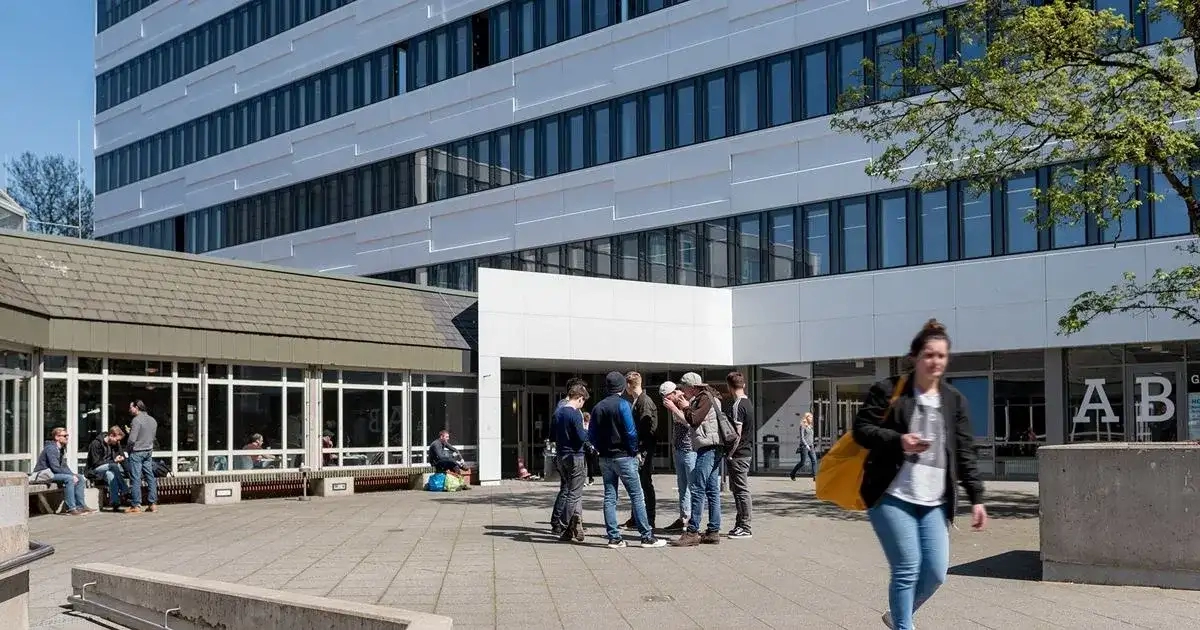
At Hochschule Bremen - City University of applied sciences (HSB) internationality enjoys a high priority at all levels: from international degree programmes, through exchange and cooperation in research, to strategic projects.
HSB pursues the goal of realizing gender equality in all areas of the university. To achieve this, we are striving for a change in the university culture that involves the entire organization, from managers to staff and students. HSB's offers in the area of equality are designed from the current state of research, reflection on past activities, and in relation to current needs.
Sustainability also plays an important role in the management of HSB’s premises and buildings at its four campus locations: the focus here is always on the economical and efficient use of resources. This web page provides exemplary insights into HSB's activities in the area of sustainability.
In order to be able to study at the Hochschule Bremen, you must prove that you are qualified and formally entitled to do so on the basis of your previous school education or professional qualification, i.e. that you have the required higher education entrance qualification (Hochschulzugangsberechtigung, HZB). You can prove your higher education entrance qualification in various ways.
For some degree programmes you have to fulfil further admission requirements in addition to the higher education entrance qualification. These can be, for example:
You can find the admission requirements on the respective programme page. On the programme pages you will also find the details of the person to contact at the Registration and Examination Office should you require additional information.
For a consecutive Master's programme, you must have obtained a first academic degree, which is usually a Bachelor's degree.
There are also additional admission requirements specific to Master's degree programmes.
You can find these on the respective programme page.
International applicants
The Hochschule Bremen participates in the preliminary review documentation (German: Vorprüfungsdokumentation VPD) procedure organised by uni-assist.
If your higher education entrance qualification was acquired abroad, and you meet the admission requirements as well as the language qualifications, you first apply for the Vorprüfungsdokumentation (VPD) at uni-assist.de before applying directly to the HSB in CampInO with the VPD.
If you completed your school education outside Germany, you first need to apply for a VPD (preliminary document assessment) via uni-assist.de.
The VPD will show whether you meet the requirements to study at a German university (university entrance qualification – HZB).
Once you meet the admission requirements, you can apply to the Hochschule Bremen:
If you do not yet have a university entrance qualification (HZB), you can apply to the preparatory program (Studienkolleg) in Bremen, called :prime. More information is available here: primebremen.de
If your application to HSB is successful, you will receive an admission letter. This document allows you to apply for your student visa.
Email: [email protected]
Phone : +49 421-5905-0







Being rich in tradition and innovative at the same time has always been a distinguishing feature of the Hochschule Bremen. While its beginnings can be traced back to the end of the 18th century, today the HSB systematically focuses on innovation and internationalisation. This extraordinary combination has decisively shaped its character over the past decades. Today, the Hochschule Bremen embodies the highest level of competence in applied and practice-oriented teaching and research.
1799: Foundation of the Bremen Navigation School
The Bremen School of Navigation, forerunner institut... read more
In 1894, the Technikum of the Free Hanseatic City of Bremen opened its doors to students, initially with the Baugewerkschule (school of architecture and technical construction). This later evolved into today's Faculty of Architecture, Construction and Environment. In 1895, the schools of ship’s engineering, mechanical engineering and ship building were added.
Today's Faculty of Social Sciences looks back on a tradition of over 100 years: In 1918 the Social School for Women was founded.
1963 saw the start of the Höhere Wirtschaftsfachschule, today: Faculty of Economics.
An act passed in 1970 established the Universities of Applied Sciences for Nautical Science, for Social Pedagogy and Social Economics, for Engineering and for Economics.
The Hochschule Bremen (HSB) emerged from the merger of the four independent universities in 1982.
In 2004, the International Graduate Center was founded, one of the most successful graduate schools in Germany.
This was followed in 2018 by the opening of the Institute for Continuing Academic Education with the International Graduate Center, the HSB Professional School and the Centre for Teaching and Learning.
In 2019, Hochschule Bremen became the first university in the Northwest to receive system accreditation with no prior conditions.
Over 125 years of engineering education
Change and continuity characterise the eventful path from the 105 students of the building trade in 1894 to the approximately 8,700 students enrolled in the engineering, economic and social science degree programmes in 2020.
In 1894, the Technikum of the Free Hanseatic City of Bremen took up its teaching activities, initially with the Baugewerkschule, which in the course of time developed into today's Faculty of Architecture, Construction and the Environment. In 1895, the Seemaschinistenschule (later: Schiffsbetriebstechnik, transferred to the Bremerhaven University of Applied Sciences in 1975) was added, followed in the same year by the schools of mechanical engineering and ship building.
The Technikum was originally located in a new building at what is now Langemarckstraße 113, which was erected as a school building between 1892 and 1894. It was not until 1906 that it moved to the building on the opposite side of the street (today the M-building of the Hochschule Bremen), and the complex at 113 Langemarckstraße could immediately serve as a school building. During the First World War it was used as a military hospital, later as council offices. After the latter moved out, the Hochschule Bremen occupied the building for its growing space requirements. Since 2018, Langemarckstraße 113 has been the address of the International Graduate Center, with numerous offices, seminar rooms and four lecture halls.
50 years of universities of applied sciences in Bremen
When the originally completely separate Bremen universities of applied sciences were established by law in 1970 and merged into the HSB in 1982, presumably no one had any idea of the significance this type of university would one day have, particularly in terms of regional economic effects and as a driver of innovation for regional development. One million people, or 40 percent of all students in Germany, are currently enrolled at universities of applied sciences – and the trend is ongoing.
Today, HSB is the second largest scientific institution in the state of Bremen with a recognised, central place in the higher education system. With application-oriented teaching and research and its hallmark of internationality, it is indispensable for the local science and innovation system and scores as an indispensable location factor for the region. The graduates contribute to the supply of skilled labor in all relevant fields, and research is carried out in close cooperation with companies and organizations.