ListOfUni

Freie Universität Berlin

Berlin, Germany
Visit School Website
  • Public Type
  • 1948Founded
  • YesAccept Int. Studs
  • YesDistance learning

About

Freie Universität Berlin is an internationally oriented leading research institution in the southwestern part of the German capital. Approximately 33,500 students study there, and roughly 4,000 doctoral candidates conduct research. About 460 professors teach and conduct research in a broad range of disciplines in the humanities and social sciences, as well as the natural and life sciences. Charité – Universitätsmedizin Berlin is a joint institution of Freie Universität Berlin and Humboldt-Universität zu Berlin.

Freie Universität Berlin was founded in 1948 in response to the increasing political repression at the traditional Berlin university on Unter den Linden, which at that time was located in the Soviet sector of the divided city. Freie Universität Berlin emerged victorious in the three rounds of the German federal and state Excellence Competitions for universities in 2006/2007, 2012, and 2019, and was recognized as a German University of Excellence.

Motto / Slogan Veritas, Justitia, and Libertas, Truth, Justice and Freedom
Colour Black and Green
Founded 1948
Location Berlin, Berlin, Germany
Address Freie Universität Berlin Kaiserswerther Str. 16-18 14195 Berlin Germany

Vision

To be a globally recognized university that shapes the future through innovative research, interdisciplinary collaboration, and a strong commitment to academic excellence and societal impact.
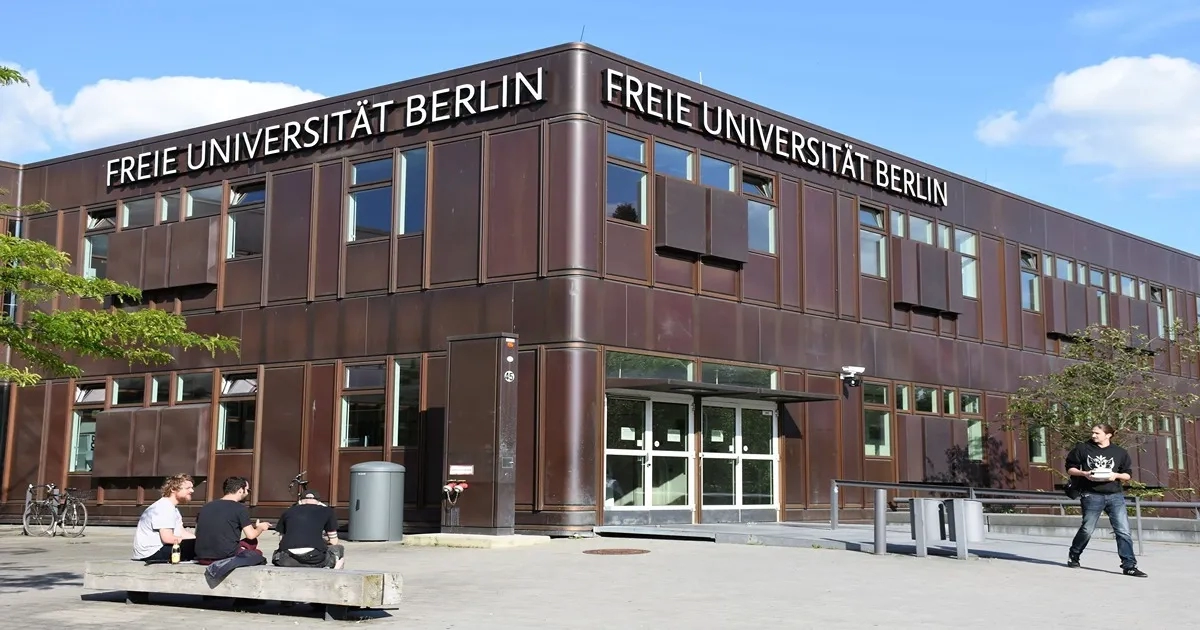
Freie Universität Berlin

Main Academic Divisions (Faculties)

  1. Department of Law
  2. Department of Business & Economics
  3. Department of Political & Social Sciences
  4. Department of Humanities
  5. Department of Philosophy & Humanities
  6. Department of History & Cultural Studies
  7. Department of Mathematics & Computer Science
  8. Department of Physics
  9. Department of Biology, Chemistry & Pharmacy
  10. Department of Earth Sciences
  11. Department of Education & Psychology
  12. Department of Veterinary Medicine

Reasons to Study at Freie Universität Berlin

  1. Diversity, Equality, Family

    Freie Universität Berlin promotes gender equality and equal opportunities at all levels while actively combating discrimination. The university values diversity, recognizing both the differences and shared experiences within its community. It is committed to removing barriers that prevent students, researchers, and staff from receiving fair treatment and fully benefiting from studying, working, and conducting research at the university.

  2. Sustainability in Research, Teaching, Knowledge Transfer, and on Campus

    Securing a livable future presents major global challenges, including climate protection, biodiversity conservation, poverty reduction, and intergenerational justice. Addressing these issues requires new knowledge, technical and social innovations, and essential skills. While many solutions are still evolving, it is widely recognized that higher education plays a vital role in developing the ideas, research, and leaders needed to build a sustainable future.

  3. Good Research Practice

    As a research-driven institution, Freie Universität Berlin is committed to maintaining high academic and ethical standards. Guided by its motto “Veritas, Iustitia, Libertas” (Truth, Justice, Freedom), the university upholds honesty, integrity, fairness, and trust as the core principles of its teaching, research, and support for early-career scholars.

  4. Academia and Practice

    Knowledge and technology transfer is a high priorities at Freie Universität Berlin. Cooperative arrangements with a large number of private-sector firms underscore the university’s commitment to academic work with a focus on practical, real-world applications. Profound Innovation is the central service facility for supporting the transfer of knowledge and technology at Freie Universität.

Admission

Undergraduate Admission Requirement

Entry requirements vary by program. View the admission requirements on the admission page.

Postgraduate Admission Requirments

Entry requirements vary by program. View the admission requirements on the admission page.

How To Apply For Admission

  • select the right application portal for you
  • create an account by registering there
  • upload the required documents
  • complete the application process within the deadline

Admission Contacts

Email: [email protected]
Phone : +49 (0)30 838 70000

Apply For Admission

Campus Tour

Facilities

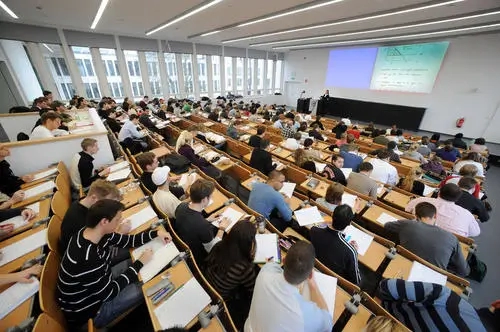
  • Classrooms
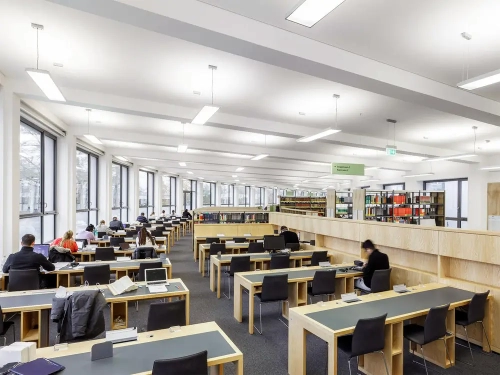
  • Library
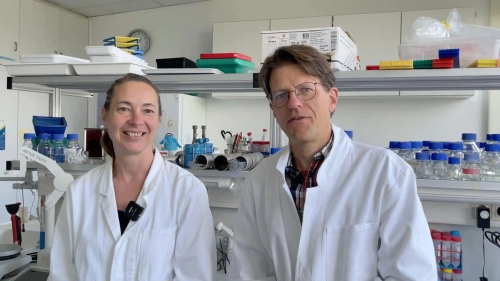
  • Laboratory
  • Research Center
  • Accommodation
  • Sports
  • ICT
  • Cafeteria
  • Library: Represented at fourteen different locations across campus, the University Library provides members of Freie Universität Berlin with the information, literature, and services they need to research, teach, and study effectively. The library provides physical and virtual spaces for exchanging thoughts and ideas, promoting learning, and facilitating communication. It also provides reliable access to data, information, and knowledge.


  • Sports: University Sports at Freie Universität Berlin provides a service for all members of the university. Every semester a wide range of courses, sport activities, competitions, and events are organized and offered to students and employees of Freie Universität and of partner universities in Berlin. One of the main objectives of University Sports is to provide special opportunities for international students and to develop an open and inclusive cultural environment to favor intercultural exchange among students of any nationality at Freie Universität. University Sports also offers courses in English

School Contact

Address

Freie Universität Berlin Kaiserswerther Str. 16-18 14195 Berlin Germany

Email Address

[email protected]

Phone Number

+49 30 838-70000

Website Address

https://www.fu-berlin.de/en/index.html

Social Media Pages

Accreditations

  • Accredited by the German government and state authorities
  • Member of the German Excellence Strategy (Excellence Initiative winner)
  • Recognized by organizations such as the German Rectors' Conference
  • Programs accredited through official German accreditation agencies

Vice Chancellor

Prof. Günter M. Ziegler

Günter M. Ziegler was born in Munich in 1963. After first studying mathematics and physics at Ludwig-Maximilians-Universität München, he earned his doctorate in mathematics from the Massachusetts Institute of Technology in Cambridge (USA) in 1987. After four postdoc years at the University of Augsburg and a research stay at Institut Mittag-Leffler in Stockholm, he came to Berlin in 1992, where ... read more
he worked at the Konrad Zuse Zentrum (today’s Zuse Institute Berlin). Ziegler received his postdoctoral university instruction qualification (Habilitation) at Technische Universität Berlin, where he was professor of mathematics from January 1995 to February 2011. He began working at Freie Universität Berlin in March 2011 and commenced a concurrent position as adjunct professor at Technische Universität Berlin in May 2017. In 2006 he led the process of establishing the Berlin Mathematical School as a joint graduate school of Berlin’s three major universities.

Academic Staff

  • Prof. Dr. Verena Blechinger-Talcott

    Executive Vice President
    • Permanent deputy of the President of Freie Universität Berlin
    • University culture
      • Coordination of Freie Universität mission statements
      • Staff development and career path... read more
        s
      • Human resources working group
      • Sustainability strategy


  • Prof. Dr. Georg Bertram

    Vice President Georg Bertram was born in Gießen in 1967 and grew up in Esslingen am Neckar. He studied philosophy and German studies at Justus Liebig University Gießen, where he also received his doctorate (1997) ... read more
    with a dissertation on the philosophy of the Sturm und Drang. Following his time as a research associate with Professor Martin Seel at the Center for Philosophy and the Foundations of Science in Gießen, he was assistant professor (Juniorprofessor) of philosophy at the University of Hildesheim from 2002 to 2007.


  • Prof. Dr. Petra Knaus

    Vice President for Research Areas of Responsibility

    • Research
      • Research strategy
      • Research funding
      • Third-party research
      • Research infrastructure
      • Campus development a... read more
        nd innovation
      • Knowledge transfer and spin-offs
      • Central Ethics Committee
  • View More Staff

    Notable Alumni

    View More Alumni

    History

    The history of Freie Universität Berlin dates back to 1947, when the first public demand for a new university was published in a student journal. Otto Hess, who was studying medicine at the main university in Berlin, which happened to be situated in the eastern, Soviet-occupied sector of the city, was the author of an article demanding an international university in Berlin. It appeared in the student periodical “Colloquium,” which had been licensed by the American occupation authorities as of May 1947.

    The students Otto Hess, Joachim Schwarz, and Otto Stolz, editor-in-chief of “Colloquium,” were expelled from the main university in Berlin (see photo) by the president of the So... read more

    viet-controlled German Central Administration for Education (Deutsche Zentralverwaltung für Volksbildung), Paul Wandel (a member of the SED party).

    About 2,000 students protested in support of Otto Hess, Joachim Schwarz, and Otto Stolz in front of the Hotel Esplanade at Potsdamer Platz. They demanded the founding of a new, free university. The rector of the main Berlin university, Hermann Dersch, justified expelling them as he said their journalistic work was “an affront to decency and dignity.”

    The Institute for Latin American Studies was opened. The interdisciplinary central institute for research and teaching in ancient American studies, history, Latin American studies, politics, sociology, and economics moved into a building at Rüdesheimer Strasse 54-56. The building was designed by Max Taut and Franz Hoffmann from 1929 to 1930 for the German Miners’ Union.
     

    Joint University Day. Freie Universität invited researchers and students at Humboldt-Universität to visit the university in Dahlem. Members of the AStA student association as well as supporters of the autonomous scene in Kreuzberg disrupted the event with protests. In their eyes the event was an “imperialist takeover” of Humboldt-Universität by Freie Universität. Numerous invited guests left the assembly hall. However, the planned meetings between guests from Humboldt-Universität and their counterparts at Freie Universität were able to take place in the academic departments in the afternoon.

    Freie Universität was one of the winners in the German federal and state governments’ Excellence Initiative, making it one of nine “Universities of Excellence” in Germany. Its concepts for graduate schools, clusters of excellence, and its development strategy for an “International Network University” were deciding factors. The previous year, in the first round of the Excellence Initiative, the Berlin Mathematical School, a joint institution of Freie Universität, Humboldt-Universität, and Technische Universität, had already been selected for funding through the Excellence Initiative.

    Freie Universität Berlin was the first German university to declare a state of climate emergency. By doing so, the university pledged to incorporate climate protection and sustainability across the university to a greater extent in the future and set the goal of attaining “climate neutrality” by 2025.

    Other Universities in Germany

    View all universities in Germany