QTEM was born in 2012 from a shared vision among a small group of pioneering universities: to create a unique international degree focused on quantitative skills, AI, and data analytics — the languages of the future. They imagined a program that would allow top students to explore the world, learn from excellence across borders, and grow into global decision-makers. What started as an ambitious idea has grown into a vibrant network of over 20 leading universities, with hundreds of talented students joining the journey every year.
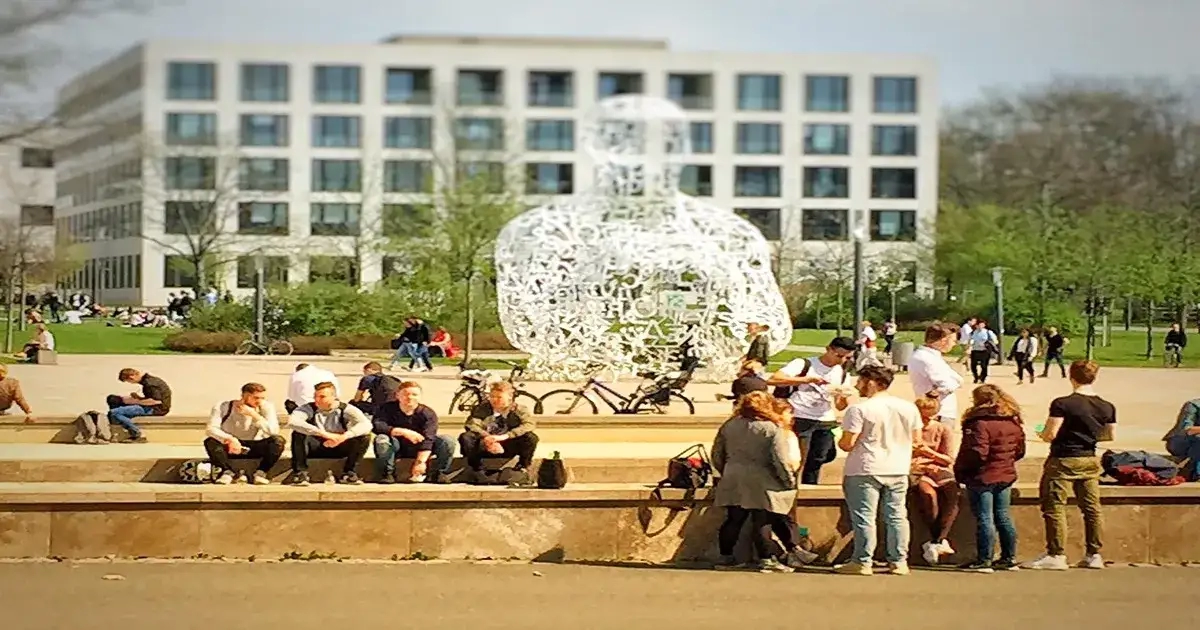
Goethe University Frankfurt is a research-intensive university in Frankfurt am Main, continental Europe’s most important financial hub. Founded in 1914 by citizens for citizens, it is today one of Germany’s 10 largest universities, also in terms of external funding. On January 1, 2008, it acquired a unique degree of independence by returning to its historical roots as a foundation university. At the same time, it also gained a new appearance: A new campus was built around the historic Poelzig ensemble in Frankfurt’s Westend, which continues to set aesthetic and functional standards to this day.
| Acronym | QTEM |
| Colour | Blue |
| Founded | 1914 |
| Departments | 15 |
| Location | Frankfurt am Main, Hesse, Germany |
| Address | Theodor-W.-Adorno-Platz 1, 60629 Frankfurt am Main, Germany |
QTEM educates international analytics-savvy decision makers with the ambition to create a more sustainable future. The network achieves its educational goal through providing students with a solid quantitative background, global learning experience, fostering a deep respect for cultural diversity, industry connections and excellent digital and communication skills.
To be the global leading network of business and economics schools, and corporate and social partners, focusing on analytical and multicultural skills for future decision-makers aiming at a more sustainable future.
QTEM offers a unique opportunity for students to become future decision makers who are highly skilled in analytical and quantitative techniques, experienced through concrete business and policy challenges, and comfortable in international settings.
Before you apply, we recommend that you find out more about your desired course of study: In our course finder you will find everything you need to know – from the content and admission requirements to the application process, in particular
There are various application methods for the undergraduate degree programs at Goethe University – you can find the details on this page.
You can apply for up to three degree programs simultaneously at Goethe University . If you are already enrolled and wish to change your major or degree program , please see the further links at the bottom of this page.
International Applicants:
View the international applicants admission requirements.
All information regarding the requirements for your desired course of study can be found on the website of the respective course in our course finder or in the corresponding Master's examination regulations.
International Applicants:
View the international applicants admission requirements.
Germans register on the Goethe Campus Portal of Goethe University; EU citizens and non-EU citizens without German university entrance qualifications register via uni-assist.de (more information here ).
Email: [email protected],[email protected]
Phone : +49 221 470 90222, +49 221 470 90358

Sports: The University Sports Center at Goethe University offers a diverse, high-quality program for exercise, fitness, and relaxation. Beyond sports, it focuses on social interaction, exchange, and community – providing an easy entry point for all university members.
Alongside our own regular evaluations and surveys, the accreditation of the faculty and its degree programs by AACSB International and the institutional accreditation of Goethe University Frankfurt are essential components of quality assurance in studies, teaching and research.
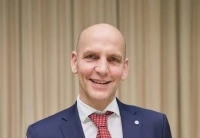
In university self-governance, he most recently served as Chairman of the Board of the Frankfurt Institute for Advanced Studies (2018-2020), and prior to that (2012-2018) as Vice President of Goethe University, responsible for early career researchers, equal opportunities, and academic infrastructure. He has been President of Goethe University Frankfurt am Main since January 2021.
From 1991 to 2005, Ulrich Breuer was employed at th... read more
In 2005 he moved from the Jülich Research Centre to the Hahn-Meitner Institute Berlin, where he held the position of Commercial Director.
From 2009 to 2011, Ulrich Breuer was the Commercial Director of the Helmholtz Centre Berlin for Materials and Energy, which emerged from the merger between the Hahn-Meitner Institute and BESSY (Berliner SpeicherringGesellschaft für Synchrotronstrahlung mbH).
From 2012 to 2017 he was Vice President for Economics and Finance at the Karlsruhe Institute of Technology (KIT). In 2018, Ulrich Breuer joined the Helmholtz-Zentrum Dresden-Rossendorf eV (HZDR) as Commercial Director, where he worked until 2020.
From 2020 to 2023, he was Administrative Managing Director of GSI Helmholtzzentrum für Schwerionenforschung GmbH and FAIR – Facility for Antiproton and Ion Research in Europe GmbH in Darmstadt. For many years, Ulrich Breuer has experienced both perspectives in his professional environment: that of a businessman and that of a science manager.

2011
Bernheim Foundation provides the funding to launch the QTEM project
2012
First five Universities sign an Agreement to Start QTEM and recruitment of first students
2016
First QTEM organized Graduation in Australia
2017
First QTEM Annual Event with more than 15 Universities and 60 graduates
2018
First QTEM Data Challenge final, with Data provided by Corporate Partners... read more
2020
QTEM starts to be mentioned in articles by the Financial Times and other main Economic publications
2021
Launch of the Global Business Analytics Challenge: Soft skills and hard skills courses preparing students for the QTEM Data Challenge
2022
QTEM reaches 20 Academic Partners
2023
QTEM Alumni community reaches the 500 members
2024
First QTEM Graduation and Annual Event in Africa, at Rabat Business School
2025
Insper Institute from Sao Paulo joins QTEM, the network has its first Academic Partner in Latin America.
History of Goethe University: Founded in 1914 as a foundation university by the citizens of Frankfurt, Goethe University quickly gained recognition for its progressive teaching methods and pioneering faculty structures. Later Nobel laureates such as Paul Ehrlich, Max Born, and Otto Stern taught and conducted research here. In the post-war period, the "Frankfurt School," co-founded by Max Horkheimer and later Theodor W. Adorno, significantly shaped the social sciences in Germany. Representatives of subsequent generations of the Frankfurt School and Critical Theory, such as Jürgen Habermas, who taught philosophy in Frankfurt, have been active in public debates in Germany for decades. To this day, Goethe University remains one of the largest and most diverse universities in Germany.