
Since its founding on May 1, 2009, Rhine-Waal University of Applied Sciences has grown beyond all expectations. The resonance from students both in Germany and around the world has been overwhelming – after a mere six years of operation, the university reached and exceeded its founding objective of a minimum enrolment of 6,200 students. The best part? This is just the beginning.
Rhine-Waal University of Applied Sciences currently offers 25 undergraduate degree programs and eleven graduate programs across four faculties and two campuses: the Faculties of Technology and Bionics, Life Sciences and Society and Economics in Kleve, and the Faculty of Communication and Environment in Kamp-Lintfort. Their programs cover a broad range of topics from the natural sciences, economics, engineering and technology, the humanities, social and health sciences. Their professors and lecturers are young, accomplished and approachable researchers who enjoy working closely with students to help them reach their full potential.
As a university of applied sciences, the focus of their degree programs is on practical applications and real-world relevance. In all of their degree programs, for example, students learn the important fundamentals of business economics and law, and are given numerous opportunities to develop interpersonal soft skills that are key for the business world, such as presentation and communication techniques, project management skills, social and intercultural skills and conflict management strategies. Their objective at Rhine-Waal is to produce graduates who are ready to meet the real-world demands of both national and international job markets, and excel at their new careers.
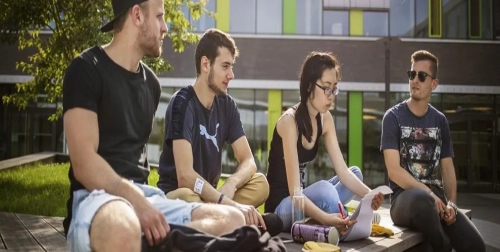
Internationality – this describes both who they are and what we’re about. Over 75 percent of their degree programmes are taught exclusively in English, which gives people from all over the world the opportunity to earn a quality education according to the rigorous and internationally recognized academic standards of Germany. As a result, their student body is also incredibly diverse: in fact, over one third of their students come from outside of Germany and over 120 different nationalities are represented here. A rich, intercultural exchange occurs every day on their campuses and in their halls, and there’s no shortage of fun, interesting people to meet and communicate with even if you can’t speak German.
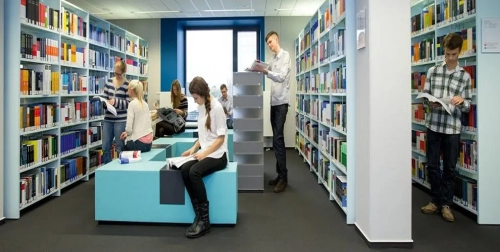
For international students, the advantages of studying at Rhine-Waal are clear. Studying in English provides intense language training and prepares you for specialists fields where English is often the preferred language of communication. Not only that, but their brand-new campuses are research hotspots which feature top-of-the-line equipment and facilities, including laboratories, classrooms, libraries, language centers and canteens – all on campus and within walking distance of one another. Rhine-Waal University of Applied Sciences also maintains numerous collaborative contacts with private industry in a variety of fields and sectors, for example: chemistry, energy, material sciences, mechanical engineering, electrical engineering, IT, logistics, life sciences, agricultural sciences and biotechnology – just to name a few. Their students have little difficulty finding eager partners for their projects, internships or bachelor’s and master’s theses.
International students will also find that there’s always something to do at Rhine-Waal University, which offers dozens of active sport clubs and leisure time activities at little to no charge. For fans of live music and nightlife, Kleve and Kamp-Lintfort offer privately-run clubs, and the nearby major cities of Nijmegen, Cologne, Düsseldorf, Duisburg and Oberhausen are home to many other options. Don’t have a car? No problem for their students, who receive a Semester Ticket with their biannual semester enrolment fee. This ticket is a pass to ride on nearly all bus and train lines in the state of North Rhine-Westphalia, providing a near limitless amount of things to do and places to see.
The Lower Rhine region is full of picturesque landscapes and rich historical traditions. Kleve and Kamp-Lintfort both offer a high living standard for individuals and families in a safe, crime-free and centralized urban environment with low costs of living. The three nearby international airports – in Amsterdam, Düsseldorf and Weeze – make both Kleve and Kamp-Lintfort accessible by air from nearly anywhere in the world.
It’s no wonder that so many international students choose to earn a degree with them. They hope you’ll join them – and them – to help their young university grow and create new traditions for the future.
They look forward to welcoming you to Rhine-Waal University of Applied Sciences!
| Acronym | HSRW |
| Nickname | Rhine-Waal |
| Motto / Slogan | Innovative, Interdisciplinary, International |
| Colour | Blue (Primary) and Silver / Grey |
| Mascot | The Swan |
| Founded | 2009 |
| Location | Kleve, North Rhine-Westphalia, Germany |
| Address | Kleve and Kamp-Lintfort, North Rhine-Westphalia, Germany |
Inherently international
At Rhine-Waal University of Applied Sciences they are rooted in the region and networked with the world. They strive to promote an international academic discourse and value-driven, cultural exchange. With this cosmopolitan approach, their aim is to contribute to mutual understanding between cultures in a networked world.
Modern teaching, pioneering research
Their method-based, application-driven and cross-subject research and teaching programs produce highly qualified graduates. They teach, learn and do research in modern, excellently equipped laboratories. They identify new interdisciplinary research fields and develop innovative products and services. In all this, the challenges posed by society serve as their yardstick.
Building the region responsibly
Working with their partners, they are helping to turn the region into an attractive knowledge center. They deliver innovative ideas and serve as partners in their implementation. In their eyes, internationality is an opportunity. Accordingly, they accept their responsibility for connecting the region with the rest of the world.
Empowering people to shape the future
They prepare individuals with varying capabilities for the future. Their theoretically sound and application-driven teaching models produce responsible and creative people who know their subjects. In the process, their place great emphasis on ingenuity and personal autonomy. They achieve this with an education that emboldens students and inspires curiosity and enthusiasm.
Who they are
They are ambitious. They have the courage and the passion to be different! For them, finding solutions is more motivating than discussing problems. They are open to new ways of thinking, reflect on what they do and strive to improve on the basis of their experience. To this end, they seek the feedback of everyone they come into contact with, both inside and outside the university.
They attract people from all cultures and countries. Along with the people who come to them, they take responsibility for a mindful interaction.
Their actions are shaped by mutual respect between teaching staff, students and university members, regardless of nationality, religion, culture or sexual orientation. Equality, inclusion and tolerance are core principles for them.
They believe that the huge diversity of the people at their university enriches the teaching and research experience. The university bodies and committees reflect this diversity.
They deal with their partners respectfully, professionally and dependably. For them, this method of interaction is the mainstay of a collectively articulated university culture. They strive to keep a close eye on this culture, render it transparent and actively shape it going forward.
To ensure they not only achieve their goals and values, but also live and breathe them, they seek to uphold their mission statement in everything they do.
Rhine-Waal University’s vision is to be an inherently international, method-based, and application-driven institution. It strives to act as a bridge between the local community of the Lower Rhine region and the broader global network. The university is committed to providing modern teaching and pioneering research that addresses real-world societal challenges, while championing values like tolerance, intercultural exchange, and sustainability.
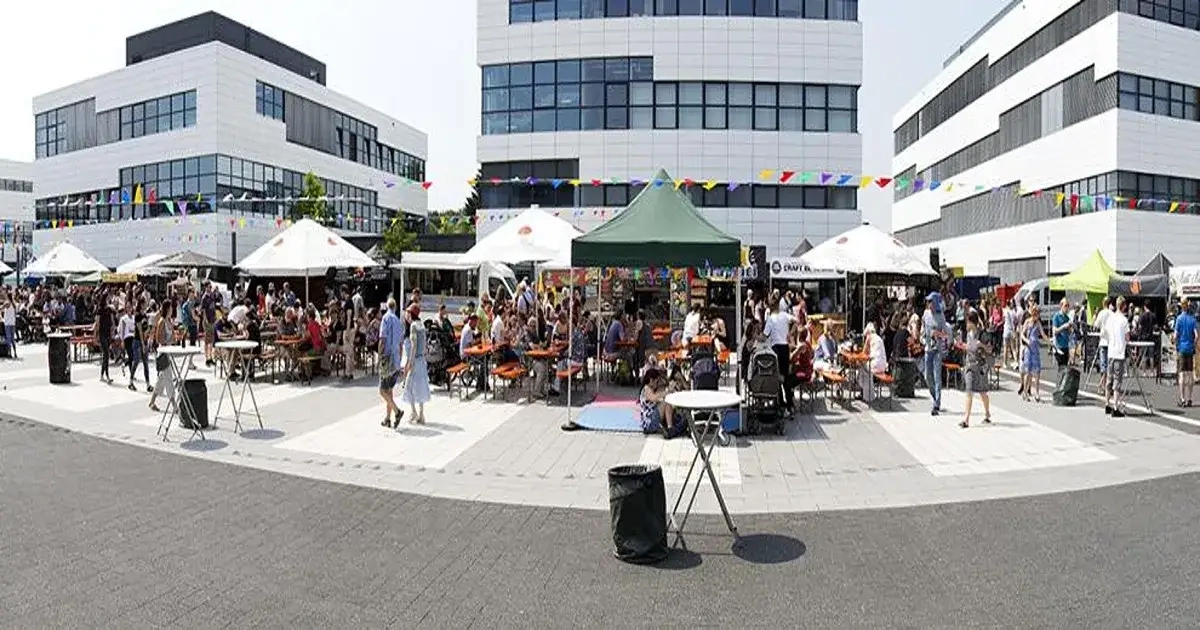
Hochschule Rhein-Waal is highly international, with students and staff from many countries. Many programs are taught entirely in English, making it attractive for international students.
The university focuses on applied sciences, combining theory with practical experience, projects, internships, and industry collaboration to prepare students for the job market.
The university promotes innovation, sustainability, interdisciplinary research, and solutions to global challenges through modern teaching and research approaches.
Students enjoy a welcoming environment with student organizations, cultural events, sports, language support, and international student services.
The university maintains strong connections with industries and businesses, helping students gain internships, research opportunities, and career experience.
1. University Entrance Qualification (in German: Hochschulzugangsberechtigung (HZB))
This is proof that you have reached a sufficient level of schooling to attend a higher education institution in Germany. If you did not earn your HZB in Germany, then you must apply through uni-assist so that the equivalency of your international HZB can be established. Uni-assist establishes equivalency based on official guidelines from the Standing Conference of the Ministers of Education and Cultural Affairs (Kultusministerkonferenz), the German Rector’s Conference (Hochschulrectorenkonferenz), and the Central Office for Foreign Education (Zentralstelle für ausländisches Bildungswesen).
2. Language requirements
You must prove that you understand and can follow the language of your degree program at an advanced level. This requires an internationally recognized language certificate. If you are applying to a degree program taught in English, your certificate must be in English. If you are applying to a degree program taught in German, you need a German certificate. For more information, please see requirements for bachelor’s programmes.
3. Proof of a completed preparatory internship
This requirement must be met before the 4th semester enrolment deadline. More information can be found in the examination regulations of the individual degree programs.
Note for restricted admission (N.C.) programs: Numerus Clausus degree programmes (N.C.) rely on a process of selection when the number of applicants exceeds the number of available seats. See application process for bachelor’s programmes for more information. The results of the previous selection procedures for programs with restricted admission (N.C. values) can be viewed here.
The three main requirements for admission to a master’s degree programme:
Note: Individual degree programs may have specific, additional admission requirements. Please see the degree programme pages and the examination regulations for more information.
Note for restricted admission (N.C.) programs: Numerus Clausus degree programs (N.C.) rely on a process of selection when the number of applicants exceeds the number of available seats.
For questions about admission requirements, please contact the Study Advisory Service.
Email: [email protected],[email protected]
Phone : +49 2821 806 73 - 360, +49 2842 908 25 - 0.
January 2006 The Association for the Promotion of Higher Education in Kleve and the Region, later the Campus Kleve e.V. friends association, is founded.
2008
The government of North Rhine-Westphalia passes a resolution for the establishment of a new “Northern Lower Rhine” university of applied sciences located in Kleve and Kamp-Lintfort.
2009
March 2009 Renovations are completed for the first provisional university buildings in Kleve.
April 2009 The Hochschule Rhein-Waal e.V. friends association is founded.
30 April 2009 Professor Dr Andreas Pinkwart, NRW Minister of... read more
1 May 2009 Rhine-Waal University of Applied Sciences is officially founded. President Klotz and Vice-President Goch officially enter into office.
11 August 2009 The first students are enrolled in the undergraduate degree programme International Business and Social Sciences.
September 2009 The Campus Camp-Lintfort e.V. friends association is founded.
2009 Rhine-Waal University applies for the Erasmus Charter for Higher Education, thus joining the family of European universities receiving EU funding to promote the exchange of students and teachers among EU member states.
winter semester 2009/2010 Rhine-Waal University begins its first semester of operations with three undergraduate degree programmes: Bio Science and Health, International Business and Social Sciences and E-Government. Fifteen students begin their studies. It employs a total of 30 staff members: six professors, five academic staff members, and 19 non-academic staff members.
2020
April 2020 Project “StartGlocal – Global Spirit for Local Start-ups” launched to promote startup culture at HSRW
25 July 2020 Green FabLab opens in Kamp-Lintfort
November 2020 HSRW organises first annual Days of Antidiscrimination.
2021
April 2021 Research focus area “Sustainable Food Systems” launches
July 2021 Sustainable Development Management M.A. becomes first internationally accredited sustainable development degree programme in Germany.
November 2021 HSRW begins collaborating with the Kurhaus Kleve museum
2022
2022 Research focus area “Assistance and Participation” launches
May 2022 HSRW wins nationwide Innovative Hochschule competition with the project “TransRegINT – Innovation, Sustainability, Participation”
13 June 2022 HSRW receives endowment for a professorship in “Sustainable Land Use Systems”
September 2022 HSRW commences new double-degree programme with the Kazakh-German University in Almaty, Kazakhstan