
The Karlsruhe Institute of Technology (KIT) is “The University in the Helmholtz Association.” As the only German university of excellence with a national large-scale research sector, we offer our students, researchers, and employees unique learning, teaching, and working conditions. The roots of the academic education institution extend all the way back to 1825. Today’s structure of KIT is the result of the merger of the Technical University of Karlsruhe and Karlsruhe Research Center in 2009.
Presently, around 10000 people are working at KIT, of which more than half are conducting research in a broad range of disciplines from natural sciences to engineering, to economics, to the humanities and social sciences. This makes KIT one of the largest science institutions in Europe. Apart from excellent academic education and cutting-edge research, innovation is our central task. We do not only create and impart knowledge for the society and the environment, we also use this knowledge to develop applications for industry. It is our goal to help manage global challenges facing humankind by pioneer research contributions in the areas of energy, mobility, and information. Doing this, we attach high importance to permanent contact and exchange with society.
| Acronym | KIT |
| Motto / Slogan | The Research University in the Helmholtz Association |
| Colour | Black, Green, and Blue |
| Founded | 1825 |
| Location | Karlsruhe, Baden-Württemberg, Germany |
| Address | Kaiserstraße 12, 76131 Karlsruhe, Germany |
With passion, curiosity, creativity, and freedom – and with a clear awareness of our social responsibility – we at KIT contribute to shaping a sustainable and resilient future. The pressing challenges of our time – climate change, the energy transition, the sustainable use of natural resources, digitalization and artificial intelligence, security and technological sovereignty, and demographic change – require bold, collaborative responses from science and society
These challenges spur us all on to drive fundamental changes in our world and at KIT. We are in a unique position to shape this transformation: KIT unites the basic research of a technical university with the societal mission of the Helmholtz Association under one roof – thus enabling the transition from scientific excellence to Science for Impact .
As a university within the Helmholtz Association, we assume a leading role from the generation of knowledge to its application. The interplay between basic research and engineering holds extraordinary potential and drives scientific progress as well as societal change. This is the core of Science for Impact .
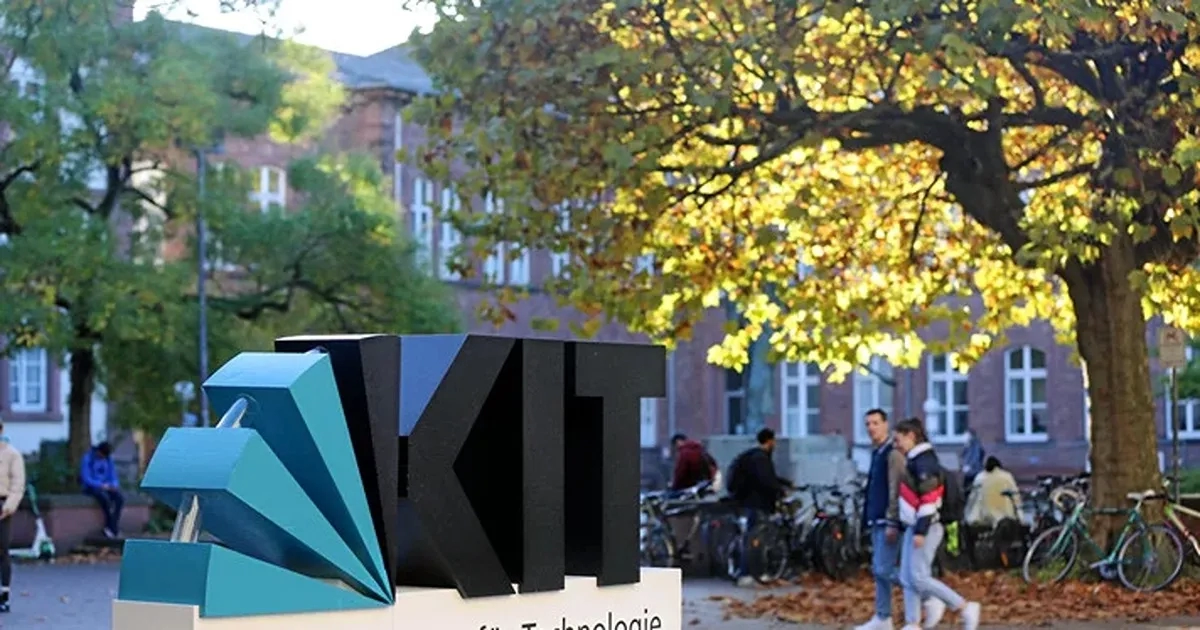
These objectives are pursued through three main thrusts: “Strengthening Excellent Research”, “Promoting Research by Interaction with Society”, and “Providing Reliable Academic Careers”, each with various measures. Since the start of funding in 2019, we have successfully implemented a wide range of measures to achieve our goals.
KIT is one of Germany’s eleven “Universities of Excellence.” Our 2019 concept with which we prevailed in the Excellence Contest conducted by the federal and state governments, focuses on expanding cutting-edge research across the entire spectrum, from basic research to practical applications, by using the momentum of 100 new professorships, fostering intensive dialogue with society, and providing reliable career paths for young scientists.
With passion, curiosity, creativity, and freedom – and with a clear awareness of our social responsibility – we at KIT contribute to shaping a sustainable and resilient future. The pressing challenges of our time – climate change, the energy transition, the sustainable use of natural resources, digitalization and artificial intelligence, security and technological sovereignty, and demographic change – require bold, collaborative responses from science and society
Diversity is essential for mastering the challenges of our time, and together we develop tailored, innovative solutions for global issues such as climate change and the energy transition, and find answers to questions about sustainability, the future of mobility, and artificial intelligence. Different perspectives, experiences, and skills enrich our daily work at KIT and make it possible to offer genuine added value to society.
Sustainable development is a shared responsibility. At Karlsruher Institut für Technologie, we create and share knowledge that supports society and the environment. Through innovative research in climate protection, resource conservation, and sustainable practices, we shape the future. We also apply these solutions in our teaching, partnerships, and everyday actions.
Entry requirements vary by program. View the program page for the requirements.
Entry requirements vary by program. View the program page for program specific requirements.
The application portal for all Bachelor's, Master's and Studienkolleg courses can be found here: https://bewerbung.studium.kit.edu/en
Email: [email protected],[email protected]
Phone : +49 (0) 721 - 608 44911, +49 721 608 45164

Since 2002 he has been Professor and Head of the current Institute of Applied Materials of the KIT. Kraft is the scientific co-author of more than 200 articles; between 2006 and 2011, he was the spokesman of a collaborative research center. Between 2006 and 2009, he was Chairman and Deputy Chairman, respectively, of the Scientific-technical Council of the former Karlsruhe Research Center. In 2011, Kraft was granted the Professorship for Nanostructured Functional Materials funded by the Bosch Group. From 2012 to 2015, he was one of the spokespersons of the Helmholtz Programme Science and Technology of Nanosystems (STN).




In its tenth year, the Karlsruhe Institute of Technology successfully prevailed again in 2019 in the "Universities of Excellence" funding line of the Excellence Strategy of the... read more