Founded in 1831 by the scholar Karl Karmarsch, the Higher Trade School of Hannover started out with just 64 students. Today Leibniz University Hannover is home to roughly 26,000 students in the natural sciences and engineering, the humanities and social sciences, and law and economics. The university is committed to continuously improving its teaching and research to ensure its ongoing appeal as a place to study, teach and conduct research.
The spirit of Leibniz – as one of the nine leading universities of technology in Germany, Leibniz University Hannover is committed to seeking sustainable, peaceful and responsible solutions to the key issues of tomorrow. Our ability to do this stems from our broad spectrum of subjects, which range from engineering and the natural sciences to architecture and environmental planning, and from law and economics to the social sciences and humanities.
| Acronym | LUH |
| Colour | Blue and White |
| Founded | 1831 |
| Location | Hanover, Saxony, Germany |
| Address | Gottfried Wilhelm Leibniz University of Hanover, Welfengarten 1, 30167 Hanover |
For 40 creative years of his life Gottfried Wilhelm Leibniz was associated with Hannover. He made major contributions to all areas of contemporary knowledge. His universality and inspiration have created an example and set a commitment for Leibniz University Hannover. We stand for excellence in teaching and research, and attach great importance to the interdisciplinary and international character of our work. We see ourselves as a community striving for scientific and academic insight, seeking sustainable, peaceful and responsible solutions to central issues concerning the future. Our work is thus guided by the motto:
Teaching as dialogue – students are at the center
We understand teaching as a vibrant and collaborative exchange between instructors and students. Building on our diverse range of subjects, we offer students individual qualification opportunities and a wide variety of professional and personal development prospects. We train the experts of tomorrow by offering interested and motivated students future-oriented degree programs with interdisciplinary focuses. It is the responsibility of our instructors to provide students with optimal support and guidance. We continuously develop our curriculum, support the transition from secondary school to university, and promote lifelong learning.
Research as a challenge – we strive for excellence
We set research priorities to combine our strengths and achieve outstanding results in international competition. Through exemplary facilities and collaborations with non-university institutions, we offer a research-friendly environment. Excellent training and support for early-career researchers are among our most important tasks. Demanding and internationally competitive doctoral programs contribute to this.
Cooperation as a principle – together we are stronger
Through regional collaborations with other universities and research institutions, we strengthen Germany's position as a center of scientific excellence. Close cooperation with industry contributes to the development of the region and the country. We promote technology transfer, spin-offs, and continuing scientific education. Nationally and internationally leading universities are our partners in teaching and research.
Universality – our competence grows from diversity
Our range of subjects is diverse, encompassing engineering and natural sciences, architecture and environmental planning, law, social sciences, economics, and the humanities. Few universities in Germany offer such a differentiated range of subjects. We are purposefully developing this profile further, placing particular emphasis on interdisciplinary teaching and research.
Theoria cum praxi – what moves life, moves us
At Leibniz University Hannover, we understand academic teaching as a unity of scholarship, reflection on practice, and moral responsibility. For us, as for Leibniz, "theoria cum praxi" means linking knowledge-oriented research and application for mutual benefit.
Creating something new – we stand for excellence in teaching and research
Teaching and research are closely intertwined for us. We create the best possible conditions to be an attractive university both in Germany and abroad. We are sharpening and expanding our profile to be among the international leaders. In doing so, we confidently compete for the best minds in research and teaching.
Ethics of science – we act responsibly
Through our teaching and research, we aim to contribute to the peaceful coexistence of people and to answering the pressing questions of our time. The freedom of research and teaching is a precious asset to us. It demands critical reflection and an assessment of the consequences of our actions. We strive for high standards of academic integrity for our university.
Seeking the truth – we are curious and open-minded.
Our goal is to foster intellectual and personal independence. We approach this with a critical yet constructive mindset, promoting creativity and the ability to engage in dialogue as prerequisites for innovative action. We are open to the world and embrace internationality in our teaching and research. We integrate international students, staff, faculty, and guests, and promote the intercultural competence of all members of Leibniz University Hannover.
Utilizing everyone's potential – we open up opportunities
We are leaders in equality policy and will consistently pursue this path. We promote the skills of women and men in all areas. Through family-friendly study and working conditions, we support the compatibility of studies, career, and family life.
Progress requires effort – we expect results.
At all levels of research, teaching, and administration, we focus on continuous improvement processes and strive for sustainable development. In doing so, we are guided not only by our own high standards of success but also by those of our partners. We demand performance and recognize it.
Our goal is to create flexible structures that enable interdisciplinary teaching and research at the highest level. Outstanding disciplinary achievements are an essential foundation for sustainable interdisciplinarity.
We foster a university culture that creates space for creativity, stimulates dialogue, and connects disciplines. In our daily university life, we value transparent decision-making and the participation of all. Appropriate quality controls in teaching, research, and administration help us to use our resources optimally.
We are service-oriented and goal-driven. We optimize the conditions for teaching and research by providing the necessary spatial and technical infrastructure and services for communication and cooperation.
Leibniz University Hannover is successfully represented in the Excellence Strategy of the German federal and state governments. The Clusters of Excellence PhoenixD and QuantumFrontiers are led by LUH; Hearing4all is a joint project of Carl von Ossietzky University in Oldenburg, Hannover Medical School, and LUH.
A general university entrance qualification entitles the holder to study in all disciplines. It can be obtained at the following institutions:
Entry requirements vary by program. View the requirements on the program page.
View the Language proficiency required. You need proof of sufficient German language skills. For international applications, level B1 must be demonstrated for all Bachelor's degree programs, and level C1 must be demonstrated for enrollment .
Some degree programs require a preliminary internship . This internship is not always a prerequisite for enrollment/application; it can often be completed later in your studies up to a certain point. Please contact the relevant internship office if you have any questions. A preliminary internship is recommended for the following degree programs:
International Applicants:
In order to study at a German university, applicants from abroad must meet two particularly important requirements: the necessary language skills and a school or university degree that is recognized in Germany as a ( university) entrance qualification.
or all Bachelor's degree programs and the state examination at Leibniz University Hannover (LUH), the following applies: Your school-leaving certificate must be recognized as a university entrance qualification in Germany. In most cases, the Abitur (German university entrance qualification) or an equivalent qualification from your home country is sufficient. If you have citizenship and a school-leaving certificate from a non-EU country , you must submit a preliminary review documentation (VPD) from uni-assist with your application. This documentation checks whether your qualification is sufficient for direct admission to studies at LUH or whether further qualifications, such as an assessment test at a preparatory college (Studienkolleg) , are required.
For all Master's programs at Leibniz University Hannover (LUH), you need a recognized Bachelor's degree or an equivalent higher education qualification. For most Master's programs, a preliminary review documentation (VPD) from uni-assist is required for application if you are a citizen of a non-EU country and hold a higher education degree . This documentation checks whether your Bachelor's degree qualifies you for admission to a Master's program and converts your grades into the German grading system.
Language Skills/Certificate:
Some programs require German language skills, others German and English language skills. Some Master's programs only require English language skills for application.
Please select your personal information and receive individual instructions on how, when and where you can apply for a degree programme.
Email: [email protected]
Phone : +49 511 762 2020

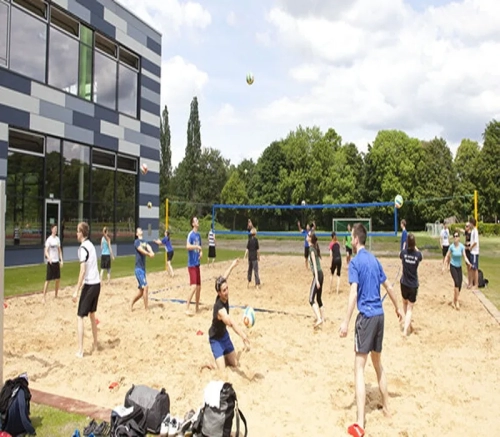
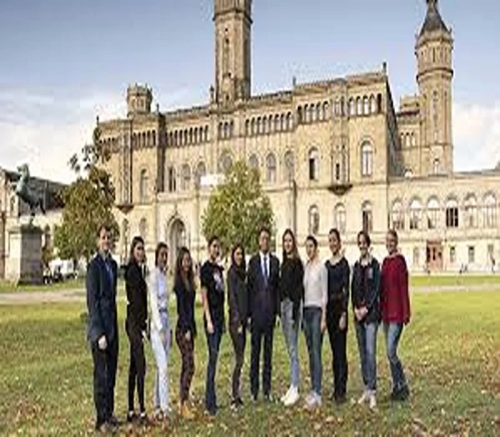
Sports: University sports offer a cost-effective and diverse range of sports and exercise activities, from A for Aikido to Z for Zumba. Most courses in the sports program are geared towards recreational sports and offer both students and staff a break from their studies or work. The sports program is complemented by numerous sports camps, workshops, tournaments, and special events.
IT Service: As a central facility, Leibniz Universität IT Services (LUIS) provides an effective infrastructure for information and processing services for research, teaching and the administration. In addition, the facility participates in regional and international groups focused on providing universities and research facilities with the resources necessary for the highest scientific computing requirements.
ACQUIN (Accreditation, Certification and Quality Assurance Institute) on behalf of the German Accreditation Council (GAC).
1959 Born in Dortmund
since 01.01.2015 President of Leibniz University Hannover
since 01.08.2016 Deputy Spokesperson of the Universities Member Group in the German Rectors' Conference (Hochschulrektorenkonferenz, HRK)
01/2018 - 09/2022 Vice President of TU9 German Universities of Technology e.V.
1983 - 1985 Banking apprenticeship at Deutsche Bank AG, Hannover
Degree: Banker
Since 12/2013 Administrative board member of Student Services Hannover
... read more



Over more than 175 years, outstanding personalities have shaped the university. Both as students and as members of teaching staff. This website provides informat... read more
On 1st July 2006 the University of Hannover gave itself a name: Gottfried Wilhelm Leibniz Universität Hannover, after the philosopher and universal scholar who had lived and worked in Hannover for 40 years. The 360th birthday of Leibniz and the 175th anniversary of the university in 2006 led to this choice of date for adopting the new name. With his scientific studies ranging from philosophy to engineering, Leibniz embraced a scientific diversity that characterises the profile of today’s Gottfried Wilhelm Leibniz Universität Hannover. A Short Profile Gottfried Wilhelm Leibniz Universität Hannover offers its 26,800 or so students (as of: winter semester 2015/2016) a broad range of courses in science and engineering, in the humanities and social sciences, and in law, economics and business administration. After the Second World War, the university widened its programme with the integration of the College of Horticulture and Land Culture, the College of Education for Technical Schools and the College of Education for Lower Saxony/ Hannover. With the creation of the Faculties of Humanities and Social Sciences, Law, and Economics and Business Administration, the former Institute of Technology acquired a much broader profile. Its tradition in teacher training goes back to the times of Gottfried Wilhelm Leibniz. With some 4,807 employees (including third-party funded positions), Gottfried Wilhelm Leibniz Universität Hannover is one of the major employers in Hannover Region: 2,930 people work in research and teaching, including 320 professors, 1,810 technical and administrative staff and 90 apprentices. In addition there are many student assistants. The university is governed by a six-member Presidential Committee consisting of the President and five Vice Presidents. The University Council advises the Presidential Committee and the Senate, particularly on development and economic plans.
In 2016, the Leibniz School of Education was established, with a cross-faculty structure equivalent to a faculty. The goal was to further develop the teaching-related degree programmes, to strengthen education research and to generate more visibility for the topic by linking the national and international levels.
In 2019, the new Mechanical Engineering campus in Garbsen was inaugurated.
European University: In November 2023, Leibniz University Hannover became part of the European Union-funded university alliance EULiST – European Universities Linking Society and Technology. LUH initiated the strategic alliance with nine partners based in Finland, France, Greece, Italy, Austria, Sweden, Spain, Slovakia and the Czech Republic.
On 1 January 2024, sponsorship of the university was transferred to a foundation under public law, which means that LUH is no longer sponsored by the state of Lower Saxony. LUH is taking advantage of an option established in the Lower Saxony Higher Education Act that gives universities in Lower Saxony more independence.